


Motor Operated Valves
Motor operated valves are automated valve assemblies that use an electric motor to open, close, or position a valve. They are widely installed in power plants, water treatment facilities, oil and gas pipelines, chemical plants, HVAC systems, manufacturing lines, and other industrial processes where reliable remote valve operation is required.
A motor operated valve, commonly abbreviated as MOV, combines an industrial valve with an electric actuator, gearbox, control system, position feedback devices, and protective switches. Correct selection depends on valve type, operating torque or thrust, required speed, duty cycle, control accuracy, electrical supply, process conditions, and the safety function of the complete assembly.
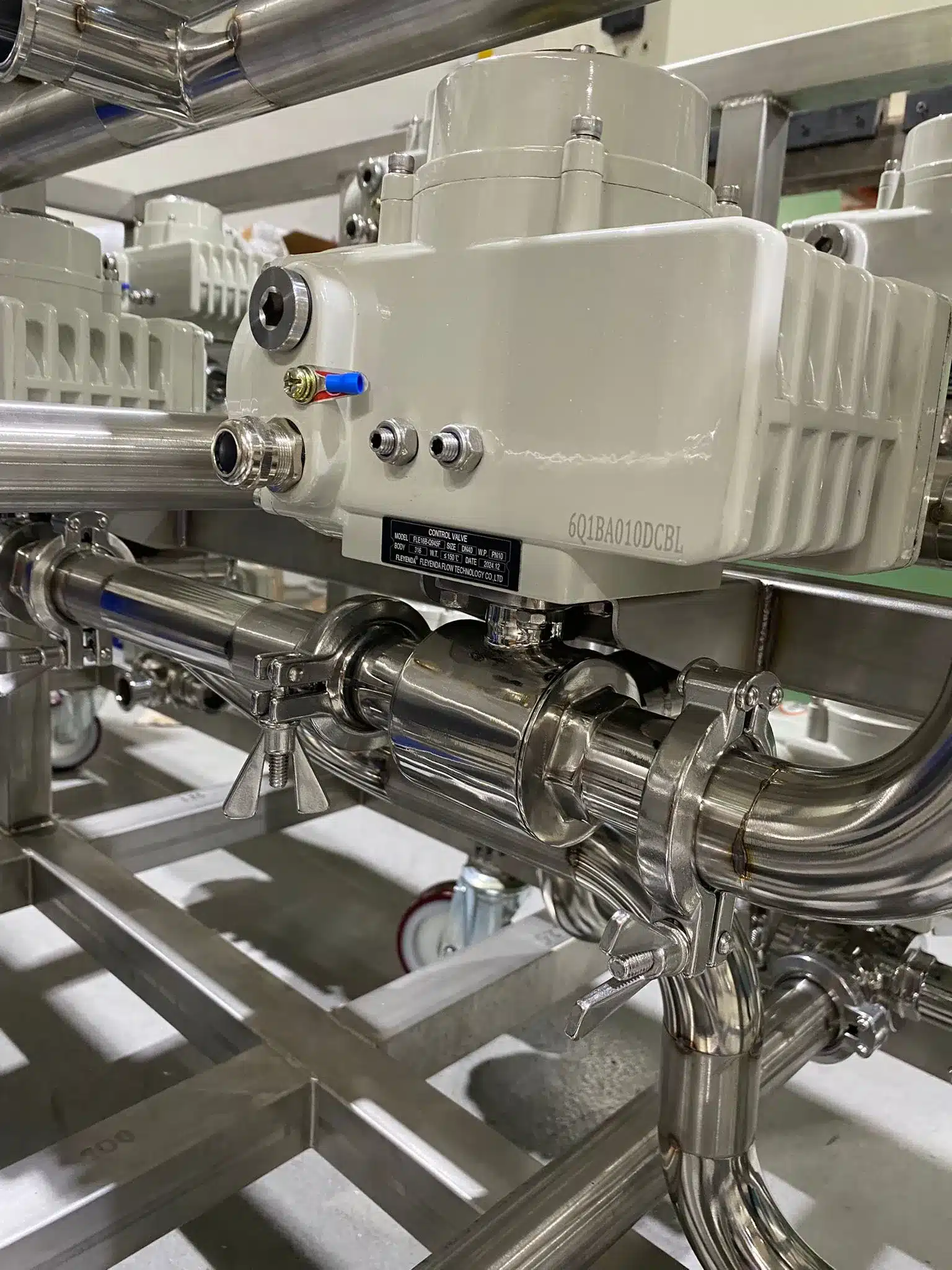
What Are Motor Operated Valves?
Motor operated valves are industrial valves driven by electric actuators rather than manual handwheels, pneumatic cylinders, or hydraulic systems. The actuator receives an electrical command and converts electrical energy into mechanical movement. This movement is then transferred to the valve stem or shaft.
Depending on the valve design, the actuator may rotate the valve shaft through approximately 90 degrees, turn a threaded stem through multiple revolutions, or generate straight-line movement. This allows motor operated valves to automate gate valves, globe valves, ball valves, butterfly valves, plug valves, dampers, and other flow-control devices.
MOVs are particularly valuable when valves are large, difficult to access, frequently operated, installed in hazardous areas, or connected to a centralized automation system. Operators can open or close the valve from a control room, programmable logic controller, distributed control system, or remote terminal unit.
How Does a Motor Operated Valve Work?
When the actuator receives an open, close, or positioning command, its control circuit energizes the electric motor. The motor drives a reduction gearbox that lowers the output speed and increases the available torque. The gearbox then transfers this mechanical force to the valve stem.
As the valve moves, position sensors or limit switches monitor its travel. When the valve reaches the configured open or closed position, the actuator stops the motor. In modulating applications, an internal controller compares the actual valve position with the requested position and adjusts the motor accordingly.
Many industrial actuators also include torque-sensing equipment. A torque switch can stop the motor if the valve becomes obstructed or if the mechanical load exceeds the configured limit. This helps protect the valve stem, seat, gearbox, coupling, and actuator structure.
Intelligent electric actuators may also monitor motor current, torque, temperature, operating time, number of starts, direction of movement, and communication status. This diagnostic information can help maintenance teams identify increasing valve friction, seat wear, stem damage, or incorrect adjustment before complete failure occurs.
Main Components of Motor Operated Valves
| Component | Main Function |
|---|---|
| Industrial valve | Controls, isolates, diverts, or regulates the process medium. |
| Electric motor | Converts electrical energy into mechanical rotation. |
| Reduction gearbox | Reduces output speed and increases operating torque. |
| Output drive | Transfers torque or thrust from the actuator to the valve stem. |
| Limit switches | Detect fully open, fully closed, or intermediate valve positions. |
| Torque-sensing system | Protects the valve and actuator against excessive mechanical load. |
| Local control station | Provides local open, stop, close, and operating-mode controls. |
| Position indicator | Shows the current valve position locally or electronically. |
| Manual override | Allows handwheel operation when electrical power is unavailable. |
| Communication module | Connects the MOV to a PLC, DCS, SCADA, or industrial network. |
Types of Motor Operated Valves
Multi-Turn Motor Operated Valves
Multi-turn actuators rotate their output through several complete revolutions. In some applications, dozens or hundreds of turns may be required to move the valve from fully closed to fully open.
These actuators are commonly installed on gate valves, globe valves, sluice gates, and other equipment with threaded or rising stems. A hollow output shaft may allow a rising valve stem to pass through the center of the actuator.
Multi-turn motor operated valves are frequently used in power stations, water treatment systems, cooling-water networks, pumping stations, refineries, pipelines, and industrial utility systems.
Part-Turn Motor Operated Valves
Part-turn actuators produce less than one complete output revolution. Most quarter-turn MOVs rotate approximately 90 degrees between the fully open and fully closed positions.
They are typically installed on ball valves, butterfly valves, plug valves, and dampers. The actuator may drive the valve directly or through an additional gearbox when greater operating torque is required.
Part-turn MOVs are commonly used for water isolation, process routing, chemical dosing, ventilation control, fuel systems, and general manufacturing applications.
Linear Motor Operated Valves
Linear electric actuators convert motor rotation into straight-line movement. They provide axial thrust over a defined stroke and are commonly installed on globe control valves, dosing valves, small gate valves, and industrial dampers.
Linear motor operated valves can provide accurate intermediate positioning, making them suitable for regulating flow, pressure, temperature, and liquid level. The actuator must be selected according to required thrust, stroke length, travel speed, and modulation frequency.
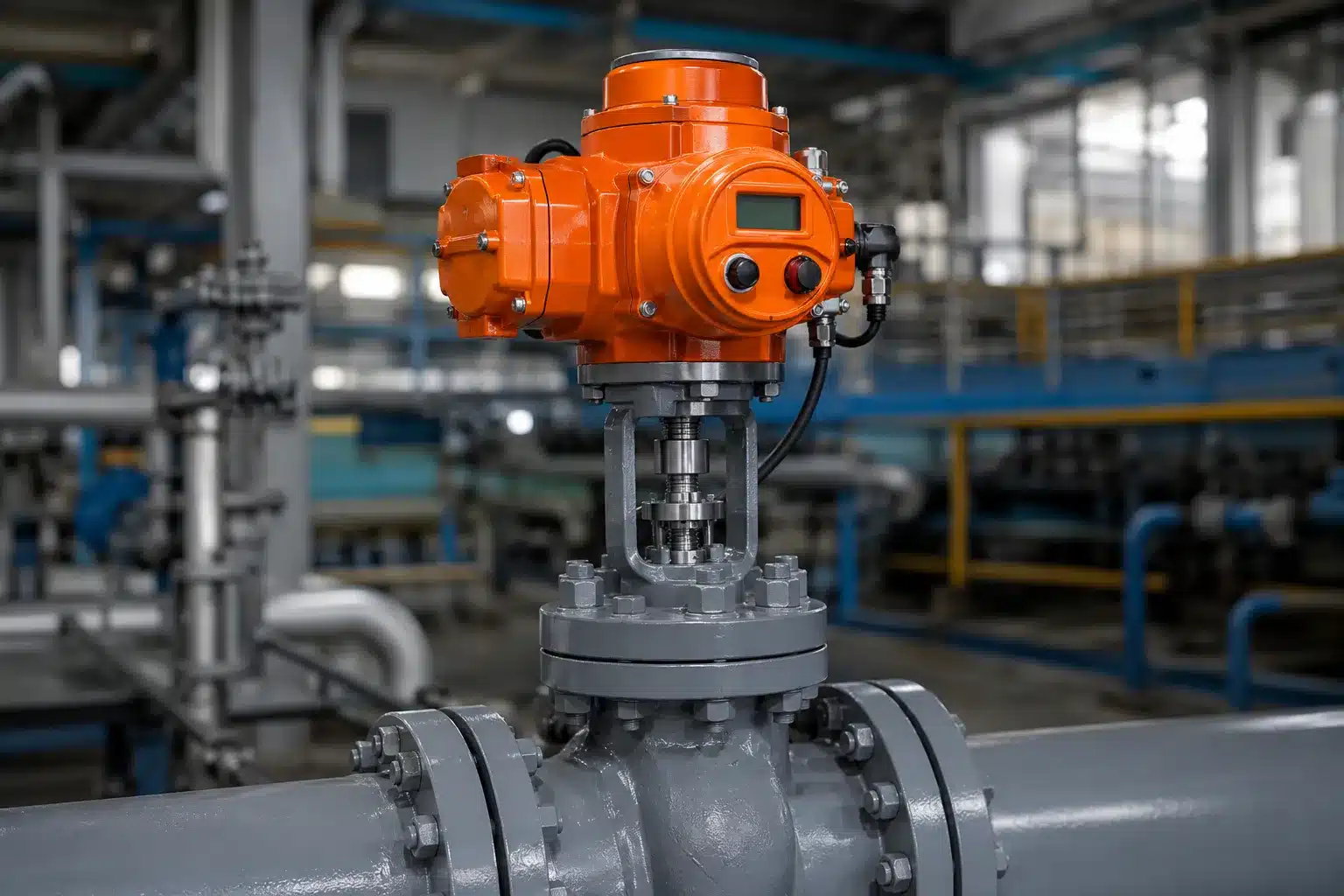
Motor Operated Valve Control Modes
Open-Close Control
Open-close motor operated valves move between fully open and fully closed positions. They are commonly used for isolation, filling, draining, process routing, and equipment shutdown. These valves may remain stationary for long periods and operate only when the process condition changes.
Positioning Control
Positioning actuators move the valve to selected intermediate positions. This control method is useful when a process requires several predetermined flow settings but does not need continuous automatic adjustment.
Modulating Control
Modulating MOVs repeatedly adjust valve position in response to a process-control signal. The actuator may receive a 4–20 mA signal, voltage signal, digital command, or industrial network instruction representing the required opening percentage.
Modulating service creates greater thermal and mechanical demand than occasional open-close operation. The actuator must be rated for the expected number of starts, running time, positioning frequency, and control accuracy. An actuator intended only for isolation duty should not be used for continuous modulation unless its duty rating specifically allows it.
Emergency Operation
Some motor operated valves form part of an emergency shutdown or safety system. A standard MOV normally stops in its current position when electrical power is lost. If the valve must move during a power failure, the system may require a battery, capacitor, uninterruptible power supply, emergency generator, spring mechanism, or another stored-energy solution.
Industrial Applications of Motor Operated Valves
Power Generation
Motor operated valves are widely used in thermal, nuclear, hydroelectric, and renewable power facilities. Typical services include boiler feedwater, cooling water, steam isolation, condensate, fuel handling, emissions control, firewater, and auxiliary systems.
In critical power applications, the complete valve-actuator assembly must operate against the maximum expected pressure, temperature, differential pressure, and mechanical load. Testing should confirm the capability of the complete assembly rather than the actuator alone.
Water and Wastewater Treatment
Water facilities use MOVs on intake pipelines, treatment filters, pump isolation systems, chemical dosing equipment, reservoirs, sludge systems, and distribution networks. Electric operation is particularly useful at remote pumping stations where installing compressed-air infrastructure would be expensive.
Oil, Gas, and Chemical Processing
Refineries, terminals, chemical plants, and pipelines use motor operated valves for tank isolation, product transfer, process utilities, cooling systems, and remote control. Hazardous-area installations require suitable electrical certification, enclosure protection, cable glands, and surface-temperature classification.
HVAC and Building Services
Compact motor operated valves control chilled water, hot water, steam, ventilation dampers, and energy-management systems in commercial and industrial buildings. Controlled actuator speed can improve temperature regulation and reduce pressure surges.
Manufacturing and Industrial Automation
Manufacturing plants use MOVs for cooling water, compressed air, vacuum, cleaning systems, process chemicals, and equipment isolation. Their electrical controls can be integrated directly with machine automation and plant-monitoring systems.
Advantages of Motor Operated Valves
- Remote operation:
Valves can be operated from a control room, remote station, or automated control system. - No compressed-air network:
MOVs can be installed where instrument air is unavailable or uneconomical. - High torque capability:
Electric motors and reduction gearboxes can operate large industrial valves. - Accurate positioning:
Electronic feedback supports controlled intermediate valve positions. - Digital integration:
Intelligent actuators can transmit commands, status, alarms, torque data, and diagnostics. - Controlled operating speed:
Selected designs can reduce water hammer and process pressure surges. - Manual backup:
Many industrial actuators include a handwheel for local emergency operation.
Limitations of Motor Operated Valves
- Power dependence:
Standard MOVs cannot move during a power failure without backup energy. - Duty-cycle limits:
Excessive starts or prolonged motor operation may cause overheating. - Operating speed:
Many motor operated valves move more slowly than pneumatic shutdown valves. - Environmental protection:
Motors and electronics must be protected from moisture, dust, corrosion, vibration, and heat. - Commissioning requirements:
Incorrect limit or torque settings may damage the valve or prevent complete operation. - Mechanical wear:
Gears, bearings, stem nuts, seals, and couplings require inspection and maintenance.
How to Select Motor Operated Valves
- Identify the valve movement.
Determine whether the valve requires multi-turn, part-turn, or linear operation. - Calculate torque or thrust.
Include breakaway, running, seating, unseating, and maximum differential-pressure loads. - Define the operating duty.
Specify open-close frequency, starts per hour, running time, and modulation requirements. - Select the operating speed.
Consider emergency response, water hammer, pressure surge, and process stability. - Confirm the electrical supply.
Specify voltage, phase, frequency, permitted variation, and emergency-power availability. - Choose the control interface.
Define hardwired commands, analog signals, digital communication, and feedback requirements. - Evaluate the environment.
Consider temperature, corrosion, water ingress, dust, vibration, and hazardous gases. - Verify the mounting interface.
Confirm flange dimensions, output-drive type, stem arrangement, and coupling size. - Define failure behavior.
Determine whether the valve should remain in place or move using backup power. - Test the complete assembly.
Validate valve travel and available operating margin under realistic process loads.
Inspection and Maintenance
Reliable MOV performance depends on both mechanical and electrical condition. Routine inspection should include enclosure sealing, cable entries, terminal connections, lubrication, gearbox condition, handwheel operation, valve-stem condition, corrosion, position indication, and control-system alarms.
Limit and torque settings should be verified using approved procedures. A torque setting that is too low may stop the actuator before the valve reaches its required position. A setting that is too high may overload the valve stem, seat, gearbox, or actuator structure.
Functional testing should confirm full valve travel, operating time, motor current, position feedback, local and remote controls, interlocks, alarms, and emergency-power operation where applicable. Critical MOVs may also require periodic load or diagnostic testing.
Frequently Asked Questions
What is the purpose of motor operated valves?
Motor operated valves provide automatic or remote control of industrial flow. They are used for isolation, routing, shutdown, positioning, and process regulation.
What valves can use an electric motor actuator?
Electric actuators can automate gate, globe, ball, butterfly, plug, and other industrial valves when the movement type, torque, thrust, and mounting interface are compatible.
Do motor operated valves fail closed during a power failure?
Not automatically. A standard MOV normally remains in its last position. Moving to a defined fail position requires backup power, stored energy, or a special fail-safe actuator design.
What is the difference between torque and limit seating?
Limit seating stops the actuator when a configured position is reached. Torque seating stops it when a configured mechanical torque is reached. The correct method depends on the valve design and manufacturer instructions.
Can motor operated valves regulate flow?
Yes. A modulating electric actuator can position a suitable control valve at intermediate openings. The actuator must have the correct duty rating, positioning accuracy, speed, and feedback system.
Conclusion
Motor operated valves provide reliable electrical automation for industrial isolation and flow-control systems. They combine an electric motor, gearbox, control equipment, position feedback, protective switches, and an industrial valve to support local or remote operation.
Multi-turn MOVs are commonly used with gate and globe valves, part-turn MOVs automate ball and butterfly valves, and linear electric actuators provide controlled thrust for regulating applications. Each configuration has different torque, thrust, speed, duty-cycle, and control requirements.
Successful selection requires more than matching an actuator to the valve size. Engineers must evaluate the actual process load, operating frequency, required safety position, electrical supply, environmental conditions, control architecture, and long-term maintenance strategy. Correct sizing, commissioning, and periodic testing are essential for safe and dependable motor operated valve performance.