


What Are Sanitary Valves? A Professional Guide to Hygienic Flow Control
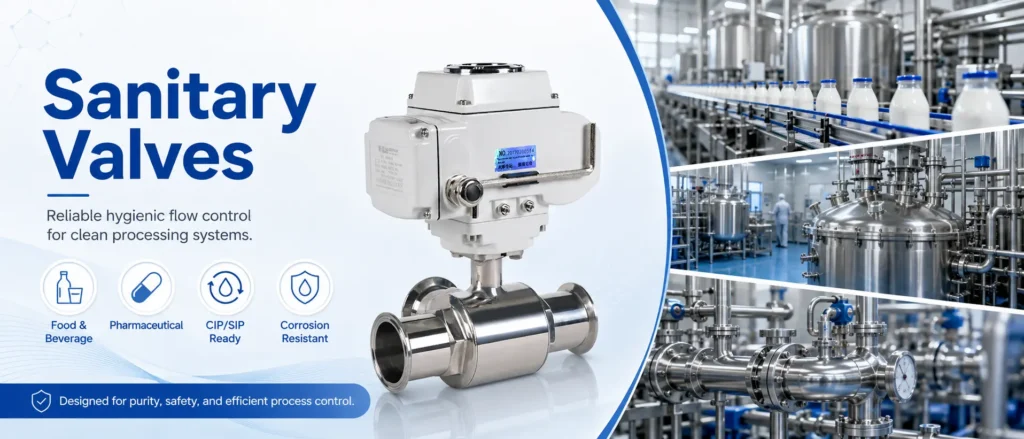
Sanitary valves are hygienic flow control devices designed for processing systems where cleanliness, product purity, and contamination prevention are essential. They are commonly used in food and beverage production, dairy processing, pharmaceutical manufacturing, biotechnology, cosmetics, personal care, and other industries that require strict hygiene standards. Unlike ordinary industrial valves, sanitary valves are engineered to minimize product retention, support effective cleaning, resist corrosion, and maintain safe contact with sensitive fluids or semi-fluid materials.
In a hygienic production line, every component that touches the product can influence safety and quality. Pipes, pumps, fittings, tanks, gaskets, and valves must all be designed to prevent contamination. Among these components, sanitary valves play a particularly important role because they open, close, regulate, divert, sample, or isolate product flow. If a valve has rough surfaces, dead spaces, poor sealing, or incompatible materials, residues can accumulate inside the system and create risks of microbial growth, cross-contamination, product loss, or batch failure.
For this reason, sanitary valves are not selected only by size or pressure rating. A professional selection process must consider hygienic design, material compatibility, surface finish, cleaning method, valve function, automation requirements, and compliance expectations. In industries where consumer safety and regulatory control are critical, using the correct sanitary valves is a basic requirement for reliable and responsible manufacturing.
1. Definition of Sanitary Valves
Sanitary valves are valves specifically designed for clean processing environments. Their primary function is to control the movement of liquids, gases, steam, slurries, or viscous products while maintaining hygienic integrity. The word “sanitary” refers not simply to cleanliness but to a design philosophy that reduces contamination risks and allows the equipment to be cleaned effectively.
A sanitary valve typically has smooth internal surfaces, food-grade or pharmaceutical-grade sealing materials, corrosion-resistant stainless steel construction, and a geometry that avoids crevices where product could remain after processing. Many sanitary valves are also compatible with clean-in-place systems, known as CIP, and sterilize-in-place systems, known as SIP. These cleaning methods allow production systems to be cleaned or sterilized without complete disassembly.
In practical terms, sanitary valves are used wherever the product must remain pure, safe, and consistent. This includes milk, yogurt, beer, juice, purified water, injectable solutions, creams, lotions, sauces, syrups, vaccines, culture media, and many other sensitive products.
2. Key Differences Between Sanitary Valves and Industrial Valves
Although sanitary valves and standard industrial valves may appear similar from the outside, their design priorities are different. Industrial valves are often selected mainly for pressure, temperature, mechanical strength, and fluid control performance. Sanitary valves must also meet those requirements, but they place additional emphasis on cleanability, surface quality, material safety, and contamination prevention.
| Comparison Item | Sanitary Valves | Standard Industrial Valves |
|---|---|---|
| Main Purpose | Control flow while protecting hygiene and product purity | Control flow in general industrial systems |
| Typical Materials | 304 or 316L stainless steel with hygienic seals | Carbon steel, cast iron, stainless steel, brass, or alloys |
| Internal Surface | Smooth, polished, and designed to reduce residue buildup | May have rougher surfaces depending on application |
| Cleanability | Designed for CIP, SIP, or easy manual cleaning | Cleaning may not be a primary design requirement |
| Dead Space Control | Minimized to reduce microbial and residue risks | May contain cavities, pockets, or crevices |
| Common Applications | Food, beverage, dairy, pharmaceutical, biotech, cosmetics | Oil and gas, chemical, water treatment, power plants, machinery |
3. Common Types of Sanitary Valves
Different sanitary valves are designed for different process functions. Selecting the right valve type helps ensure stable production, effective cleaning, and safe product handling. The most common types include sanitary butterfly valves, sanitary ball valves, sanitary check valves, sanitary diaphragm valves, sanitary seat valves, mix-proof valves, and sampling valves.
| Valve Type | Main Function | Typical Applications | Key Advantages |
|---|---|---|---|
| Sanitary Butterfly Valve | Open, close, or regulate flow using a rotating disc | Dairy, beverage, water, low-viscosity food products | Compact, economical, easy to operate |
| Sanitary Ball Valve | Provide full-bore flow and tight shutoff | Product transfer, clean fluids, viscous materials | Low pressure drop, reliable sealing, strong flow capacity |
| Sanitary Check Valve | Prevent reverse flow | Pump discharge lines, process protection, hygienic pipelines | Protects equipment and prevents backflow contamination |
| Sanitary Diaphragm Valve | Use a flexible diaphragm to isolate media from the actuator area | Pharmaceuticals, biotechnology, sterile processing | Excellent cleanability, low dead space, suitable for high-purity systems |
| Sanitary Seat Valve | Control product flow through a seat and plug mechanism | Automated food, dairy, beverage, and CIP systems | Good automation compatibility and reliable shutoff |
| Mix-Proof Valve | Allow two different fluids to pass through one valve body without mixing | Complex dairy, beverage, and CIP routing systems | Reduces piping complexity and prevents cross-contamination |
| Sanitary Sampling Valve | Collect representative product samples safely | Quality control, fermentation, tanks, process lines | Supports testing without exposing the system to contamination |
4. Materials Used in Sanitary Valves
Material selection is one of the most important factors in sanitary valve performance. The valve body is usually made from stainless steel because stainless steel provides good corrosion resistance, mechanical strength, cleanability, and durability. The two most common grades are 304 stainless steel and 316L stainless steel.
304 stainless steel is widely used in general food and beverage applications. It performs well in many clean processing environments and offers good resistance to corrosion under normal operating conditions. 316L stainless steel contains molybdenum, which improves resistance to chlorides, acids, cleaning chemicals, and more demanding process fluids. For pharmaceutical, biotechnology, high-purity water, and aggressive cleaning environments, 316L stainless steel is often preferred.
Sealing materials are equally important because gaskets and seals are in direct contact with the product. Common seal materials include EPDM, PTFE, silicone, and FKM. The correct choice depends on temperature, chemical exposure, product type, cleaning agents, and regulatory requirements.
| Material | Typical Use | Advantages | Selection Notes |
|---|---|---|---|
| 304 Stainless Steel | General food, beverage, and water systems | Cost-effective, corrosion-resistant, easy to fabricate | Suitable for many standard hygienic applications |
| 316L Stainless Steel | Pharmaceutical, biotech, high-purity, chemical cleaning systems | Better corrosion resistance and improved chemical compatibility | Preferred for demanding sanitary valve applications |
| EPDM | Food, beverage, dairy, hot water, steam exposure | Good heat resistance and hygienic performance | Not ideal for oils and some solvents |
| PTFE | Chemical, pharmaceutical, and high-purity processes | Excellent chemical resistance and low friction | Less elastic than rubber-based seals |
| Silicone | Pharmaceutical, food, and flexible sealing applications | Flexible, clean, and suitable for many temperature ranges | Mechanical strength may be lower than some alternatives |
| FKM | Oil, chemical, and high-temperature applications | Strong chemical and temperature resistance | Compatibility should be checked for steam and certain cleaning agents |
5. Hygienic Design Requirements
A high-quality sanitary valve must be designed according to hygienic engineering principles. The goal is to reduce contamination risks while making the valve easy to clean, inspect, and maintain. One important requirement is a smooth product-contact surface. Rough internal surfaces can trap proteins, sugars, fats, powders, or microbial contaminants. Over time, these residues may affect product quality or create cleaning challenges.
Another important requirement is the reduction of dead legs and internal cavities. Dead spaces are areas where product flow is weak or stagnant. In these areas, residues may remain even after cleaning. Sanitary valves should therefore have streamlined internal geometry and well-designed seals that do not create hidden pockets.
Drainability is also important. In many hygienic systems, liquid should drain naturally from the valve and pipeline after cleaning or production. Poor drainability may leave standing liquid inside the valve, increasing contamination risk.
The valve must also support reliable sealing. A leaking valve can cause product loss, environmental contamination, or cross-contact between different fluids. In systems that handle allergens, active pharmaceutical ingredients, cultures, or cleaning chemicals, sealing performance is directly related to safety.
6. Surface Finish and Cleanability
Surface finish is a critical quality factor for sanitary valves. The smoother the internal surface, the easier it is to clean and the less likely it is to retain product residue. Many sanitary valves are mechanically polished, and some high-purity valves are electropolished to improve surface smoothness and corrosion resistance.
Cleanability should be evaluated based on the actual process. A valve used for water may be easier to clean than a valve used for yogurt, cream, syrup, chocolate, ointment, or fermentation broth. Viscous or sticky products require careful valve selection because residues can remain in seals, corners, or cavities. For this reason, the best sanitary valves are not only polished but also designed with flow paths that support complete cleaning.
| Cleanability Factor | Why It Matters | Professional Evaluation Point |
|---|---|---|
| Internal Surface Roughness | Rough surfaces may retain residue and microorganisms | Check surface finish requirements for the specific industry |
| Dead Space Control | Stagnant areas can reduce cleaning effectiveness | Review valve geometry and seal design |
| CIP Compatibility | Allows cleaning without disassembly | Confirm flow velocity, chemical contact, and cleaning coverage |
| SIP Compatibility | Supports sterilization using steam or heat | Verify temperature resistance of body and seals |
| Drainability | Prevents standing liquid after production or cleaning | Consider installation angle and valve orientation |
7. Applications of Sanitary Valves
Sanitary valves are used across many industries, but their importance is especially clear in food, beverage, dairy, pharmaceutical, and biotechnology production. In dairy plants, sanitary valves control milk, cream, yogurt, whey, cheese ingredients, cleaning fluids, and pasteurized products. Dairy products are highly sensitive to microbial contamination, so hygienic valve design is essential.
In beverage production, sanitary valves are used for water, juice, tea, carbonated drinks, beer, wine, and functional beverages. They help manage product transfer, filtration, blending, fermentation, carbonation, CIP return, and filling operations. For breweries and wineries, sampling valves are also important because quality control often depends on frequent testing during fermentation and storage.
In pharmaceutical manufacturing, sanitary valves are used in purified water systems, clean steam systems, formulation lines, sterile transfer systems, and filling equipment. These applications often require strict documentation, traceability, surface finish control, and material certification. Diaphragm valves are especially common because they offer excellent hygienic separation between the product and the mechanical operating parts.
Biotechnology facilities use sanitary valves in fermentation, cell culture, buffer preparation, chromatography, filtration, and purification processes. In these environments, contamination can destroy an entire batch, making sanitary valve reliability extremely important. Cosmetics and personal care manufacturers also use sanitary valves for creams, lotions, gels, shampoos, toothpaste, emulsions, and other products that require clean and consistent processing.
8. How to Select the Right Sanitary Valves
Selecting sanitary valves requires a structured review of the process conditions. The first consideration is the product itself. Low-viscosity liquids such as water, milk, and juice may flow easily through butterfly valves or seat valves. Viscous products such as cream, honey, sauce, lotion, or gel may require valves with larger flow paths, minimal restrictions, and easy-clean designs. Sterile pharmaceutical fluids may require diaphragm valves or high-purity valve assemblies.
The second consideration is operating temperature and pressure. The valve body, seals, actuator, and connections must all withstand the actual working conditions. Cleaning conditions should also be reviewed because CIP and SIP cycles may expose valves to higher temperatures, stronger chemicals, or repeated thermal stress.
The third consideration is chemical compatibility. Product ingredients, cleaning solutions, acids, alkalis, disinfectants, and steam can all affect valve materials. A seal material that works well in one process may fail in another. Professional valve selection should always include compatibility checks for both production media and cleaning media.
The fourth consideration is automation. Manual sanitary valves are suitable for simple systems, small production lines, or occasional operation. Automated sanitary valves are better for large processing plants, repeatable batch production, CIP routing, and systems requiring remote control. Pneumatic actuators are widely used in hygienic processing because they are reliable, fast, and easy to integrate with control systems.
| Selection Factor | Questions to Ask | Recommended Focus |
|---|---|---|
| Product Type | Is the media liquid, viscous, sterile, abrasive, or sensitive? | Choose a valve type that protects product quality and flow stability |
| Temperature | What are the production, cleaning, and sterilization temperatures? | Confirm body and seal material resistance |
| Pressure | What is the maximum operating and cleaning pressure? | Select proper pressure rating and actuator strength |
| Cleaning Method | Will the system use CIP, SIP, or manual cleaning? | Prioritize cleanability and drainability |
| Connection Type | Does the pipeline use clamp, weld, thread, or flange connections? | Match existing sanitary piping standards |
| Automation | Does the valve need remote or automatic control? | Consider pneumatic or electric actuators with feedback units |
| Compliance | Are certificates, traceability, or validation documents required? | Work with suppliers that provide reliable documentation |
9. Installation and Maintenance Best Practices
Even the best sanitary valves can fail to perform correctly if they are installed or maintained improperly. Installation should ensure proper alignment, correct gasket placement, suitable tightening force, and appropriate valve orientation. For valves that require drainage, installation angle can be very important. A valve that is not self-draining may retain liquid after cleaning.
Maintenance should focus on seals, internal surfaces, actuators, clamps, and connection points. Seals should be inspected for swelling, cracking, deformation, chemical attack, or wear. Stainless steel surfaces should be checked for scratches, corrosion, product buildup, or mechanical damage. Automated valves should be tested for response time, position feedback, air leakage, and complete opening or closing.
Preventive maintenance is especially important in continuous production facilities. A leaking sanitary valve may cause contamination, product waste, cleaning failure, or unplanned downtime. In regulated industries, maintenance records are also important because they help demonstrate process control and equipment reliability.
10. Common Problems and Practical Solutions
| Problem | Possible Cause | Practical Solution |
|---|---|---|
| Valve leakage | Worn seal, incorrect installation, damaged seat | Replace seal, inspect seat surface, verify installation torque |
| Poor cleanability | Dead spaces, wrong valve type, insufficient CIP flow | Review valve design, cleaning cycle, and installation orientation |
| Seal swelling | Chemical incompatibility | Select a seal material compatible with product and cleaning agents |
| Slow actuator response | Low air pressure, actuator wear, control signal issue | Check air supply, actuator condition, and control system |
| Product retention | Improper valve orientation or unsuitable internal geometry | Improve drainage, adjust installation, or select a more hygienic valve type |
11. Why Supplier Quality Matters
The performance of sanitary valves depends not only on the valve design but also on manufacturing quality. A reliable sanitary valve supplier should provide consistent material quality, accurate machining, smooth polishing, stable sealing performance, and clear technical documentation. For demanding industries, material certificates, surface finish reports, seal certificates, pressure test records, and traceability documents may be required.
Professional buyers should not evaluate sanitary valves only by price. A low-cost valve with poor polishing, weak seals, inaccurate dimensions, or limited documentation may increase long-term risk. In hygienic processing, the cost of contamination, downtime, rejected batches, or product recalls is far higher than the cost difference between a reliable valve and a poor-quality valve.
Conclusion
Sanitary valves are essential components in hygienic processing systems. They control product flow while helping protect cleanliness, safety, and product integrity. Their value is not limited to opening and closing pipelines; they support contamination prevention, cleaning efficiency, process automation, quality control, and regulatory confidence.
A proper sanitary valve should be made from suitable stainless steel, designed with smooth and cleanable internal surfaces, equipped with compatible sealing materials, and selected according to actual process conditions. Different sanitary valves serve different functions, including shutoff, regulation, diversion, backflow prevention, sampling, and sterile control. The right choice depends on product type, hygiene level, temperature, pressure, cleaning method, automation requirements, and documentation needs.
For food, beverage, dairy, pharmaceutical, biotechnology, and cosmetic manufacturers, sanitary valves are directly connected to production quality and consumer safety. Choosing high-quality sanitary valves, installing them correctly, and maintaining them regularly can reduce contamination risks, improve operational efficiency, and support long-term process reliability.