


F-ZJHN Pneumatic Double-seat Control Valve
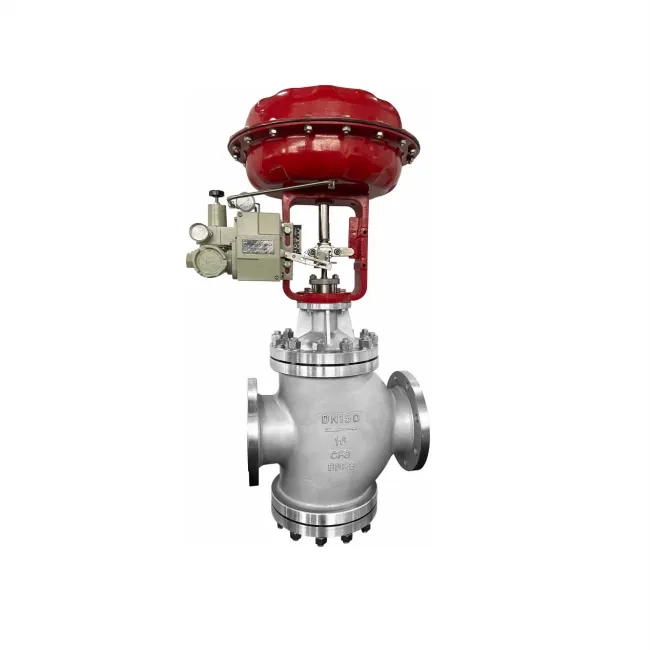
F-ZJHN Pneumatic Double-seat Control Valve
The Double-Seat Control Valve features a balanced dual-plug design that reduces actuator force and pressure imbalance, ensuring precise flow control under high differential pressure, improving stability and service life in steam, chemical, and gas systems, verified by IEC 60534 and API 598 leakage tests ≤ 0.01 % Cv.
| Boyut Aralığı | DN25 – DN400 (1″ – 16″) |
| Çalışma Basıncı Aralığı: | PN16 – PN100 / Class 150 – 600 (1.6 – 10 MPa) |
| Çalışma Sıcaklık Aralığı: | −40 °C to +450 °C |
| Gövde Malzemesi: | WCB, CF8, CF8M, CF3M, Alloy Steel |
| Bağlantı Türü: | Flanged (ASME B16.5 / GB/T 9113), Welded |
| Uygulanabilir Ortam: | Steam, Gas, Oil, Water, Corrosive Liquids |
| Aktüatör Türü: | Pneumatic Diaphragm, Electric |
| Gerilim Seçenekleri | AC 220 V, AC 110 V, DC 24 V |
| Tasarım Standardı | IEC 60534, GB/T 4213, ANSI B16.34 |
| Test Standardı | ISO 5208, API 598, GB/T 13927 |
| Yangına Dayanıklı Tasarım | API 607, ISO 10497 (Optional) |
| Sertifikasyon | CE / RoHS / ISO 9001 / IP65 (Aktüatör) |
| Özelleştirme | Yukarıda standart parametre örnekleri yer almaktadır. Özel parametreleriniz ve malzemeleriniz varsa, bunların hepsini size göre uyarlayabiliriz. |
| Series | AT | AW | Linear | Pneumatic Cylinder | Hijyenik |
|---|---|---|---|---|---|
| Valf Gövdesi | Ball valve, butterfly valve, plug valve | Gate valve, Global valve | Knife gate valve | Sanitary butterfly valve | |
| Function | Double Acting, Single Acting (Failure Resetting FO or FC) | ||||
| Kontrol Aksesuarları |
• Solenoid Valve, Filter Regulator Lubricator (F.R.L.), Positioner, Limit Switch, Handwheel • Solenoid Valve & Positioner are with Explosion-proof grade and Signal Feedback type for choice | ||||
| Operating Medium |
Clean and dry or lubricated air or inert gas. Any non-corrosive gas that is compatible with the internal parts of the actuator and the lubricant. The dew point temperature of the operating medium is -20°C, and the size of impurity particles is no more than 30u. When selecting a positioner, the impurity particle size should be no more than 5u. | ||||
| Air Source Pressure | 3bar to 8bar | ||||
| Operating Environment Temperature |
• Standard type: -20°C to +80°C • Low-temperature type: -40°C to +80°C • High-temperature type: -20°C to +160°C | ||||
| Lubrication |
Under normal operating conditions, the standard type does not require additional lubricant. For low-temperature or high-temperature environments, special lubricants are required. | ||||
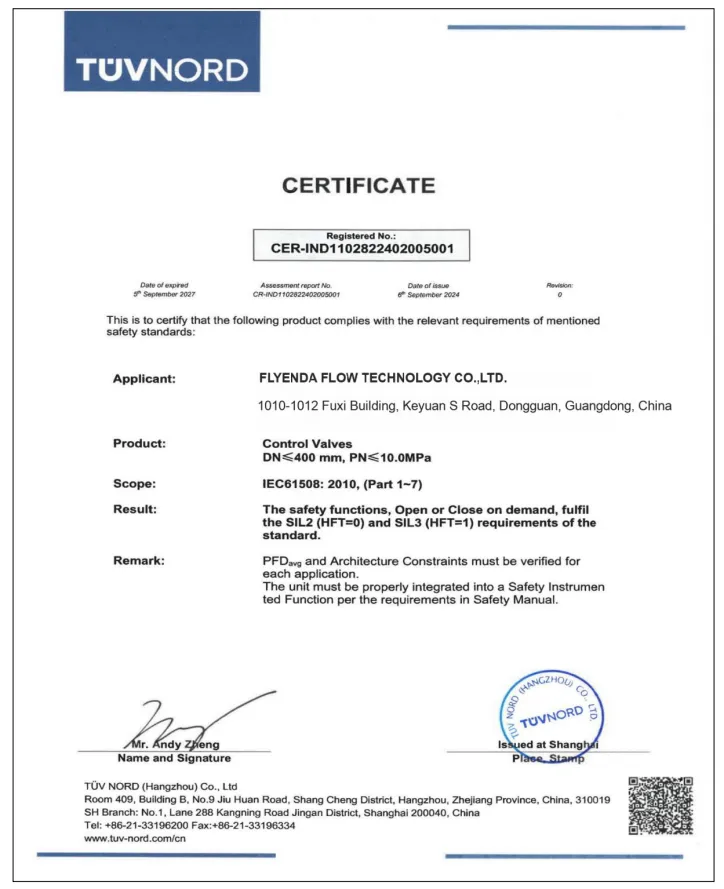
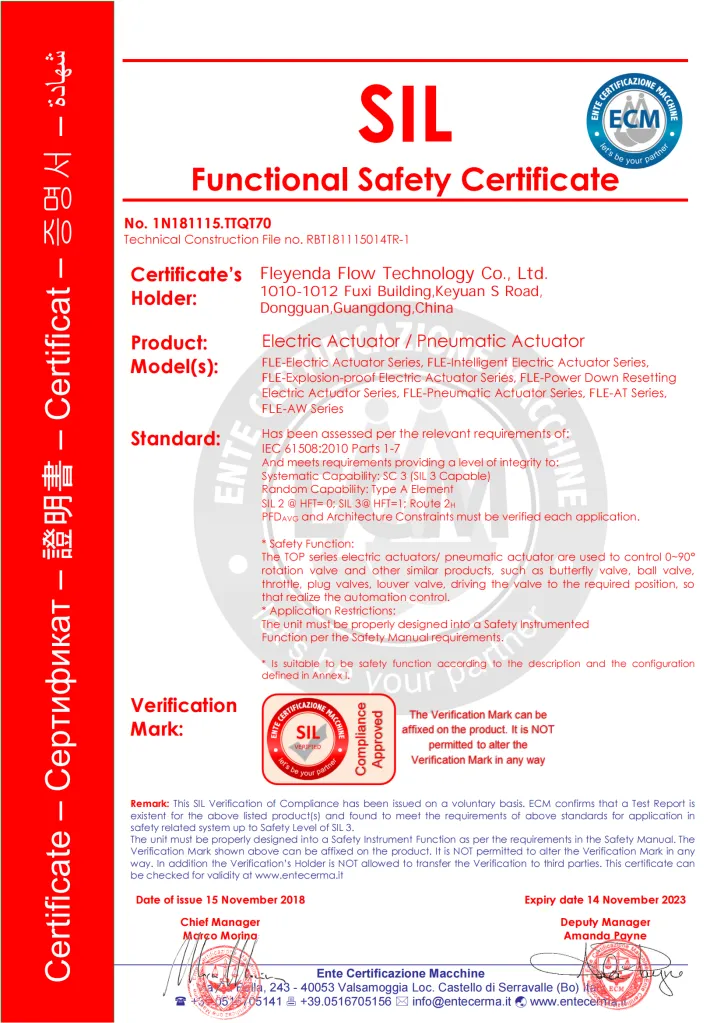
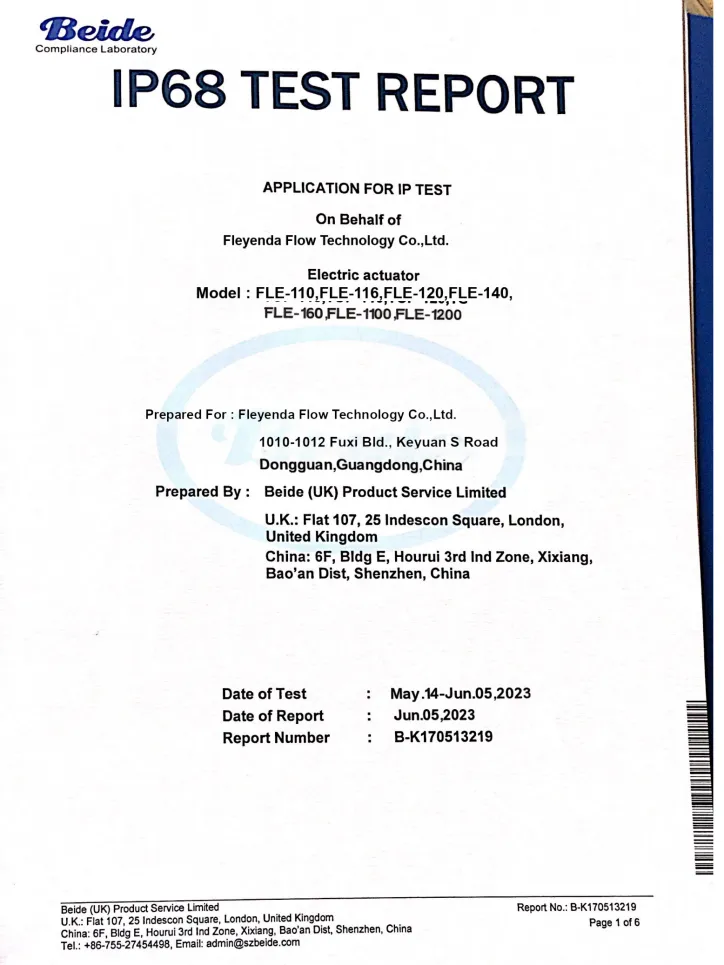
Endüstriyel Vana Uygulamaları için Sertifikalı Kalite
Fleyenda vanaları ve elektrikli aktüatörleri, istikrarlı performans, güvenilir çalışma ve uzun vadeli endüstriyel kullanım için üretilmiştir. Sertifikalı kalite desteği sayesinde, su arıtma, kimyasal işleme, otomasyon ve endüstriyel proses kontrol sistemleri için uygundur.
80% Kullanıcılarının İlgisini Çeken Sık Sorulan Sorular
1. How does a Double-Seat Control Valve improve stability in high-pressure flow systems?
• The Double-Seat Control Valve uses a balanced dual-plug design for stable flow control under large pressure differentials.
• It minimizes vibration and hunting in automated process systems.
• High Cv capacity ensures precise adjustment in steam, gas, and chemical pipelines.
• Proper actuator tuning maintains reliable flow regulation without oscillation.
2. Why is a Double-Seat Regulating Valve not ideal for tight shut-off applications?
• The balanced design of this industrial control valve reduces actuator force but limits sealing tightness.
• Dual plugs may not fully close both seats, allowing slight internal leakage.
• For zero-leakage applications, a single-seat globe valve is preferred.
• The double-plug configuration is designed for modulation, not isolation.
3. How can I prevent cavitation or noise in a Double-Seat Flow Control Valve?
• Use anti-cavitation or low-noise trims to control energy within the flow-control valve.
• Keep pressure drop within safe limits to reduce erosion in liquid or steam service.
• Add diffusers or restrictors to manage turbulence in process pipelines.
• Choose durable valve materials to resist cavitation wear.
4. What should I verify when integrating a Pneumatic Double-Seat Valve into an automated system?
• Match actuator size and signal range to the valve design for smooth modulation.
• Calibrate positioners for accurate flow response in DCS or PLC control.
• Confirm signal compatibility with 4–20 mA, HART, or digital systems.
• Ensure the valve-actuator assembly supports required flow range and response speed.