


Vanne de régulation pneumatique à double siège F-ZJHN
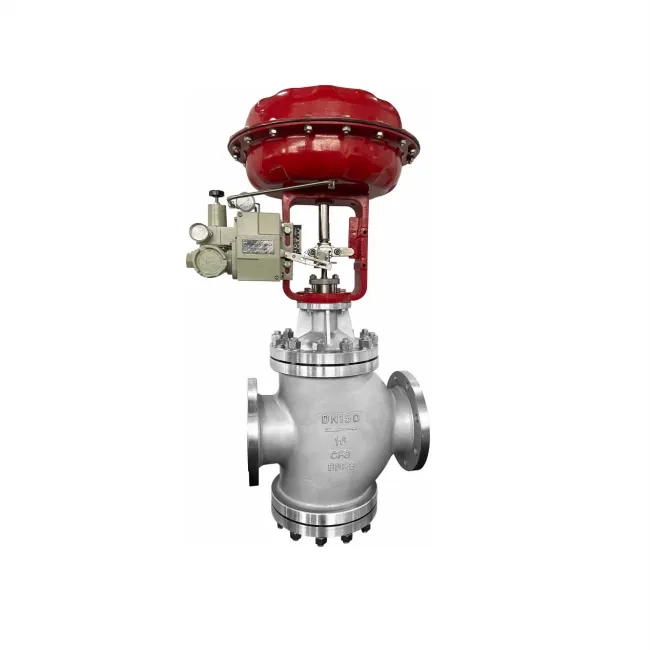
Vanne de régulation pneumatique à double siège F-ZJHN
The Double-Seat Control Valve features a balanced dual-plug design that reduces actuator force and pressure imbalance, ensuring precise flow control under high differential pressure, improving stability and service life in steam, chemical, and gas systems, verified by IEC 60534 and API 598 leakage tests ≤ 0.01 % Cv.
| Gamme de tailles | DN25 – DN400 (1″ – 16″) |
| Plage de pression de service : | PN16 – PN100 / Class 150 – 600 (1.6 – 10 MPa) |
| Plage de températures de fonctionnement : | −40 °C to +450 °C |
| Matériau du corps : | WCB, CF8, CF8M, CF3M, Alloy Steel |
| Type de connexion : | Flanged (ASME B16.5 / GB/T 9113), Welded |
| Support compatible : | Steam, Gas, Oil, Water, Corrosive Liquids |
| Type d'actionneur : | Pneumatic Diaphragm, Electric |
| Options de tension | AC 220 V, AC 110 V, DC 24 V |
| Norme de conception | IEC 60534, GB/T 4213, ANSI B16.34 |
| Norme d'essai | ISO 5208, API 598, GB/T 13927 |
| Conception résistante au feu | API 607, ISO 10497 (Optional) |
| Certification | CE / RoHS / ISO 9001 / IP65 (actionneur) |
| Personnalisation | Vous trouverez ci-dessus des exemples de paramètres standard. Si vous avez des paramètres et des matériaux spécifiques, nous pouvons les adapter à vos besoins. |
| Série | AT | AW | Linéaire | Vérin pneumatique | Sanitaire |
|---|---|---|---|---|---|
| Corps de vanne | Robinet à boisseau sphérique, vanne papillon, robinet à boisseau | Vanne à guillotine, Vanne Global | Vanne à guillotine | Vanne papillon sanitaire | |
| Fonction | Double effet, simple effet (réarmement en cas de défaillance : FO ou FC) | ||||
| Accessoires de commande |
• Électrovanne, filtre-régulateur-lubrificateur (F.R.L.), positionneur, interrupteur de fin de course, volant de commande • L'électrovanne et le positionneur sont disponibles en version antidéflagrante et avec retour de signal, au choix | ||||
| Milieu de fonctionnement |
Air propre et sec, lubrifié ou gaz inerte. Tout gaz non corrosif compatible avec les composants internes de l'actionneur et le lubrifiant. La température du point de rosée du fluide de service est de -20 °C, et la taille des particules d'impuretés ne dépasse pas 30 µ. Lors du choix d'un positionneur, la taille des particules d'impuretés ne doit pas dépasser 5 µ. | ||||
| Pression de l'air d'alimentation | de 3 bars à 8 bars | ||||
| Température ambiante de fonctionnement |
• Modèle standard : de -20 °C à +80 °C • Modèle pour basses températures : de -40 °C à +80 °C • Modèle haute température : de -20 °C à +160 °C | ||||
| Lubrification |
Dans des conditions normales d'utilisation, le modèle standard ne nécessite pas de lubrification supplémentaire. Dans les environnements à basse ou à haute température, il est nécessaire d'utiliser des lubrifiants spéciaux. | ||||
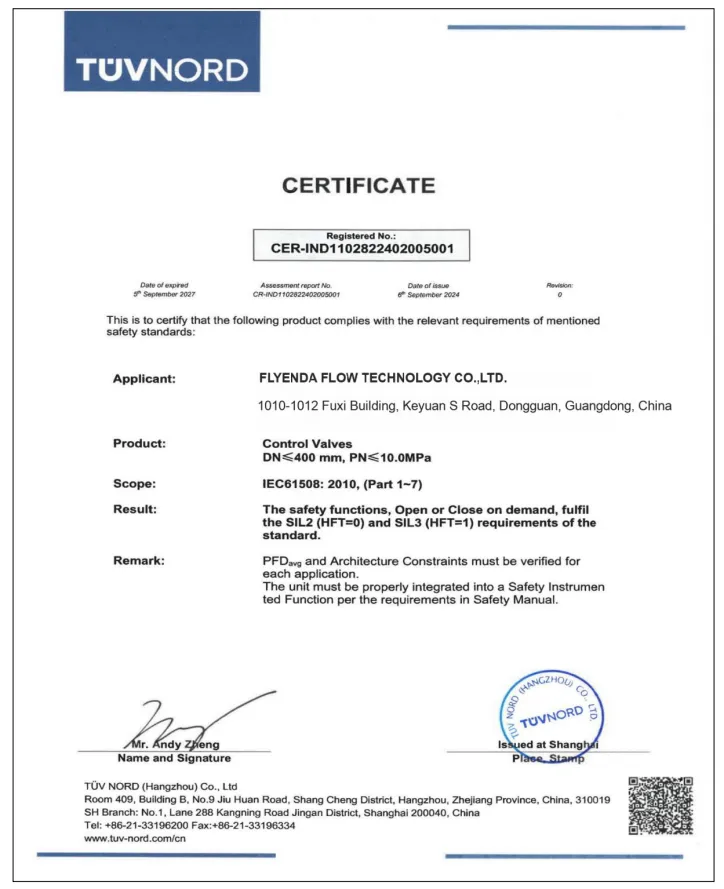
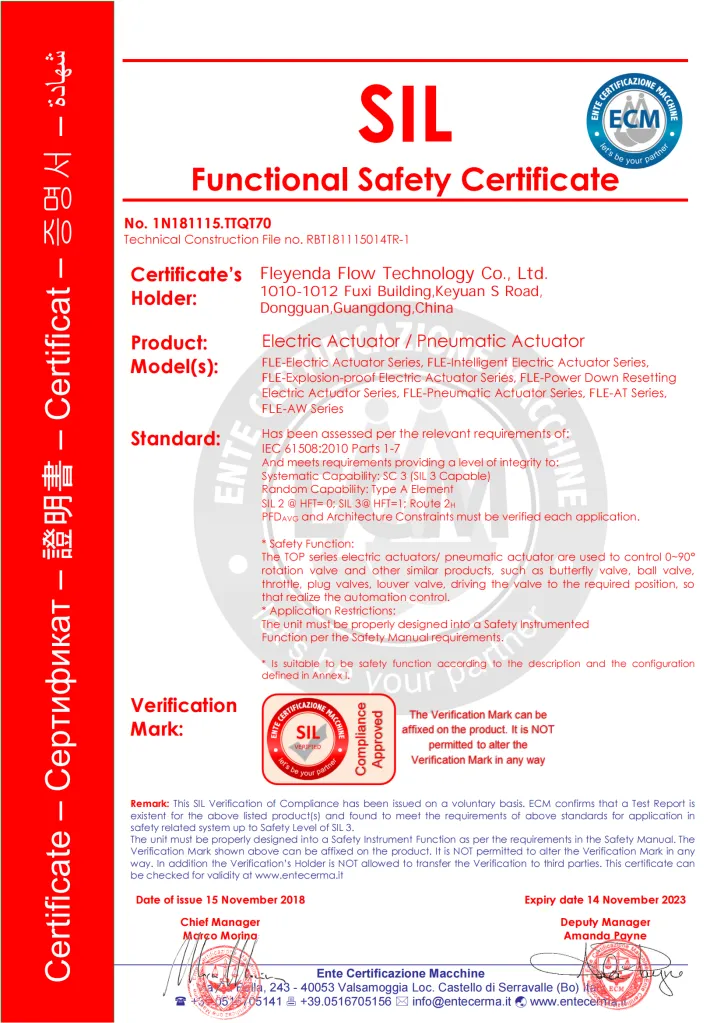
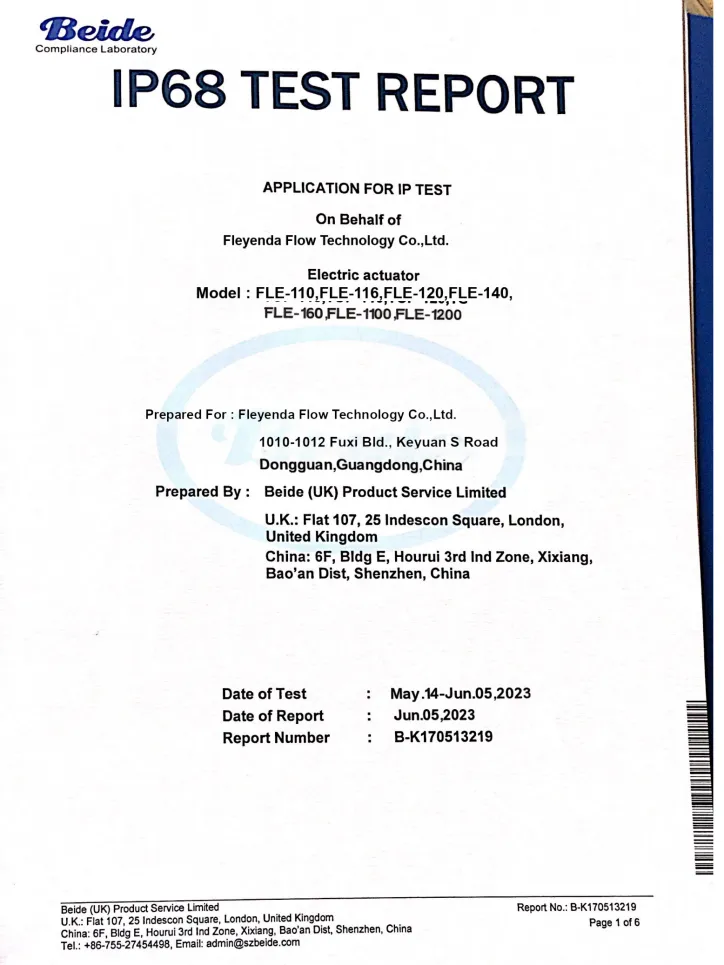
Une qualité certifiée pour les applications de vannes industrielles
Les vannes et actionneurs électriques Fleyenda sont conçus pour offrir des performances stables, un fonctionnement fiable et une utilisation industrielle à long terme. Bénéficiant d’un soutien qualité certifié, ils conviennent aux applications de traitement de l’eau, de traitement chimique, d’automatisation et aux systèmes de contrôle des processus industriels.
Questions fréquentes susceptibles d'intéresser les utilisateurs du modèle 80%
1. How does a Double-Seat Control Valve improve stability in high-pressure flow systems?
• The Double-Seat Control Valve uses a balanced dual-plug design for stable flow control under large pressure differentials.
• It minimizes vibration and hunting in automated process systems.
• High Cv capacity ensures precise adjustment in steam, gas, and chemical pipelines.
• Proper actuator tuning maintains reliable flow regulation without oscillation.
2. Why is a Double-Seat Regulating Valve not ideal for tight shut-off applications?
• The balanced design of this industrial control valve reduces actuator force but limits sealing tightness.
• Dual plugs may not fully close both seats, allowing slight internal leakage.
• For zero-leakage applications, a single-seat globe valve is preferred.
• The double-plug configuration is designed for modulation, not isolation.
3. How can I prevent cavitation or noise in a Double-Seat Flow Control Valve?
• Use anti-cavitation or low-noise trims to control energy within the flow-control valve.
• Keep pressure drop within safe limits to reduce erosion in liquid or steam service.
• Add diffusers or restrictors to manage turbulence in process pipelines.
• Choose durable valve materials to resist cavitation wear.
4. What should I verify when integrating a Pneumatic Double-Seat Valve into an automated system?
• Match actuator size and signal range to the valve design for smooth modulation.
• Calibrate positioners for accurate flow response in DCS or PLC control.
• Confirm signal compatibility with 4–20 mA, HART, or digital systems.
• Ensure the valve-actuator assembly supports required flow range and response speed.