


Guide sur les vannes à bille motorisées
A motorized ball valve is an automated valve solution that combines a ball valve with an electric actuator to control fluid flow remotely and efficiently. It is widely used in industrial automation, water treatment, HVAC systems, chemical processing, and process control applications.
This motorized ball valve guide explains the working principle, main types, components, advantages, applications, and selection methods to help engineers choose the right electric actuated ball valve for different industrial systems.
Quick Answer:
A motorized ball valve uses an electric actuator to rotate the valve ball and control fluid flow. Compared with manual ball valves, it provides automatic operation, remote control, accurate positioning, and easy integration with industrial control systems.
Motorized Ball Valve Guide Contents
What Is a Motorized Ball Valve?
A motorized ball valve is a type of automated valve that uses an electric actuator to operate a ball valve. The actuator rotates the valve ball inside the body, allowing or stopping fluid flow through the pipeline.
Unlike manual ball valves that require physical operation, motorized ball valves can be controlled remotely through switches, PLC systems, industrial automation networks, or other control equipment.
Motorized ball valves are commonly selected when reliable automatic shutoff, precise control, and easy system integration are required.
| Feature | Motorized Ball Valve Characteristics |
|---|---|
| Operation | Electric actuator driven quarter-turn operation |
| Control Method | Remote ON/OFF or modulating control |
| Main Applications | Industrial automation, water systems, HVAC, chemical processing |
| Main Advantages | Fast operation, reliable sealing, easy automation |
Comment fonctionne une vanne à bille motorisée ?
A motorized ball valve works by converting electrical energy into mechanical rotation through an electric actuator. The actuator output shaft connects to the valve stem and rotates the internal ball.
When the ball opening aligns with the pipeline, fluid can pass through the valve. When the ball rotates 90 degrees, the passage closes and stops flow.
For automated systems, the actuator can receive control signals from PLCs, sensors, or industrial control systems to achieve automatic process management.
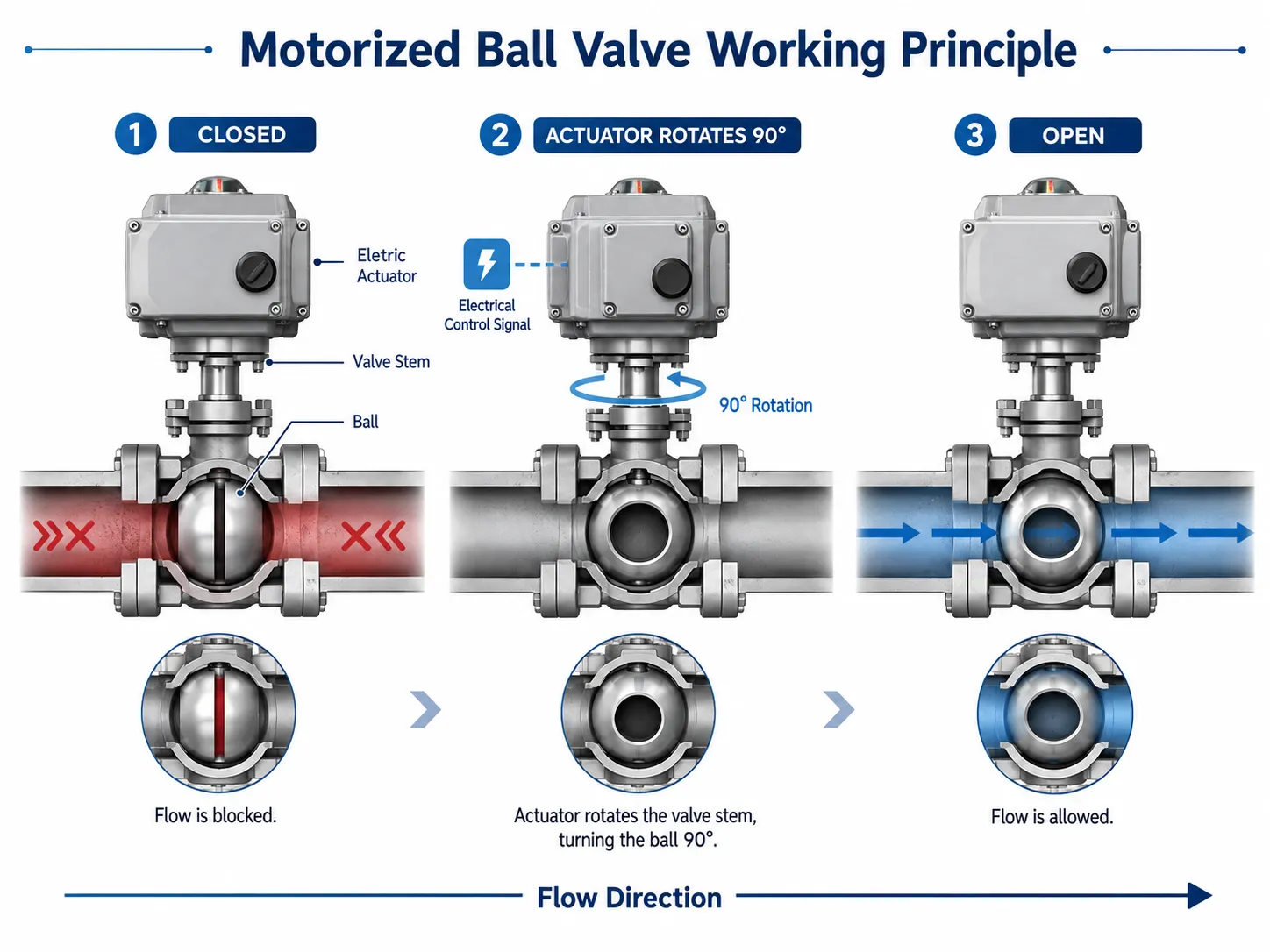
Main Components of a Motorized Ball Valve
A motorized ball valve consists of two main parts: the ball valve body and the electric actuator. Each component affects valve performance, reliability, and service life.
| Component | Fonction |
|---|---|
| Corps de vanne | Provides pressure containment and pipeline connection |
| Ball | Controls fluid passage through rotation |
| Tige | Transfers actuator torque to the ball |
| Seat | Provides sealing performance |
| Actionneur électrique | Provides automated valve operation |
Types of Motorized Ball Valves
Motorized ball valves are available in different designs depending on flow control requirements, connection methods, and industrial applications.
| Type | Description | Application |
|---|---|---|
| 2 Way Motorized Ball Valve | Controls flow between inlet and outlet ports | General shutoff and pipeline control |
| 3 Way Motorized Ball Valve | Provides flow switching or mixing functions | Process systems requiring direction control |
| V Port Segmented Ball Valve | Provides improved flow regulation performance | Precise industrial flow control |
| Flanged Motorized Ball Valve | Uses flange connections for industrial pipelines | Larger systems and process applications |
Featured Motorized Ball Valve Solutions
Fleyenda provides electric actuated ball valve solutions for different industrial applications, including V port segmented ball valves, 2 way flange ball valves, and 3 way flange ball valves.
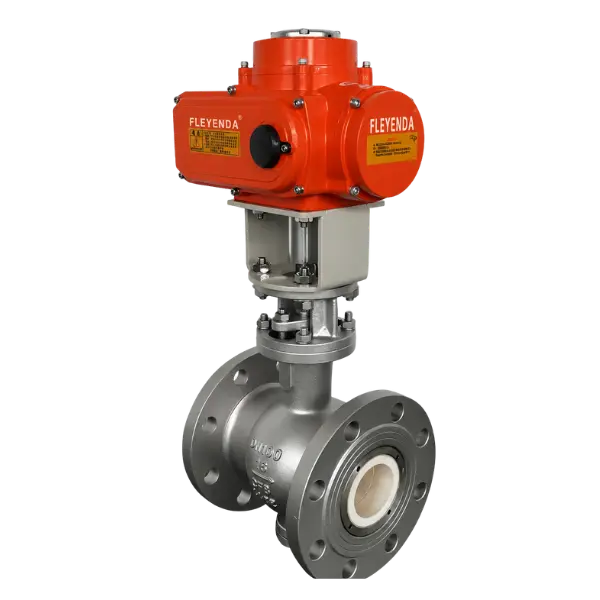
Flow Control
Motorized V Port Segmented Ball Valve
The motorized V port segmented ball valve is designed for accurate flow regulation and automated control applications requiring improved throttling performance.
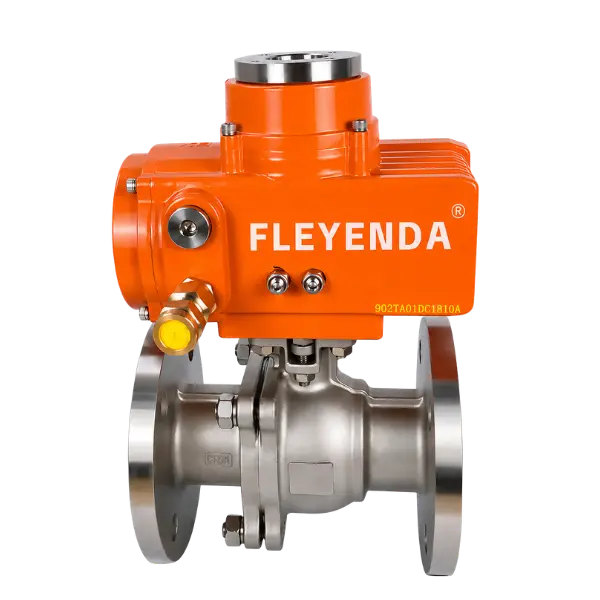
2 Way Flanged
Electric 2 Way Flange Ball Valve
Electric 2 way flange ball valve provides reliable shutoff control for industrial pipelines, water systems, and automated process applications.
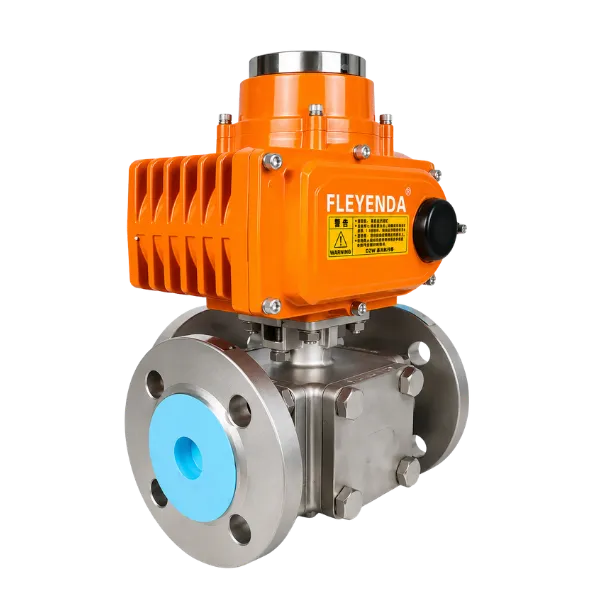
3 Way Flanged
Electric 3 Way Flange Ball Valve
Electric 3 way flange ball valve allows flow direction switching and is suitable for automated fluid distribution systems.
Motorized Ball Valve Applications
Motorized ball valves are widely used in industries where automatic flow control, reliable shutoff, and remote operation are required. Their compact structure and fast quarter-turn operation make them suitable for many automated pipeline systems.
Water Treatment
Motorized ball valves are used in water supply, filtration systems, wastewater treatment, and automatic pipeline control applications.
HVAC Systems
Electric actuated ball valves provide automatic control for chilled water, heating systems, cooling systems, and building automation.
Chemical Processing
Suitable materials and sealing designs allow motorized ball valves to handle various chemical media and industrial process fluids.
Industrial Automation
Motorized ball valves can connect with PLC systems and industrial controllers for automatic process management.
Oil and Gas Systems
Automated ball valves are commonly used for reliable shutoff and flow control in demanding industrial pipeline systems.
Process Control
V port segmented ball valves provide improved regulation performance for applications requiring accurate flow adjustment.
How to Select a Motorized Ball Valve
Choosing the correct motorized ball valve requires considering the valve size, pipeline conditions, operating media, actuator specifications, and automation requirements.
The valve and actuator should be selected as a complete system to ensure sufficient torque, reliable sealing, and stable operation under actual working conditions.
| Selection Factor | Important Consideration |
|---|---|
| Valve Size | Select according to pipeline diameter and required flow capacity. |
| Pression nominale | Confirm the valve can withstand maximum system pressure. |
| Type de média | Consider fluid characteristics, corrosion resistance, and temperature. |
| Valve Connection | Choose threaded, wafer, or flanged connection according to pipeline design. |
| Actuator Torque | The actuator must provide enough torque for reliable valve operation. |
| Control Method | Select ON/OFF control or modulating control depending on automation requirements. |
Motorized Ball Valve vs Other Valve Types
Different industrial valves provide different advantages depending on the application. Motorized ball valves are especially suitable where fast operation, reliable shutoff, and automation are required.
| Feature | Vanne à bille motorisée | Butterfly Valve | Vanne à guillotine |
|---|---|---|---|
| Operation | Quarter-turn operation | Quarter-turn operation | Multi-turn operation |
| Shutoff Performance | Excellent sealing performance | Good sealing performance | Good isolation performance |
| Automation | Easy electric actuator integration | Easy actuator integration | Requires larger actuator systems |
| Flow Control | Suitable with V port designs | Suitable for general control | Generally used for isolation |
| Space Requirement | Compact design | Very compact | Larger installation space |
Advantages of Motorized Ball Valves
Motorized ball valves provide several advantages for industrial automation systems:
- Remote automatic operation through electric actuators
- Fast quarter-turn opening and closing
- Reliable shutoff performance
- Compact valve structure
- Easy integration with PLC and control systems
- Suitable for various industrial media and applications
Motorized Ball Valve FAQ
What is a motorized ball valve?
A motorized ball valve is a ball valve operated by an electric actuator to automatically control fluid flow in industrial pipeline systems.
How does an electric actuated ball valve work?
An electric actuator converts electrical energy into rotary motion, turning the valve ball to open, close, or control fluid flow.
What is the difference between a motorized ball valve and a manual ball valve?
A manual ball valve requires physical operation, while a motorized ball valve provides automatic control and remote operation.
When should I choose a V port segmented ball valve?
A V port segmented ball valve is suitable for applications requiring more accurate flow regulation compared with standard shutoff ball valves.
What are 2 way and 3 way motorized ball valves used for?
Two way ball valves control simple open and close flow paths, while three way ball valves are used for switching or mixing different flow directions.
Can motorized ball valves be used for industrial automation?
Yes. Motorized ball valves are widely integrated into industrial automation systems using PLC control, sensors, and remote monitoring equipment.
Conclusion
Motorized ball valves provide an efficient automated solution for modern industrial flow control systems. By combining reliable ball valve sealing with electric actuator technology, they offer fast operation, remote control capability, and flexible application options.
Selecting the right motorized ball valve requires evaluating valve type, connection method, operating conditions, actuator torque, and control requirements.
Fleyenda provides electric actuated ball valve solutions including motorized V port segmented ball valves, electric 2 way flange ball valves, and electric 3 way flange ball valves for industrial automation applications.
Looking for a Motorized Ball Valve Solution?
Explore Fleyenda electric actuated ball valves designed for industrial automation, process control, water systems, HVAC, and other applications.