


PTFE Lined Valve in Mining: The Complete Industry Guide to Acid-Resistant Flow Control
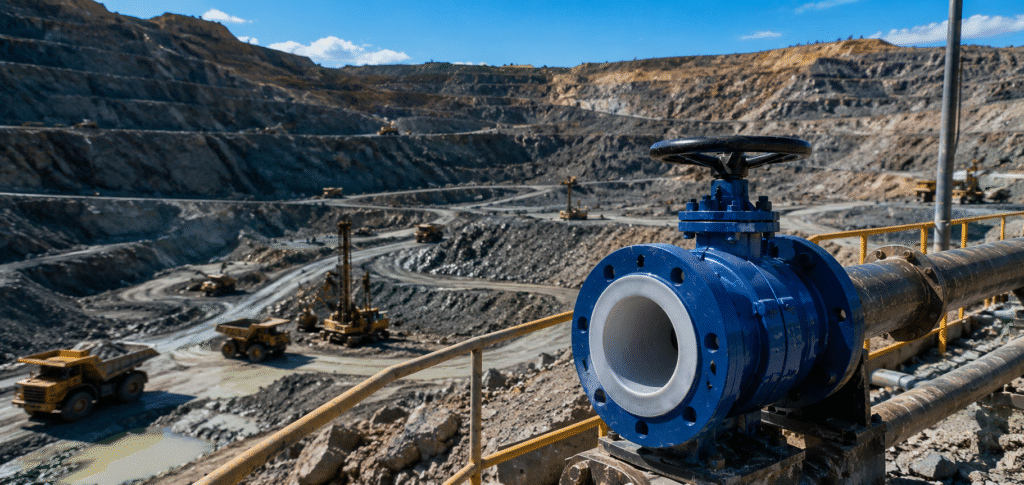
Executive Summary
The global mining industry consumes more sulfuric acid than any other industrial sector on Earth. From phosphate beneficiation in Morocco and Florida to lithium extraction in Chile’s Atacama Desert, from uranium heap leaching in Kazakhstan to rare earth processing in Sichuan, China — the chemistry of modern mineral extraction is, at its core, the chemistry of aggressive acids meeting resistant metals and minerals. The infrastructure that channels, controls, and regulates these corrosive flows is the unsung backbone of every mine and mineral processing plant.
Among all the valves, pipes, and fittings that make up this infrastructure, PTFE Lined Valves (Polytetrafluoroethylene Lined Valves) occupy a uniquely critical position. They sit at the intersection of chemical inertness and mechanical reliability — a combination demanded by the relentless, high-volume acid environments of mining and hydrometallurgy. This article explores, in depth, why PTFE Lined Valves have become the industry standard for corrosive media control in mining, how they compare to PFA Lined Valves and other fluoropolymer-lined alternatives, and what procurement and engineering teams need to know when specifying them for real-world applications.
Table of Contents
- The Acid Economy of Modern Mining
- Why Conventional Valves Fail in Mining Acid Environments
- What Is a PTFE Lined Valve? Materials, Construction, and Performance
- PTFE Lined Valve Applications by Mine Type
- 4.1 Phosphate Mining
- 4.2 Titanium (Ilmenite) Processing
- 4.3 Uranium Leaching
- 4.4 Lithium Spodumene Processing
- 4.5 Rare Earth Mining
- PTFE vs. PFA Lined Valve: How to Choose
- Valve Types Used in Mining Acid Systems
- Key Technical Specifications and Standards
- South American Mining: A Case Study in Acid Valve Demand
- Total Cost of Ownership: PTFE Lined Valves vs. Alternatives
- Procurement Guide: What to Look For When Buying PTFE Lined Valves
- Industry Trends and the Future of Fluorine Lined Valves in Mining
- Frequently Asked Questions
- Conclusion
1. The Acid Economy of Modern Mining
Sulfuric Acid: The Hidden Reagent That Runs the Mining World
To understand why PTFE Lined Valves are indispensable to mining, you must first understand the extraordinary role sulfuric acid plays across the global minerals industry. Sulfuric acid (H₂SO₄) is not merely a chemical used in mining — it is, in many ways, the operational lifeblood of the entire industry.
Globally, the mining and fertilizer sectors together account for over 60% of worldwide sulfuric acid consumption. In absolute terms, this translates to hundreds of millions of metric tons per year — a scale that dwarfs nearly every other industrial chemical application. The reason is straightforward: sulfuric acid is uniquely effective at breaking down complex mineral structures, separating target elements from gangue, and converting insoluble mineral phases into soluble, recoverable forms.
The table below summarizes the primary mining segments and their relationship with sulfuric acid:
| Mining Segment | Core Process | Role of Sulfuric Acid | Consumption Level |
|---|---|---|---|
| Phosphate Mining | Wet-process phosphoric acid (WPA) | Decomposes calcium phosphate framework, displaces phosphoric acid | Extremely High (Industry #1 globally) |
| Titanium (Ilmenite) | Sulfate process TiO₂ (titanium white) | High-temperature acid digestion of ore, separation of Fe and Ti | High (3–4 tons acid per ton product) |
| Uranium Mining | Heap leaching / In-situ recovery (ISR) | Dissolves uranium from low-grade ores, forms soluble uranyl sulfate complexes | High (varies with ore alkalinity) |
| Lithium (Spodumene) | Acid roasting process | Ion exchange at high temperature, converts Li to lithium sulfate | Medium–High (growing rapidly with EV demand) |
| Rare Earth Mining | Concentrated H₂SO₄ roasting / refining | Destroys complex fluorocarbon cerite lattices, leaches rare earth elements | Medium |
| Copper Mining | Heap leach / SX-EW | Leaches copper from oxide ores | High |
| Nickel/Cobalt | High-Pressure Acid Leach (HPAL) | Extracts Ni and Co from laterite ores at 250°C, 4–5 MPa | Extremely High |
This acid-intensive reality has enormous implications for process equipment. Every pipeline, pump, reactor, storage tank, and — critically — every valve that handles these media must be capable of withstanding concentrated, hot, and often contaminated sulfuric acid without corroding, leaching, or failing. This is where PTFE Lined Valves and PFA Lined Valves become the engineering answer of choice.
The “Acid Valve” as an Industrial Category
The global mining valve market is worth several billion dollars annually, with the corrosion-resistant segment — encompassing fluoropolymer-lined valves, alloy valves, and rubber-lined valves — accounting for a substantial and growing share. The proliferation of new lithium, nickel, and rare earth projects across South America, Africa, and Southeast Asia is further accelerating demand for acid-resistant flow control equipment.
Among the various solutions available, Fluorine Lined Valves — the family that includes PTFE Lined Valves, PFA Lined Valves, and PVDF-lined variants — have emerged as the preferred choice in most sulfuric acid handling applications below 200°C. The reasons are both chemical and economic, and they are worth understanding in detail.
2. Why Conventional Valves Fail in Mining Acid Environments
The Corrosion Problem in Numbers
Before examining the solution, it is worth quantifying the problem. Corrosion-related failures in chemical and mining process plants are estimated to cost the global industry tens of billions of dollars annually. In a typical acid leach or mineral processing plant, valves represent a disproportionately high share of maintenance costs because:
- They are active mechanical components subject to both chemical attack and mechanical wear
- They are present in very high numbers (a large acid plant may have thousands of valves)
- Valve failure is often sudden and can trigger production shutdowns or safety incidents
- Replacement in hazardous acid service is time-consuming and requires specialized procedures
The failure modes of conventional materials in mining acid environments are well-documented:
Carbon steel begins to corrode immediately in dilute sulfuric acid and fails rapidly above even 5% H₂SO₄ concentration. At higher concentrations (above ~93%), carbon steel shows passivation, but the working concentrations in most mining processes (10–80%) are precisely the most aggressive zone.
Stainless steel (304, 316) offers better resistance but is still susceptible to pitting corrosion, crevice corrosion, and stress corrosion cracking in hot, concentrated sulfuric acid. In the presence of chloride ions — common in many mine water sources — stainless steel deteriorates even faster.
Cast iron is similarly inadequate: while historically used in dilute acid services, it corrodes rapidly in concentrations relevant to mineral processing and is completely unsuitable for services above 30% H₂SO₄.
Exotic alloys (Hastelloy, Inconel, Duplex stainless, titanium) offer excellent corrosion resistance but at prices that make them impractical for large-scale valve inventories. A single Hastelloy C-276 globe valve of 4″ diameter can cost 10–20 times the price of an equivalent PTFE Lined Valve, with no corresponding advantage in most acid service conditions.
Rubber-lined valves are cost-effective and widely used for slurry applications, but natural rubber and most synthetic rubbers are severely attacked by concentrated sulfuric acid, especially at elevated temperatures. Their chemical resistance ceiling is simply too low for many mining applications.
Enter Fluoropolymers: A Chemical Revolution in Valve Lining
The development of polytetrafluoroethylene (PTFE) in 1938 — and its commercialization under the DuPont brand name Teflon® — opened an entirely new chapter in chemical process engineering. PTFE’s molecular structure, consisting of a carbon backbone fully shielded by fluorine atoms, gives it a level of chemical inertness that is virtually unmatched among engineering polymers.
The carbon-fluorine bond is one of the strongest covalent bonds in organic chemistry (approximately 544 kJ/mol). This bond strength, combined with the extremely tight and uniform fluorine atom “shield” around the carbon chain, means that almost no chemical can penetrate, react with, or degrade PTFE. The material is resistant to virtually all acids (including concentrated H₂SO₄, HF, HCl, HNO₃), virtually all bases, virtually all organic solvents, and most oxidizing and reducing agents.
When PTFE is used to line the interior wetted surfaces of a valve — the body bore, the ball or disc, the stem, and all sealing surfaces — the result is an Acid Resistant Valve that presents only PTFE (or another fluoropolymer) to the process fluid. The structural load-bearing capacity of the valve comes from the metal shell (typically cast iron, carbon steel, or stainless steel), while the chemical resistance comes from the fluoropolymer lining. This combination delivers outstanding performance at a fraction of the cost of solid exotic alloy construction.
3. What Is a PTFE Lined Valve? Materials, Construction, and Performance
Anatomy of a PTFE Lined Valve
A PTFE Lined Valve is a flow control device in which all wetted surfaces — those that come into direct contact with the process fluid — are coated or lined with polytetrafluoroethylene. The typical construction consists of:
Outer Shell (Body): Usually cast iron (GG25, GG20) or carbon steel (WCB), providing mechanical strength, pressure containment, and flanged connections to the piping system. Some premium versions use stainless steel outer shells for additional safety in high-pressure or high-temperature service.
PTFE Lining: Applied to the inner bore of the body, the valve disc or ball, the stem, and all gasket sealing surfaces. In high-quality valves, the lining is a seamless, monolithic PTFE sleeve or molded insert, with no metal exposure to the process fluid whatsoever. Lining thickness typically ranges from 3 mm to 6 mm depending on valve size and service severity.
Stem and Packing: In PTFE Lined Valves, the stem is typically PTFE-encapsulated or made from PTFE-coated stainless steel. The stem packing (the seal between the rotating/reciprocating stem and the valve body) uses PTFE chevron rings or equivalent fluoropolymer seals to prevent leakage.
Flanges: Flanged ends are standard for mining and chemical process applications, allowing easy installation, removal, and replacement. The flange face is lined with PTFE, including the sealing face, so that even the gasket interface presents no metal to corrosive media.
Actuator Interface: PTFE Lined Valves can be supplied with manual handwheels, lever operators, or pneumatic/electric actuators for remote or automated operation — an important feature in mining plants where remote operation of acid service valves improves safety.
PTFE Lining Methods
The quality and performance of a PTFE Lined Valve depend heavily on how the lining is manufactured and applied:
Compression Molding (Hot Pressing): PTFE powder is compressed into a preform and sintered in the mold. This produces dense, void-free linings with excellent thickness uniformity and bond strength. This is the preferred method for high-quality mining-grade PTFE Lined Valves.
Isostatic Pressing: PTFE is pressed under uniform pressure from all directions, producing extremely uniform density and surface finish. Used for high-precision applications.
Paste Extrusion: For certain geometries, PTFE paste is extruded into shape. Less common for valve linings but used for some tubular components.
Electrostatic Spray Coating: PTFE is applied as a spray coating and sintered. This method produces thinner coatings and is better suited for non-immersion applications; for full acid immersion service in mining, compression-molded linings are far superior.
Key Physical and Chemical Properties of PTFE in Valve Service
| Property | PTFE Value | Significance for Mining |
|---|---|---|
| Chemical resistance | Resistant to virtually all acids, bases, and solvents | Safe for H₂SO₄ at all concentrations up to ~200°C |
| Maximum continuous service temperature | 200°C (260°C short-term) | Adequate for most acid leach and WPA processes |
| Coefficient of friction | 0.04–0.10 (one of the lowest of any solid) | Enables smooth valve operation; low torque requirements |
| Oxygen index | >95% | Flame retardant |
| Permeation resistance | Moderate (PFA is superior for small molecules) | Adequate for most mining services |
| Tensile strength | 20–35 MPa | Lower than metals; requires metal reinforcement in structural applications |
| Cold flow (creep) | Moderate | Important consideration in flange and valve seat design |
| FDA / food grade | Yes | Not relevant for mining, but indicates purity |
| Electrical insulation | Excellent | Useful in electrolytic process applications |
Pressure and Temperature Ratings
Standard PTFE Lined Valves for mining service are typically rated to:
- Pressure: PN10 (150 psi) to PN16 (230 psi), with heavy-duty versions rated to PN25
- Temperature: −40°C to +150°C continuous, with short-term excursions to 180°C in some designs
- Vacuum: Full vacuum service (important for evaporator and vacuum filter applications in mineral processing)
It is important to note that PTFE’s mechanical properties decline with increasing temperature, and the combination of high temperature AND high pressure requires careful engineering review for each specific application.
4. PTFE Lined Valve Applications by Mine Type
4.1 Phosphate Mining and Wet-Process Phosphoric Acid (WPA)
The phosphate industry is the world’s single largest consumer of sulfuric acid, and consequently one of the largest users of PTFE Lined Valves and PFA Lined Valves.
The WPA Process and Its Acid Demands
Wet-process phosphoric acid production involves reacting phosphate rock (fluorapatite, Ca₅(PO₄)₃F) with concentrated sulfuric acid (typically 93–98% H₂SO₄) to produce phosphoric acid (H₃PO₄) and calcium sulfate (gypsum):
Ca₅(PO₄)₃F + 5H₂SO₄ + 10H₂O → 3H₃PO₄ + 5CaSO₄·2H₂O + HF
The resulting slurry — a mixture of phosphoric acid (typically 28–32% P₂O₅), gypsum, and fluorine compounds — is one of the most aggressive chemical environments encountered in any industrial process. It contains:
- 28–54% phosphoric acid
- Fluoride ions (from the fluorapatite feedstock)
- Residual sulfuric acid
- Elevated temperatures (60–80°C in the reactor, higher in evaporation stages)
Every valve in the WPA unit — the sulfuric acid feed valves, the reactor outlet valves, the phosphoric acid product valves, the filtrate return valves, and the gypsum slurry valves — must handle at least one component of this aggressive system.
PTFE Lined Valve Requirements in WPA Plants
For sulfuric acid feed lines (93–98% H₂SO₄), PTFE Lined Butterfly Valves and PTFE Lined Ball Valves are the standard choice in sizes ranging from DN50 to DN400. For phosphoric acid product service (including evaporation and concentration), the same valve types apply, with attention to temperature ratings in the evaporation section.
Large WPA plants in Morocco (OCP Group), Tunisia, Florida (Mosaic Company), and Saudi Arabia (Ma’aden) operate hundreds to thousands of acid service valves each, making them major procurement targets for PTFE Lined Valve manufacturers globally.
Key valve services in a WPA plant:
- Sulfuric acid storage tank outlet and dosing valves
- Reactor feed and drain valves
- Filter feed and filtrate recycle valves
- Evaporator inlet/outlet and condensate valves
- Phosphoric acid storage and transfer valves
- Fluorosilicic acid (H₂SiF₆) handling valves
- Gypsum slurry control valves (often rubber-lined for abrasion, but PTFE for acid contact points)
4.2 Titanium Dioxide (TiO₂) Production via the Sulfate Process
The sulfate process for titanium dioxide production is one of the most acid-intensive operations in the entire chemicals and mining industry. The process consumes 3–4 metric tons of sulfuric acid for every ton of TiO₂ product — a consumption ratio that directly translates into extraordinary demands for acid-resistant infrastructure.
Process Chemistry and Valve Exposure
Ilmenite ore (FeTiO₃) or titanium slag is digested in hot concentrated sulfuric acid (80–95% H₂SO₄) at temperatures of 150–180°C. The resulting solution contains titanyl sulfate and ferrous/ferric sulfate, which are then processed through hydrolysis, washing, calcination, and surface treatment stages to produce finished TiO₂ pigment.
The acid digestion stage is the most aggressive valve environment, with near-boiling concentrated sulfuric acid present. Here, PTFE Lined Globe Valves and PTFE Lined Gate Valves rated for elevated temperature service are critical. The subsequent hydrolysis and washing stages, while operating at lower acid concentrations, still require full fluoropolymer protection because of the elevated temperatures (95–110°C) and the presence of titanium compound complexes.
Major TiO₂ producers (Chemours/DuPont, Tronox, Venator, Lomon Billions, CNNC Hua Yuan) all operate large sulfate-process plants that are significant users of PTFE Lined Valves globally.
Specific valve requirements:
- Acid digestion vessel charge/discharge valves (high-temperature PTFE rated)
- Clarifier feed and underflow valves
- Titanyl sulfate solution transfer valves
- Ferrous sulfate (copperas) handling valves
- Vacuum drum filter valves
- Calcination kiln gas washing circuit valves
4.3 Uranium Mining: Heap Leaching and In-Situ Recovery (ISR)
Uranium extraction via acid leaching presents a distinctive set of valve challenges. Unlike WPA or TiO₂ production, the acid concentrations involved are relatively modest (typically 10–50 g/L H₂SO₄), but the mining environments impose unique constraints:
- Remote and geographically isolated locations (Kazakhstan steppes, Namibian desert, Australian outback) demand extreme valve reliability and minimal maintenance
- Radiological safety considerations mean that valve leaks in uranium service lines carry health and regulatory consequences beyond ordinary chemical hazards
- Variable ore chemistry means that the leach solution composition can fluctuate significantly, sometimes incorporating chloride, nitrate, or bicarbonate species depending on ore type
- Heap leach pad infrastructure may extend over enormous areas (hundreds of hectares), requiring large numbers of distribution and collection valves that must function reliably outdoors in extreme weather
PTFE Lined Valves in Uranium Service
For dilute sulfuric acid uranium leach solutions, PTFE Lined Butterfly Valves are the dominant choice for distribution headers and process lines. Their lightweight construction, ease of actuation over large pad areas, and fluoropolymer resistance to the complex leach solution chemistry make them ideal.
For the solvent extraction (SX) circuit, where uranium is concentrated using organic extractants such as D2EHPA or Alamine 336 in kerosene, different valve considerations apply (PTFE’s resistance to organic solvents is excellent, an advantage here).
In ion exchange (IX) and yellowcake precipitation circuits, where ammonium sulfate, ammonia, and hydrogen peroxide may be present along with residual sulfuric acid, PTFE Lined Valves continue to provide reliable service where the chemical compatibility matrix is complex.
4.4 Lithium Spodumene Processing
The global transition to electric vehicles and lithium-ion batteries has created an enormous surge in demand for lithium chemicals — lithium carbonate (Li₂CO₃) and lithium hydroxide (LiOH) — derived from spodumene concentrate (LiAlSi₂O₆). The dominant commercial processing route, the acid roasting process, is highly sulfuric acid-intensive.
The Acid Roasting Route and Its Valve Demands
Spodumene concentrate is first calcined at 1050–1100°C to convert α-spodumene to the more reactive β-form. The β-spodumene is then mixed with concentrated sulfuric acid and roasted at 250–300°C, producing lithium sulfate (Li₂SO₄) and an insoluble aluminosilicate residue:
β-LiAlSi₂O₆ + H₂SO₄ → Li₂SO₄ + Al₂(SO₄)₃ + SiO₂ + H₂O
The Li₂SO₄ leach solution is then purified and converted to either Li₂CO₃ or LiOH via precipitation or membrane electrolysis.
The acid roasting and leaching circuits involve:
- Concentrated sulfuric acid (93–98%) feed and dosing
- Roaster off-gas scrubbing (SO₃, HF, SO₂ species)
- Leach liquor at pH 2–4 with elevated aluminum and iron
- Purification stages with lime, soda ash, and sodium carbonate
PTFE Lined Valves are specified across all sulfuric acid handling and leach liquor service points. As new spodumene conversion facilities come online in Australia (Albemarle Kemerton, IGO Kwinana), Chile, China, and Canada, demand for mining-grade PTFE Lined Valves in lithium service is growing faster than in virtually any other mining segment.
4.5 Rare Earth Mining and Processing
Rare earth elements (REEs) — the 17 elements including lanthanum, cerium, neodymium, praseodymium, and the heavy rare earths — are extracted from minerals such as bastnäsite, monazite, and xenotime. The processing chemistry is complex and typically involves concentrated sulfuric acid at multiple stages.
Concentrated H₂SO₄ Roasting of Bastnäsite and Monazite
Bastnäsite [(Ce,La)(CO₃)F] and monazite [(Ce,La,Nd,Th)PO₄] both require aggressive acid treatment to break open their highly stable crystal lattices. The concentrated sulfuric acid roasting process operates at 150–500°C depending on mineralogy, destroying the fluorocarbon and phosphate structures and converting the rare earths to sulfate form.
The challenges for PTFE Lined Valves in REE processing include:
- High-temperature concentrated H₂SO₄ in the roasting circuit (often requiring PTFE Lined Valves rated to maximum temperature specifications)
- Hydrofluoric acid (HF) evolution during bastnäsite decomposition — PTFE’s HF resistance is one of its most distinctive advantages
- Complex mixed acid streams in the solvent extraction purification circuits
- Radioactive thorium and uranium co-processing requirements (similar radiological safety considerations as uranium mining)
China dominates global REE production and processing, operating the world’s largest concentration of rare earth acid processing facilities, which collectively represent one of the most significant PTFE Lined Valve markets in the world.
5. PTFE vs. PFA Lined Valve: How to Choose
Among fluoropolymer-lined valves, the two most common materials encountered in mining and chemical process applications are PTFE (polytetrafluoroethylene) and PFA (perfluoroalkoxy alkane). Understanding the differences is essential for correct specification.
Chemical Structure and Properties Compared
PTFE and PFA share the same fully fluorinated carbon backbone, giving them essentially identical chemical resistance. Both materials resist virtually all acids, bases, and organic solvents across a similar pH range and temperature envelope. For most mining acid services, this means that chemical compatibility is not a differentiating factor — both materials will handle the job.
The critical differences lie in physical and processing properties:
| Property | PTFE | PFA |
|---|---|---|
| Chemical resistance | Virtually universal | Virtually universal (equivalent to PTFE) |
| Maximum use temperature | 200°C continuous | 260°C continuous |
| Clarity / transparency | Opaque (white) | Translucent |
| Permeation resistance | Good | Excellent (superior to PTFE) |
| Melt processability | Does not melt-flow (cannot be injection molded) | Fully melt-processable (injection moldable) |
| Seam/weld quality | Mechanical joining only (no fusion welding) | Can be butt-welded with high integrity joints |
| Surface smoothness | Good | Excellent (slightly better) |
| Flexibility | Stiffer | More flexible |
| Cost | Lower | Higher (typically 2–4× PTFE) |
| Cold flow (creep) | More prone to creep | Less prone to creep |
When to Specify PTFE Lined Valves
PTFE Lined Valves are the correct choice in the vast majority of mining acid applications:
- Sulfuric acid service at concentrations from 0–98% and temperatures up to 150°C
- Phosphoric acid service at all concentrations
- Hydrochloric acid, hydrofluoric acid, and nitric acid service
- Mixed acid slurries at moderate temperatures
- Cost-sensitive applications where the large price premium of PFA is not justified
- Large-bore valves (DN100 and above) where PFA lining cost becomes prohibitive
PTFE Lined Valves represent 70–80% of the fluoropolymer-lined valve market in mining by volume, due primarily to their cost advantage.
When to Specify PFA Lined Valves
PFA Lined Valves are preferred or required in the following scenarios:
- High-temperature acid service above 150°C: PFA maintains mechanical integrity up to 260°C, making it essential in hot acid digestion circuits (TiO₂ sulfate process, some REE processing)
- Ultra-pure process streams: PFA’s lower extractable content and smoother surface make it preferable in semiconductor-grade acid handling, pharmaceutical-grade mineral acids, and anywhere ionic contamination of the product must be minimized
- Small-diameter valves in high-penetration services: PFA’s superior permeation resistance is advantageous in small valves (DN15–DN50) handling highly concentrated or aggressive acids where PTFE’s slightly higher permeation rate could lead to micro-leakage over time
- Applications requiring welded lining continuity: PFA can be fusion-welded at joints, providing seamless lining integrity in critical applications
- Fluorosilicic acid (H₂SiF₆) at elevated concentrations: PFA’s lower permeation makes it preferable for this particularly challenging WPA byproduct stream
Cost Guidance: In a large WPA plant or TiO₂ facility, it is common to specify PTFE Lined Valves for the bulk of the acid service while reserving PFA Lined Valves for the 10–20% of service points where temperature, purity, or permeation requirements demand the upgrade. This mixed specification approach optimizes both cost and performance across the plant.
6. Valve Types Used in Mining Acid Systems
The fluoropolymer lining technology can be applied to virtually every standard valve configuration. Mining acid systems use the following valve types, each with specific application domains:
PTFE Lined Butterfly Valve
The most widely used valve type in mining acid systems, particularly for large-bore applications (DN50–DN600) and general-purpose isolation and regulation service. Key advantages:
- Compact and lightweight — important for large mine/plant footprints
- Low torque requirements (PTFE’s low friction coefficient aids actuation)
- Fast opening/closing — 90° quarter-turn operation
- Compatible with pneumatic and electric actuators for automated operation
- Cost-effective even in large bore sizes
Applications: Sulfuric acid distribution headers, leach tank inlet/outlet valves, process water acid addition lines, filter feed and discharge.
PTFE Lined Ball Valve
Superior to butterfly valves for tight shutoff and high-pressure service. The full-bore PTFE Lined Ball Valve provides zero obstruction to flow when fully open, minimizing pressure drop in high-velocity acid lines.
Applications: Pump discharge valves, high-pressure acid metering, tank drain valves requiring positive shutoff, sampling connections.
PTFE Lined Globe Valve
Preferred for throttling and flow regulation service. The globe valve’s multi-turn design provides precise control over flow rate, making it suitable for acid dosing and metering applications where exact reagent addition is critical.
Applications: Acid addition control to reactors, pH adjustment circuits, reagent metering.
PTFE Lined Diaphragm Valve
The diaphragm valve uses a flexible PTFE diaphragm to isolate the stem mechanism from the process fluid entirely, eliminating the risk of stem leakage. This makes it especially valuable for:
- Toxic or highly corrosive media where any leakage is unacceptable
- Slurry service (the smooth body bore minimizes solids buildup)
- Sanitary or regulated applications
Applications: Uranium leach solution valves (radiological safety), HF acid service, toxic acid transfer.
PTFE Lined Check Valve
Prevents backflow in acid lines, protecting pumps, meters, and mixing systems. PTFE Lined Check Valves use swing or lift check mechanisms with full fluoropolymer wetted surfaces.
Applications: Acid pump discharge check valves, reagent addition line protection.
PTFE Lined Plug Valve
Used in services requiring a straight-through, non-clogging bore with minimal pressure drop. Less common than butterfly and ball valves in mining acid service but preferred for certain abrasive slurry applications.
7. Key Technical Specifications and Standards
When purchasing PTFE Lined Valves for mining acid service, procurement and engineering teams should verify compliance with the following technical standards and specifications:
International Standards
- ISO 16135 — Industrial valves: Ball valves of thermoplastics
- ISO 16136 — Industrial valves: Butterfly valves of thermoplastics
- ASME B16.34 — Valves: Flanged, threaded, and welding end
- API 598 — Valve Inspection and Testing
- EN 12516 — Industrial valves: Shell design strength (relevant to lined valve body)
- ASTM F423 — Standard specification for PTFE plastic-lined ferrous metal fittings, flanges, and valves
Lining Quality Tests
Reputable PTFE Lined Valve manufacturers subject their products to:
- Spark (Holiday) Test: High-voltage electrical test to detect pinholes or voids in the PTFE lining. Any lining discontinuity that would expose metal to the process fluid will be detected by this test. Spark testing at 15–20 kV is standard for mining-grade valves.
- Hydrostatic Shell Test: Pressure testing of the valve body at 1.5× rated pressure to verify structural integrity
- Seat Leakage Test: Low-pressure and high-pressure seat closure tests to verify sealing performance
- Torque/Operating Force Test: Measurement of actuation torque to verify smooth PTFE-on-PTFE operation
Flange Dimensions
Mining acid valves are typically supplied to:
- PN6/PN10/PN16 (European/international standard, DIN/EN flanges)
- Class 150/Class 300 (ASME/ANSI standard, used extensively in South American projects)
When procuring from Chinese or Asian manufacturers for South American projects, it is essential to clarify which flange standard is required at the project specification stage, as these are not interchangeable without adapter flanges.
End Connection Options
- Flanged: Standard for most mining valve installations; allows easy replacement
- Wafer: Compact between-flange installation; common for butterfly valves in space-constrained installations
- Lugged: Wafer-style with threaded lugs for dead-end service (allows disconnection of downstream pipe without removing valve)
8. South American Mining: A Case Study in Acid Valve Demand
The New Center of Global Mining Investment
South America has emerged as one of the world’s most important regions for new mining development, driven by its extraordinary endowment of critical mineral resources. The continent hosts:
- Over 50% of the world’s identified lithium reserves (the “Lithium Triangle” spanning Chile, Argentina, and Bolivia)
- The world’s largest copper reserves and production base (Chile, Peru)
- Significant rare earth, phosphate, and nickel resources
- Extensive titanium mineral sands along Atlantic and Pacific coastal zones
The combination of resource endowment and rapidly expanding global demand — driven by the energy transition, EV adoption, and grid storage investment — has triggered an unprecedented wave of mining investment across the continent. Dozens of new lithium, copper, nickel, and rare earth projects are at various stages of development from feasibility to construction.
Why PTFE Lined Valves Are a Core Infrastructure Requirement
Every one of these new mine projects, regardless of commodity, faces the same operational reality: the extraction and processing of mineral concentrates requires acid. In some projects (lithium spodumene, copper SX-EW, nickel HPAL), this means enormous quantities of sulfuric acid. In others (lithium brine, certain copper oxide), it means other aggressive chemical environments.
The infrastructure challenges in South American mining are significant:
Geographic isolation: Projects in Chile’s Atacama Desert, Argentina’s Puna plateau, or the Peruvian highlands operate in extreme environments — high altitude, temperature extremes, and remote locations hundreds of kilometers from maintenance centers. This places a premium on valve reliability and long service life. A valve failure that requires a week-long spare parts delivery can cost millions in lost production.
Water scarcity: The Atacama and surrounding regions are among the world’s driest environments. Process water is scarce and expensive, and acid recovery and recycling are essential. PTFE Lined Valves in acid return and recovery circuits must be absolutely leak-free.
Local content requirements: Several South American countries (Chile, Peru, Argentina, Bolivia) have policies encouraging or requiring local procurement and content. This has driven the establishment of valve distribution, maintenance, and sometimes light manufacturing operations in the region.
Project scale: Major projects such as SQM and Albemarle’s Atacama operations, Codelco’s large copper mines, Vale’s Carajas operations in Brazil, and multiple HPAL nickel projects under development in Colombia, Brazil, and elsewhere are all significant consumers of PTFE Lined Valves.
The Acid Infrastructure of a South American Lithium Project
To make the valve demand concrete, consider the acid infrastructure of a typical spodumene-to-lithium hydroxide conversion plant with a 25,000 tonne/year LiOH capacity:
- Sulfuric acid storage: 2–4 large storage tanks (10,000–30,000 m³) with associated inlet, outlet, transfer, and emergency drain valves — all PTFE lined
- Acid metering and dosing: Multiple metered feed points to roaster mixers, leach tanks, and neutralization vessels — PTFE Lined Globe Valves and control valves
- Roast circuit: High-temperature acid addition valves rated for near-boiling concentrated H₂SO₄ — a key application for high-temperature PTFE or PFA Lined Valves
- Leach circuit: 10–20 leach tanks with inlet, outlet, agitator seal flush, and sampling valves per tank
- Purification and precipitation: pH adjustment valves, lime slurry addition valves, precipitate slurry valves
- Effluent treatment: Acid neutralization and gypsum dewatering valves
A plant of this scale may require 500–1,500 fluoropolymer-lined valves of various types and sizes — a procurement order of significant value and logistical complexity.
9. Total Cost of Ownership: PTFE Lined Valves vs. Alternatives
Beyond Purchase Price: Understanding TCO in Mining Valve Selection
Mining procurement teams are increasingly sophisticated in their use of Total Cost of Ownership (TCO) analysis for valve selection. The initial purchase price of a valve represents only a fraction of its lifetime cost in acid service. A comprehensive TCO comparison must include:
- Purchase price: PTFE Lined Valves typically cost 20–40% more than equivalent rubber-lined valves but are 60–90% less expensive than equivalent exotic alloy (Hastelloy/titanium) valves
- Service life: In concentrated sulfuric acid service, a correctly specified PTFE Lined Valve typically achieves 8–15 years of service life. Comparable carbon steel or standard stainless steel valves may fail within months
- Maintenance frequency: PTFE’s chemical inertness and low friction coefficient result in minimal seat wear and extended maintenance intervals compared to metal-on-metal or rubber-on-metal sealing designs
- Replacement cost: Including not just the valve cost but the labor cost of replacing a valve in a hazardous acid service area, the cost of production shutdown, and any environmental remediation following a leak
- Energy cost: PTFE’s extremely low coefficient of friction reduces actuator torque requirements, reducing actuator sizing and energy consumption over the life of the installation
- Spare parts inventory: The broad standardization of PTFE Lined Valve dimensions (PN/ANSI flanges, standard face-to-face dimensions) allows efficient spare parts management with relatively small inventory
TCO Comparison Example: DN150 Valve in Sulfuric Acid Service (10-Year Horizon)
| Valve Type | Initial Cost (Index) | Expected Life | Replacements (10yr) | Total Cost (Index) |
|---|---|---|---|---|
| Carbon steel (standard) | 1.0 | 6–18 months | 7–20× | 15–25× |
| 316 Stainless steel | 2.5 | 12–36 months | 3–8× | 15–25× |
| Rubber-lined | 1.2 | 2–4 years | 3–5× | 6–8× |
| PTFE Lined Valve | 1.8 | 8–15 years | 0–1× | 2–3× |
| Hastelloy C-276 | 15–20× | 15–25 years | 0–1× | 15–20× |
| PFA Lined Valve | 3.5–5× | 10–18 years | 0–1× | 4–6× |
(Indices are illustrative and vary with actual market conditions, valve size, and specific service)
The TCO case for PTFE Lined Valves is compelling: they deliver corrosion resistance approaching exotic alloys at a fraction of the cost, with dramatically better performance and service life than conventional materials or rubber-lined alternatives.
10. Procurement Guide: What to Look For When Buying PTFE Lined Valves
Quality Indicators for Mining-Grade PTFE Lined Valves
The PTFE Lined Valve market is highly fragmented globally, with hundreds of manufacturers in China, India, Europe, and North America offering products across a wide range of quality levels. For mining acid service — where valve failure can mean production loss, chemical spills, or personnel safety incidents — quality verification is essential.
1. Lining Thickness and Uniformity
Request documentation of lining thickness measurements at multiple points on the valve bore. For mining acid service, minimum lining thickness should be 3 mm for smaller valves (DN50–DN100) and 4–5 mm for larger bore valves. Thin or non-uniform linings indicate compromised protection and shortened service life.
2. Spark Test Certification
Every mining-grade PTFE Lined Valve should be spark (holiday) tested before shipment. Request the test certificate with test voltage and pass/fail results. Any reputable manufacturer will provide this without hesitation.
3. Material Certifications
Request material test reports (MTRs) confirming:
- PTFE lining material grade (confirm virgin PTFE, not regrind or blended material)
- Body casting material (verify cast iron grade or steel equivalent)
- Stem material and coating
4. Third-Party Test Reports
For large procurement orders, specify third-party inspection by TÜV, Bureau Veritas, SGS, or equivalent. For South American projects, ensure test reports are acceptable under the relevant country’s import regulations.
5. Manufacturer Experience and References
Request references for comparable acid service installations, particularly in mining environments. A manufacturer with documented experience supplying PTFE Lined Valves to WPA plants, TiO₂ facilities, or lithium processing plants provides greater confidence than one whose primary experience is in lighter chemical duty.
6. Actuator Compatibility and Documentation
For automated valves (pneumatic or electric actuator), verify that the PTFE Lined Valve / actuator interface meets required torque, fail-safe mode, and control signal specifications. Request valve data sheets with complete dimensional, weight, torque, and flow coefficient (Cv/Kv) data.
7. Local Service and Support
For remote mining locations, the ability to obtain spare parts and technical support locally or regionally is a significant factor. Evaluate the supplier’s distribution network and in-region spare parts availability.
Common Purchasing Mistakes to Avoid
- Specifying PTFE where PFA is actually needed: Particularly at high temperatures; review process conditions carefully before defaulting to the less expensive option
- Ignoring flange standard compatibility: PTFE Lined Valves from different manufacturers and regions may have different flange drilling patterns; always specify flange standard explicitly (PN10/PN16 vs. ANSI Class 150/300)
- Underestimating actuator torque requirements: PTFE lined valves generally require lower torque than equivalent unlined metal valves, but over-pressured or fouled valves may require higher torque; specify actuator with sufficient safety margin
- Overlooking stem seal quality: The stem seal is the most common site of fugitive emissions on PTFE Lined Valves; specify valves with double stem seals or bellows seals for critical services
- Purchasing purely on lowest unit price: As the TCO analysis shows, the lowest-priced PTFE Lined Valve is rarely the lowest-cost option over a 10-year operating horizon
11. Industry Trends and the Future of Fluorine Lined Valves in Mining
Growing Demand Driven by Energy Transition
The global transition from fossil fuels to renewable energy and electrification is, perhaps counterintuitively, driving significant growth in acid-intensive mining. Electric vehicles require lithium, nickel, cobalt, and manganese — all of which involve substantial sulfuric acid processing. Solar panels require silicon and specialized glass (magnesium fluoride, antimony compounds) processed with acids. Wind turbines require significant quantities of rare earth magnets (neodymium, dysprosium) processed through complex acid chemistry.
The International Energy Agency projects that demand for battery metals will increase 3–5× by 2030 and potentially 8–15× by 2040 relative to 2020 levels. This mineral demand growth directly translates into acid consumption growth, and consequently into PTFE Lined Valve demand growth.
Automation and Remote Operation Driving Actuated Valve Demand
Mining operations are increasingly automated, driven by both cost efficiency and safety objectives. Remote and automated operation is particularly important in acid service, where minimizing human exposure to corrosive chemicals is a key safety priority. This trend is driving a shift from manual to actuated (pneumatic, electric, or electrohydraulic) PTFE Lined Valves across all mining acid applications.
Smart actuated valves — with integrated position feedback, partial stroke testing capability, and digital communication (HART, FOUNDATION Fieldbus, Profibus, or IIoT protocols) — are becoming standard specifications for new mining projects, particularly in South America where digital mine (“mina digital”) programs are actively promoted by operators and governments alike.
New Fluoropolymer Technologies
While PTFE and PFA remain the dominant lining materials, ongoing materials research is producing new fluoropolymer formulations with enhanced properties:
- MFA (perfluoromethylvinylether/tetrafluoroethylene copolymers): Even higher temperature rating than PFA, with very low permeation — potentially valuable for the most demanding acid digestion applications
- ETFE (ethylene tetrafluoroethylene): Lower cost than PTFE with good chemical resistance and improved mechanical strength — increasingly used in applications where full PTFE resistance is not required but cost is important
- Nano-filled PTFE: PTFE compounds incorporating nano-fillers (carbon nanotubes, graphene, nano-silica) to improve mechanical strength and creep resistance while maintaining chemical resistance — potentially enabling thinner, lighter valve linings with equivalent or better performance
Sustainability and Environmental Considerations
The mining industry faces increasing pressure to reduce its environmental footprint, and this is creating new requirements for acid service valves. Zero-fugitive-emissions valve specifications (per ISO 15848 and EPA Method 21) are becoming standard in new mine projects and retrofit upgrades. PTFE Lined Valves with bellows stem seals or live-loaded PTFE packing provide best-in-class emissions performance for acid service.
The handling and disposal of fluoropolymer-lined equipment at end of life is also receiving increasing attention, as PFAS (per- and polyfluoroalkyl substances) environmental contamination is a growing regulatory concern globally. Responsible PTFE Lined Valve manufacturers are developing take-back and recycling programs for their products.
12. Frequently Asked Questions
Q: What is the maximum temperature for PTFE Lined Valves in sulfuric acid service?
A: Standard PTFE Lined Valves are rated for continuous service up to 150°C in most sulfuric acid concentrations. Some manufacturers offer high-temperature versions rated to 180°C for short-term service. For temperatures above 180°C, PFA Lined Valves (rated to 260°C) should be specified instead.
Q: Can PTFE Lined Valves handle concentrated (98%) sulfuric acid?
A: Yes. PTFE has excellent resistance to sulfuric acid at all concentrations from 0–100% (oleum/fuming sulfuric acid also). At high concentrations (above 93%), the main consideration is temperature: at ambient temperature (20–40°C), even 98% H₂SO₄ is handled well by PTFE Lined Valves. At elevated temperatures, always verify the specific combination of concentration and temperature against the manufacturer’s resistance chart.
Q: How is a PTFE Lined Valve different from a PTFE-coated valve?
A: A PTFE Lined Valve has a thick, monolithic PTFE sleeve or insert (typically 3–6 mm) forming the wetted interior of the valve. A “PTFE-coated” valve typically has a thin spray-applied coating (0.025–0.5 mm) that provides limited corrosion protection but is not suitable for full immersion in aggressive acids. For mining acid service, always specify a fully lined valve, not a spray-coated one.
Q: What is the difference between a Fluorine Lined Valve and a PTFE Lined Valve?
A: “Fluorine Lined Valve” is a general term encompassing all valves lined with fluoropolymer materials, including PTFE, PFA, PVDF, ETFE, FEP, and others. A PTFE Lined Valve specifies that the lining material is polytetrafluoroethylene. In common industry usage, especially in Chinese manufacturing and export contexts, “Fluorine Lined Valve” (衬氟阀门) often specifically refers to PTFE Lined Valves, but the broader term can encompass PFA Lined Valves and others.
Q: How long do PTFE Lined Valves last in sulfuric acid service?
A: Properly specified and installed PTFE Lined Valves in sulfuric acid mining service typically achieve 8–15 years of service life before lining replacement or valve replacement is required. Key factors affecting service life include: acid concentration and temperature, presence of abrasive particulates (which accelerate mechanical wear), cycle frequency (high-cycle applications wear seats faster), and installation quality (improper pipe alignment causes accelerated mechanical stress on linings).
Q: Can PTFE Lined Valves handle slurries as well as pure acids?
A: PTFE Lined Valves can handle moderate-concentration slurries (typically up to 30–40% solids by weight) in acid service. For high-solids slurries (phosphate rock slurry, gypsum slurry, TiO₂ slurry), rubber-lined valves often provide better abrasion resistance. In practice, many mining plants use rubber-lined valves for high-solids slurries and PTFE Lined Valves for acid and product streams, optimizing each valve type for its specific service.
Q: What flange standard is most common for PTFE Lined Valves in South American mining?
A: Both PN (DIN/EN, European standard) and ANSI/ASME Class 150/300 (American standard) flanges are common in South American mining projects, depending on the engineering contractor and project origin. Chilean and Peruvian copper projects often follow North American ANSI standards due to historical involvement of North American EPC firms. Lithium projects with Australian or European involvement may specify PN flanges. Always clarify flange standard at the project specification stage.
13. Conclusion
The PTFE Lined Valve is not merely a commodity component in the mining industry — it is a precision engineering solution to one of the most demanding materials science challenges in industrial operations: controlling the flow of aggressive acids that dissolve, corrode, and attack virtually every conventional engineering material.
As the global mining industry continues its transformation under the pressure of the energy transition — extracting ever-larger quantities of lithium, nickel, cobalt, titanium, rare earths, and phosphates to fuel a decarbonizing global economy — the demand for reliable, cost-effective, chemically resistant flow control equipment will only intensify. PTFE Lined Valves, supported by PFA Lined Valves in the most demanding temperature and purity applications, sit at the center of this demand.
For engineers and procurement professionals working in phosphate, titanium, uranium, lithium, rare earth, or copper mining operations — and particularly for those engaged in the enormous wave of new mining and mineral processing development across South America — a thorough understanding of PTFE Lined Valve technology, selection criteria, quality standards, and total cost of ownership is not optional. It is a core competency for building and operating mines that are safe, efficient, and economically sustainable over their full operating lives.
The acid flows. The valves must hold.