


Electric Ball Valve: Definition, Features, Applications
An electric ball valve is an automated quarter-turn flow control device that integrates a traditional ball valve with an electric actuator to achieve remote, precise, and programmable fluid regulation. It plays a key role in modern industrial automation systems by enabling centralized control, reducing manual intervention, and improving operational stability.
Compared with manual or pneumatic alternatives, electric ball valves are especially valuable in systems that require digital integration, long-distance control, and stable modulation performance. As industries move toward intelligent manufacturing and IoT-based infrastructure, they have become a standard component in fluid control engineering.
For reference technical standards and general valve principles, you may consult this engineering resource:
Electric Ball Valve Technical Reference
1. Definition of Electric Ball Valve
An electric ball valve is a valve system that uses an electric actuator to rotate a ball with a central bore by 90 degrees, allowing or blocking the flow of media inside a pipeline.
While the mechanical structure is based on the classic ball valve design, the addition of an electric actuator transforms it into a controllable automation device capable of responding to electrical signals from control systems such as PLCs, SCADA platforms, or building automation systems.
From an engineering perspective, its structure can be divided into functional layers:
| Layer | Component | Function |
|---|---|---|
| Mechanical Layer | Valve body & ball | Flow control & sealing |
| Sealing Layer | Seats (PTFE, RPTFE) | Leak prevention |
| Driving Layer | Electric actuator | Motion generation |
| Control Layer | Circuit board | Signal processing & feedback |
This layered structure allows electric ball valves to function not only as mechanical shutoff devices, but also as integrated nodes within automated control networks.
Electric Ball Valve Key Features and Technical Advantages
The strength of an electric ball valve lies in the combination of mechanical reliability and electrical intelligence. Its performance advantages are best understood through a combination of system behavior and functional characteristics.
One of the most important advantages is remote automation capability. Operators can control valve states (open, close, or modulated positions) through centralized systems without physical access to the valve location. This is particularly valuable in large-scale infrastructure such as water treatment plants, oil pipelines, and industrial production lines.
Another key feature is stable torque output and reliable operation. Electric actuators provide consistent rotational force, ensuring the valve can operate under varying pressure conditions without performance instability.
In addition, modern electric ball valves support digital feedback and monitoring functions, enabling real-time system visibility. This includes valve position feedback, fault detection, and operational status reporting.
Key functional advantages
- Remote control via PLC / SCADA systems
- On/off or modulating flow regulation
- Stable torque output under variable pressure
- Real-time position feedback and diagnostics
- Easy integration with industrial automation systems
These capabilities make electric ball valves not just flow control devices, but critical components in intelligent industrial systems.
Electric Ball Valve Industrial Applications
Electric ball valves are widely used across industries due to their adaptability, automation capability, and compatibility with different media types and system architectures.
In water treatment systems, they are used for pipeline isolation, chemical dosing, and filtration control. Their corrosion resistance and remote operation capability make them suitable for large municipal infrastructure.
In HVAC systems, electric ball valves regulate chilled and hot water flow to maintain stable indoor environments. When integrated into building automation systems, they help optimize energy consumption based on real-time demand.
In oil, gas, and chemical industries, they are applied in pipeline control and process isolation. In hazardous environments, explosion-proof actuators ensure safe operation under strict industrial standards.
In food, beverage, and pharmaceutical production, sanitary-grade electric ball valves ensure hygienic processing conditions, especially in CIP (Clean-in-Place) systems.
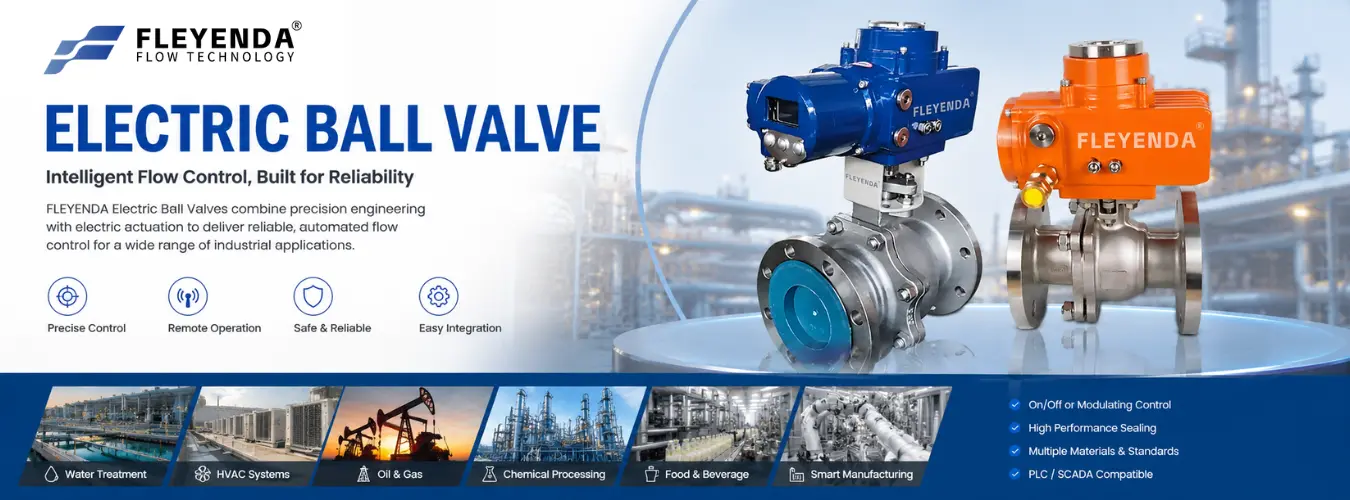
Application overview
| Industry | Main Function | Key Value |
|---|---|---|
| Water Treatment | Flow isolation & dosing | System reliability |
| HVAC | Temperature regulation | Energy efficiency |
| Oil & Gas | Pipeline control | Operational safety |
| Chemical Processing | Corrosive media handling | Material compatibility |
| Food & Beverage | Hygienic fluid control | Sanitary compliance |
| Smart Manufacturing | Automated process control | System integration |
Across all industries, the core value of electric ball valves is consistent: enabling controlled, stable, and intelligent fluid management.
Selection Guide for Electric Ball Valve
Selecting an electric ball valve requires careful evaluation of system parameters, media conditions, and control requirements. A correct selection ensures long-term stability, efficiency, and compatibility with automation systems.
The first consideration is valve size and pressure rating, which determines whether the valve can safely operate within the pipeline system. Incorrect sizing may lead to flow restriction or excessive actuator load.
Next is material compatibility, which must match the properties of the medium. For example:
- Stainless steel is used for corrosive or high-purity applications
- PVC is suitable for low-pressure water and chemical systems
- Carbon steel is applied in high-strength industrial pipelines
Another important factor is actuator type selection, which determines how the valve behaves in the system.
Actuator types and usage scenarios
| Type | Function | Application |
|---|---|---|
| On/Off Type | Fully open or closed | Isolation systems |
| Modulating Type | Adjustable flow control | Process regulation |
Environmental conditions also play a critical role. Temperature range, humidity, vibration, and explosion risk must all be considered. In hazardous environments, certified explosion-proof actuators are required to ensure compliance and safety.
Finally, system compatibility with control signals such as 4–20mA or 0–10V should be verified to ensure seamless integration with existing automation infrastructure.
System-Level Value and Conclusion
Electric ball valves represent a key evolution in industrial flow control technology. By combining mechanical sealing reliability with electric automation intelligence, they transform traditional pipeline systems into smart, controllable, and data-driven infrastructures.
Their value is not limited to opening or closing flow paths, but extends to enabling centralized control, system optimization, and predictive maintenance strategies across industries.
As industrial systems continue to evolve toward digitalization and automation, electric ball valves will remain a foundational component in modern fluid control architecture, supporting safer, more efficient, and more intelligent industrial operations.