


F-ZJHM Stainless Steel Sleeve Control Valve
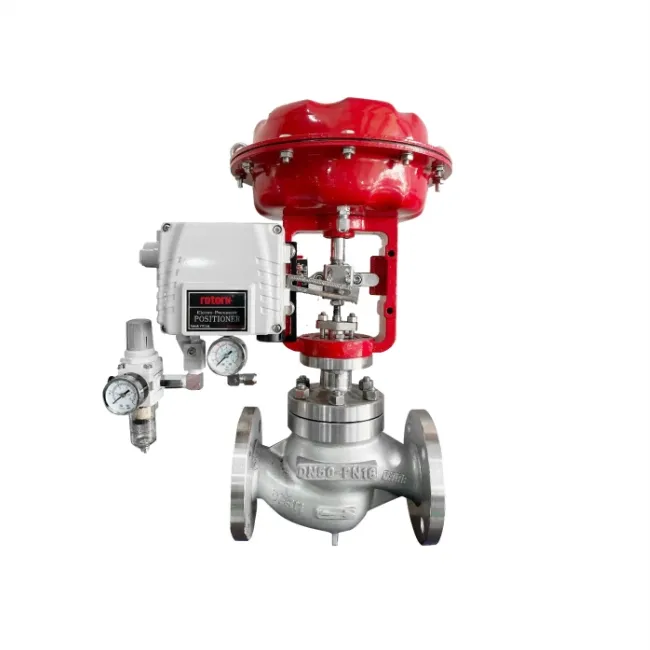
F-ZJHM Stainless Steel Sleeve Control Valve
Stainless Steel Sleeve Control Valve uses a cage-guided sleeve trim to stabilize flow and reduce noise under high pressure; its CF8M stainless steel body resists corrosion and extends service life; this design improves accuracy, lowers cavitation, and cuts maintenance costs, verified by IEC 60534 and API 598 testing for reliability and leak-tightness.
| Диапазон размеров | DN15–DN300 (1/2″–12″) |
| Диапазон рабочего давления: | ASME Class 150/300/600 (PN16–PN100) |
| Диапазон рабочих температур: | : -10°C to 200°C (PTFE/soft seat); -29°C to 425°C (graphite/metal seat) |
| Материал корпуса: | CF8M (ASTM A351 316/316L Stainless Steel) |
| Тип подключения: | Raised-Face Flanged, ASME B16.5 (EN 1092-1 on request) |
| Применимая среда: | Liquids, gases, and steam (including mildly corrosive service) |
| Тип привода: | Pneumatic diaphragm, spring-return with electro-pneumatic positioner (4–20 mA) |
| Варианты напряжения | 24 VDC, 110 VAC, 220 VAC (for positioner/solenoid/limits) |
| Стандарт проектирования | IEC 60534; ASME B16.34 |
| Стандарт испытаний | API 598 (body/seat); IEC 60534-4 (performance) |
| Противопожарная конструкция | Not standard/applicable for globe control valves |
| Сертификация | CE / RoHS / ISO 9001 / IP65 (привод) |
| Настройка | Выше приведены примеры стандартных параметров. Если у вас есть конкретные параметры и материалы, мы можем адаптировать их все в соответствии с вашими требованиями. |
| Серия | AT | AW | Линейный | Пневматический цилиндр | Санитарный |
|---|---|---|---|---|---|
| Корпус клапана | Шаровой кран, дроссельная заслонка, пробковый кран | Задвижка, Global Valve | Ножевой задвижка | Санитарный клапан-бабочка | |
| Функция | Двойного действия, одинарного действия (с автоматической переустановкой при сбое, FO или FC) | ||||
| Вспомогательное оборудование для систем управления |
• Электромагнитный клапан, фильтр-регулятор-смазочник (F.R.L.), позиционер, концевой выключатель, маховик • Электромагнитный клапан и позиционер имеют взрывозащищенное исполнение и, на выбор, сигнализацию обратной связи | ||||
| Рабочая среда |
Чистый и сухой воздух, воздух с добавлением смазки или инертный газ. Любой некоррозионный газ, совместимый с внутренними деталями привода и смазочным материалом. Температура точки росы рабочей среды составляет –20 °C, а размер частиц примесей не превышает 30 мкм. При выборе позиционера размер частиц примесей не должен превышать 5 мкм. | ||||
| Давление воздуха в источнике | от 3 бар до 8 бар | ||||
| Температура окружающей среды при эксплуатации |
• Стандартный тип: от -20 °C до +80 °C • Низкотемпературный тип: от -40 °C до +80 °C • Высокотемпературный тип: от -20 °C до +160 °C | ||||
| Смазка |
В нормальных условиях эксплуатации стандартная модель не требует дополнительной смазки. Для условий эксплуатации при низких или высоких температурах требуются специальные смазочные материалы. | ||||
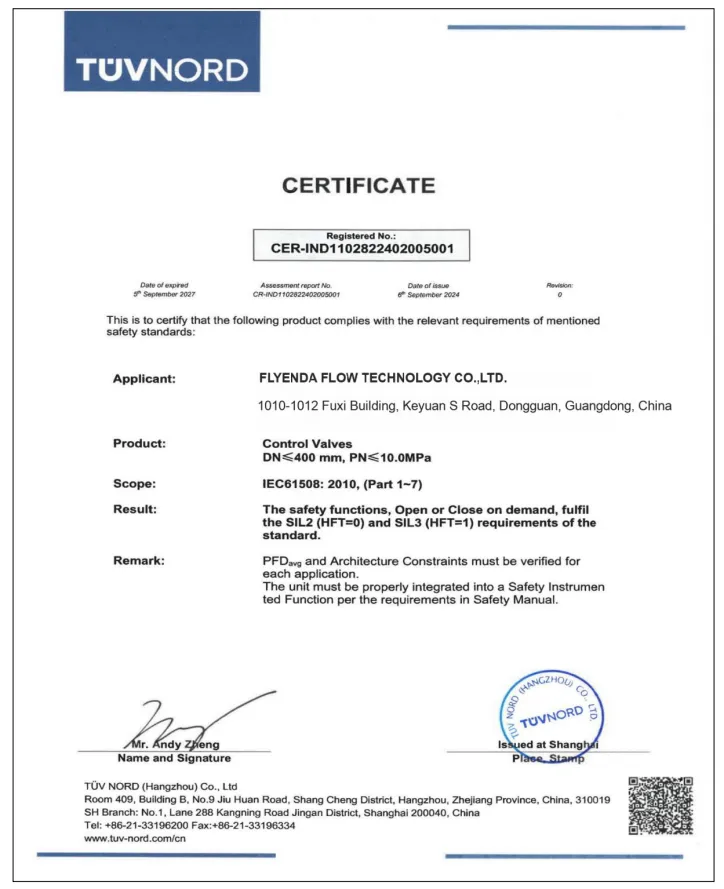
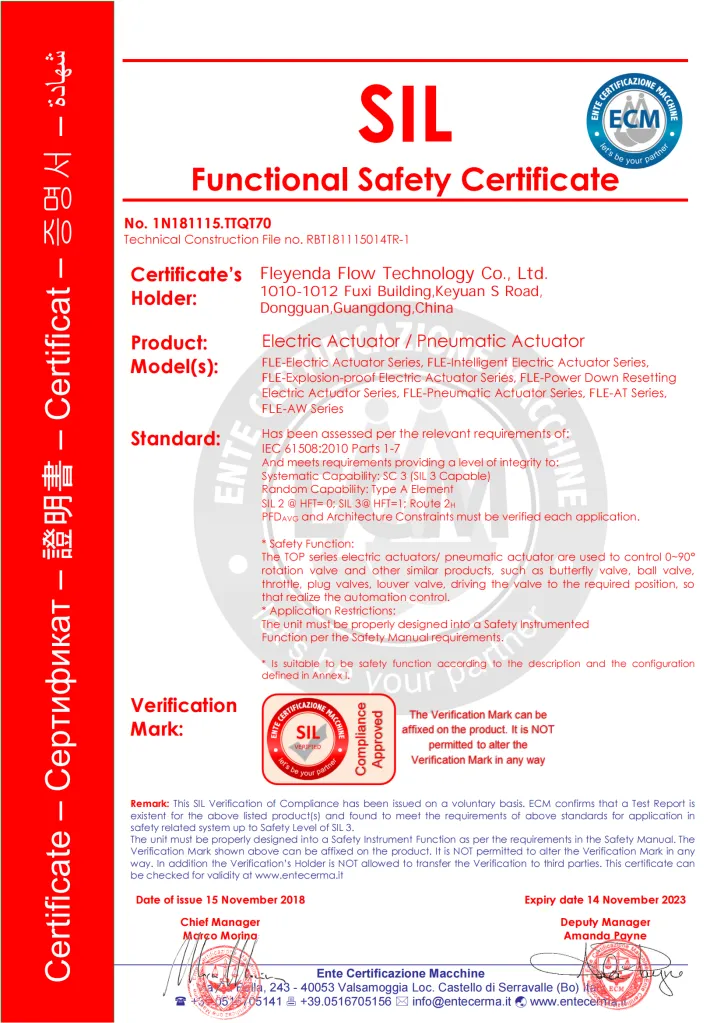
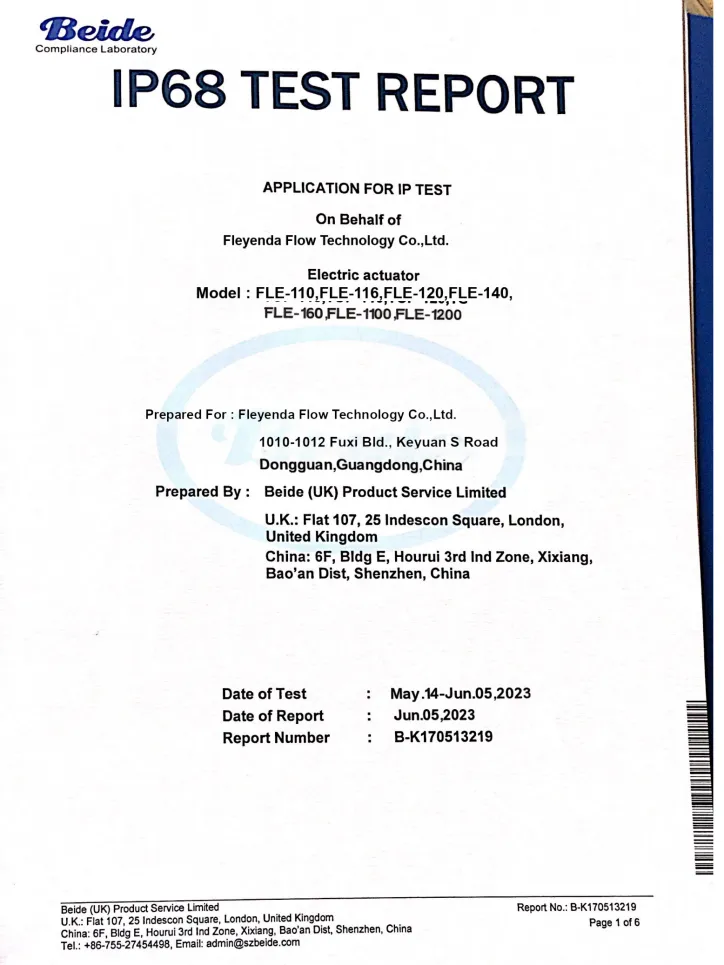
Сертифицированное качество для промышленного применения арматуры
Клапаны и электрические приводы Fleyenda разработаны для стабильной работы, надежной эксплуатации и длительного использования в промышленных условиях. Благодаря сертифицированному качеству и соответствующей технической поддержке они подходят для применения в системах водоподготовки, химической переработки, автоматизации и управления промышленными процессами.
Часто задаваемые вопросы, которые интересуют пользователей 80%
1.What factors should be checked when sizing a Stainless Steel Sleeve Control Valve for high-pressure service?
• Confirm valve pressure drop and flow range suit the process conditions.
• Use sleeve-guided trim to handle large differential pressures with stability.
• Match actuator and positioner size to the valve’s flow capacity.
• Choose the right flow characteristic—linear or equal-percentage—to optimize control.
2.How to ensure reliable operation of a corrosion-resistant sleeve control valve in harsh media?
• Verify 316/316L stainless steel body and trim for chemical compatibility.
• Select proper packing—PTFE for moderate, graphite for high-temperature service.
• Use hardened seats for erosion resistance under abrasive or hot flow.
• Schedule regular inspection of sleeve and plug surfaces for wear.
3.What installation steps improve performance of a flanged stainless sleeve valve in automation systems?
• Maintain straight pipeline runs to reduce turbulence.
• Calibrate actuator stroke and positioner response before startup.
• Verify 4–20 mA signal accuracy with control system feedback.
• Test valve performance under operating flow to confirm stability.
4.How to reduce noise or vibration in a high-pressure control valve?
• Keep pressure drop within the valve’s rated ΔP limit.
• Install anti-cavitation sleeve trim for flashing or erosive conditions.
• Inspect downstream piping for restrictions that amplify turbulence.
• Adjust actuator tuning to prevent hunting in control loops.