


INDUSTRIAL VALVE SELECTION GUIDE
Electric Actuated Ball Valves Guide
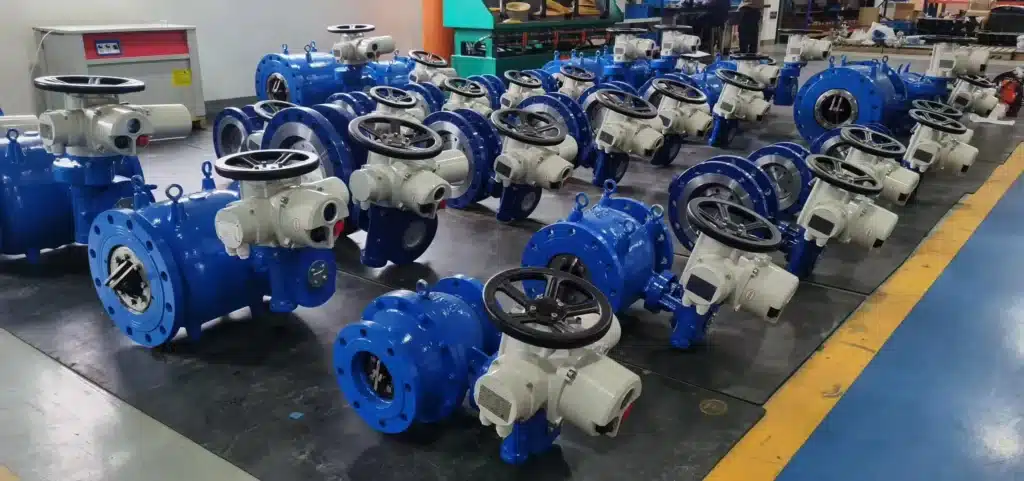
Electric actuated ball valves combine a quarter-turn ball valve with an electric actuator to provide automated pipeline isolation, remote operation and, with a suitable valve and actuator configuration, flow regulation. They are widely used in water treatment, chemical processing, oil and gas, industrial equipment, food and beverage processing, and other automated piping systems.
Choosing the right electric actuated ball valve involves more than selecting a nominal pipe size. Valve body material, seat compatibility, pressure and temperature ratings, actuator torque, power supply, control signals and installation conditions all affect performance. This guide explains the main configurations, applications and selection criteria, with practical product options from Fleyenda.
What Are Electric Actuated Ball Valves?
Electric actuated ball valves are automated valves in which an electric actuator rotates a ball inside the valve body to open or close the flow passage. In a typical quarter-turn design, the ball rotates approximately 90 degrees between the open and closed positions.
When the ball bore aligns with the pipeline, the valve permits flow. When the ball rotates to the closed position, the solid section of the ball blocks the passage. Seat materials and valve construction determine sealing performance and suitability for the process medium.
The electric actuator supplies the movement required to operate the valve. Depending on its configuration, it can receive commands from a switch, relay, control panel, PLC or DCS. Some models support only open and close commands, while suitable modulating configurations can position the valve in response to a control signal.
The main advantage is automated operation without requiring a compressed-air supply. Electric actuated ball valves are particularly useful when equipment needs remote switching, scheduled operation, centralized monitoring or integration into an automated production line.
FLEYENDA PRODUCT RANGE
Electric Actuated Ball Valves: Recommended Products
Compare the valve construction, connection, operating function and application before choosing a model. These Fleyenda products cover common requirements for automated industrial pipelines.
| Product | Key Specifications | Aplicações típicas | Product Details |
|---|---|---|---|
FLE-Q-FElectric 2-Way Flanged Ball Valve Full-bore construction for automated pipeline isolation and remote shutoff. | ConexãoCom flangeSizeDN15–DN300PressãoPN16–PN40CorpoSS304 / SS316 / WCB | Industrial pipelines, water systems, process skids and automated isolation. | View Product |
FLE-Q-3PS3-Piece Motorized Ball Valve Serviceable body construction for easier access to internal components during maintenance. | ConexãoThreadedSizeDN8–DN100Pressão10 / 16 bar standard configurationsCorpoSS304 / SS316 options | OEM equipment, industrial utility lines and process skids where maintenance access matters. | View Product |
FLE-Q-2PSFemale Thread Electric Actuated Ball Valve Compact electric valve for compatible threaded pipework and equipment connections. | ConexãoFemale threadSizeDN8–DN100PressãoUp to PN16–PN63, by configurationThreadNPT / BSP options | Small-bore industrial pipelines, utility lines and automated machinery. | View Product |
FLE-VQ-FElectric Actuator V-Port Ball Valve V-shaped ball opening for selected throttling and modulating applications. | ConexãoCom flangeSizeDN25–DN200PressãoPN1.6 MPa referenceControlON/OFF or modulating options | Process flow regulation where the flow characteristic and control range must be specified. | View Product |
FLE-Q-TFElectric 3-Way Flanged Ball Valve Three-port construction for automated flow diversion, distribution and bypass. | ConexãoCom flangeSizeDN15–DN200PressãoPN10–PN40Flow pathL-port / T-port options | Process routing, equipment switching, bypass circuits and selected mixing arrangements. | View Product |
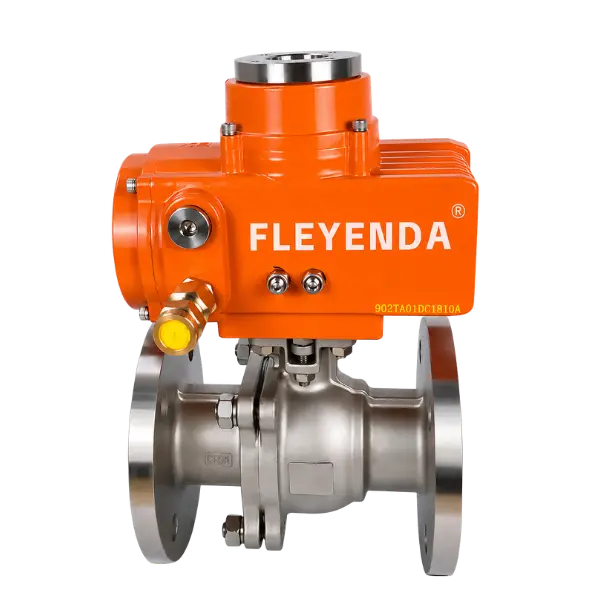
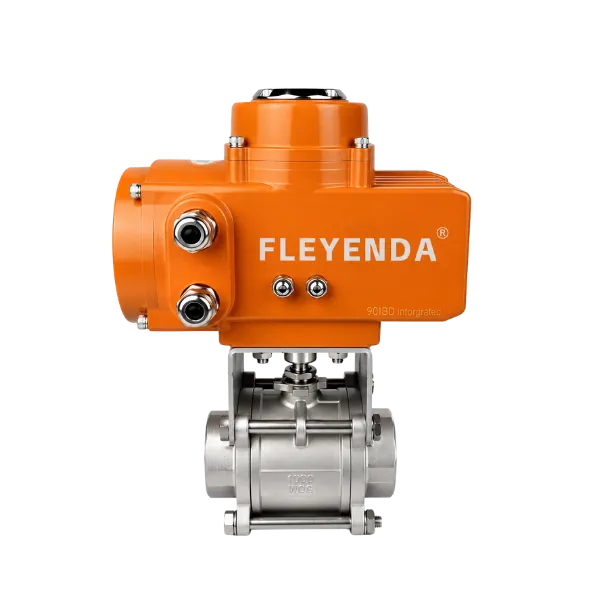

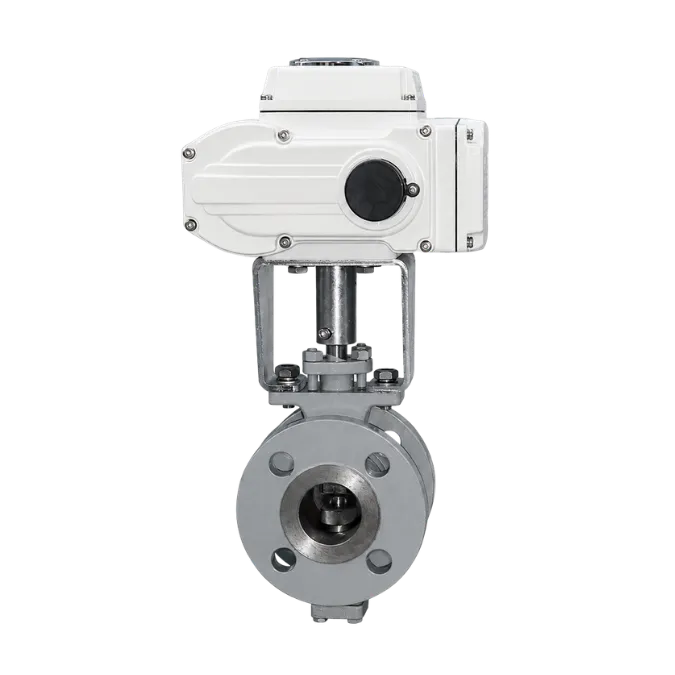
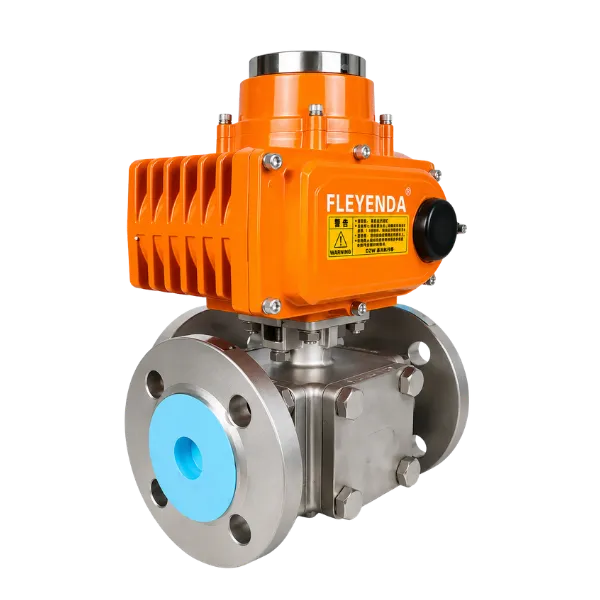
Specifications vary by size, material, seat and actuator configuration. Confirm the approved product datasheet for the actual operating conditions before ordering.
How Does an Electric Actuated Ball Valve Work?
The operation combines the mechanical action of the ball valve with the electrical control and output mechanism of the actuator.
1. The Control System Sends a Command
A control panel, PLC or other compatible control device sends an opening, closing or positioning command. The required wiring and control interface depend on whether the actuator is an ON/OFF or modulating model.
2. The Electric Actuator Produces Torque
An electric motor drives a gear mechanism that converts motor rotation into usable output torque. The actuator transfers this torque to the valve stem through the mounting interface.
3. The Ball Rotates
The stem rotates the ball to the commanded position. In a standard quarter-turn design, a 90-degree movement typically changes the valve from fully open to fully closed, or vice versa.
4. The Actuator Stops at the Required Position
Limit switches, position sensors or actuator control electronics stop movement at the designated position. Depending on the configuration, the actuator may provide open/closed status or continuous position feedback to the control system.
For reliable operation, actuator output torque must be sufficient for the selected valve under the actual differential pressure and operating conditions. Nominal pipe size alone is not enough to determine the correct actuator.
Common Types of Electric Actuated Ball Valves
Two-Way Electric Ball Valves
A two-way valve has one inlet and one outlet and is generally used for pipeline isolation. When open, the ball bore allows flow through the valve; when closed, the ball blocks the passage. Two-way designs are common in water, oil, gas and compatible process-fluid systems.
Full-bore designs can reduce flow restriction when fully open. The appropriate seat material, body construction, pressure rating and actuator torque should be confirmed for each service.
Three-Way Electric Ball Valves
Three-way ball valves are used to divert, distribute or combine flow between three ports. L-port and T-port configurations create different flow paths, so the required connection between ports must be defined before ordering.
These valves are often used in tank switching, bypass arrangements, equipment selection and process routing. A simple request for a three-way valve is not sufficient if the process requires a specific port sequence.
Flanged Electric Ball Valves
Flanged designs are often selected for industrial pipelines where bolted connections, defined face-to-face dimensions and convenient installation are required. Confirm the flange standard, pressure class, gasket requirements and mating-pipe dimensions.
Threaded Electric Ball Valves
Threaded designs are suitable for compatible smaller-bore piping and compact equipment assemblies. Thread form, size and sealing method must match the pipe or fitting. NPT and BSP-family threads should not be assumed interchangeable.
Three-Piece Electric Ball Valves
The three-piece body allows the central valve section to be accessed more easily for maintenance than many one-piece constructions. This can be useful where downtime, seat replacement and access to internal components matter.
V-Port Electric Ball Valves
V-port ball valves are designed for selected flow-regulation duties. The shaped opening can provide a more useful relationship between valve position and flow than a conventional full-port ball valve, but actual performance depends on valve sizing, pressure drop, fluid properties and installed system conditions.
Sanitary and UPVC Electric Ball Valves
Sanitary designs are intended for suitable hygienic processing systems, while UPVC-bodied designs may suit compatible liquids in water treatment and chemical applications. Neither category should be selected by material name alone: the complete wetted-material package must be checked against the medium, concentration, temperature and cleaning process.
ON/OFF vs Modulating Electric Actuated Ball Valves
The required control mode is one of the most important decisions when specifying an electric actuated ball valve.
| Feature | ON/OFF Control | Controle de modulação |
|---|---|---|
| Main purpose | Fully open or fully closed | Adjust valve position between setpoints |
| Typical command | Open / close input | Compatible positioning signal, such as 4–20 mA or 0–10 V |
| Common use | Remote isolation and automatic switching | Selected flow-control applications |
| Key consideration | Travel time, torque and status feedback | Valve characteristic, Cv/Kv, pressure drop and positioning performance |
A modulating actuator does not automatically make every ball valve suitable for precise flow control. If continuous regulation is required, consider a V-port or other purpose-designed control configuration and confirm its flow characteristics against the process requirement.
How to Choose the Right Electric Actuated Ball Valve
1. Define the Medium and Operating Conditions
Identify the fluid, concentration, viscosity, temperature and any suspended solids. These factors influence the body material, ball, seat, seals and overall valve construction. Chemical compatibility should be verified for the actual operating conditions rather than inferred from a general material category.
2. Select the Valve Size and Connection
Confirm nominal pipe size, required flow rate and connection standard. Flanged, threaded and sanitary connections serve different piping arrangements. The valve should fit the installation and meet the required flow capacity without introducing unacceptable pressure loss.
3. Confirm Pressure and Temperature Ratings
Check normal and maximum operating pressure, differential pressure, temperature and potential pressure surges. The pressure rating of the body does not automatically mean every seat, seal or actuator configuration is suitable for the same conditions.
4. Match the Seat and Sealing Materials
PTFE is widely used for compatible chemical and general industrial services, while other elastomeric or polymer seat materials may be selected for different fluids and temperatures. Material selection must consider chemical resistance, temperature, pressure, shutoff requirements and expected service life.
5. Calculate the Required Actuator Torque
Ball valves require sufficient torque to overcome seating friction and other operating loads. The required torque can change with differential pressure, seat design, material, temperature and service conditions. Use manufacturer torque data for the selected valve and apply the appropriate engineering margin rather than choosing an actuator from pipe size alone.
6. Choose the Control Signal and Power Supply
Specify the available electrical supply, such as DC24V, AC110V or AC220V where supported by the selected model. For PLC or DCS integration, define the control logic, open/closed feedback, position feedback and any modulating input. Confirm the wiring diagram and terminal configuration for the quoted actuator.
7. Check Environmental Protection
For outdoor or washdown installations, consider enclosure protection, cable-entry sealing, humidity, dust, corrosion exposure and possible water immersion. IP67 or IP68 options may be available on selected configurations, but the required rating and installation conditions must be confirmed for the specific model.
8. Define Power-Loss Behaviour
State whether the valve should remain in position, move to a safe position or require manual intervention when electrical power is lost. A standard electric actuator does not automatically provide fail-open or fail-closed action. Any automatic return function requires a suitable specified configuration.
Industrial Applications of Electric Actuated Ball Valves
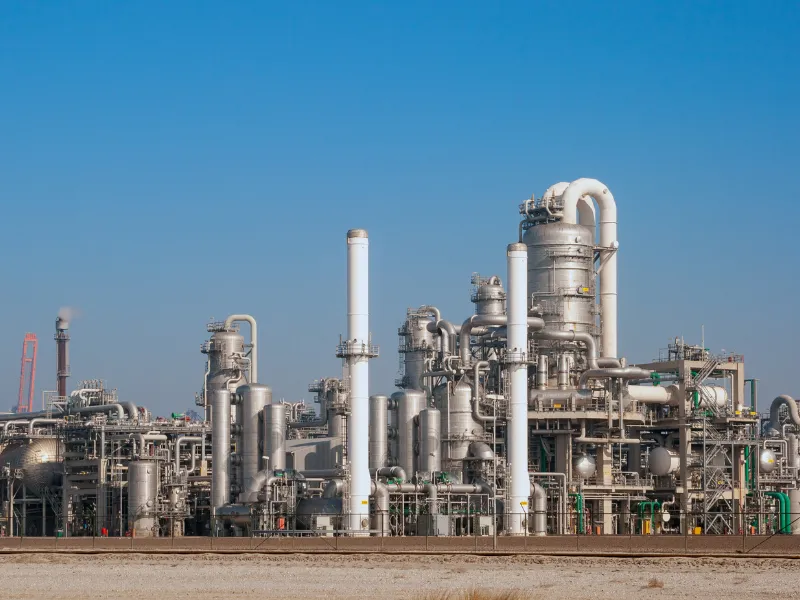
Tratamento de Água e Efluentes
Electric actuated ball valves can provide remote isolation for compatible water lines, dosing equipment, treatment skids and utility pipelines. Seat selection, water quality, pressure and outdoor exposure should be considered. Larger pipelines may be better served by butterfly valves depending on the required duty.
Processamento Químico
Automated ball valves can isolate or route compatible chemicals between tanks, pumps and process equipment. Select body, ball, seat and seals based on the exact chemical concentration, temperature and pressure. For strongly corrosive media, lined valve configurations may be worth evaluating.
Petróleo e Gás
Electric actuated ball valves can be used for remote isolation and process routing in suitable oil and gas systems. Pressure class, leakage requirements, fire-safe requirements, material compatibility and hazardous-area certification must be checked against the project specification.
Alimentos e Bebidas
Sanitary electric ball valves may be used for automated product transfer and process switching where the valve construction is suitable for the hygiene requirements. Confirm the wetted materials, surface and connection requirements, seal compatibility and cleaning conditions.
Industrial Equipment and OEM Systems
Equipment manufacturers can integrate electric ball valves into water-treatment skids, packaging equipment, thermal systems and automated production machinery. Connection dimensions, actuator mounting, wiring, available space and control interfaces should be confirmed before finalizing the equipment design.
Installation and Maintenance Considerations
Correct installation helps protect the valve seat, actuator and pipeline connection from avoidable damage.
- Check the flow direction: Follow any directional marking and the manufacturer’s installation instructions for the selected model.
- Align the pipeline: Avoid forcing misaligned flanges or threaded connections into place, as piping stress can affect sealing and operation.
- Verify the electrical supply: Confirm voltage, wiring, grounding and control logic before commissioning.
- Test the full travel: Verify opening and closing, position indication and control-system feedback before placing the system into service.
- Check the process limits: Do not operate outside the specified pressure, temperature or differential-pressure limits.
- Plan maintenance: Inspect for external leakage, abnormal actuator noise, loose connections and changes in operating time according to the service conditions.
Before maintenance, isolate the equipment and safely release trapped pressure in accordance with site procedures. An electric actuated ball valve should not be assumed to provide safe isolation for every maintenance task without an appropriate system-level isolation arrangement.
Perguntas frequentes
What is the difference between an electric ball valve and an electric actuated ball valve?
The terms are often used interchangeably, but electric actuated ball valve explicitly describes a ball valve fitted with an electric actuator. When ordering, confirm that the valve and actuator are supplied as a compatible assembly.
Are electric actuated ball valves suitable for continuous flow control?
Some configurations are suitable for modulating service, but not every standard ball valve provides accurate control across the required flow range. Evaluate a V-port or purpose-designed control valve when continuous regulation is needed.
Which electric actuated ball valve is best for chemical applications?
There is no universal best model. Select the body, ball, seat and seal materials based on the actual chemical, concentration, temperature, pressure and required leakage performance. Lined valves or compatible polymer-bodied valves may be suitable for some services.
Can electric actuated ball valves connect to a PLC?
Yes, when the actuator has a compatible electrical interface. Confirm the control input, wiring logic, status contacts and any required position feedback before ordering.
What voltage options are available?
Depending on the actuator model, options may include DC24V, AC110V and AC220V, as well as other configurations. Always confirm the required supply voltage against the selected product datasheet.
Can electric actuated ball valves be used outdoors?
Yes, if the actuator enclosure, cable entries, external materials and installation are suitable for the environment. Specify the required ingress protection and any additional corrosion or hazardous-area requirements.
How do I choose between a flanged and threaded electric ball valve?
Flanged valves are commonly considered for industrial pipeline connections where bolted joints and defined flange standards are required. Threaded valves are often suitable for smaller piping and compact equipment. Confirm the pipe connection, pressure rating and installation requirements.
What information is needed for a quotation?
Provide the valve size, medium, pressure, temperature, connection standard, body and seat material requirements, voltage, control mode, feedback requirements and quantity. A process datasheet or equipment drawing can help confirm the correct configuration.
Find the Right Electric Actuated Ball Valve for Your Application
Choosing the right electric actuated ball valve requires matching the valve construction, wetted materials and actuator configuration to the actual pipeline duty. Two-way and three-way designs, flanged and threaded connections, serviceable three-piece bodies and V-port control valves address different requirements.
Fleyenda offers electric actuated ball valve options for industrial isolation, process routing and selected modulating applications. Share your operating conditions and technical requirements to identify a suitable configuration for your project.