


How to Choose an Oil Control Valve for Industrial Pipelines
Selecting the right oil control valve is not simply a matter of matching valve diameter to pipeline size. Oil viscosity, operating temperature, differential pressure, flow range, control accuracy, actuator type and safety requirements can all affect valve performance. For industrial pipelines, the correct valve should provide stable control while protecting pumps, process equipment and downstream systems.
An oil control valve may perform several different functions in an industrial system. Some valves continuously regulate oil flow, while others isolate equipment, control tank transfer, manage bypass lines or respond to automation commands. This means there is no single valve design that is ideal for every oil pipeline.
A lubricating oil skid, hydraulic oil system, fuel oil transfer line and refinery process pipeline may all use oil control valves, but their operating conditions can be very different. The best selection begins with the required function of the valve and then considers oil characteristics, system pressure, temperature, flow requirements and method of actuation.
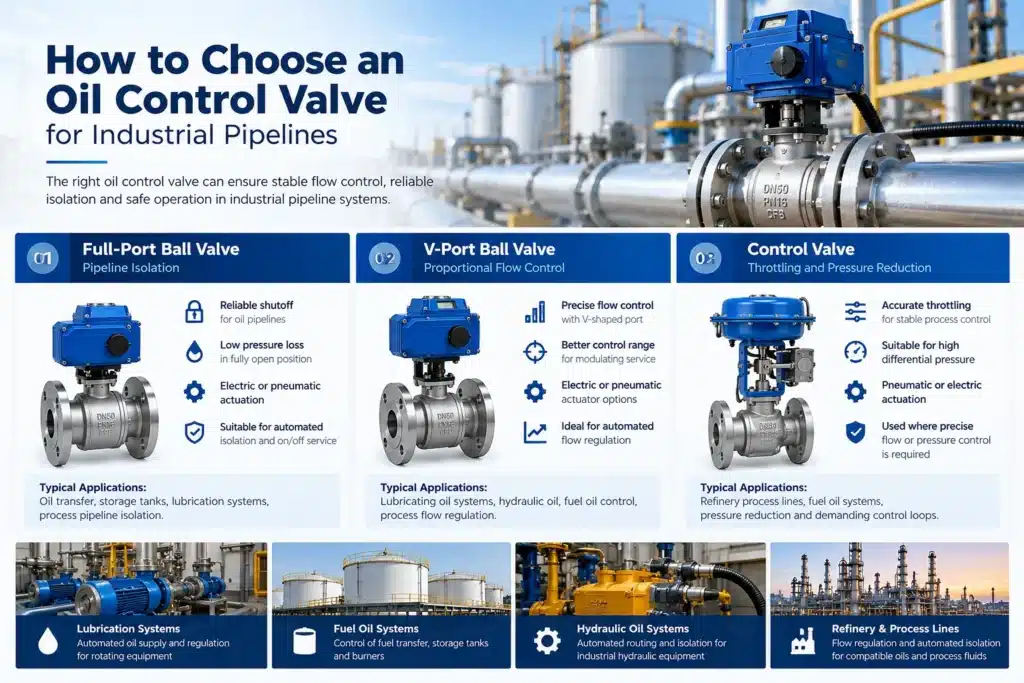
What Does an Oil Control Valve Do?
In an industrial pipeline, an oil control valve changes or stops the flow of oil according to process requirements. In a simple transfer system, the valve may only need to open and close automatically. In a more complex process line, the valve may continuously change position to maintain a required flow rate, pressure, tank level or other process condition.
The term oil control valve therefore covers several types of industrial valves. A full-port ball valve is commonly used where low pressure loss and reliable shutoff are important. A V-port ball valve provides more predictable flow adjustment at intermediate opening positions. Globe-style control valves may be preferred where the process requires traditional throttling characteristics or where the valve must handle substantial pressure reduction.
Selecting the wrong valve can create unstable oil flow, excessive pressure loss, premature seat wear, actuator overload or poor control response. Engineers should therefore evaluate the complete operating condition instead of specifying an oil control valve based only on pipe diameter.
Which Valve Type Is Best for Oil Pipelines?
| Type de vanne | Typical Duty | Main Advantage | Important Selection Point |
|---|---|---|---|
| V-Port Ball Valve | Modulating oil flow | Good control range with a compact quarter-turn design | Size according to flow rate and pressure drop rather than pipeline diameter alone |
| Full-Port Ball Valve | On/off isolation | Low pressure loss when fully open | Best suited to isolation rather than continuous throttling |
| Globe Control Valve | Continuous throttling | Established control characteristics | Confirm required Cv, differential pressure and actuator thrust |
| Pneumatic V-Port Valve | Modulating or fail-safe control | Fast response where instrument air is available | Confirm air pressure, fail position and control accessories |
| 3-Way Ball Valve | Oil diversion and routing | Multiple flow paths within one valve body | Confirm whether L-port or T-port configuration is required |
7 Factors to Consider When Choosing an Oil Control Valve
Define the Control Function
First determine whether the oil control valve will regulate flow continuously or operate mainly as an automatic shutoff valve. Continuous modulation normally requires a characterized valve such as a V-port ball valve or dedicated control valve, while simple isolation can usually be handled by a full-port ball valve.
Identify the Oil Type and Viscosity
Lubricating oil, hydraulic oil, fuel oil and heavier process oils behave differently. Higher viscosity increases flow resistance and can affect the required Cv, valve size, pressure loss, actuator torque and response of the complete control loop.
Check Pressure and Differential Pressure
Maximum pipeline pressure alone is not sufficient for proper control valve selection. Upstream and downstream pressures should also be provided so that the actual differential pressure across the valve can be considered during sizing and actuator selection.
Confirm Operating Temperature
Oil temperature affects viscosity as well as seat, seal and packing selection. Higher-temperature oils may require upgraded sealing materials or alternative seat designs instead of standard soft-seat configurations.
Calculate the Required Flow Range
For modulating service, provide minimum, normal and maximum flow rather than automatically selecting the same DN as the pipeline. An oversized control valve may operate almost entirely near its closed position and provide unstable or inaccurate control.
Select Compatible Materials
Carbon steel and stainless steel are common body materials for industrial oil pipelines. Seat, packing and elastomer compatibility should also be checked against oil composition, additives, operating temperature and the required service life.
Choose the Correct Actuator
Electric actuators are convenient for remote pipeline automation without instrument air. Pneumatic actuators provide rapid response and can support spring-return fail-safe arrangements where a reliable compressed-air supply is available.
Oil Pipeline Valve Options
The correct product depends on whether the oil pipeline requires proportional regulation, automated isolation or fast pneumatic modulation. Select the valve function first, then confirm size, pressure, temperature, flow range and actuator configuration.
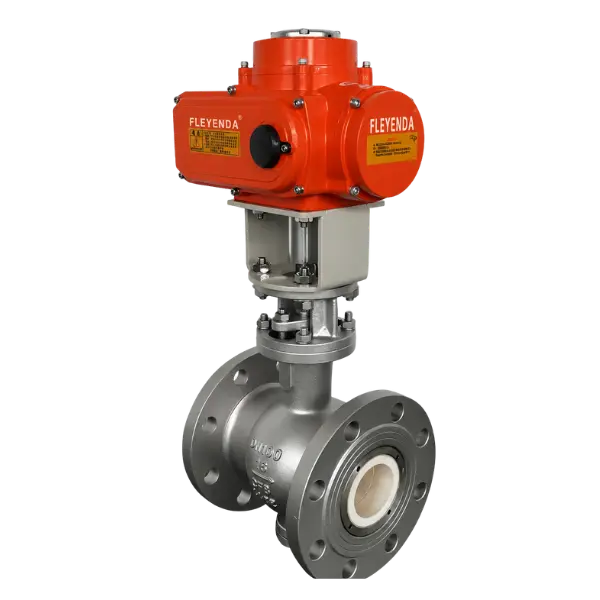
Electric V-Port Ball Valve
A modulating electric ball valve designed for proportional flow regulation where a conventional round-port valve does not provide sufficient usable control range.
- Size RangeDN25–DN300
- PressurePN16–PN40
- V-Port15° / 30° / 60° / 90°
- ControlOn/Off / Modulating
- Best ForOil Flow Regulation
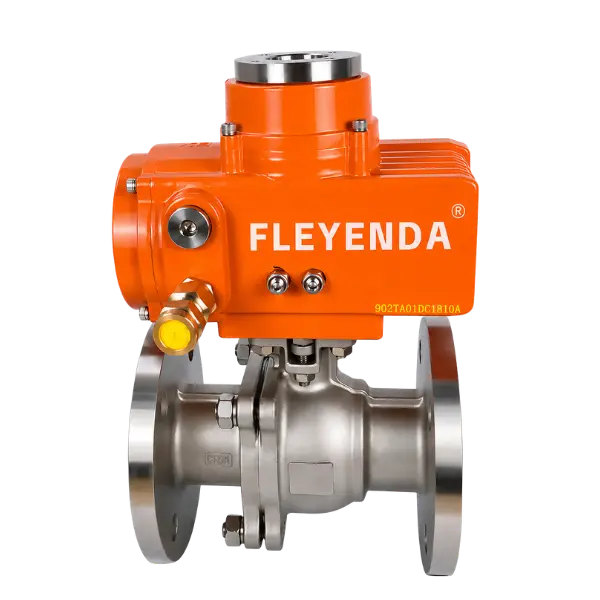
Electric 2-Way Flanged Ball Valve
A full-bore electric ball valve for dependable automated shutoff in oil pipelines, equipment skids and process systems where low flow restriction is important.
- Size RangeDN15–DN300
- PressurePN16–PN40
- BodySS304 / SS316 / WCB
- ProtectionIP67 / IP68 Option
- Best ForAutomated Isolation

Pneumatic V-Port Ball Valve
A V-port control valve with pneumatic actuation for proportional flow regulation where rapid response, positioner control or spring-return operation is required.
- Size RangeDN15–DN200
- PressurePN16–PN40
- BodyCF8 / CF8M
- ActuatorDA / Spring Return
- Best ForFast Modulation
Why Valve Sizing Matters More Than Pipeline Diameter
One of the most common mistakes when selecting an oil control valve is choosing a valve with exactly the same nominal diameter as the pipeline without checking the required flow coefficient. This approach may be acceptable for a simple full-open isolation valve, but it can create serious problems in a modulating control loop.
If the control valve is oversized, normal operating flow may occur when the valve is only slightly open. Small actuator movements can then create relatively large changes in oil flow, making the process difficult to stabilize. Excessive valve sizing can also cause frequent actuator movement and accelerated wear of the valve trim and seat.
At the opposite extreme, an undersized oil control valve can create excessive pressure loss and may not provide the required maximum flow. The valve may remain close to fully open during normal operation, leaving very little additional capacity when process demand increases.
For control applications, the valve manufacturer should receive minimum, normal and maximum flow, upstream pressure, downstream pressure, oil temperature and fluid properties. These values allow the required Cv or Kv to be evaluated and help determine the appropriate valve size and flow characteristic.
Oil Viscosity and Temperature Must Be Considered Together
Oil behaves differently from water because its viscosity can change significantly with temperature. Lubricating oil or fuel oil that flows relatively easily at normal operating temperature may become considerably more viscous during a cold startup. This change increases system resistance and can reduce the actual flow passing through the control valve.
For heavier oils, viscosity information should therefore be supplied at the expected operating temperature rather than using only generic fluid data. If the pipeline operates over a wide temperature range, both startup and normal operating conditions should be considered when evaluating valve capacity.
Temperature also affects valve seat, packing and seal materials. PTFE seats are widely used in industrial ball valves, but higher temperatures or demanding process conditions may require modified materials or alternative sealing configurations. Pressure, temperature and fluid compatibility should always be evaluated together.
Electric vs Pneumatic Oil Control Valves
Both electric and pneumatic actuators are widely used for oil control valves. The better choice depends on plant infrastructure, required response speed, control requirements and the desired fail-safe philosophy.
An electric oil control valve can be particularly useful in packaged equipment, remote pipelines and facilities where instrument air is unavailable. Electric actuators can be integrated with PLC or DCS systems and can be configured for simple on/off operation or proportional control depending on the actuator and control module.
Pneumatic oil control valves are frequently used in process facilities that already have a reliable compressed-air network. Their rapid response and spring-return configurations make them attractive where a defined fail-open or fail-closed position is required after loss of air or control signal.
| Selection Point | Actionneur électrique | Actionneur pneumatique |
|---|---|---|
| Instrument Air | Not required | Required |
| Remote Equipment | Often convenient | Requires air infrastructure |
| Actuation Speed | Depends on actuator design | Typically faster |
| Fail-Safe Function | Requires suitable fail-safe configuration | Spring-return actuator commonly used |
| Commande modulante | Available with modulating actuator | Available with pneumatic positioner |
Typical Industrial Applications for Oil Control Valves
Automated oil supply, regulation and isolation for bearings, compressors, turbines and other rotating equipment.
Control of fuel transfer, circulation, storage tanks, burners and associated process equipment.
Automated routing and isolation for industrial hydraulic equipment, machinery and packaged systems.
Flow regulation and automated isolation for compatible oils and hydrocarbon process fluids.
Do You Need a V-Port or Full-Port Ball Valve?
The difference between a V-port and a full-port ball valve is important when selecting an oil control valve. A standard full-port ball valve provides a nearly unrestricted flow path when fully open, making it well suited to isolation duties and applications where minimizing pipeline pressure loss is important.
However, a conventional round port does not normally provide an ideal flow characteristic during partial opening. It can therefore be difficult to achieve stable proportional flow control using a standard on/off ball valve, particularly when the valve is oversized.
A V-port ball valve uses a shaped opening that changes the effective flow area progressively as the ball rotates. This makes it more suitable for modulating oil flow. For automated control loops, it can be combined with an electric modulating actuator or with a pneumatic actuator and positioner.
Full-Port Ball ValveBest suited to automatic pipeline isolation where reliable shutoff and low pressure loss in the fully open position are the main requirements.
V-Port Ball ValveBetter suited to proportional oil flow adjustment because the V-shaped opening provides more usable valve travel for intermediate positioning.
Control ValveConsider a dedicated control valve where the process requires accurate throttling, substantial pressure reduction or demanding process-loop control.
What Information Should You Give the Valve Manufacturer?
Providing complete operating data reduces the risk of incorrect valve sizing and allows the manufacturer to recommend the appropriate valve body, seat, trim and actuator configuration. For OEM equipment and industrial pipeline projects, this information should ideally be confirmed before the piping design is finalized.
- Oil type and composition
- Pipeline nominal diameter
- Minimum, normal and maximum flow rate
- Maximum operating pressure
- Upstream and downstream pressure during control
- Minimum and maximum operating temperature
- Oil viscosity at operating temperature
- Required flange or connection standard
- Classe de pression requise
- On/off or modulating control requirement
- Available power supply or instrument-air pressure
- Required control signal such as 4–20 mA or 0–10 V
- Fail-open, fail-closed or fail-in-place requirement
- Hazardous-area or explosion-proof requirements where applicable
Common Oil Control Valve Selection Mistakes
A frequent mistake is treating every oil valve as an ordinary shutoff valve. This may result in the use of an oversized round-port ball valve for a process that actually requires stable flow modulation. The valve can technically open and close, but its control performance may be poor.
Another common issue is ignoring oil viscosity. A valve selected using only pipeline diameter and pressure may perform very differently once a high-viscosity fluid is introduced. The same concern applies to temperature because oil viscosity can change substantially between cold startup and normal operation.
Engineers should also avoid selecting the actuator based only on nominal valve size. Actual operating torque depends on valve design, seat material, differential pressure, frequency of operation and process conditions. For automated oil valves, actuator safety factor and required control mode should be considered together.
How to Select the Right Oil Control Valve
For simple automatic pipeline isolation, a full-port electric or pneumatic ball valve can provide low flow resistance and reliable shutoff. For continuous flow adjustment, a V-port ball valve or dedicated control valve is usually a better starting point because it provides more useful control across the valve opening range.
The final choice should be based on the actual oil, minimum and maximum flow, operating temperature, differential pressure, required control accuracy and plant automation system. In critical industrial applications, valve sizing should be completed using real process data instead of nominal pipeline size alone.
A correctly selected oil control valve can improve flow stability, reduce unnecessary pressure losses, support reliable automation and extend the operating life of pumps and downstream equipment. For OEM skids, industrial machinery and process pipeline projects, early valve selection also makes it easier to coordinate piping design, actuator requirements, control signals and safety functions.
Oil Control Valve FAQs
What is the best valve for controlling oil flow?
For proportional oil flow control, a V-port ball valve or dedicated control valve is often more suitable than a conventional full-port on/off ball valve. The final selection depends on oil viscosity, flow range, differential pressure, temperature and required control accuracy.
Can a ball valve be used as an oil control valve?
Yes. Full-port ball valves are commonly used for automated oil isolation, while V-port ball valves are more suitable for modulating flow because their port geometry provides a more progressive change in effective flow area as the valve opens.
Is an electric oil control valve better than a pneumatic valve?
Neither actuator type is universally better. Electric actuators are convenient where instrument air is unavailable, while pneumatic actuators are often preferred for fast operation and simple spring-return fail-safe control.
Why is oil viscosity important when selecting a control valve?
High viscosity increases flow resistance and can influence valve capacity, pressure loss and actuator requirements. Oil viscosity can also change significantly with temperature, so sizing should use data that reflects actual operating conditions.
Should an oil control valve be the same size as the pipeline?
Not necessarily. Isolation valves are often selected close to pipeline size, but a modulating oil control valve should be sized according to required flow coefficient, pressure differential and control range. A smaller correctly sized valve can sometimes provide better process control than a valve matching the full pipeline diameter.
Need Help Selecting an Oil Control Valve?
Send Fleyenda your oil type, pipeline size, flow range, operating pressure, temperature and automation requirements. Our team can help evaluate an appropriate electric or pneumatic valve configuration for industrial oil pipelines, equipment packages and process systems.