


How Are Electric Actuated Ball Valves Used in Water Treatment Systems?
Electric Actuated Ball Valves are widely used in industrial water treatment systems to automate pipeline isolation, flow switching and fluid distribution. From raw water intake and filtration to reverse osmosis (RO), chemical dosing and wastewater treatment, these automated valves help operators manage water flow remotely and coordinate different treatment processes.
As water treatment plants become increasingly automated, selecting the right electric actuated ball valves is important for reliable operation. Valve body material, sealing compatibility, pressure rating, pipeline connection and actuator control all influence the suitability of a valve for a particular treatment process.
This guide explains the applications of electric actuated ball valves in industrial water treatment, compares different valve configurations and provides practical selection guidance for engineers, equipment manufacturers and procurement teams.
Electric Actuated Ball Valves for Industrial Water Systems
Explore different valve constructions, flow configurations, materials and electric actuator options for industrial water treatment and pipeline automation.
Recommended Electric Actuated Ball Valves
Different treatment processes require different valve materials, flow paths and connections. Explore these Fleyenda configurations for compatible industrial water and chemical applications.
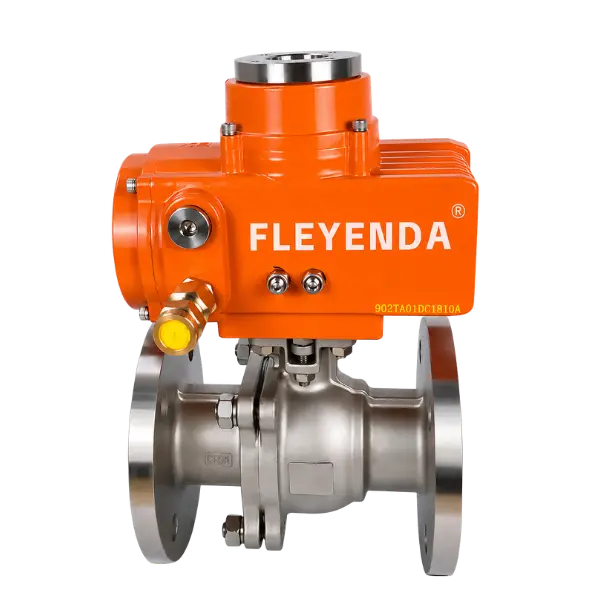
01 / INDUSTRIAL ISOLATION
Electric 2-Way Flanged Ball Valve
A full-bore stainless steel or carbon steel electric ball valve for automated isolation in industrial water pipelines, pump systems, treatment equipment and utility lines.
DN15–DN300
ANSI / DIN / JIS

02 / FLOW DIVERSION
Válvula de bola eléctrica de 3 vías de UPVC FLE-Q-PD
Designed for automated flow diversion and distribution in compatible water treatment, chemical dosing and industrial liquid handling systems. L-port and T-port configurations are available.
DN15–DN100
PN10
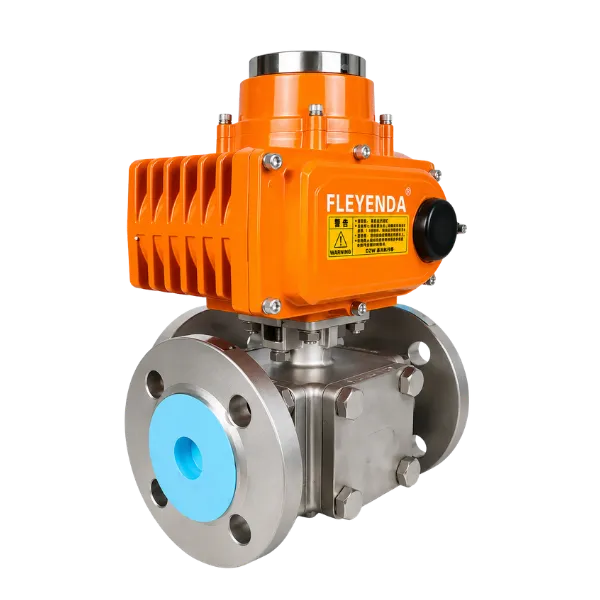
03 / AUTOMATED ROUTING
FLE-Q-TF Electric 3-Way Flanged Ball Valve
For automated water routing, bypass arrangements and flow switching between treatment equipment and different pipeline branches. L-port and T-port options support different flow schemes.
DN15–DN200
PN10–PN40
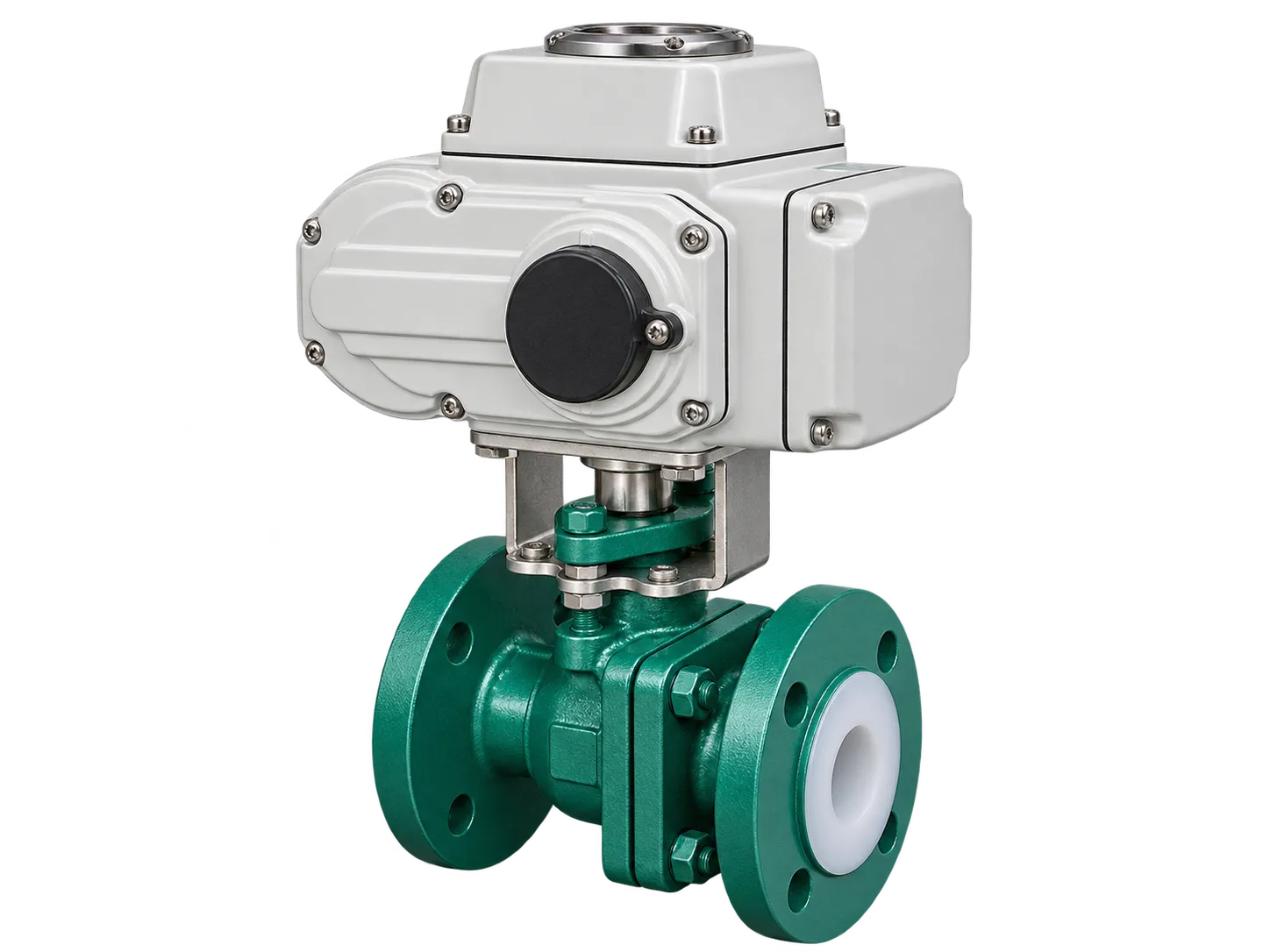
04 / CORROSIVE MEDIA
PTFE/PFA-Lined Electric Actuated Ball Valve
For compatible chemical dosing, acid and alkali transfer, and chemical wastewater applications where fluoropolymer-lined wetted surfaces are required.
DN15–DN300
PN10–PN16
1. Why Are Electric Actuated Ball Valves Important in Water Treatment?
Industrial water treatment plants contain multiple interconnected processes. Water moves through pumps, storage tanks, filtration equipment, chemical dosing systems and distribution pipelines. Each process requires reliable flow management and equipment isolation.
Traditional manual valves require operators to access individual pipeline locations. In larger facilities, this can increase operating workload and make coordinated process control more difficult.
Electric Actuated Ball Valves combine a quarter-turn ball valve with an electric actuator. The actuator rotates the valve ball through 90 degrees to open or close the flow passage, allowing remote operation through control panels, relays or programmable logic controllers (PLCs).
The main benefits include:
- Remote pipeline operation: Open and close valves from centralized control rooms or local electrical panels.
- Automated process sequencing: Coordinate valve operation with pumps, filters and other treatment equipment.
- Reliable isolation: Provide repeatable open-close operation for compatible pipeline services.
- Reduced manual intervention: Minimize the need for operators to access multiple valve locations.
- Flexible integration: Selected actuators support position feedback and modulating control signals.
- No compressed air requirement: Electric actuators are useful where an instrument-air system is unavailable or unnecessary.
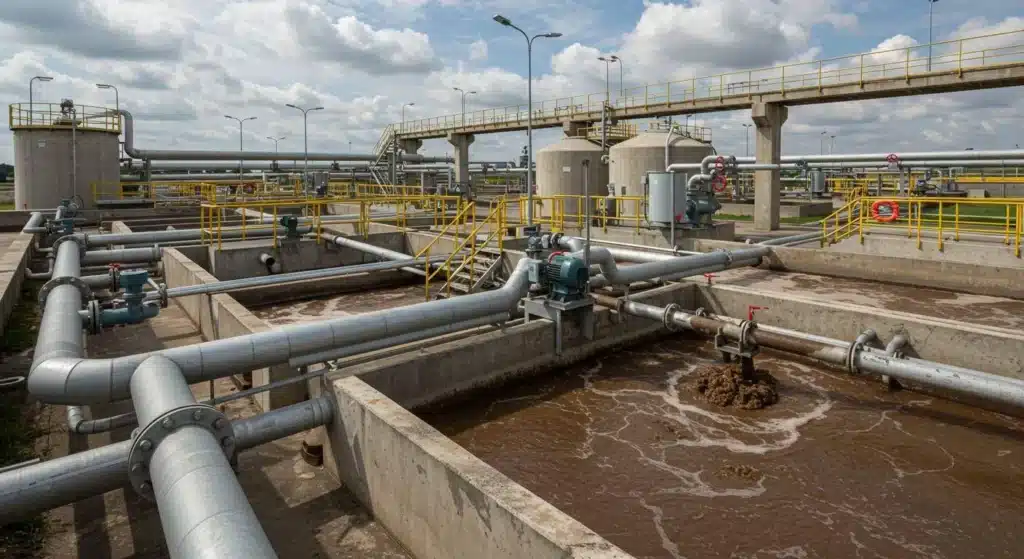
2. Applications of Electric Actuated Ball Valves in Water Treatment Plants
2.1 Raw Water Intake and Pumping Systems
Raw water intake systems transfer water from rivers, reservoirs, groundwater sources and industrial supply networks into treatment facilities.
Electric actuated ball valves can be installed on compatible pump discharge pipelines, bypass lines and water transfer branches. Automated operation helps coordinate pipeline isolation with pump startup, shutdown and maintenance procedures.
For these applications, engineers should check nominal pipe size, operating pressure, differential pressure, water quality and actuator torque. If raw water contains suspended solids or abrasive particles, the internal valve design and seat arrangement should also be evaluated.
2.2 Filtration Systems
Industrial filtration removes suspended particles and other contaminants before water enters downstream treatment processes. Typical equipment includes sand filters, multimedia filters, activated carbon filters and specialized filtration units.
Electric actuated ball valves can be used for inlet and outlet isolation, bypass switching and pipeline routing around filter vessels.
In multi-filter installations, automated valves can coordinate different filter units during operation and maintenance. The required 2-way or 3-way configuration depends on the actual piping arrangement and control sequence.
2.3 Reverse Osmosis (RO) Systems
Reverse osmosis is widely used in industrial water purification and desalination. An RO system normally includes feed pumps, pretreatment equipment, membrane housings, concentrate discharge lines and permeate collection pipelines.
Electric actuated ball valves may be used for compatible feedwater isolation, equipment shutoff, bypass switching and auxiliary water pipelines.
However, RO systems can operate at relatively high pressure, particularly on the membrane feed side. The valve pressure rating, body construction, seat material and actuator torque must therefore be checked against the actual operating and design conditions.
2.4 Chemical Dosing and Disinfection Systems
Water treatment plants use chemicals such as sodium hypochlorite, coagulants, pH adjustment chemicals and other treatment agents. These substances are injected into water at specific points to support disinfection, coagulation and chemical treatment.
Electric actuated ball valves can provide automated isolation and flow switching in compatible chemical transfer and dosing pipelines.
Material compatibility is critical. The valve body, ball, seat, stem seals and lining must be evaluated against the chemical type, concentration and operating temperature.
UPVC or fluoropolymer-lined constructions may be considered for selected corrosive chemical services, provided their pressure-temperature limits and chemical compatibility have been confirmed.
2.5 Wastewater Treatment Systems
Industrial and municipal wastewater treatment facilities include collection, equalization, chemical treatment, filtration and treated-water discharge processes.
Electric actuated ball valves can be applied to compatible liquid transfer pipelines, auxiliary water lines, chemical dosing systems and equipment isolation points.
For wastewater containing sludge, suspended solids or fibrous materials, engineers should carefully evaluate valve passage geometry, clogging risk and sealing requirements. A conventional ball valve is not automatically suitable for every solids-bearing application.
2.6 Treated Water Storage and Distribution
After treatment, water is transferred to storage tanks, distribution networks and downstream manufacturing equipment.
Electric actuated ball valves can automate isolation and switching across distribution branches, helping operators manage different water supply zones and equipment connections.
For outdoor installations or wet environments, actuator protection, cable connections and electrical installation requirements should be checked against site conditions.
3. How to Select Valve Materials for Water Treatment Applications
Water treatment involves more than clean water. Different process stages may contain raw water, treated water, chlorinated water, acids, alkalis, coagulants and other treatment chemicals.
UPVC Electric Actuated Ball Valves
UPVC electric ball valves are considered for compatible water distribution, chemical treatment and industrial fluid systems. Their corrosion-resistant plastic construction can be useful in selected low-temperature water and chemical pipelines.
Before selection, verify chemical compatibility, maximum operating temperature, pressure derating and connection requirements. The FLE-Q-PD electric 3-way UPVC ball valve, for example, is listed with DN15–DN100 sizes, PN10 pressure rating and 0–60°C working temperature.
Stainless Steel Electric Actuated Ball Valves
SS304 and SS316 stainless steel constructions are commonly considered for industrial water pipelines, pump systems and process equipment.
SS316 may be preferred in certain environments requiring improved corrosion resistance, but the actual water chemistry, chloride concentration and cleaning chemicals must be evaluated.
Flanged stainless steel electric ball valves offer a practical connection option for permanent industrial piping and larger treatment systems.
PTFE/PFA-Lined Electric Ball Valves
PTFE/PFA-lined electric ball valves are options for compatible aggressive chemical transfer, acid and alkali handling, and chemical wastewater services.
The lining helps separate the process medium from the metallic valve body. However, selection must consider chemical concentration, operating temperature, pressure, lining integrity and compatibility of all wetted components.
4. 2-Way vs. 3-Way Electric Actuated Ball Valves
One important decision when specifying electric actuated ball valves for water treatment is whether the pipeline requires simple isolation or multiple flow paths.
| Comparación | 2-Way Ball Valve | 3-Way Ball Valve |
|---|---|---|
| Flow path | One inlet and one outlet | Three ports with selected switching paths |
| Función principal | Open and close a pipeline | Divert or distribute flow |
| Uso típico | Pump isolation, filter lines and water distribution | Bypass arrangements and automated flow switching |
| Configuration | Straight-through ball design | L-port or T-port design |
| Selection focus | Size, pressure, sealing and actuator torque | Port arrangement and required flow sequence |
A 2-way electric ball valve is generally suitable for automated isolation. A 3-way valve is more appropriate when the system requires flow diversion or switching between different branches.
For continuous and accurate flow regulation, engineers should also evaluate V-port ball valves or dedicated control valves. A standard ON/OFF ball valve should not be assumed to provide precise throttling simply because its actuator can stop at an intermediate position.
5. How to Select the Right Electric Actuator
The electric actuator is as important as the valve body. An incorrectly sized actuator may not operate the valve reliably under actual differential pressure and operating conditions.
Operating Torque
Actuator torque must match the valve’s required operating torque. Differential pressure, seat friction, valve size and operating conditions should all be considered, together with an appropriate engineering margin.
Fuente de alimentación
Common electric actuator power options include DC24V, AC110V, AC220V and AC380V, depending on the selected model. Confirm the available electrical supply before ordering.
ON/OFF or Modulating Control
ON/OFF actuators are suitable for automated opening and closing. Where the process requires position adjustment, compatible modulating actuators and signals such as 4–20 mA or 0–10 V may be considered.
Actual flow regulation performance also depends on valve geometry, sizing and process conditions.
Protection Rating and PLC Integration
Water treatment plants may expose electrical equipment to humidity, splashing water and outdoor weather. The actuator protection rating should match the installation environment.
Compatible electric actuators can integrate with PLC systems and may provide position feedback for automated monitoring. Wiring, signal type, control logic and feedback configuration should be confirmed for each project.
6. What Information Should You Prepare Before Ordering?
To select suitable electric actuated ball valves for water treatment, procurement teams should provide the following information:
- Process medium: Raw water, treated water, wastewater, seawater or treatment chemicals.
- Pipe size: Nominal diameter and connection dimensions.
- Operating pressure: Normal pressure, maximum pressure and differential pressure.
- Temperatura: Normal and maximum operating temperature.
- Body material: UPVC, SS304, SS316 or suitable lined construction.
- Seat material: PTFE or another material compatible with the medium.
- Valve function: 2-way isolation, 3-way switching or suitable modulating duty.
- Connection: Threaded, flanged, wafer or other specified connection.
- Actuator: Voltage, torque, control mode, operating time and feedback.
- Installation environment: Indoor, outdoor, wet area or other site conditions.
Providing these details allows the manufacturer to evaluate the complete valve and actuator assembly rather than selecting components based on nominal size alone.
Frequently Asked Questions About Electric Actuated Ball Valves
Common questions about water treatment applications, valve materials, configurations and electric actuator selection.
What are electric actuated ball valves used for in water treatment?
They are used for automated pipeline isolation, equipment shutoff, flow switching and compatible process control duties in water treatment plants. Typical locations include pumping systems, filtration equipment, RO auxiliary pipelines, chemical dosing lines and treated-water distribution networks.
Are electric actuated ball valves suitable for wastewater treatment?
They can be used in compatible wastewater pipelines and auxiliary systems. However, applications involving sludge, suspended solids or fibrous materials require careful evaluation of passage design and clogging risk.
Which material is best for electric actuated ball valves in water treatment?
There is no single material suitable for every application. UPVC can be considered for compatible water and chemical services, stainless steel for selected industrial pipelines, and PTFE/PFA-lined constructions for compatible corrosive media.
Should I choose a 2-way or 3-way electric actuated ball valve?
Choose a 2-way valve for opening and closing a single pipeline. Choose a 3-way valve when the system requires flow diversion, distribution or switching between different pipeline branches. The L-port or T-port configuration must match the required flow sequence.
Can electric actuated ball valves be controlled by a PLC?
Yes. Compatible electric actuators can receive control commands from PLC systems and may provide position feedback or modulating control options. Confirm wiring, voltage, signal type and feedback requirements before integration.
Are electric actuated ball valves suitable for reverse osmosis systems?
They can be used in selected RO auxiliary and feedwater isolation duties. Pressure rating, body and seat materials, differential pressure and actuator torque must be verified against actual system conditions.
What is the difference between electric and pneumatic ball valves?
Electric ball valves use an electric motor and gearbox, while pneumatic ball valves use compressed air. Electric actuators are convenient where electrical power and PLC integration are available. Pneumatic actuators may be preferred where compressed air is already installed or specific fail-safe arrangements are required.
What information should I provide when requesting a quotation?
Provide valve size, medium, operating pressure and temperature, body and seat materials, connection standard, required flow function, actuator voltage, control mode and quantity. A pipeline drawing or valve schedule can help clarify the requirements.
Choose the Right Electric Actuated Ball Valves for Your Water Treatment Project
Electric Actuated Ball Valves provide practical automation solutions for industrial water treatment systems, from filtration and pumping to chemical dosing and treated-water distribution.
The right selection depends on process medium, valve construction, pressure and temperature conditions, flow path and actuator control requirements. Matching these factors helps improve system reliability and simplify automated operation.
Fleyenda provides different electric ball valve configurations for industrial water and wastewater applications, including stainless steel, UPVC, flanged, 3-way and PTFE/PFA-lined designs.
Looking for electric actuated ball valves for your treatment plant? Share your pipeline size, medium, pressure and actuator requirements with our team.