


How To Choose Electric Actuated Ball Valve For Water Treatment?
Choosing the right electric actuated ball valve for water treatment requires more than matching the valve size to the pipeline. Water quality, chemical concentration, operating pressure, temperature, connection type and actuator control requirements all influence valve performance and service life.
In water and wastewater treatment plants, electric actuated ball valves are commonly used for remote pipeline isolation, equipment switching, chemical dosing lines and automated process control. However, a valve suitable for clean water may not be appropriate for wastewater containing suspended solids or aggressive chemical solutions.
This guide explains how to select an electric actuated ball valve for different water treatment applications, including material selection, valve construction, actuator specifications and practical product recommendations from Fleyenda.
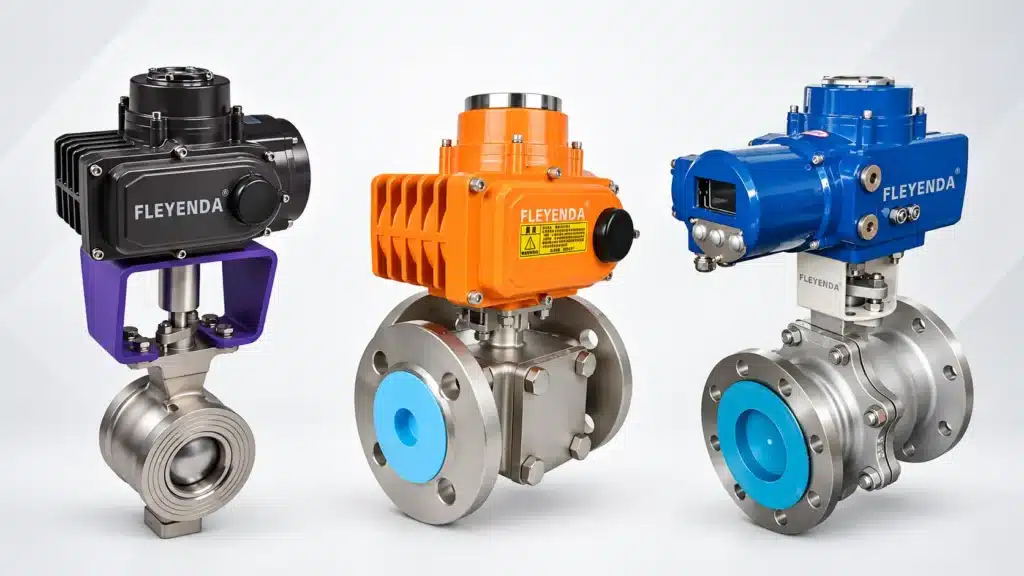
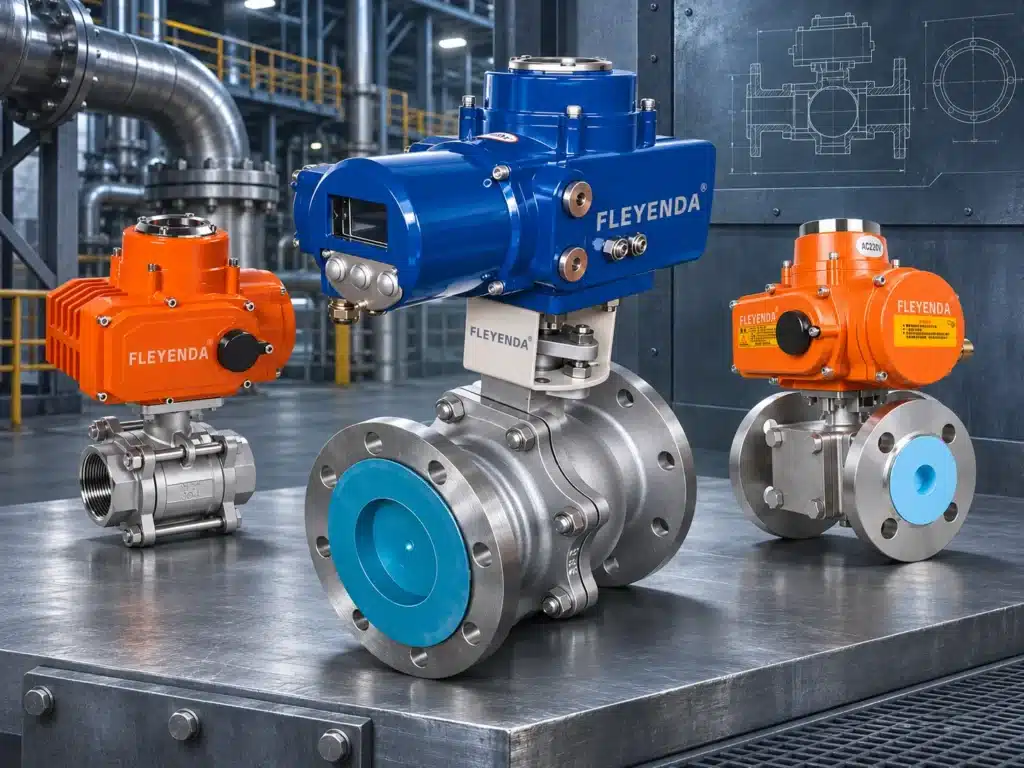
1. Understand the Water Treatment Application First
Before selecting an electric ball valve, identify the exact service conditions. Different stages of a water treatment plant handle different fluids, and each stage may require a different valve construction.
Clean Water Supply and Distribution
Clean water pipelines generally require reliable shutoff, low flow resistance and convenient remote operation. Stainless steel electric ball valves are suitable for many industrial water systems where the water chemistry and material compatibility have been verified.
For larger pipeline systems, flanged electric ball valves provide a secure connection and are convenient for installation in fixed process piping.
Tratamiento de aguas residuales
Wastewater may contain suspended particles, organic matter, sludge and other contaminants. Standard ball valves can be used for suitable wastewater services, but the amount and size of suspended solids must be considered.
For wastewater with significant solids content, abrasive particles or fibrous materials, a conventional ball valve may not be the best choice. An electric knife gate valve or another solids-handling valve may be more appropriate depending on the process.
Chemical Dosing and Disinfection
Chemical dosing systems commonly handle sodium hypochlorite, acids, alkalis, coagulants and other treatment chemicals. The correct valve material depends on chemical identity, concentration, temperature and exposure conditions.
UPVC, suitable stainless steel grades and PTFE-lined constructions may be considered for different chemical services. However, no material should be selected based on the chemical name alone. Confirm compatibility of the complete wetted assembly, including the body, ball, seats, stem seals and gaskets.
Filtration and Reverse Osmosis Systems
Filtration and reverse osmosis installations require valves for feed-water isolation, filter switching, flushing, bypass and equipment maintenance.
In these applications, valve leakage, pressure rating, connection compatibility and actuator switching logic are particularly important. Where a process requires flow diversion between two branches, a three-way electric ball valve may be considered instead of installing multiple two-way valves.
2. Select the Right Valve Body Material
Material selection is one of the most important decisions when purchasing an electric actuated ball valve for water treatment. The valve body, ball, seat and sealing components must all be compatible with the process fluid.
| Material | Suitable Service Considerations | Selection Notes |
|---|---|---|
| SS304 | General industrial water and compatible utility fluids | Evaluate chloride concentration and corrosion exposure. |
| SS316 / SS316L | Water systems requiring enhanced corrosion resistance | Check chlorides, disinfectants and actual water chemistry. |
| UPVC | Compatible chemical solutions, saline water and selected water treatment lines | Verify chemical resistance and temperature-dependent pressure limits. |
| PTFE-Lined | Selected corrosive chemical dosing and treatment applications | Check lining compatibility, permeation, temperature and pressure limits. |
| WCB Carbon Steel | Selected industrial water and utility services | Consider internal corrosion protection and water chemistry. |
Why Seat Material Matters
The seat is in direct contact with the ball and plays an important role in sealing performance, operating torque and service life.
PTFE seats are commonly used in compatible water and chemical applications because of their chemical resistance and sealing properties. EPDM may be suitable for certain water services, while other elastomers may be needed for specific fluids or temperatures.
Do not assume that a stainless steel body automatically makes the complete valve suitable for a chemical application. The seat and seal materials must also be checked.
3. Choose the Correct Electric Ball Valve Configuration
After identifying the medium and material requirements, determine how the valve needs to operate within the water treatment system.
2-Way Electric Actuated Ball Valve
A 2-way electric ball valve has one inlet and one outlet. Its primary function is to open or close a single pipeline flow path.
It is commonly used for:
- Water supply pipeline isolation.
- Pump inlet and outlet shutoff.
- Filter equipment isolation.
- Automated water distribution lines.
- Remote isolation of treatment equipment.
3-Way Electric Actuated Ball Valve
A 3-way electric ball valve has three pipeline connections and uses an L-port or T-port ball configuration. It can redirect, distribute or connect selected flow paths according to the internal ball design.
Typical applications include switching between filtration units, directing water to alternative tanks and creating selected bypass arrangements.
V-Port Electric Ball Valve
When the process requires more controlled flow adjustment rather than simple isolation, a V-port electric actuated ball valve may be considered. Its characterized opening provides a more suitable flow-control characteristic for selected modulating applications.
Valve sizing, Cv/Kv, differential pressure and actuator positioning performance must be evaluated before using it as a control valve.
4. How to Select the Electric Actuator
The electric actuator determines how the valve operates and communicates with the water treatment control system. A suitable actuator should match the valve’s operating torque, required switching frequency and electrical control requirements.
ON/OFF or Modulating Control
| Tipo de control | Operating Function | Aplicación típica |
|---|---|---|
| ON/OFF | Moves between open and closed positions. | Pipeline isolation and equipment switching. |
| Modulación | Accepts a proportional position command, commonly 4–20 mA or 0–10 V. | Selected flow adjustment with a suitable valve characteristic. |
| Intelligent Control | Provides selected control, monitoring and feedback functions. | Integrated PLC and industrial automation systems. |
Actuator Voltage
Common actuator power supply options include:
- DC24V – suitable for selected low-voltage control systems.
- AC110V – available for compatible industrial electrical systems.
- AC220V – commonly specified in industrial equipment and plant installations.
- AC380V – available for selected actuator configurations.
Always confirm the actual site power supply, wiring arrangement and actuator model before ordering.
Protection Rating for Wet Environments
Water treatment plants frequently expose valve actuators to humidity, splashing water, outdoor weather and washdown conditions. The actuator enclosure should be selected according to the actual installation environment.
IP67 and IP68 options are available on selected Fleyenda actuator configurations. Check the specific model’s certified protection rating and installation limitations rather than assuming that every actuator has the same protection level.
Power Failure and Fail-Safe Requirements
Consider what should happen when the electrical supply is interrupted. Depending on the process, the valve may need to remain in its last position, move to a fail-open position or move to a fail-closed position.
Automatic return requires a compatible fail-safe actuator configuration. A standard electric actuator with manual override does not necessarily provide automatic fail-safe operation.
5. Determine Valve Size, Pressure and Connection
Correct valve sizing is important for maintaining the required flow capacity and avoiding unnecessary pressure loss. The nominal pipe size alone is not sufficient to determine the ideal valve.
Before selecting the valve, confirm the following parameters:
- Nominal size: DN or NPS pipeline size.
- Flow rate: Required operating flow and expected maximum flow.
- Pressure: Normal working pressure, maximum pressure and differential pressure.
- Temperature: Normal and maximum operating temperature.
- Connection: ANSI, DIN, JIS flanged, NPT, BSP or another specified standard.
- Installation: Indoor, outdoor, wet-area or equipment-mounted conditions.
Flanged vs. Threaded Electric Ball Valves
Flanged valves are generally preferred for permanent industrial pipelines, larger sizes and installations where project piping standards specify bolted connections.
Threaded electric ball valves are useful for smaller equipment pipelines, compact skids and installations where compatible threaded connections are already specified.
For water treatment projects, the connection must match the existing pipeline standard. NPT and BSP threads are not interchangeable simply because they have the same nominal size.
6. Fleyenda Electric Actuated Ball Valves for Water Treatment
Fleyenda offers different electric actuated ball valve configurations for industrial water systems, chemical treatment, equipment isolation and automated pipeline control. The following products serve different installation and process requirements.
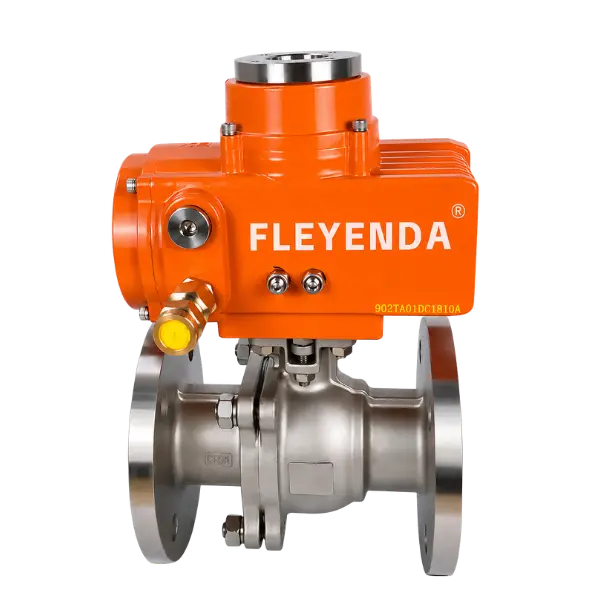
Electric 2-Way Flanged Ball Valve
A general-purpose electric isolation valve for industrial water pipelines, treatment equipment and utility systems. Its full-bore construction and flanged connection make it suitable for fixed process piping where reliable remote shutoff is required.
| Size | ½″–12″ / DN15–DN300 |
|---|---|
| Presión | PN16–PN40 / ANSI 150–300 |
| Cuerpo | SS304 / SS316 / WCB |
| Connection | ANSI / DIN / JIS Flanged |
| Temperatura | −20°C to +180°C* |
| Actuador | ON/OFF / Selected Modulating |

Female Thread Electric Actuated Ball Valve
Designed for compact water treatment equipment, small-bore utility lines and packaged process systems. Its female-threaded connections allow integration with compatible threaded pipework while the electric actuator supports remote operation.
| Size | ¼″–4″ / DN8–DN100 |
|---|---|
| Presión | PN16–PN63* |
| Cuerpo | SS316 / CF8M; selected alternatives |
| Connection | Female NPT / BSP options |
| Temperatura | −20°C to +180°C* |
| Actuador | ON/OFF / Regulating |

PTFE Fluorine-Lined Electric Ball Valve
Designed for selected corrosive chemical services in water treatment, including compatible chemical dosing and treatment lines. The fluorine-lined wetted construction provides an additional corrosion-resistant barrier when ordinary metal valve surfaces are unsuitable.
| Size | ½″–4″ |
|---|---|
| Presión | 10 bar / 16 bar |
| Cuerpo | Carbon Steel / Stainless Steel with lining |
| Asiento | PTFE / Nylon / PPL options |
| Temperatura | −40°C to +180°C* |
| Actuador | ON/OFF / Regulating / Intelligent |
*Product ratings and available configurations vary by size, body construction, seat material, actuator and service conditions. Confirm the current technical datasheet before ordering.
For additional configurations, including UPVC, three-way and V-port designs, explore the complete Fleyenda electric ball valve range.
7. Common Mistakes When Selecting Electric Ball Valves for Water Treatment
Choosing Materials Based Only on the Fluid Name
Water can contain chlorine, chlorides, dissolved salts, treatment chemicals and other substances. Always evaluate the actual water chemistry, concentration and operating temperature before choosing the body and sealing materials.
Using a Standard Ball Valve for Slurry Service
Suspended solids and abrasive particles can affect seat sealing and operating torque. If the process contains substantial sludge or solids, evaluate whether a knife gate valve or another solids-handling construction is more suitable.
Ignoring Differential Pressure
Actuator sizing should consider the pressure difference across the valve, not only the nominal pipeline pressure. Insufficient actuator torque can result in incomplete operation or failure to reach the required position.
Assuming All Electric Actuators Are Waterproof
Outdoor and wet-area installations require verification of the actuator enclosure rating, cable entry protection and installation conditions. Select the actual IP protection required by the project.
Using ON/OFF Ball Valves for Precise Flow Regulation
A standard full-port ball valve is primarily designed for isolation. If the process requires continuous flow adjustment, consider a suitable V-port ball valve or dedicated control valve with appropriate sizing and modulating control.
8. Frequently Asked Questions
Which electric actuated ball valve is best for water treatment?
The best choice depends on the medium and operating conditions. Stainless steel flanged ball valves are suitable for many industrial water pipelines, threaded valves are useful for compact equipment lines, and PTFE-lined valves may be appropriate for selected corrosive chemical services.
Can an electric actuated ball valve be used for wastewater?
Yes, for suitable wastewater services where the solids content, particle size and valve construction are compatible. For heavy sludge, abrasive solids or fibrous media, a dedicated solids-handling valve may be more appropriate.
Is SS316 better than SS304 for water treatment?
SS316 generally offers improved resistance to certain chloride-containing environments compared with SS304. However, neither grade is universally suitable for every water chemistry. Concentration, temperature and exposure conditions must be evaluated.
Can UPVC electric ball valves be used for chemical dosing?
UPVC can be suitable for certain acids, alkalis and other compatible chemical solutions. Verify the exact chemical compatibility, temperature and pressure limits of the complete valve assembly before selection.
What IP rating should an electric actuator have in a water treatment plant?
IP67 or IP68 may be appropriate depending on exposure to water, dust, cleaning and installation conditions. The required rating should be confirmed against the project’s environmental specifications.
Can an electric ball valve connect to a PLC?
Yes. Depending on the actuator configuration, it can support open/close control, position feedback and selected modulating signals such as 4–20 mA or 0–10 V. Confirm the required I/O arrangement and wiring diagram.
What information should I provide when requesting a quotation?
Provide the pipeline size, medium, chemical concentration if applicable, pressure, temperature, required flow function, connection standard, actuator voltage, control mode and environmental protection requirements. A P&ID or valve schedule can help speed up technical selection.
Choose the Right Electric Actuated Ball Valve for Your Water Treatment Project
Successful valve selection starts with understanding the actual process conditions. Water chemistry, suspended solids, pressure, temperature, valve construction and actuator requirements must be evaluated together.
Whether you need a flanged electric ball valve for a main water pipeline, a compact threaded valve for treatment equipment or a PTFE-lined solution for compatible chemical dosing, Fleyenda offers different configurations for industrial flow control.
Explore our electric actuated ball valve products or send your project specifications for technical assistance.