


F-ZJHN Pneumatic Double-seat Control Valve
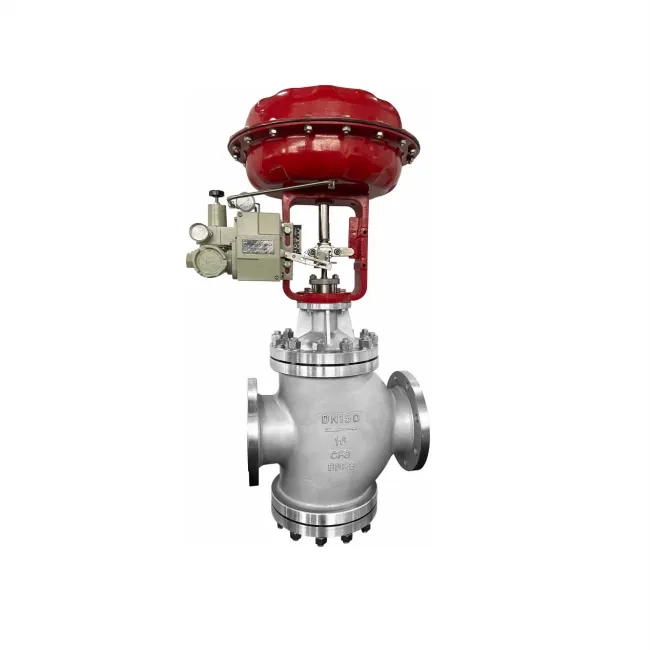
F-ZJHN Pneumatic Double-seat Control Valve
The Double-Seat Control Valve features a balanced dual-plug design that reduces actuator force and pressure imbalance, ensuring precise flow control under high differential pressure, improving stability and service life in steam, chemical, and gas systems, verified by IEC 60534 and API 598 leakage tests ≤ 0.01 % Cv.
| Gama de tallas | DN25 – DN400 (1″ – 16″) |
| Rango de presión de trabajo: | PN16 – PN100 / Class 150 – 600 (1.6 – 10 MPa) |
| Rango de temperatura de funcionamiento: | −40 °C to +450 °C |
| Material del cuerpo: | WCB, CF8, CF8M, CF3M, Alloy Steel |
| Tipo de conexión: | Flanged (ASME B16.5 / GB/T 9113), Welded |
| Medio aplicable: | Steam, Gas, Oil, Water, Corrosive Liquids |
| Tipo de actuador: | Pneumatic Diaphragm, Electric |
| Opciones de voltaje | AC 220 V, AC 110 V, DC 24 V |
| Norma de diseño | IEC 60534, GB/T 4213, ANSI B16.34 |
| Norma de ensayo | ISO 5208, API 598, GB/T 13927 |
| Diseño a prueba de incendios | API 607, ISO 10497 (Optional) |
| Certificación | CE / RoHS / ISO 9001 / IP65 (actuador) |
| Personalización | Las siguientes son muestras de parámetros estándar. Si tienes parámetros y materiales específicos, podemos personalizarlos todos. |
| Serie | AT | AW | Lineal | Cilindro neumático | Sanitario |
|---|---|---|---|---|---|
| Cuerpo de válvulas | Válvula de bola, válvula de mariposa, válvula de tapón | Válvula de compuerta, Válvula Global | Válvula de compuerta de cuchilla | Válvula de mariposa sanitaria | |
| Función | De doble efecto, de simple efecto (reposicionamiento automático en caso de falla FO o FC) | ||||
| Accesorios de control |
• Válvula solenoide, filtro-regulador-lubricador (F.R.L.), posicionador, interruptor de límite, volante • La válvula solenoide y el posicionador son de grado a prueba de explosiones y están disponibles en versión con retroalimentación de señal | ||||
| Medio de funcionamiento |
Aire limpio y seco, o aire lubricado, o gas inerte. Cualquier gas no corrosivo que sea compatible con las piezas internas del actuador y con el lubricante. La temperatura del punto de rocío del medio de operación es de -20 °C, y el tamaño de las partículas de impurezas no supera los 30u. Al seleccionar un posicionador, el tamaño de las partículas de impurezas no debe ser superior a 5u. | ||||
| Presión del aire de alimentación | De 3 bar a 8 bar | ||||
| Temperatura del entorno operativo |
• Tipo estándar: de -20 °C a +80 °C • Tipo de baja temperatura: de -40 °C a +80 °C • Tipo para altas temperaturas: de -20 °C a +160 °C | ||||
| Lubricación |
En condiciones normales de funcionamiento, el modelo estándar no requiere lubricante adicional. Para entornos de baja o alta temperatura, se requieren lubricantes especiales. | ||||
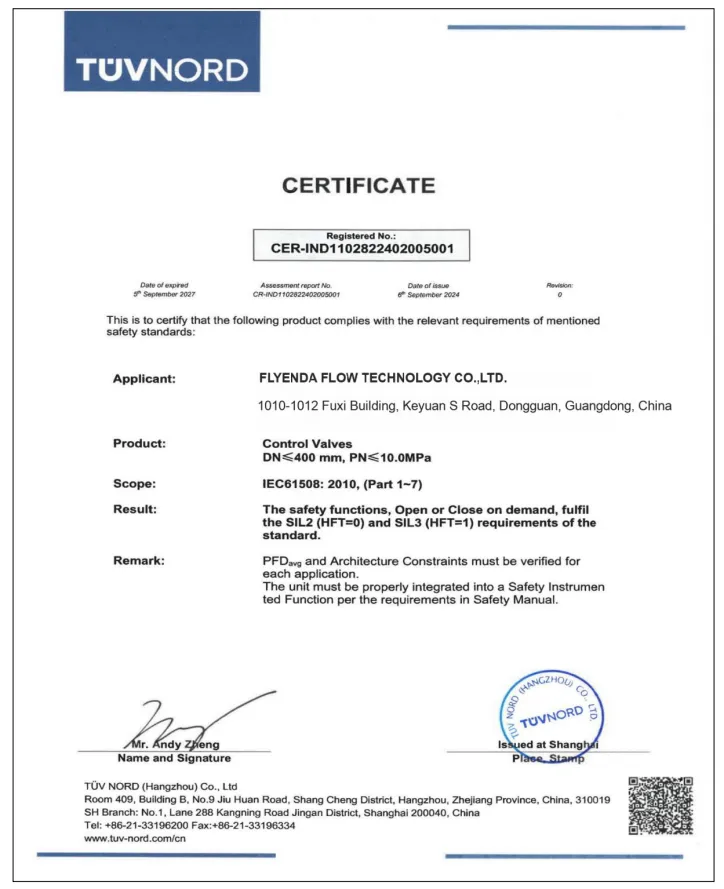
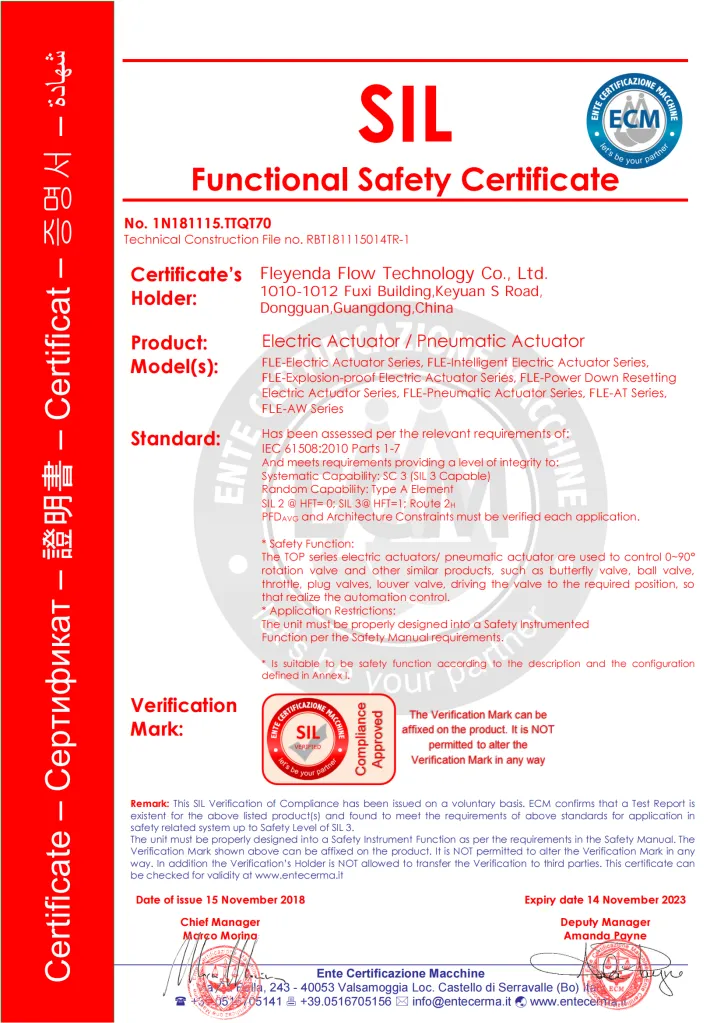
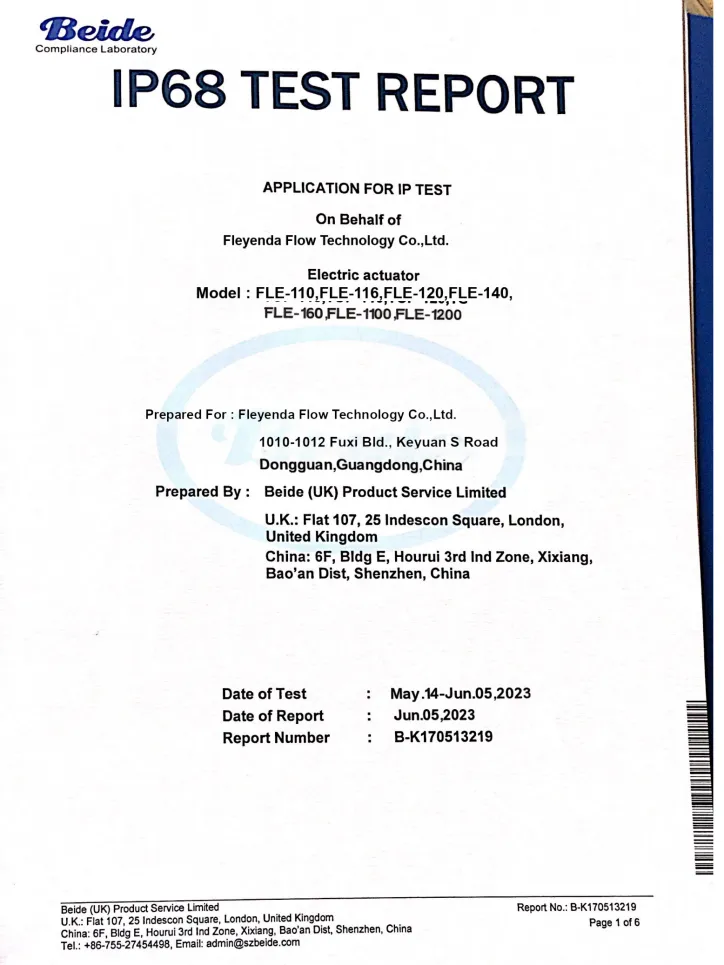
Calidad certificada para aplicaciones de válvulas industriales
Las válvulas y los actuadores eléctricos de Fleyenda están diseñados para ofrecer un rendimiento estable, un funcionamiento confiable y un uso industrial a largo plazo. Con un respaldo de calidad certificada, son adecuados para el tratamiento de agua, el procesamiento químico, la automatización y los sistemas de control de procesos industriales.
Preguntas frecuentes que interesan a los usuarios del 80%
1. How does a Double-Seat Control Valve improve stability in high-pressure flow systems?
• The Double-Seat Control Valve uses a balanced dual-plug design for stable flow control under large pressure differentials.
• It minimizes vibration and hunting in automated process systems.
• High Cv capacity ensures precise adjustment in steam, gas, and chemical pipelines.
• Proper actuator tuning maintains reliable flow regulation without oscillation.
2. Why is a Double-Seat Regulating Valve not ideal for tight shut-off applications?
• The balanced design of this industrial control valve reduces actuator force but limits sealing tightness.
• Dual plugs may not fully close both seats, allowing slight internal leakage.
• For zero-leakage applications, a single-seat globe valve is preferred.
• The double-plug configuration is designed for modulation, not isolation.
3. How can I prevent cavitation or noise in a Double-Seat Flow Control Valve?
• Use anti-cavitation or low-noise trims to control energy within the flow-control valve.
• Keep pressure drop within safe limits to reduce erosion in liquid or steam service.
• Add diffusers or restrictors to manage turbulence in process pipelines.
• Choose durable valve materials to resist cavitation wear.
4. What should I verify when integrating a Pneumatic Double-Seat Valve into an automated system?
• Match actuator size and signal range to the valve design for smooth modulation.
• Calibrate positioners for accurate flow response in DCS or PLC control.
• Confirm signal compatibility with 4–20 mA, HART, or digital systems.
• Ensure the valve-actuator assembly supports required flow range and response speed.