


F-ZJHS Pneumatic Angle Control Valve
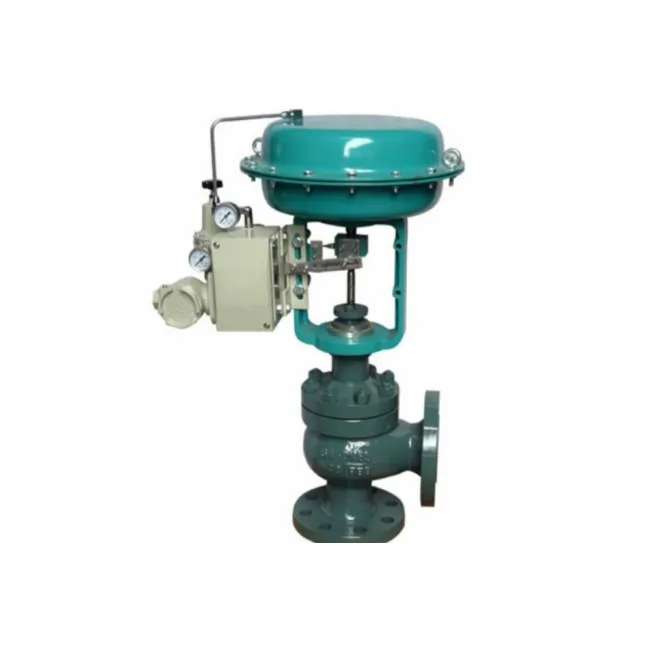
F-ZJHS Pneumatic Angle Control Valve
The Angle Control Valve uses a 90° flow path to reduce turbulence and cavitation, providing precise flow control, lower erosion, longer service life, and verified performance under IEC 60534 and API 598 standards.
| Größenauswahl | DN15–DN300 (½”–12″) |
| Betriebsdruckbereich: | PN1.6–6.4MPa / ANSI Class150–600 |
| Betriebstemperaturbereich: | −40°C–+450°C |
| Material des Gehäuses: | WCB / CF8 / CF8M / CF3M |
| Verbindungstyp: | Flanged / Welded |
| Geeignetes Medium: | Steam, Gas, Oil, Water, Corrosive Fluids |
| Antriebstyp: | Pneumatic Diaphragm / Electric |
| Spannungsoptionen | AC220V / AC110V / DC24V |
| Designstandard | IEC 60534 / ISA S75 / GB/T 4213 |
| Prüfnorm | GB/T 13927 / API 598 / ISO 5208 |
| Brandschutzkonzeption | API 607 / ISO 10497 |
| Zertifizierung | CE / RoHS / ISO 9001 / IP65 (Antrieb) |
| Anpassung | Oben finden Sie Beispiele für Standardparameter. Wenn Sie bestimmte Parameter und Materialien haben, können wir diese individuell anpassen. |
| Reihe | AT | AW | Linear | Pneumatikzylinder | Sanitär |
|---|---|---|---|---|---|
| Ventilkörper | Kugelhahn, Absperrklappe, Kegelventil | Absperrschieber, Global-Ventil | Messerschieberventil | Hygienische Absperrklappe | |
| Funktion | Doppeltwirkend, einfachwirkend (bei Ausfall rückstellend FO oder FC) | ||||
| Zubehör für Steuerungen |
• Magnetventil, Filter-Regler-Schmiervorrichtung (F.R.L.), Stellungsregler, Endschalter, Handrad • Magnetventil und Stellungsregler sind in explosionsgeschützter Ausführung erhältlich und können wahlweise mit Signalrückmeldung ausgestattet werden | ||||
| Betriebsmedium |
Saubere und trockene oder geschmierte Luft oder Inertgas. Jedes nicht korrosive Gas, das mit den inneren Bauteilen des Stellantriebs und dem Schmiermittel verträglich ist. Die Taupunkttemperatur des Betriebsmediums beträgt -20 °C, und die Größe der Verunreinigungspartikel beträgt höchstens 30 µ. Bei der Auswahl eines Stellungsreglers sollte die Partikelgröße der Verunreinigungen höchstens 5 µ betragen. | ||||
| Luftdruck | 3 bar bis 8 bar | ||||
| Betriebstemperatur |
• Standardausführung: -20 °C bis +80 °C • Niedrigtemperaturausführung: -40 °C bis +80 °C • Hochtemperaturausführung: -20 °C bis +160 °C | ||||
| Schmierung |
Unter normalen Betriebsbedingungen benötigt die Standardausführung kein zusätzliches Schmiermittel. Für Umgebungen mit niedrigen oder hohen Temperaturen sind spezielle Schmierstoffe erforderlich. | ||||
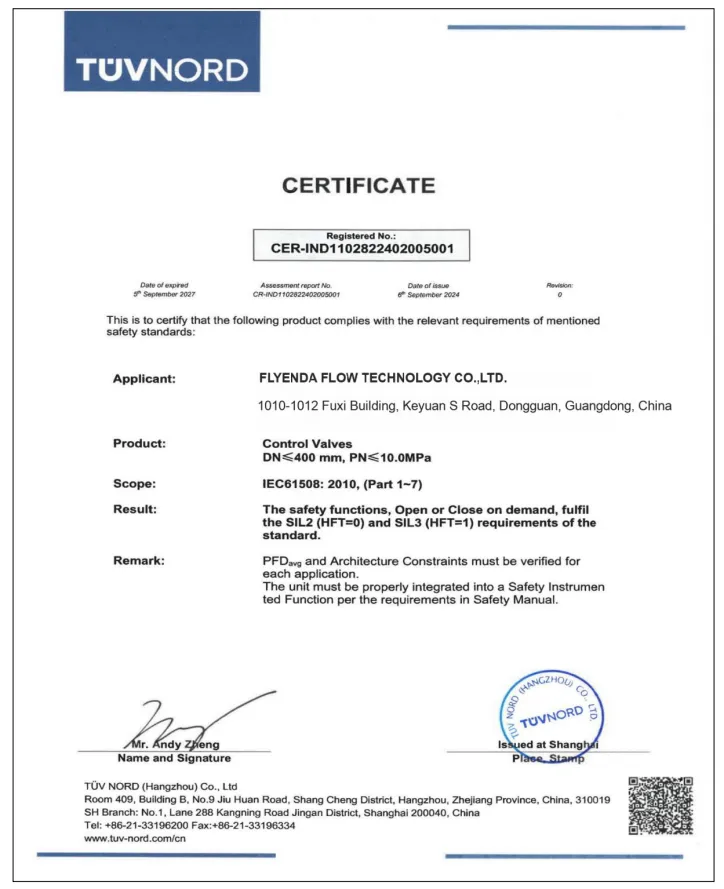
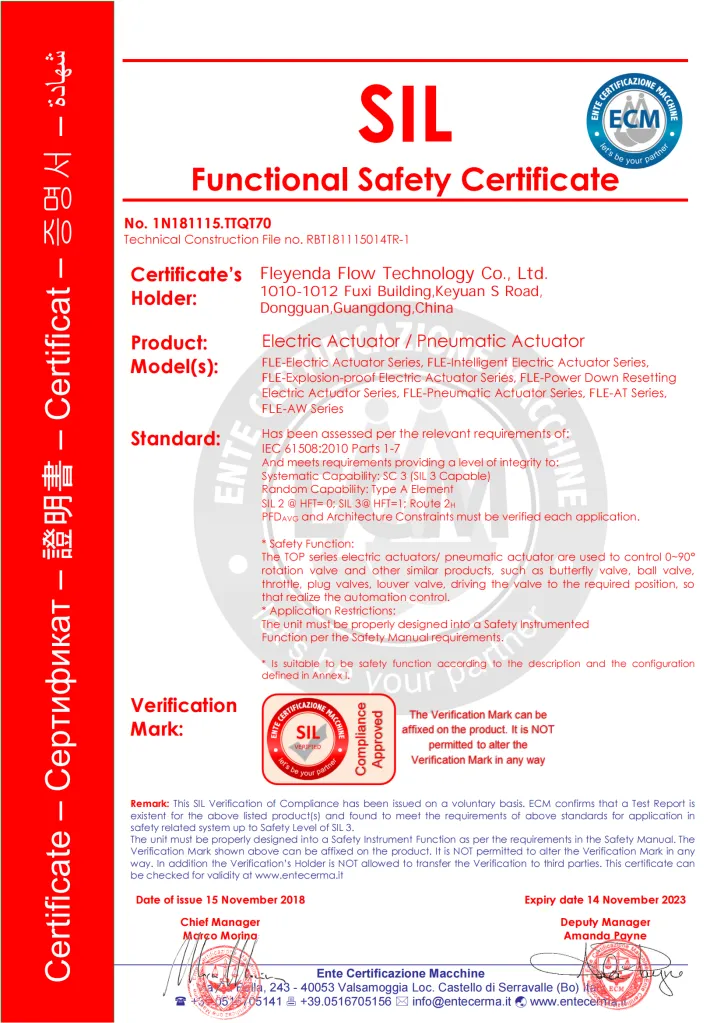
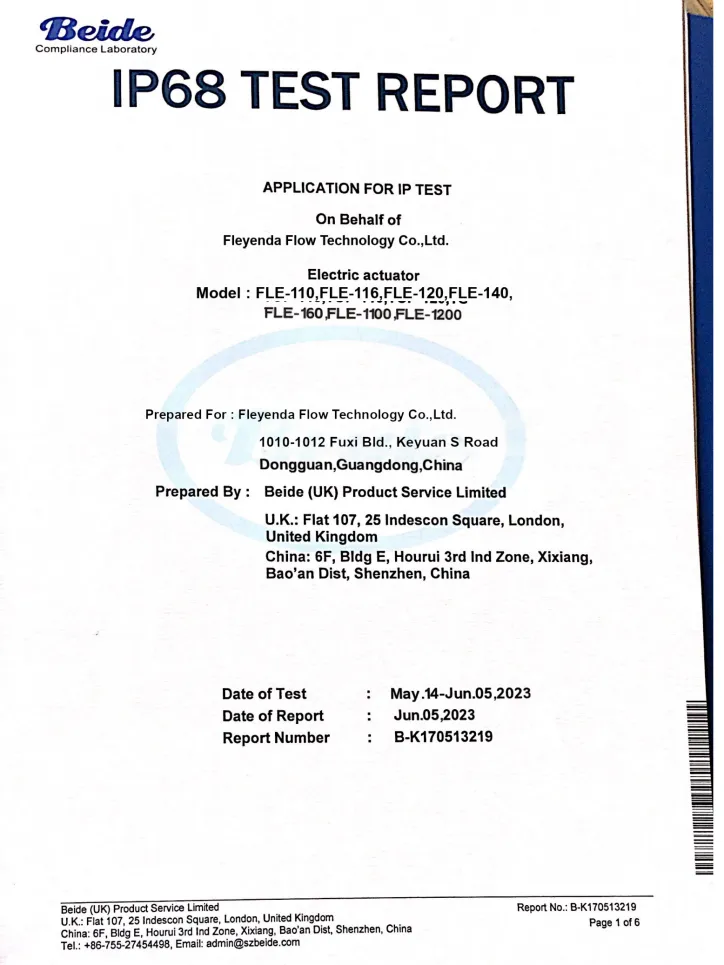
Zertifizierte Qualität für industrielle Ventilanwendungen
Ventile und elektrische Stellantriebe von Fleyenda sind auf stabile Leistung, zuverlässigen Betrieb und den langfristigen industriellen Einsatz ausgelegt. Dank zertifizierter Qualitätssicherung eignen sie sich für die Wasseraufbereitung, die chemische Verarbeitung, die Automatisierung sowie industrielle Prozessleitsysteme.
Häufig gestellte Fragen, die für Nutzer des 80% von Interesse sind
1. What factors determine the best sizing for an Angle Control Valve in industrial flow systems?
• Accurate flow rate and differential pressure calculation prevent oversizing or unstable modulation.
• Proper Cv selection ensures smooth throttling and stable operation.
• The angle-body design optimizes pressure recovery and flow direction.
• Correct actuator choice maintains responsiveness and precise automation control.
2. How does an industrial angle valve reduce cavitation and erosion in high-pressure applications?
• The 90° angle flow path minimizes turbulence and internal wear.
• The angle-body structure discharges vapor efficiently in flashing conditions.
• Hardened trim materials resist corrosion and extend service life.
• The anti-cavitation design maintains pressure balance and protects outlets.
3. What installation tips ensure the angle-type control valve operates at peak performance?
• Follow proper flow direction to maintain correct velocity and pressure.
• Use suitable pneumatic or electric actuators with fail-safe positioning.
• Calibrate valve positioners to ensure stable control and reduce hunting.
• Maintain straight-pipe sections and vibration isolation to reduce noise.
4. What maintenance practices improve reliability and lifespan of an angle-body control valve?
• Inspect valve trim for corrosion, wear, or cavitation damage.
• Keep actuator linkages clean and properly calibrated.
• Monitor pressure drop and flow velocity to detect early issues.
• Use erosion-resistant coatings for severe service environments.