


FAT-VQ-F Pneumatic V-Port Ball Valve

FAT-VQ-F Pneumatic V-Port Ball Valve
The Pneumatic V-Port Ball Valve uses a V-shaped ball for precise flow control, ensuring accurate modulation, lower pressure loss, and 30% higher control efficiency, verified by ISO 5211 and API 598 standards.
| Boyut Aralığı | ½” – 8″ (DN15–DN200) |
| Çalışma Basıncı Aralığı: | PN16–PN40 / 150–600 PSI |
| Çalışma Sıcaklık Aralığı: | −20°C to +180°C |
| Gövde Malzemesi: | Stainless Steel CF8 / CF8M (AISI 304 / 316) |
| Bağlantı Türü: | Flanged (ANSI, DIN, JIS optional) |
| Uygulanabilir Ortam: | Water, Steam, Air, Gas, Oil, Chemical, Pulp, Slurry |
| Aktüatör Türü: | Double Acting or Spring Return Pneumatic Actuator |
| Gerilim Seçenekleri | 24 V DC, 110 V AC, 220 V AC |
| Tasarım Standardı | ISO 5211, ASME B16.34 |
| Test Standardı | API 598 / EN12266-1 |
| Yangına Dayanıklı Tasarım | API 607 / ISO 10497 compliant |
| Sertifikasyon | CE / RoHS / ISO 9001 / IP65 (Aktüatör) |
| Özelleştirme | Yukarıda standart parametre örnekleri yer almaktadır. Özel parametreleriniz ve malzemeleriniz varsa, bunların hepsini size göre uyarlayabiliriz. |
| Series | AT | AW | Linear | Pneumatic Cylinder | Hijyenik |
|---|---|---|---|---|---|
| Valf Gövdesi | Ball valve, butterfly valve, plug valve | Gate valve, Global valve | Knife gate valve | Sanitary butterfly valve | |
| Function | Double Acting, Single Acting (Failure Resetting FO or FC) | ||||
| Kontrol Aksesuarları |
• Solenoid Valve, Filter Regulator Lubricator (F.R.L.), Positioner, Limit Switch, Handwheel • Solenoid Valve & Positioner are with Explosion-proof grade and Signal Feedback type for choice | ||||
| Operating Medium |
Clean and dry or lubricated air or inert gas. Any non-corrosive gas that is compatible with the internal parts of the actuator and the lubricant. The dew point temperature of the operating medium is -20°C, and the size of impurity particles is no more than 30u. When selecting a positioner, the impurity particle size should be no more than 5u. | ||||
| Air Source Pressure | 3bar to 8bar | ||||
| Operating Environment Temperature |
• Standard type: -20°C to +80°C • Low-temperature type: -40°C to +80°C • High-temperature type: -20°C to +160°C | ||||
| Lubrication |
Under normal operating conditions, the standard type does not require additional lubricant. For low-temperature or high-temperature environments, special lubricants are required. | ||||
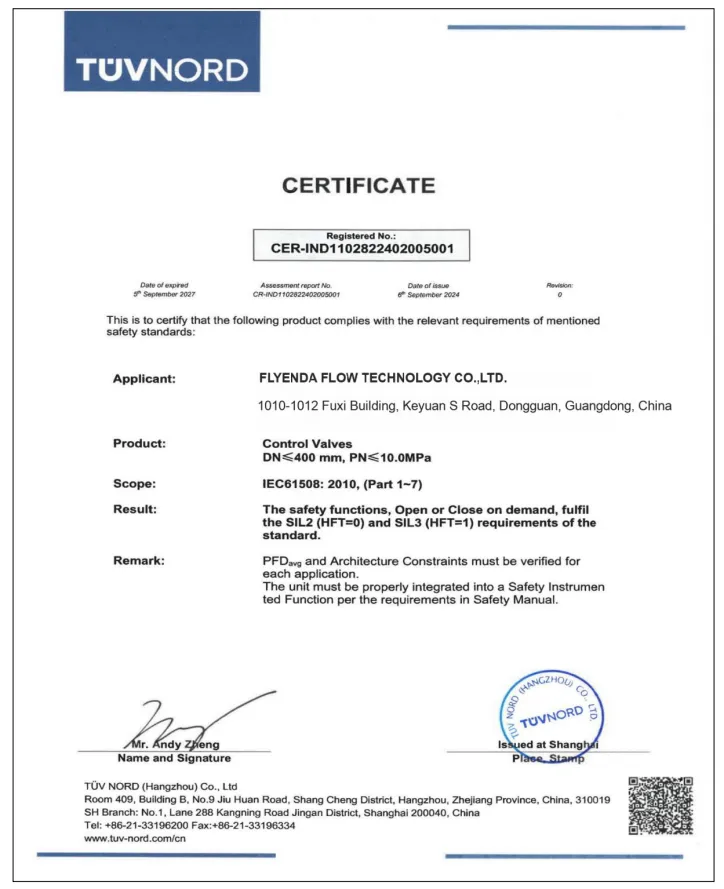
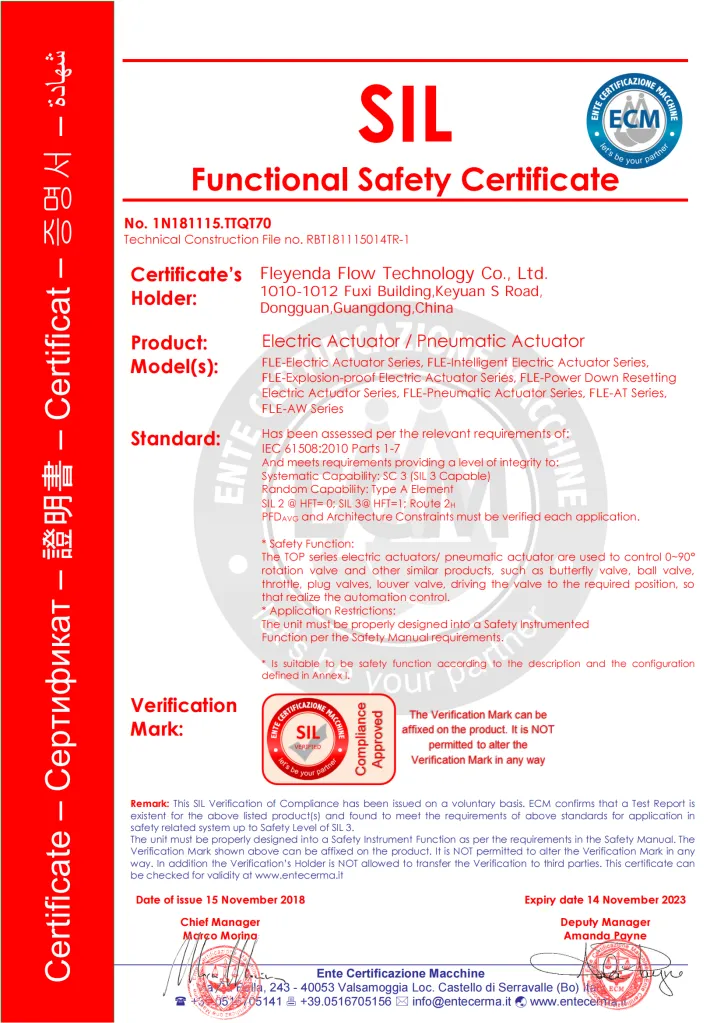
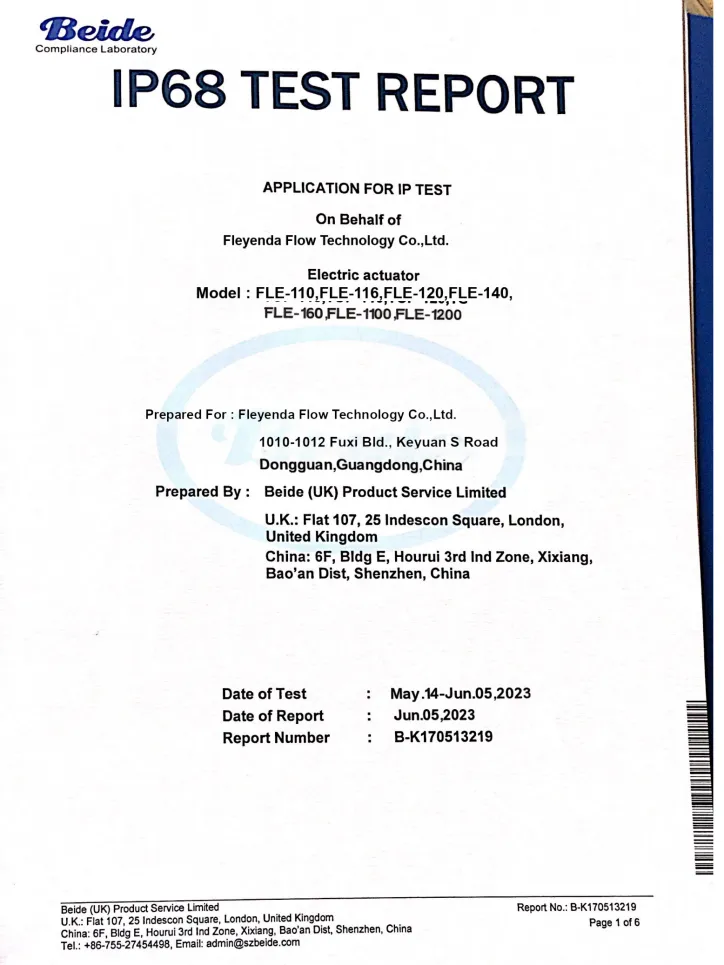
Endüstriyel Vana Uygulamaları için Sertifikalı Kalite
Fleyenda vanaları ve elektrikli aktüatörleri, istikrarlı performans, güvenilir çalışma ve uzun vadeli endüstriyel kullanım için üretilmiştir. Sertifikalı kalite desteği sayesinde, su arıtma, kimyasal işleme, otomasyon ve endüstriyel proses kontrol sistemleri için uygundur.
80% Kullanıcılarının İlgisini Çeken Sık Sorulan Sorular
1. When should I choose a Pneumatic V-Port Ball Valve instead of a standard control valve?
• The V-notch ball design delivers precise throttling and proportional flow control.
• Provides linear or equal-percentage flow characteristics for stable regulation of liquids and gases.
• The sharp V-edge minimizes clogging in slurry or fibrous media.
• Compact and fast-acting, suitable for automated process systems requiring accurate modulation.
2. What are the best practices for installing a Pneumatic V-Port Ball Valve in automation systems?
• Match the ISO 5211 mounting interface to ensure actuator compatibility.
• Connect the actuator to PLC or DCS with 4–20 mA or digital signals for precise control.
• Keep correct pipeline alignment and straight runs to reduce turbulence.
• Verify rangeability and leakage class before commissioning.
3. How does a V-Port Control Valve perform with abrasive or corrosive media?
• Stainless-steel body and reinforced seats resist corrosion and wear.
• Metal-seated ball options extend service life in high-pressure, high-velocity flow.
• Streamlined passage minimizes pressure loss and erosion.
• Fire-safe and anti-blowout stem designs enhance operational safety.
4. What maintenance steps keep a Pneumatic V-Port Ball Valve running efficiently?
• Check actuator air supply, feedback, and torque settings regularly.
• Clean the V-notch ball and seat to prevent buildup and sticking.
• Inspect seats for leakage and replace worn seals promptly.
• Keep spare actuator and positioner parts ready for quick servicing.