


FAT-VQ-F Pneumatisches V-Port-Kugelventil

FAT-VQ-F Pneumatisches V-Port-Kugelventil
The Pneumatic V-Port Ball Valve uses a V-shaped ball for precise flow control, ensuring accurate modulation, lower pressure loss, and 30% higher control efficiency, verified by ISO 5211 and API 598 standards.
| Größenauswahl | ½” – 8″ (DN15–DN200) |
| Betriebsdruckbereich: | PN16–PN40 / 150–600 PSI |
| Betriebstemperaturbereich: | −20°C to +180°C |
| Material des Gehäuses: | Stainless Steel CF8 / CF8M (AISI 304 / 316) |
| Verbindungstyp: | Flanged (ANSI, DIN, JIS optional) |
| Geeignetes Medium: | Water, Steam, Air, Gas, Oil, Chemical, Pulp, Slurry |
| Antriebstyp: | Doppeltwirkender oder federrückstellender pneumatischer Antrieb |
| Spannungsoptionen | 24 V Gleichstrom, 110 V Wechselstrom, 220 V Wechselstrom |
| Designstandard | ISO 5211, ASME B16.34 |
| Prüfnorm | API 598 / EN12266-1 |
| Brandschutzkonzeption | API 607 / ISO 10497 compliant |
| Zertifizierung | CE / RoHS / ISO 9001 / IP65 (Antrieb) |
| Anpassung | Oben finden Sie Beispiele für Standardparameter. Wenn Sie bestimmte Parameter und Materialien haben, können wir diese individuell anpassen. |
| Reihe | AT | AW | Linear | Pneumatikzylinder | Sanitär |
|---|---|---|---|---|---|
| Ventilkörper | Kugelhahn, Absperrklappe, Kegelventil | Absperrschieber, Global-Ventil | Messerschieberventil | Hygienische Absperrklappe | |
| Funktion | Doppeltwirkend, einfachwirkend (bei Ausfall rückstellend FO oder FC) | ||||
| Zubehör für Steuerungen |
• Magnetventil, Filter-Regler-Schmiervorrichtung (F.R.L.), Stellungsregler, Endschalter, Handrad • Magnetventil und Stellungsregler sind in explosionsgeschützter Ausführung erhältlich und können wahlweise mit Signalrückmeldung ausgestattet werden | ||||
| Betriebsmedium |
Saubere und trockene oder geschmierte Luft oder Inertgas. Jedes nicht korrosive Gas, das mit den inneren Bauteilen des Stellantriebs und dem Schmiermittel verträglich ist. Die Taupunkttemperatur des Betriebsmediums beträgt -20 °C, und die Größe der Verunreinigungspartikel beträgt höchstens 30 µ. Bei der Auswahl eines Stellungsreglers sollte die Partikelgröße der Verunreinigungen höchstens 5 µ betragen. | ||||
| Luftdruck | 3 bar bis 8 bar | ||||
| Betriebstemperatur |
• Standardausführung: -20 °C bis +80 °C • Niedrigtemperaturausführung: -40 °C bis +80 °C • Hochtemperaturausführung: -20 °C bis +160 °C | ||||
| Schmierung |
Unter normalen Betriebsbedingungen benötigt die Standardausführung kein zusätzliches Schmiermittel. Für Umgebungen mit niedrigen oder hohen Temperaturen sind spezielle Schmierstoffe erforderlich. | ||||
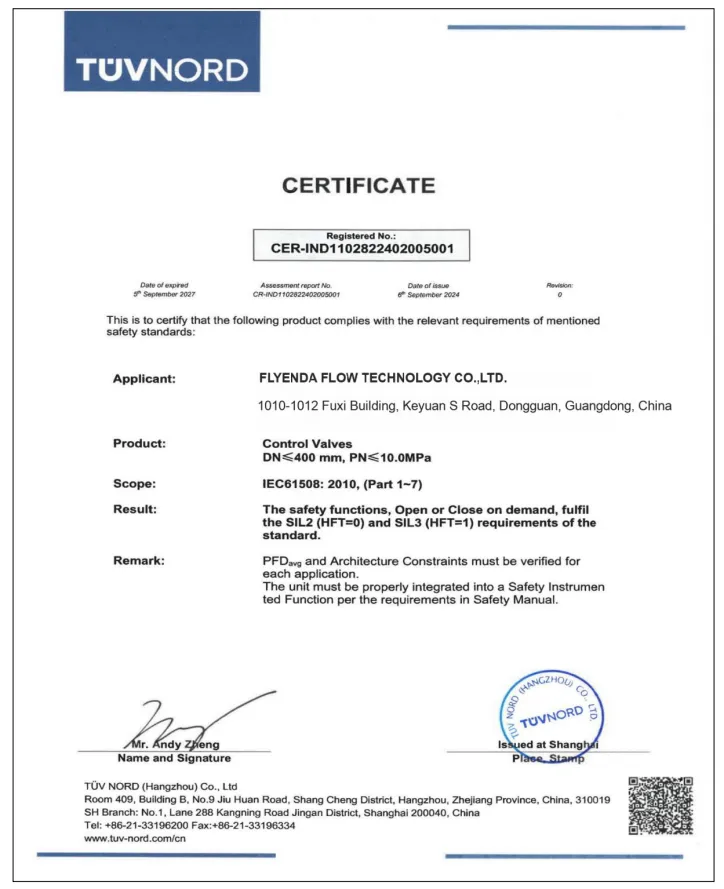
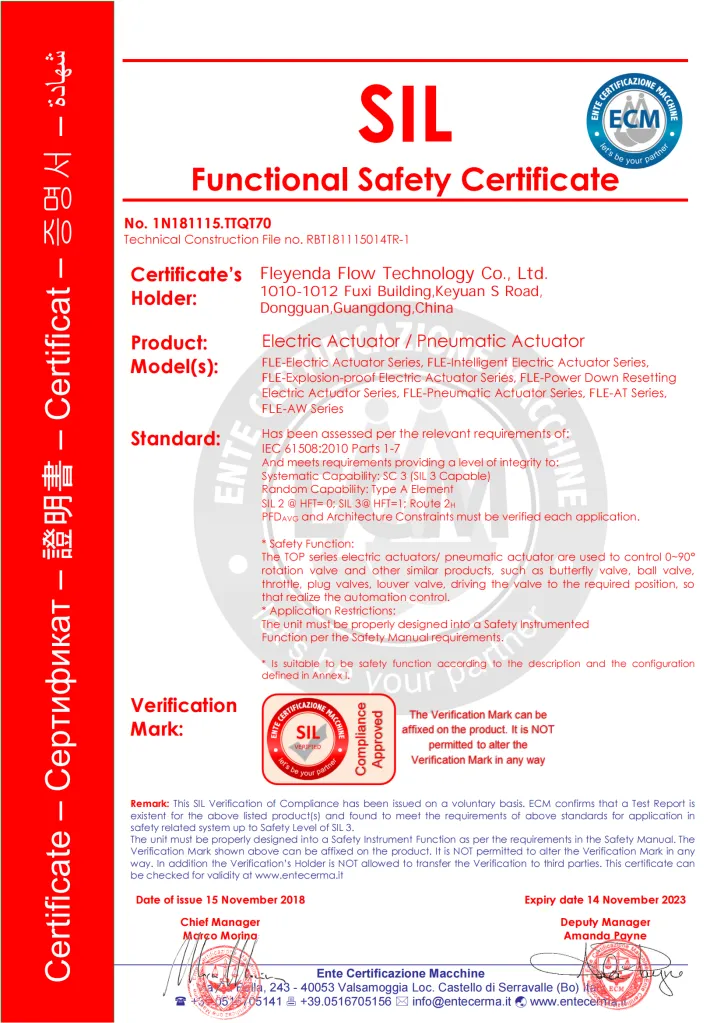
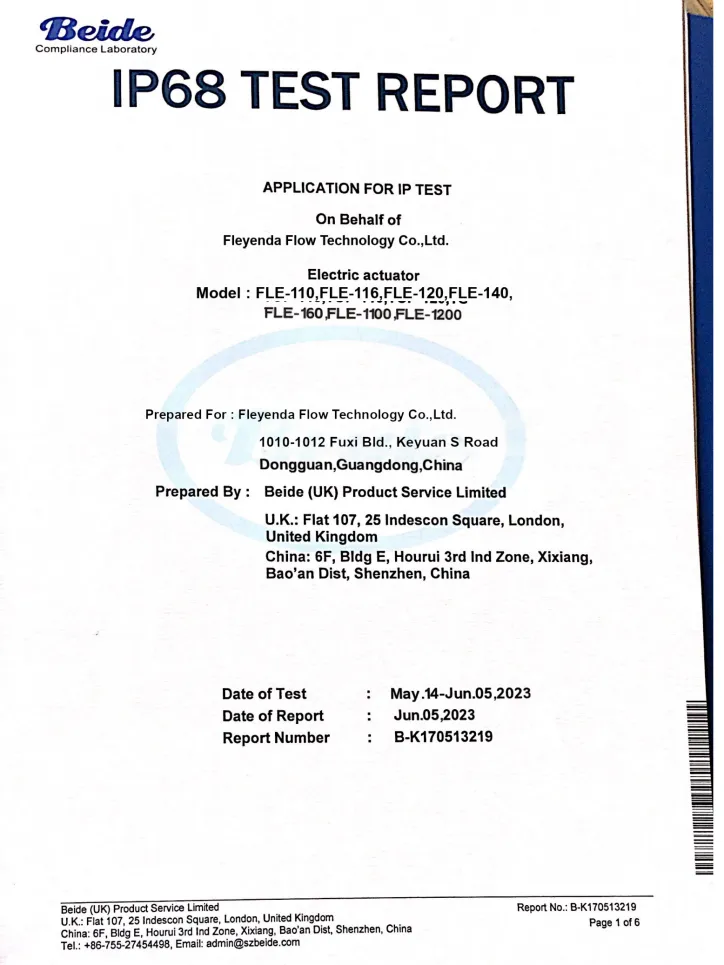
Zertifizierte Qualität für industrielle Ventilanwendungen
Ventile und elektrische Stellantriebe von Fleyenda sind auf stabile Leistung, zuverlässigen Betrieb und den langfristigen industriellen Einsatz ausgelegt. Dank zertifizierter Qualitätssicherung eignen sie sich für die Wasseraufbereitung, die chemische Verarbeitung, die Automatisierung sowie industrielle Prozessleitsysteme.
Häufig gestellte Fragen, die für Nutzer des 80% von Interesse sind
1. When should I choose a Pneumatic V-Port Ball Valve instead of a standard control valve?
• The V-notch ball design delivers precise throttling and proportional flow control.
• Provides linear or equal-percentage flow characteristics for stable regulation of liquids and gases.
• The sharp V-edge minimizes clogging in slurry or fibrous media.
• Compact and fast-acting, suitable for automated process systems requiring accurate modulation.
2. What are the best practices for installing a Pneumatic V-Port Ball Valve in automation systems?
• Match the ISO 5211 mounting interface to ensure actuator compatibility.
• Connect the actuator to PLC or DCS with 4–20 mA or digital signals for precise control.
• Keep correct pipeline alignment and straight runs to reduce turbulence.
• Verify rangeability and leakage class before commissioning.
3. How does a V-Port Control Valve perform with abrasive or corrosive media?
• Stainless-steel body and reinforced seats resist corrosion and wear.
• Metal-seated ball options extend service life in high-pressure, high-velocity flow.
• Streamlined passage minimizes pressure loss and erosion.
• Fire-safe and anti-blowout stem designs enhance operational safety.
4. What maintenance steps keep a Pneumatic V-Port Ball Valve running efficiently?
• Check actuator air supply, feedback, and torque settings regularly.
• Clean the V-notch ball and seat to prevent buildup and sticking.
• Inspect seats for leakage and replace worn seals promptly.
• Keep spare actuator and positioner parts ready for quick servicing.