


FAT-Q-TF 3 Way Flange Stainless Steel Ball Valve
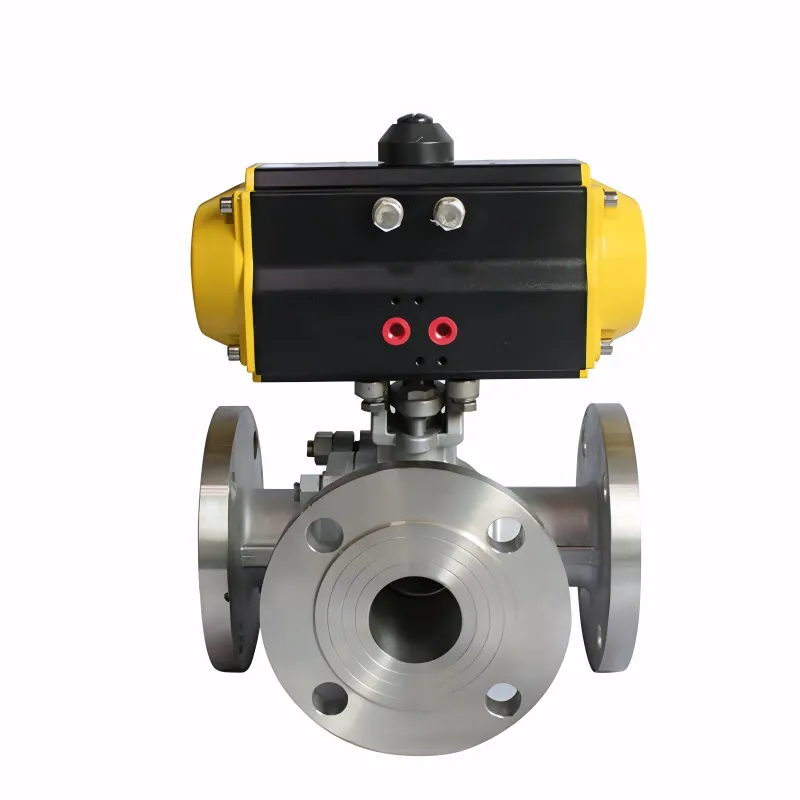
FAT-Q-TF 3 Way Flange Stainless Steel Ball Valve
The 3 Way Flange Stainless Steel Ball Valve uses a CF8M body and PTFE seats for corrosion resistance and tight sealing, offers precise flow diversion or mixing with a pneumatic actuator, and is proven by 100,000-cycle durability tests under PN63 pressure and 180 °C.
| Boyut Aralığı | DN15 – DN200 (1/2″ – 8″) |
| Çalışma Basıncı Aralığı: | PN16 – PN63 (Class 150 – 600) |
| Çalışma Sıcaklık Aralığı: | -20 °C ile +180 °C arası |
| Gövde Malzemesi: | CF8 / CF8M (Stainless Steel 304 / 316) |
| Bağlantı Türü: | Flanged Ends |
| Uygulanabilir Ortam: | Water, Air, Steam, Oil, Gas, Acid, Alkali, Corrosive Fluids |
| Aktüatör Türü: | Pneumatic Rack & Pinion Actuator |
| Gerilim Seçenekleri | 24 V DC, 110 V AC, 220 V AC |
| Tasarım Standardı | ISO 5211, ASME B16.34, API 6D |
| Test Standardı | API 598 / EN 12266-1 |
| Yangına Dayanıklı Tasarım | Optional per API 607 / ISO 10497 |
| Sertifikasyon | CE / RoHS / ISO 9001 / IP65 (Aktüatör) |
| Özelleştirme | Yukarıda standart parametre örnekleri yer almaktadır. Özel parametreleriniz ve malzemeleriniz varsa, bunların hepsini size göre uyarlayabiliriz. |
| Series | AT | AW | Linear | Pneumatic Cylinder | Hijyenik |
|---|---|---|---|---|---|
| Valf Gövdesi | Ball valve, butterfly valve, plug valve | Gate valve, Global valve | Knife gate valve | Sanitary butterfly valve | |
| Function | Double Acting, Single Acting (Failure Resetting FO or FC) | ||||
| Kontrol Aksesuarları |
• Solenoid Valve, Filter Regulator Lubricator (F.R.L.), Positioner, Limit Switch, Handwheel • Solenoid Valve & Positioner are with Explosion-proof grade and Signal Feedback type for choice | ||||
| Operating Medium |
Clean and dry or lubricated air or inert gas. Any non-corrosive gas that is compatible with the internal parts of the actuator and the lubricant. The dew point temperature of the operating medium is -20°C, and the size of impurity particles is no more than 30u. When selecting a positioner, the impurity particle size should be no more than 5u. | ||||
| Air Source Pressure | 3bar to 8bar | ||||
| Operating Environment Temperature |
• Standard type: -20°C to +80°C • Low-temperature type: -40°C to +80°C • High-temperature type: -20°C to +160°C | ||||
| Lubrication |
Under normal operating conditions, the standard type does not require additional lubricant. For low-temperature or high-temperature environments, special lubricants are required. | ||||
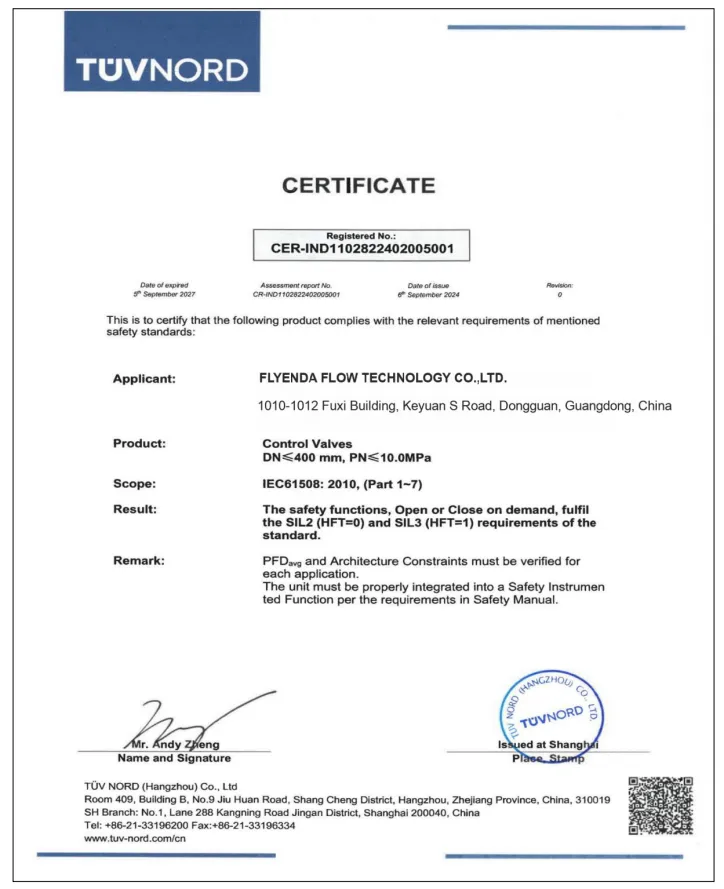
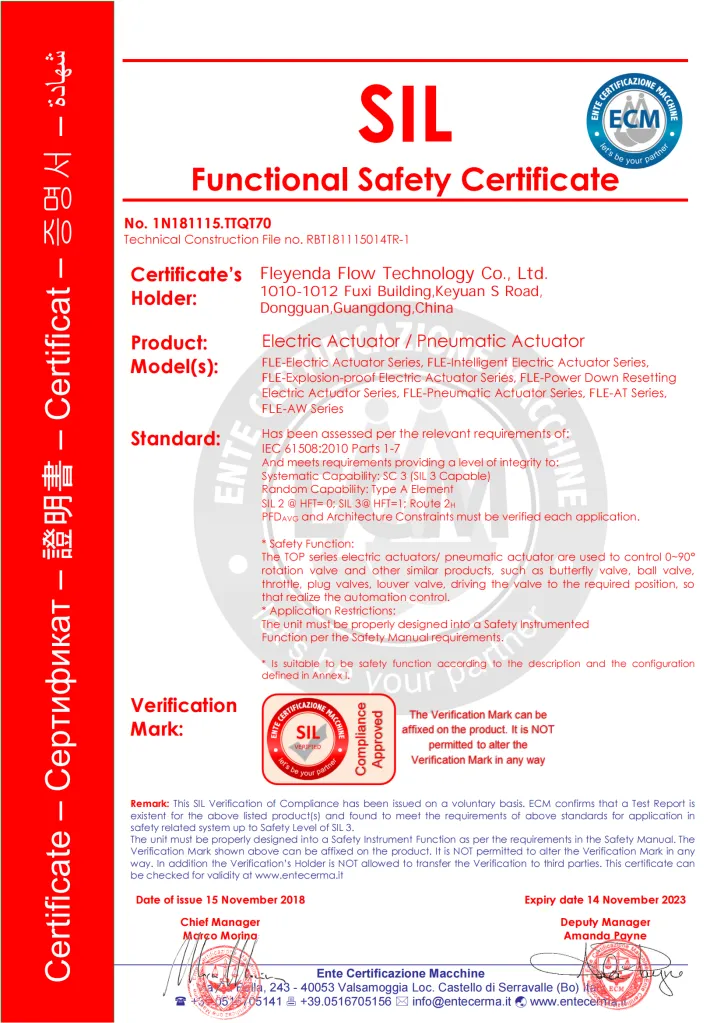
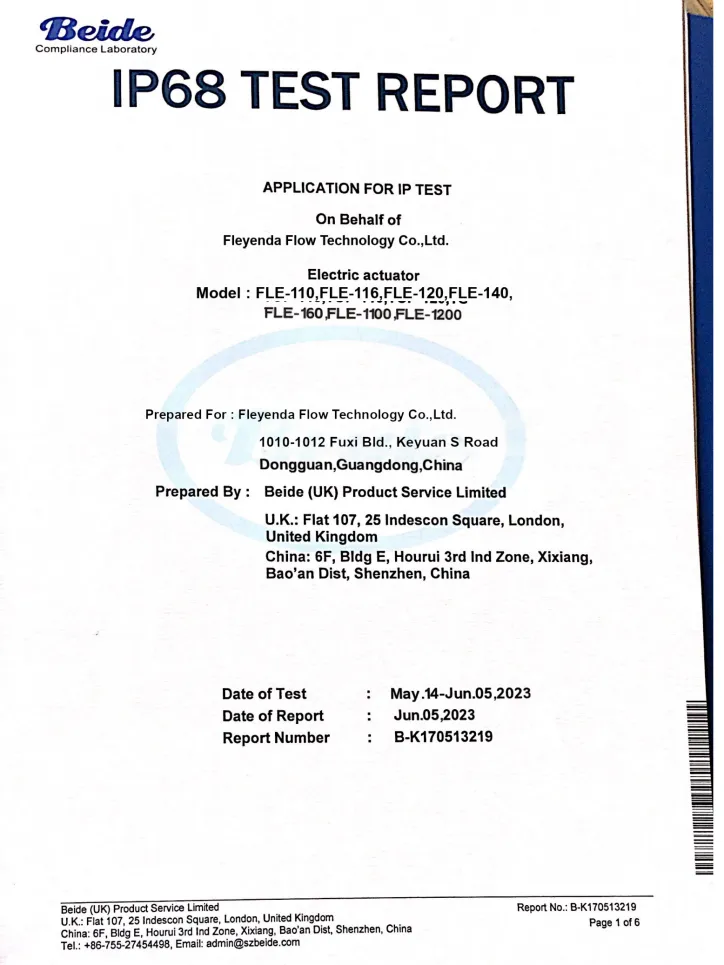
Endüstriyel Vana Uygulamaları için Sertifikalı Kalite
Fleyenda vanaları ve elektrikli aktüatörleri, istikrarlı performans, güvenilir çalışma ve uzun vadeli endüstriyel kullanım için üretilmiştir. Sertifikalı kalite desteği sayesinde, su arıtma, kimyasal işleme, otomasyon ve endüstriyel proses kontrol sistemleri için uygundur.
80% Kullanıcılarının İlgisini Çeken Sık Sorulan Sorular
1. What are the key advantages of using a 3 Way Flange Stainless Steel Ball Valve in automated flow systems?
• Three-port stainless ball valve enables precise flow diversion and mixing in complex pipelines.
• Flanged stainless valve minimizes pressure loss and simplifies system layout.
• Pneumatic actuator ensures fast torque response and stable automation.
• 316 stainless steel body provides strong corrosion resistance and long service life.
2. How do I choose between an L-port and T-port configuration for a three-way stainless flanged valve?
• L-port valve is ideal for diverting flow between two lines without mixing.
• T-port design supports mixing or simultaneous flow for blending processes.
• Match the pneumatic actuator type with the required flow direction for smooth control.
• Ensure flanged connections meet ANSI, DIN, or JIS standards for reliable sealing.
3. Can a 3 Way Stainless Flanged Ball Valve handle aggressive chemicals and high-temperature media?
• CF8M stainless valve with PTFE or RPTFE seats resists corrosion and high temperatures up to +180 °C.
• Fire-safe structure ensures safety under extreme heat or flammable media.
• Steel construction maintains sealing integrity in steam and gas systems.
• Confirm pressure class and actuator compatibility with the operating environment.
4. What are the most common installation mistakes to avoid with a three-port flanged steel valve?
• Choosing the wrong L or T flow path may cause unwanted bypass or mixing.
• Incorrect pressure class or flange size leads to misalignment and leaks.
• Poor actuator alignment or missing ISO 5211 mounting reduces accuracy.
• Using low-grade materials instead of stainless steel and Teflon seats shortens valve life.