


INDUSTRIAL VALVE ENGINEERING
Corrosion is one of the most common causes of industrial valve deterioration, leakage and unplanned maintenance. In chemical processing, water treatment, mining, metallurgy and other demanding industries, the wrong valve material can lead to damaged sealing surfaces, weakened pressure-containing components and premature equipment failure.
When searching for a corrosion valve, buyers and engineers are usually looking for a corrosion-resistant valve that can withstand a specific process medium, temperature, pressure and operating environment. However, corrosion resistance depends on more than the valve body material. The disc or ball, stem, seats, packing, gaskets and any protective lining must also be compatible with the fluid.
This guide explains the main causes and types of valve corrosion, how corrosion affects industrial performance, and how to select suitable valve materials and designs for corrosive service.
What Causes Valve Corrosion?
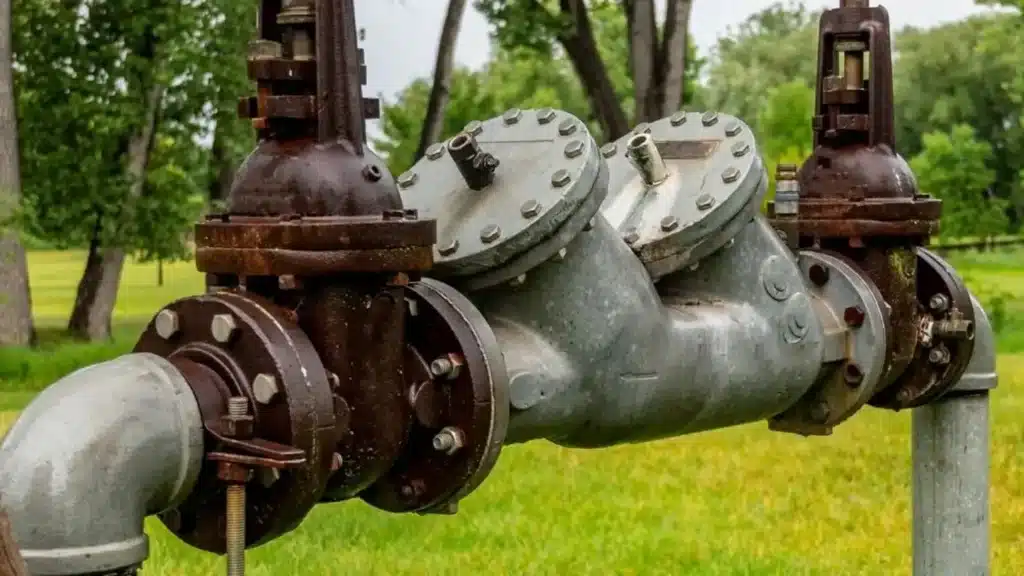
Valve corrosion occurs when a material deteriorates through chemical or electrochemical reactions with its surrounding environment. Depending on the process conditions, corrosion may affect the external body, internal flow passage, closure element, stem or sealing components.
1. Chemical Composition of the Medium
Acids, alkalis, salts, chlorides, dissolved gases and process contaminants can attack valve materials in different ways. Carbon dioxide and hydrogen sulfide, for example, can create corrosive conditions in the presence of water. Chloride-containing fluids can also increase the risk of localized corrosion in susceptible stainless steels.
2. Temperature and Concentration
Increasing temperature often accelerates corrosion reactions, although the exact effect depends on the material and chemical system. Concentration can be equally important. A metal that performs acceptably in one concentration range may corrode rapidly in another. This is particularly important when handling sulfuric acid and other industrial chemicals.
3. Flow Velocity and Turbulence
High fluid velocity, pressure drops, turbulence and repeated impingement can damage protective surface films or accelerate material loss. Valve throttling areas, changes in flow direction and partially open closure elements may be especially vulnerable to erosion-corrosion.
4. Deposits, Stagnant Areas and Crevices
Deposits, narrow gaps and poorly drained cavities can create localized chemical conditions that differ from the main process stream. These areas may become susceptible to crevice corrosion, under-deposit attack or corrosion caused by concentrated contaminants.
5. Contact Between Dissimilar Metals
When dissimilar metals are electrically connected in the presence of an electrolyte, galvanic corrosion may occur. The less noble metal can corrode preferentially, particularly when the material combination and exposed surface-area ratio are unfavorable.
6. Mechanical Stress and Surface Damage
Residual manufacturing stress, pressure loading, vibration, repeated operating cycles and surface damage can contribute to certain corrosion mechanisms. Under specific combinations of material, tensile stress and corrosive environment, stress corrosion cracking may develop even when general material loss appears limited.
Common Types of Valve Corrosion
Understanding the corrosion mechanism helps engineers identify the appropriate prevention strategy. Different corrosion types can occur independently or simultaneously in the same valve.
| Corrosion Type | How It Develops | Prevention Focus |
|---|---|---|
| Uniform Corrosion | Material loss occurs across a relatively broad surface. | Select compatible materials and monitor wall thickness or corrosion rate. |
| Pitting Corrosion | Localized attack creates small but potentially deep pits. | Evaluate chloride exposure, temperature and alloy resistance. |
| Crevice Corrosion | Localized attack develops in narrow gaps, under deposits or around joints. | Reduce vulnerable crevices and verify gasket, seat and assembly design. |
| Galvanic Corrosion | Electrical contact between dissimilar metals accelerates attack on one material. | Review material combinations and electrical isolation where appropriate. |
| Erosion-Corrosion | Flow-induced wear and chemical attack reinforce each other. | Evaluate velocity, turbulence, throttling conditions and material resistance. |
| Stress Corrosion Cracking | A susceptible material cracks under tensile stress in a specific environment. | Confirm material suitability, stress conditions and applicable engineering requirements. |
| Microbiologically Influenced Corrosion | Microorganisms and their associated deposits alter local corrosion conditions. | Assess water chemistry, deposits, cleaning and appropriate treatment measures. |
Visual inspection alone cannot reliably identify every corrosion mechanism. Pitting beneath deposits, internal liner damage and early-stage cracking may require closer inspection or appropriate nondestructive testing.
How Does Corrosion Affect Industrial Valves?
Valve corrosion can affect process safety, operating efficiency and total maintenance costs. The consequences depend on where the damage occurs and whether the valve is used for isolation, flow regulation or a safety-related function.
- External or pressure-boundary damage: Corrosion can reduce wall thickness and compromise the integrity of pressure-containing components.
- Seat and closure-element damage: Corroded balls, discs, plugs or seats can cause internal leakage and reduce shutoff performance.
- Stem and shaft deterioration: Corrosion can increase operating torque, cause sticking or damage stem sealing areas.
- Actuation problems: Increased friction or mechanical damage may prevent an automated valve from reaching its commanded position.
- Unplanned downtime: Premature failure can interrupt production and require emergency replacement, cleaning and system inspection.
- Environmental and safety risks: Leakage of hazardous, hot or corrosive fluids can expose personnel and nearby equipment to additional risks.
A valve may still look acceptable externally while internal components have already deteriorated. For critical chemical service, material verification and inspection planning should therefore be based on the actual service conditions rather than appearance alone.
Corrosion-Resistant Valve Materials: What Should You Choose?
There is no single material that is suitable for every corrosive medium. The selection should consider chemical compatibility, temperature, pressure, mechanical strength, flow conditions, expected service life and the complete cost of ownership.
| Material or Construction | Potential Applications | Important Limitations |
|---|---|---|
| Углеродистая сталь | General industrial fluids and selected chemical services under verified conditions. | Can corrode rapidly in unsuitable aqueous acids, salts or other aggressive media. |
| Stainless Steel 304 / 316 | Water, process fluids and selected chemical environments, depending on grade and conditions. | Not universally resistant to chlorides, sulfuric acid or other aggressive chemicals. |
| Duplex Stainless Steel | Selected chloride-containing fluids, seawater-related services and demanding industrial environments. | Suitability depends on grade, temperature, chloride concentration and other process conditions. |
| Nickel-Based Alloys | Selected aggressive chemical services where conventional stainless steels are unsuitable. | Specific alloy selection and cost require engineering evaluation. |
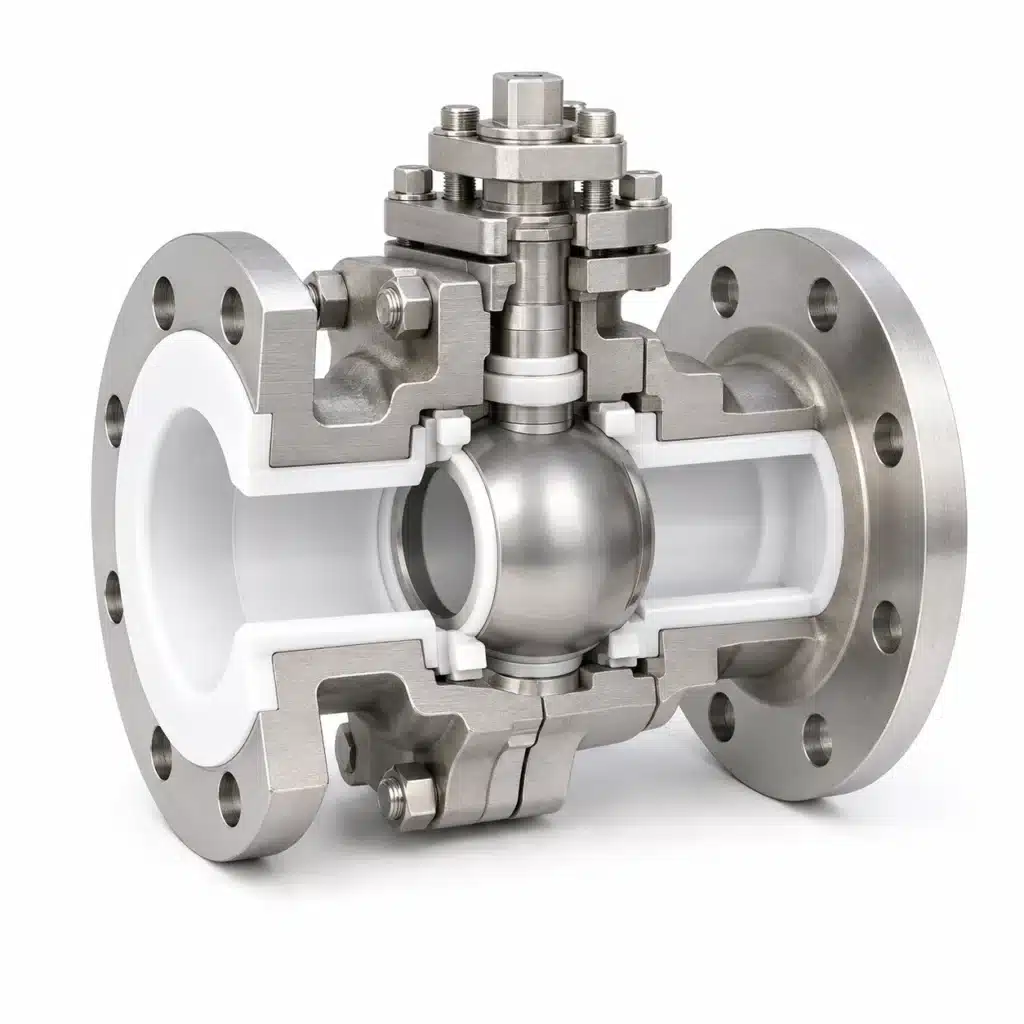
| PTFE / PFA-Lined Valves | Many corrosive acid, alkali and chemical applications where a compatible fluoropolymer barrier is appropriate. | Check temperature, pressure, vacuum, permeability, liner integrity and mechanical limits. |
| PVC / CPVC / PVDF | Selected chemical transfer, water treatment and lower-pressure process systems. | Pressure ratings, temperature limits, joint design and chemical compatibility vary by material. |
Why the Valve Body Is Not the Only Consideration
Corrosion resistance must be assessed across all components exposed to the process fluid. A corrosion-resistant body does not guarantee a corrosion-resistant valve if the ball, disc, stem, seat, packing or fasteners are unsuitable.
For lined valves, engineers should also verify the coverage and continuity of the protective lining at flange faces, internal passages, closure elements and other wetted areas. The lining material must be compatible with the process, while the underlying body must provide the required mechanical strength and pressure rating.
Material selection should be confirmed against manufacturer compatibility data, applicable corrosion references and, where necessary, a qualified materials or corrosion engineer.
Which Valve Types Are Suitable for Corrosive Media?
The correct valve type depends on the required function, pressure drop, solids content, sealing performance and chemical compatibility. Material selection and valve geometry should be considered together.
Corrosion-Resistant Ball Valves
Ball valves are widely used for on/off isolation in chemical transfer and process pipelines. PTFE- or PFA-lined designs can be considered for compatible corrosive media where the lining, seats and stem sealing system meet the operating requirements.
For example, Fleyenda offers a PFA-lined ball valve for sulfuric acid service. Final suitability still depends on the actual concentration, temperature, pressure, flow conditions and approved configuration.
Corrosion-Resistant Butterfly Valves
Butterfly valves can provide compact flow isolation for larger pipelines. Depending on the application, suitable body materials, disc materials and resilient or fluoropolymer seats may be required. They should not be selected for a corrosive medium based on body material alone.
Corrosion-Resistant Diaphragm Valves
Diaphragm valves can be useful for selected corrosive fluids because the diaphragm separates the operating mechanism from the process medium. The diaphragm, body lining and other wetted parts must all be compatible with the fluid and operating temperature.
Corrosion-Resistant Check Valves
Check valves help prevent reverse flow in chemical and industrial pipelines. Their closure elements, hinges, springs, seats and body materials require careful evaluation, particularly where deposits or crystallization may interfere with movement.
Corrosion-Resistant Plug and Other Specialty Valves
Plug valves and other specialty designs may suit particular chemical, slurry or isolation applications. The final choice should account for operating torque, flow characteristics, solids, cleaning requirements and the sealing arrangement.
Special Considerations for Sulfuric Acid Valves
Sulfuric acid is a good example of why corrosion-resistant valve selection cannot rely on a simple material ranking. Its effect on valve materials can change significantly with concentration, temperature, velocity and the presence of contaminants.
Some carbon-steel equipment can be suitable for particular cold, concentrated sulfuric acid services under controlled conditions. That does not mean carbon steel is appropriate for all sulfuric acid pipelines. Dilute acid, elevated temperature, high flow velocity or unexpected water ingress can create substantially different corrosion conditions.
Similarly, standard 304 or 316 stainless steel should not be treated as a universal solution for sulfuric acid. Fluoropolymer-lined valves may be appropriate for many applications, but the specific liner, seat, pressure rating and operating envelope must still be verified.
When evaluating a sulfuric acid valve, confirm the following information:
- Sulfuric acid concentration and any expected dilution during operation.
- Normal, maximum and upset temperatures.
- Operating pressure, differential pressure and possible vacuum conditions.
- Flow velocity, throttling requirements and potential turbulence.
- Contaminants, solids, crystallization and cleaning procedures.
- Compatibility of the liner, closure element, seats, stem seals and gaskets.
For more detailed guidance, see Fleyenda’s sulfuric acid valve selection and application guide, which focuses on process conditions, lining systems and material compatibility for sulfuric acid service.
How to Prevent Valve Corrosion and Extend Service Life
Preventing valve corrosion requires a combination of correct initial specification, suitable installation and condition-based maintenance.
1. Define the Actual Operating Envelope
Document the process medium, concentration, operating temperature, pressure, velocity and possible upset conditions. Do not select materials solely from the normal operating point if the system may experience dilution, overheating or contamination.
2. Verify All Wetted Materials
Review the body, closure element, stem, seats, packing, gaskets and other wetted components. Confirm that material grades and lining coverage match the intended application.
3. Avoid Unnecessary Material Combinations
Where galvanic corrosion is a concern, review the contact between dissimilar metals and the surrounding electrolyte. Use appropriate material combinations or isolation methods where the engineering design requires them.
4. Consider Flow and Installation Conditions
Assess high-velocity areas, pressure drops, dead legs, stagnant pockets and locations where deposits can accumulate. Valve orientation and installation should follow the manufacturer’s requirements and the process design.
5. Inspect Seals and Linings
Inspection should consider liner damage, seat wear, stem sealing, flange interfaces, leakage and signs of localized attack. The inspection method and interval should reflect the fluid hazard, valve criticality and operating history.
6. Maintain Records and Replace Components Correctly
Keep material certificates, valve specifications, inspection findings and maintenance records. Replacement seats, gaskets and internal components must be compatible with the original service conditions rather than chosen only by size.
Corrosion-Resistant Valve Selection Checklist
Before ordering a corrosion valve for an industrial project, prepare the following information for the valve supplier or engineering team.
| Selection Item | Information to Confirm |
|---|---|
| Рабочая среда | Chemical name, concentration, contaminants and solids content. |
| Operating Conditions | Normal and maximum temperature, pressure, differential pressure and flow velocity. |
| Конструкция клапана | Required valve type, size, connection, flow function and shutoff requirements. |
| Wetted Materials | Body, closure element, stem, seats, packing, gaskets and lining material. |
| Operating Mode | Manual or actuated operation, cycling frequency and any modulating requirement. |
| Стандарты и испытания | Applicable pressure rating, inspection, testing, material documentation and project specifications. |
| Техническое обслуживание | Expected service life, inspection access, replacement parts and maintenance strategy. |
Providing this information early helps the supplier evaluate the complete valve assembly instead of recommending a material based on the chemical name alone.
Frequently Asked Questions About Corrosion Valves
What is a corrosion valve?
The term generally refers to a corrosion-resistant valve designed for service in corrosive fluids or environments. Its suitability depends on the complete material and design specification, not just the valve body.
What causes valve corrosion?
Common causes include chemical attack, chlorides, elevated temperature, galvanic contact, deposits, crevice conditions, flow-induced erosion-corrosion and certain combinations of tensile stress and corrosive environments.
Which material is best for corrosion-resistant valves?
There is no universal best material. Stainless steel, duplex alloys, nickel-based alloys, fluoropolymer linings and engineering plastics each have different application limits. Selection must be based on the exact medium and operating conditions.
Are stainless steel valves corrosion-resistant?
Stainless steel offers useful corrosion resistance in many applications, but performance varies by grade and environment. Chlorides, certain acids, elevated temperatures and crevice conditions can cause corrosion even in stainless-steel valves.
Are PTFE-lined and PFA-lined valves suitable for acids?
They can be suitable for many acid services, depending on the specific chemical, concentration, temperature, pressure, vacuum conditions, liner construction and sealing components. Compatibility must be verified for the actual application.
What is the difference between corrosion and erosion-corrosion?
Corrosion is material deterioration caused by chemical or electrochemical reactions. Erosion-corrosion involves flow-related mechanical damage that accelerates or removes protective surface films and increases material loss.
How can valve corrosion be reduced?
Use verified material compatibility, suitable valve construction, correct installation, appropriate operating conditions and planned inspection. Monitor leakage, liner condition, sealing components and signs of localized damage.
Select a Corrosion-Resistant Valve for Your Actual Process Conditions
Reliable corrosion-resistant valve selection requires more than choosing stainless steel or a fluoropolymer lining. The process medium, concentration, temperature, pressure, flow conditions and all wetted components must be evaluated together.
Fleyenda supports industrial valve applications involving corrosive chemicals, including lined valve configurations for selected acid and chemical services. Share your operating conditions with the technical team to help identify a suitable valve design and material configuration.