


Onde as válvulas de lâmina são utilizadas?
Knife gate valves are primarily used to isolate slurry, sludge, pulp, wastewater, powders, and other process media containing suspended solids. Their thin gate is designed to move through media that may clog or interfere with the operation of conventional valves, making them especially valuable in mining, pulp and paper, wastewater treatment, power generation, chemical processing, and bulk-material handling.
Although knife gate valves are available in many body, seat, and actuation configurations, they are generally selected for fully open or fully closed service. Understanding the process medium, solids concentration, pressure, temperature, abrasion level, corrosion risk, and required shutoff performance is essential for choosing the correct design.
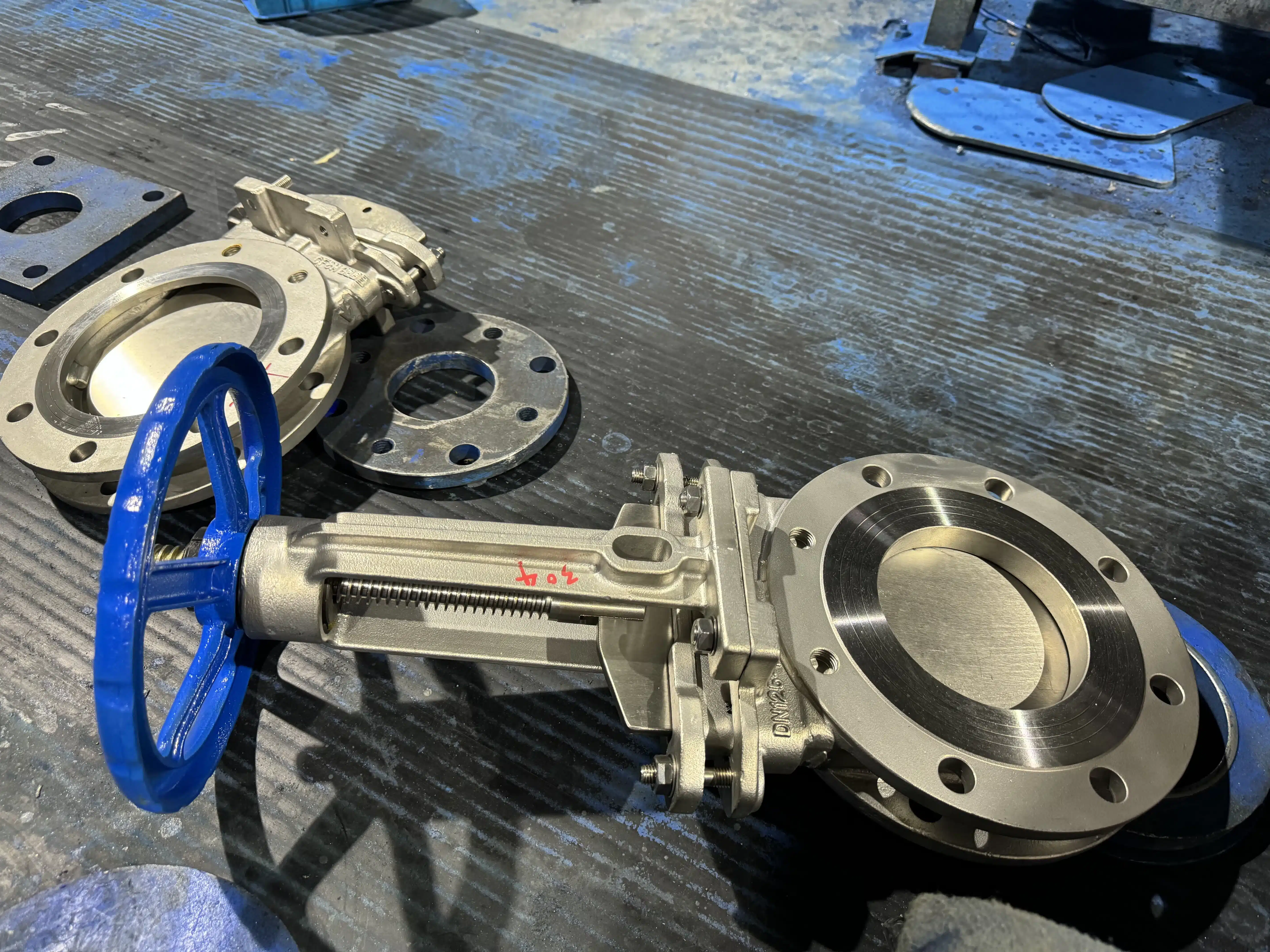
What Is a Knife Gate Valve?
A knife gate valve is an industrial isolation valve that uses a flat or slightly beveled gate to open or close the flow passage. The gate travels vertically through the valve body and moves across the pipeline when the valve closes.
The lower edge of the gate is often shaped to help pass through thick media, fibrous material, settled solids, or deposits near the seat. This feature distinguishes knife gate valves from many conventional gate valves, which are usually intended for relatively clean liquids and gases.
When fully open, many knife gate valve designs provide a nearly unobstructed flow path. This helps reduce pressure loss and allows slurry or solids-bearing media to pass through the valve with less risk of accumulating around an internal closure element.
Knife gate valves may have wafer, lugged, or flanged bodies. Depending on the selected model, the valve may use metal seats, resilient seats, elastomer sleeves, replaceable liners, packing systems, or specialized sealing arrangements for abrasive and corrosive service.
Why Are Knife Gate Valves Used for Slurry and Solids?
Slurry systems can be difficult to isolate because solid particles may settle, compact, or become trapped inside a valve. Fibrous media can wrap around internal components, while abrasive particles can rapidly damage sealing surfaces.
Knife gate valves address these challenges with a relatively simple flow path and a gate that moves directly across the pipeline. Selected designs can push through or displace material that might prevent a conventional gate, globe, or butterfly valve from closing correctly.
Their compact face-to-face dimensions can also reduce installation space and valve weight. This is useful in large pipelines where a conventional full-body valve could require greater structural support and considerably more room.
However, not every knife gate valve is suitable for every slurry. Light wastewater sludge, dense mineral tailings, dry powder, corrosive chemicals, and high-temperature ash have very different operating characteristics. The valve construction must be matched to the actual application.
Main Industries Using Knife Gate Valves
| Industry | Mídia típica | Common Valve Duties |
|---|---|---|
| Mining and mineral processing | Ore slurry, tailings, sand, concentrate, process water | Pump isolation, cyclone isolation, thickener and tailings control |
| Pulp and paper | Pulp stock, recycled fiber, black liquor, rejects | Stock-line isolation, screening, cleaning, and process routing |
| Wastewater treatment | Sewage sludge, biosolids, screenings, grit, slurry | Sludge-line isolation, digester service, and pump maintenance |
| Power generation | Ash slurry, limestone slurry, gypsum, wastewater | Ash handling, scrubber systems, and process isolation |
| Processamento químico | Corrosive slurry, crystals, viscous fluids, process residue | Batch isolation, transfer-line isolation, and equipment shutdown |
| Bulk-material handling | Powder, granules, pellets, fly ash, dry solids | Hopper discharge, silo isolation, and gravity-flow control |
| Biogas and agriculture | Organic slurry, manure, digestate, fibrous waste | Manifold isolation, digester piping, and transfer routing |
Mining and Mineral Processing
Mining is one of the most demanding application areas for knife gate valves. Mineral-processing pipelines frequently carry abrasive mixtures containing rock particles, sand, water, chemicals, and finely ground ore.
Knife gate valves may be installed around slurry pumps, hydrocyclones, flotation equipment, thickeners, dewatering systems, tailings pipelines, and concentrate-transfer systems. They allow sections of equipment to be isolated for maintenance or process changes.
Severe mining applications normally require more than a general-purpose metal-seated valve. Heavy slurry knife gate valves may use replaceable elastomer sleeves, polyurethane liners, hardened gates, wear rings, reinforced bodies, or specialized seat geometries.
Proper material selection is critical because an abrasive slurry can erode the body, gate, seat, and downstream piping. Valve orientation, flow velocity, particle size, solids percentage, and frequency of operation should all be reviewed during selection.
Pulp and Paper Production
Pulp and paper facilities use knife gate valves because many process streams contain long fibers, recycled paper, wood particles, chemicals, and thick pulp stock. Fibrous materials can collect around conventional valve components and prevent reliable shutoff.
Typical applications include stock preparation, pulp transfer, screening, cleaning, bleaching, recycled-fiber processing, chemical recovery, rejects handling, and wastewater systems.
The gate must pass through the fiber concentration and close against the selected seat without creating excessive material buildup. Valve designs for pulp service may use shaped ports, specialized gate edges, flush connections, or body configurations intended to reduce plugging.
Material compatibility must also be considered because some paper-production chemicals can be corrosive. Stainless steel gates and corrosion-resistant body materials may be required even when the process pressure is relatively low.
Wastewater, Sludge, and Biogas Systems
Knife gate valves are widely installed in municipal and industrial wastewater facilities. They are particularly useful in sludge and biosolids lines where the medium may contain suspended solids, fibers, grit, grease, and organic material.
Common installation points include sludge pumps, thickening equipment, digesters, dewatering machines, screening systems, grit-handling equipment, sewage-treatment tanks, and sludge-transfer manifolds.
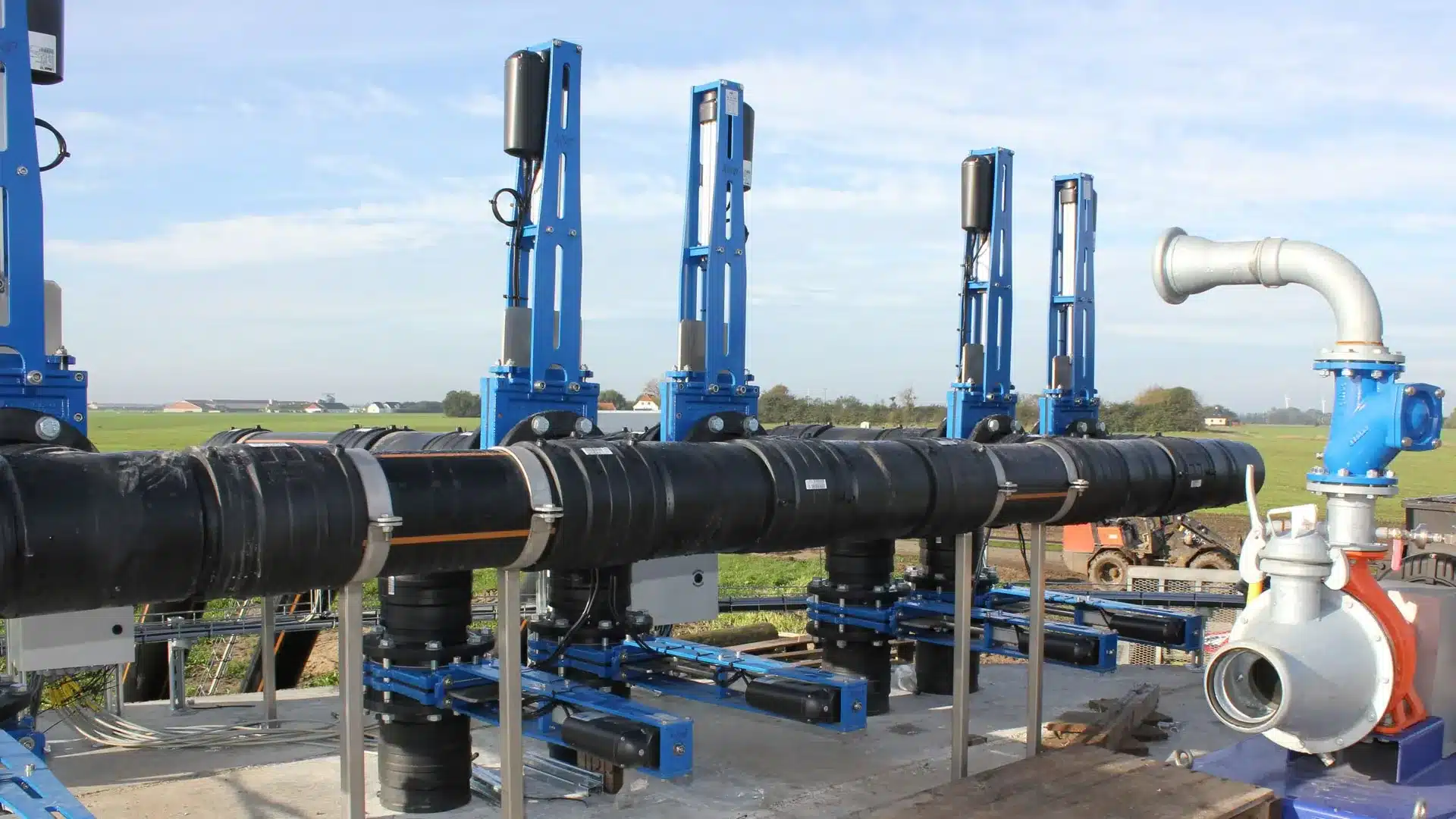
Biogas and agricultural installations may use knife gate valves to route manure slurry, organic waste, digestate, and other fibrous media. Automated valves can direct the slurry between storage tanks, digesters, pumps, and processing equipment.
Corrosion protection is important in these environments because valves may be exposed to moisture, aggressive gases, cleaning chemicals, outdoor weather, or buried chambers. Resilient seats and suitable coatings are commonly considered for low-pressure wastewater applications.
Power Generation and Ash Handling
Power facilities use knife gate valves in systems that transport ash, limestone slurry, gypsum, coal residue, and contaminated process water. These media can be abrasive, corrosive, or highly concentrated.
In coal-fired plants, knife gate valves may be found in bottom-ash systems, fly-ash handling, scrubber systems, wastewater treatment, and slurry-transfer pipelines. Flue-gas desulfurization systems may use them to isolate limestone and gypsum slurry equipment.
The operating temperature, solids concentration, pressure, and chemical composition must be evaluated carefully. A standard wastewater knife gate valve may not provide adequate wear resistance for high-velocity ash slurry or severe scrubber service.
Automated operation is common where the valves are large, difficult to access, or integrated into a plant control sequence. Pneumatic cylinders are often selected for rapid isolation, while electric or hydraulic actuators may be used according to the available utilities and required force.
Chemical and Industrial Processing
Chemical plants and general industrial facilities use knife gate valves for process streams containing crystals, residue, viscous fluids, suspended particles, or corrosive slurry. Applications may include pigment production, fertilizer processing, salt handling, polymer production, metal processing, and industrial wastewater.
These services require detailed chemical-compatibility evaluation. The body, gate, seat, packing, liner, and actuator seals must tolerate both the process fluid and any cleaning chemicals.
Where hazardous chemicals are present, external leakage can be more important than seat leakage. An enclosed body, live-loaded packing, secondary seal, flushing arrangement, or protective gate cover may be required.
Knife gate valves should not be selected solely because the process contains solids. Pressure rating, temperature capability, shutoff direction, vacuum conditions, dead-end service, and worker-safety requirements must also be confirmed.
Dry Powders and Bulk Solids
Specialized knife gate valves can isolate dry powders, granules, pellets, cement, fly ash, and similar bulk materials. They may be installed below storage silos, hoppers, bins, conveyors, and processing equipment.
Dry-media applications can create different challenges from liquid slurry service. Fine powder may enter the packing area, prevent full gate movement, or escape into the surrounding environment. Abrasive granules can wear the seat and body, while compacted material may increase the required actuator force.
Valves intended for dry solids may use dust-tight seals, enclosed bodies, purged packing, replaceable wear components, or specially shaped ports. A slurry-style elastomer sleeve valve should not automatically be assumed suitable for dry powder service.
Common Types of Knife Gate Valves
Unidirectional Knife Gate Valves
A unidirectional valve is designed to achieve its specified shutoff performance with pressure applied from a defined direction. An installation arrow or manufacturer marking indicates the preferred flow or pressure direction.
These valves can provide an economical solution for low- or moderate-pressure isolation when reverse pressure is not expected.
Bidirectional Knife Gate Valves
Bidirectional knife gate valves are designed to seal with pressure applied from either side. They are useful in systems with reversing flow, manifold arrangements, pump bypasses, or changing operating conditions.
Slurry Knife Gate Valves
Slurry knife gate valves are engineered specifically for abrasive, viscous, and high-solids media. Many designs use resilient sleeves that seal around the gate and help prevent solids from entering internal cavities.
Through-Conduit and O-Port Valves
A through-conduit or O-port gate contains a full circular opening. When the valve is open, the opening aligns with the pipeline. As the gate closes, the solid portion moves across the port.
This design can help displace solids and may be selected for dry materials, abrasive media, or services where an uninterrupted full-bore opening is important.
Manual and Automated Knife Gate Valves
Small or infrequently operated knife gate valves may use a handwheel, chainwheel, lever, or bevel gearbox. Manual operation is simple but may become impractical when the valve is large, elevated, frequently operated, or difficult to access.
Pneumatic cylinder actuators are widely used because they provide fast linear movement and can generate substantial thrust. Spring-return designs may be selected when the valve must move to a defined position after loss of air pressure.
Electric actuators are useful where compressed air is unavailable or where remote positioning, status feedback, and digital communication are required. Hydraulic actuators may be selected for very high thrust or severe operating conditions.
The actuator must be sized for the actual gate force, not only the pipeline diameter. Packing friction, solids buildup, differential pressure, seat design, process temperature, and required operating speed can all increase the necessary thrust.
Where Should Knife Gate Valves Not Be Used?
- Continuous throttling:
Standard designs may suffer severe gate and seat erosion when left partially open. - Clean high-pressure gas:
Other valve types may provide better pressure containment and emission control. - Critical bubble-tight isolation:
The selected valve must have a verified leakage rating for the actual pressure direction. - High-frequency cycling without verification:
Packing, seats, guides, and actuators must be designed for the required cycle life. - Unsupported dead-end service:
Not every wafer-style valve can safely withstand pressure without a downstream flange. - Unsuitable temperature or chemicals:
Elastomer sleeves and resilient seats have specific compatibility limits.
How to Select Knife Gate Valves
- Identify the process medium.
Define the liquid, solids type, particle size, solids percentage, viscosity, and tendency to settle. - Determine the service duty.
Confirm whether the valve is required for isolation, emergency shutdown, diversion, or dry-material discharge. - Check pressure conditions.
Specify normal pressure, maximum differential pressure, reverse pressure, vacuum, and possible pressure surges. - Define the temperature range.
Evaluate both continuous operating temperature and temporary process excursions. - Evaluate abrasion and corrosion.
Select suitable body, gate, liner, sleeve, seat, and packing materials. - Confirm flow direction.
Determine whether a unidirectional or bidirectional valve is required. - Select the actuator.
Calculate the required thrust and consider operating speed, cycle frequency, fail position, and available utilities. - Review external leakage control.
Consider packing design, secondary seals, flushing, gate covers, and hazardous-media containment. - Verify installation requirements.
Check flange compatibility, face-to-face dimensions, pipe support, orientation, and maintenance access. - Test the complete assembly.
Confirm valve travel, shutoff, actuator force, limit settings, and control feedback under realistic conditions.
Perguntas frequentes
What are knife gate valves mainly used for?
Knife gate valves are mainly used for on-off isolation of slurry, sludge, pulp, wastewater, powders, and other media containing suspended or fibrous solids.
Can knife gate valves be used for clean water?
Some designs can handle clean water, but a butterfly valve, conventional gate valve, or ball valve may be more appropriate when no suspended solids are present.
Can knife gate valves control flow?
Standard knife gate valves are generally intended for fully open or fully closed service. Throttling should only be considered when the manufacturer specifically approves the valve design for flow regulation.
Are knife gate valves bidirectional?
Some are bidirectional, while others are designed to seal against pressure from only one direction. The product data sheet and installation markings should always be checked.
Can knife gate valves handle dry materials?
Yes, selected designs can isolate powders and bulk solids. The valve should be specifically designed for dry-media abrasion, dust containment, and solids accumulation.
Conclusão
Knife gate valves are used wherever conventional valves may struggle with slurry, sludge, pulp, suspended solids, fibrous material, abrasive particles, or dry bulk products. Their most important applications are found in mining, mineral processing, pulp and paper, wastewater treatment, power generation, chemical processing, biogas, and material-handling systems.
Their simple flow path and cutting or displacement action make them effective isolation valves, but the term “knife gate valve” covers many different designs. A light-duty wastewater valve and a high-pressure mining slurry valve are not interchangeable.
Reliable performance depends on matching the body design, pressure direction, gate material, seat system, wear protection, packing, actuator thrust, and installation arrangement to the real operating conditions. Proper selection and maintenance can significantly improve isolation reliability and reduce process downtime.