


Válvula pneumática de controle de ângulo F-ZJHS
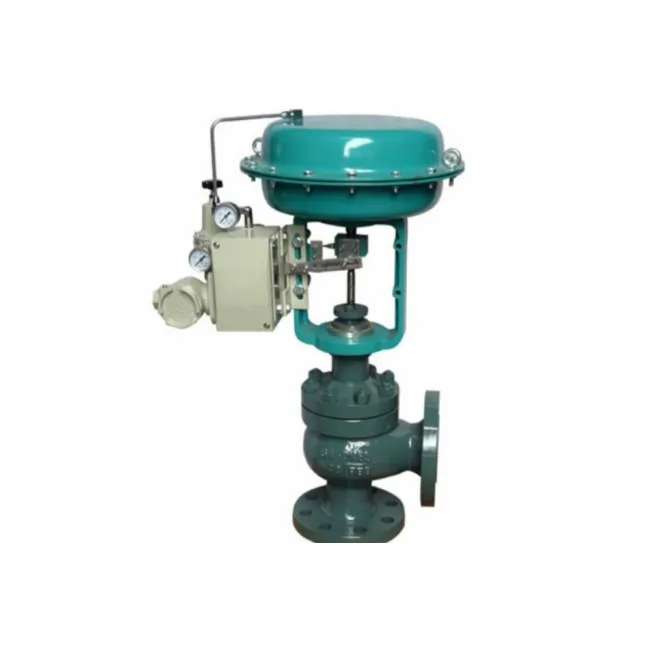
Válvula pneumática de controle de ângulo F-ZJHS
A válvula de controle angular utiliza um trajeto de fluxo de 90° para reduzir a turbulência e a cavitação, proporcionando controle preciso do fluxo, menor erosão, maior vida útil e desempenho comprovado de acordo com as normas IEC 60534 e API 598.
| Faixa de tamanhos | DN15–DN300 (½”–12″) |
| Faixa de pressão de trabalho: | PN 1,6–6,4 MPa / ANSI Classe 150–600 |
| Faixa de temperatura de operação: | −40 °C a +450 °C |
| Material do corpo: | WCB / CF8 / CF8M / CF3M |
| Tipo de conexão: | Com flange / Soldado |
| Meio aplicável: | Vapor, gás, óleo, água, fluidos corrosivos |
| Tipo de atuador: | Diafragma pneumático / Elétrico |
| Opções de tensão | 220 V CA / 110 V CA / 24 V CC |
| Padrão de projeto | IEC 60534 / ISA S75 / GB/T 4213 |
| Norma de ensaio | GB/T 13927 / API 598 / ISO 5208 |
| Projeto à prova de fogo | API 607 / ISO 10497 |
| Certificação | CE / RoHS / ISO 9001 / IP65 (atuador) |
| Personalização | Acima estão exemplos de parâmetros padrão. Se você tiver parâmetros e materiais específicos, podemos personalizar todos eles. |
| Série | AT | AW | Linear | Cilindro pneumático | Sanitário |
|---|---|---|---|---|---|
| Corpo da válvula | Válvula de esfera, válvula borboleta, válvula de obturador | Válvula de guilhotina, Válvula Global | Válvula de guilhotina | Válvula borboleta sanitária | |
| Função | Dupla ação, ação simples (FO ou FC com reajuste em caso de falha) | ||||
| Acessórios de controle |
• Válvula solenóide, filtro-regulador-lubrificador (F.R.L.), posicionador, interruptor de fim de curso, volante • A válvula solenóide e o posicionador são do tipo à prova de explosão e com retorno de sinal, à escolha | ||||
| Meio de operação |
Ar limpo e seco ou lubrificado, ou gás inerte. Qualquer gás não corrosivo que seja compatível com as peças internas do atuador e com o lubrificante. A temperatura do ponto de orvalho do meio de operação é de -20 °C, e o tamanho das partículas de impurezas não ultrapassa 30 u. Ao selecionar um posicionador, o tamanho das partículas de impureza não deve ser superior a 5u. | ||||
| Pressão da fonte de ar | 3 bar a 8 bar | ||||
| Temperatura do ambiente de operação |
• Tipo padrão: -20 °C a +80 °C • Tipo para baixas temperaturas: -40 °C a +80 °C • Tipo para altas temperaturas: -20 °C a +160 °C | ||||
| Lubrificação |
Em condições normais de operação, o modelo padrão não requer lubrificante adicional. Para ambientes de baixa ou alta temperatura, são necessários lubrificantes especiais. | ||||
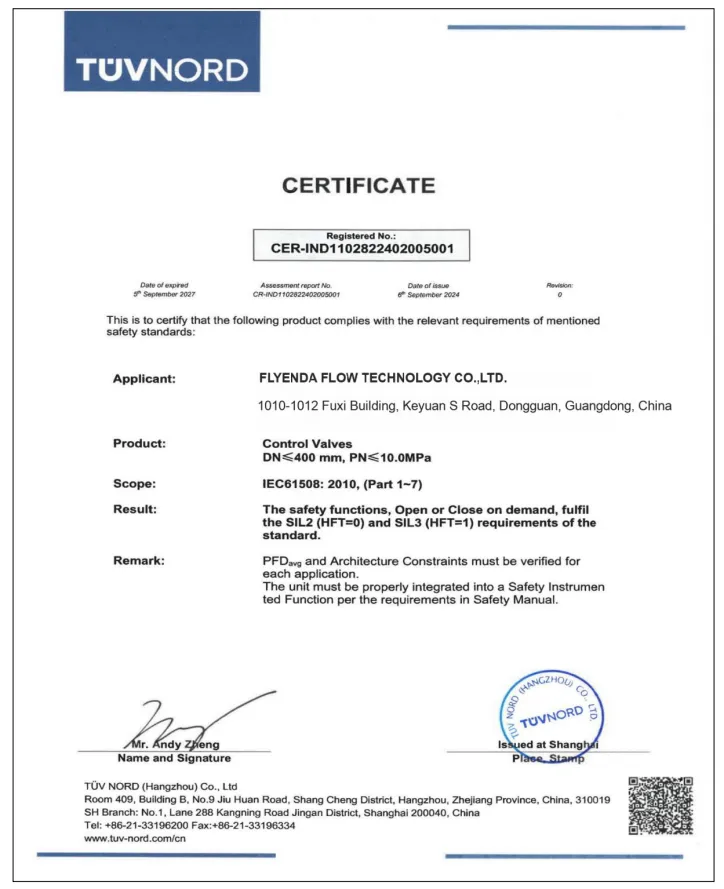
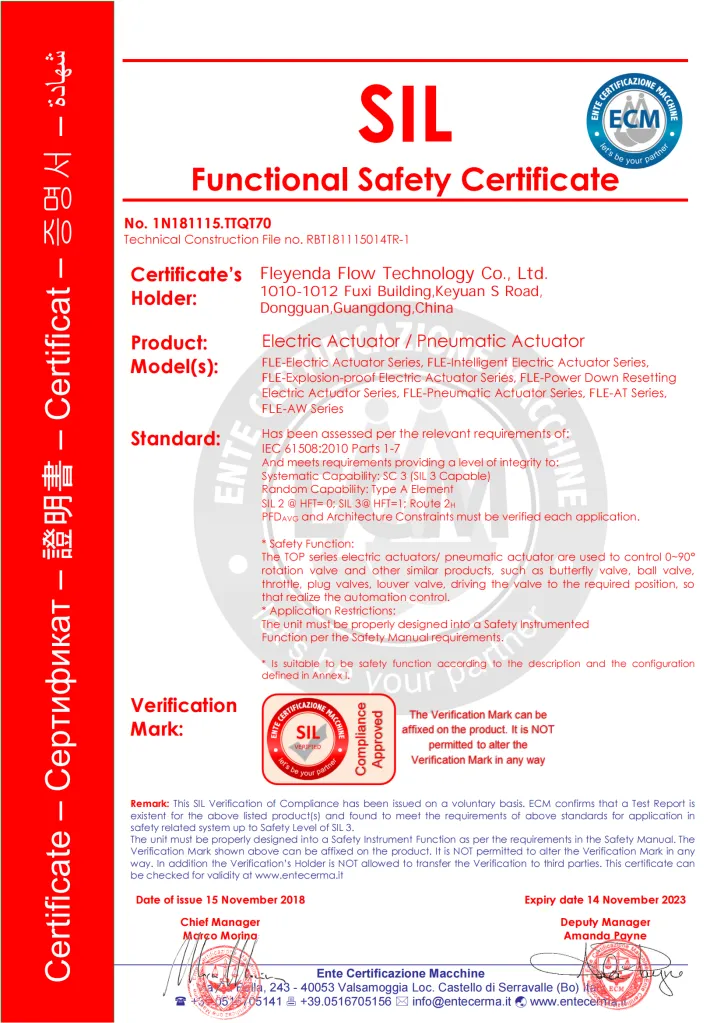
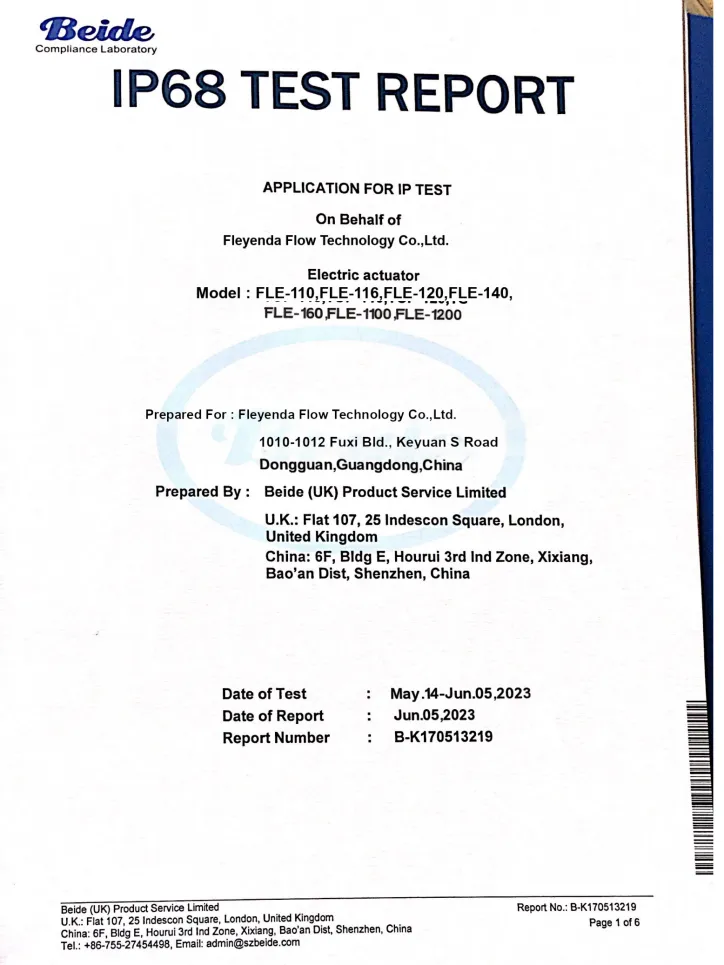
Qualidade certificada para aplicações em válvulas industriais
As válvulas e os atuadores elétricos da Fleyenda são projetados para oferecer desempenho estável, operação confiável e uso industrial de longo prazo. Com suporte de qualidade certificada, são adequados para tratamento de água, processamento químico, automação e sistemas de controle de processos industriais.
Perguntas frequentes que interessam aos usuários do 80%
1. Quais fatores determinam o melhor dimensionamento para uma válvula de controle angular em sistemas de fluxo industriais?
• O cálculo preciso da vazão e da pressão diferencial evita o sobredimensionamento ou a modulação instável.
• A seleção adequada do Cv garante um controle de aceleração suave e uma operação estável.
• O design do corpo angular otimiza a recuperação de pressão e a direção do fluxo.
• A escolha correta do atuador garante a capacidade de resposta e o controle preciso da automação.
2. Como uma válvula angular industrial reduz a cavitação e a erosão em aplicações de alta pressão?
• O trajeto de fluxo em ângulo de 90° minimiza a turbulência e o desgaste interno.
• A estrutura angular do corpo permite a descarga eficiente do vapor em condições de flash.
• Os materiais de acabamento reforçados resistem à corrosão e prolongam a vida útil.
• O projeto anticavitação mantém o equilíbrio da pressão e protege as saídas.
3. Quais dicas de instalação garantem que a válvula de controle do tipo angular funcione com desempenho máximo?
• Siga a direção correta do fluxo para manter a velocidade e a pressão adequadas.
• Utilize atuadores pneumáticos ou elétricos adequados com posicionamento à prova de falhas.
• Calibre os posicionadores de válvulas para garantir um controle estável e reduzir a oscilação.
• Utilizar seções de tubulação reta e isolamento antivibração para reduzir o ruído.
4. Quais práticas de manutenção aumentam a confiabilidade e a vida útil de uma válvula de controle com corpo angular?
• Inspecione os componentes internos da válvula quanto à presença de corrosão, desgaste ou danos causados por cavitação.
• Mantenha as articulações dos atuadores limpas e devidamente calibradas.
• Monitore a queda de pressão e a velocidade do fluxo para detectar problemas precocemente.
• Utilize revestimentos resistentes à erosão para ambientes de operação severos.