


FLE-Q-PD Electric 3-Way UPVC Ball Valve
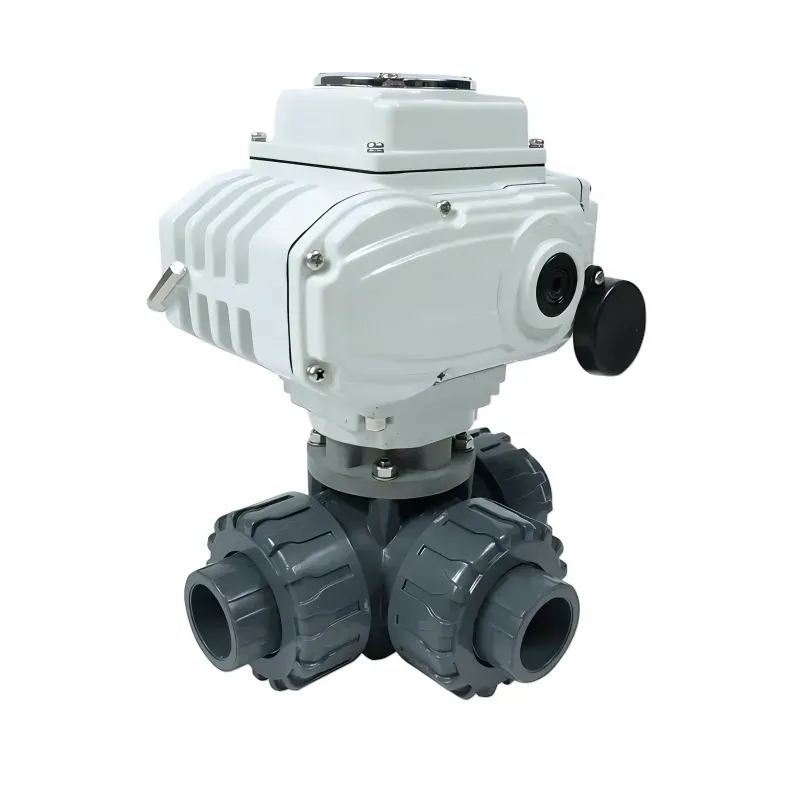
FLE-Q-PD Electric 3-Way UPVC Ball Valve
The Electric 3-Way UPVC Ball Valve combines a corrosion-resistant UPVC body and electric actuator for precise L- or T-port flow control, ensuring reliable chemical compatibility, leak-free operation, and long service life verified by CE, RoHS, and ISO9001 certifications.
| Gamme de tailles | DN15 – DN100 (1/2″ – 4″) |
| Plage de pression de service : | PN10 (≤1.0 MPa / 145 PSI) |
| Plage de températures de fonctionnement : | 0°C to 60°C (32°F to 140°F) |
| Matériau du corps : | UPVC |
| Type de connexion : | Union Socket or Female Thread |
| Support compatible : | Water, Acid, Alkali, Salt Solution, Weak Chemical Liquids |
| Type d'actionneur : | Servomoteur électrique à quart de tour |
| Options de tension | AC220V, AC110V, DC24V, DC12V |
| Norme de conception | ISO 5211, DIN, JIS, ANSI |
| Norme d'essai | ISO 9393, GB/T 17241.6, EN 12266-1 |
| Conception résistante au feu | Not Applicable |
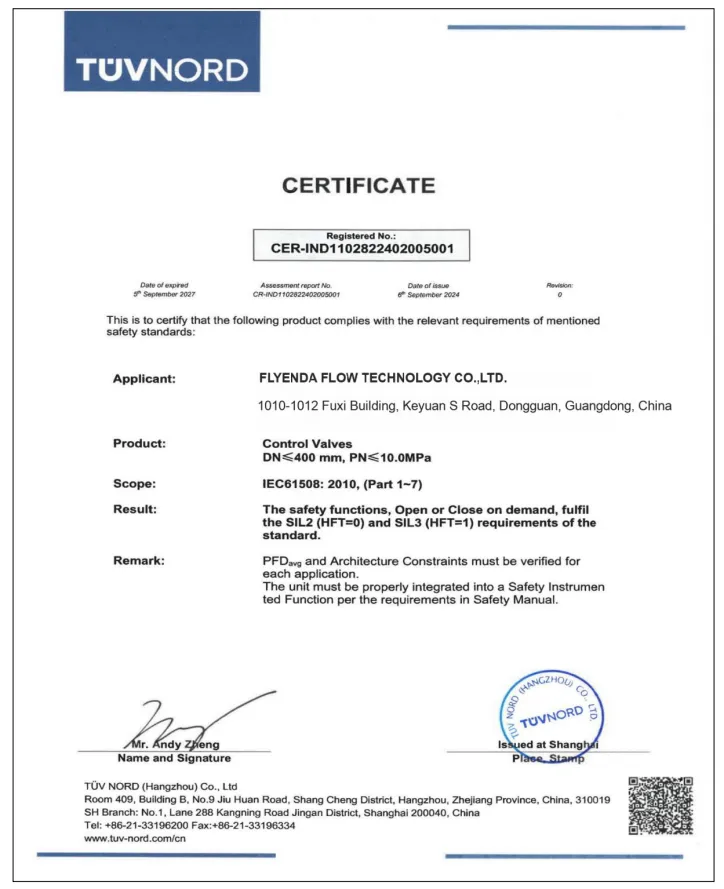
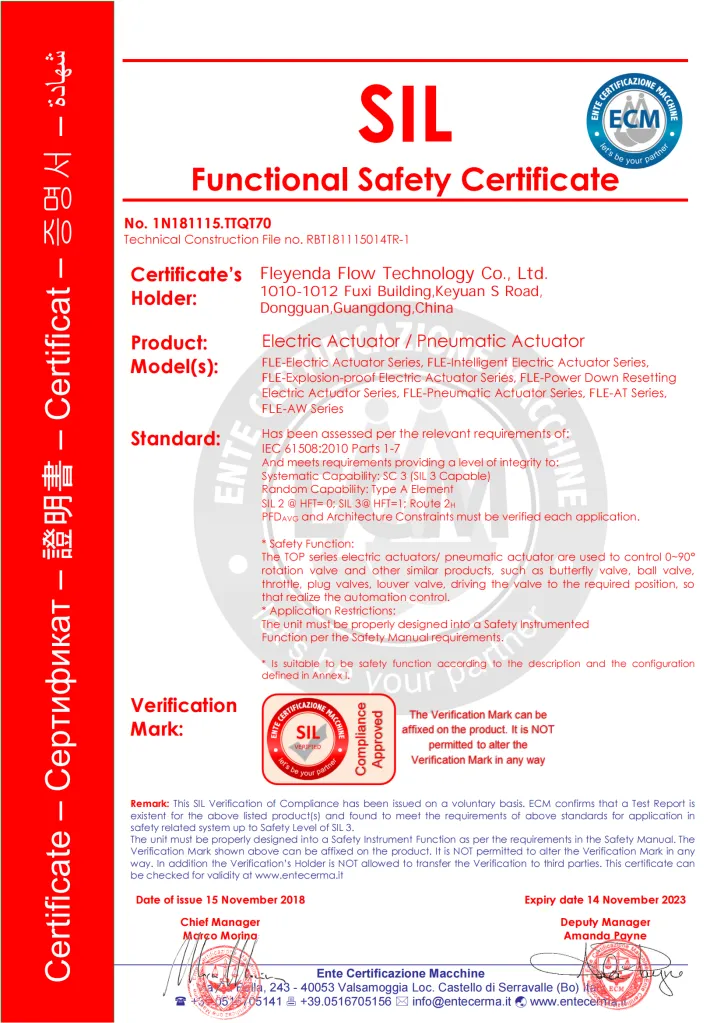
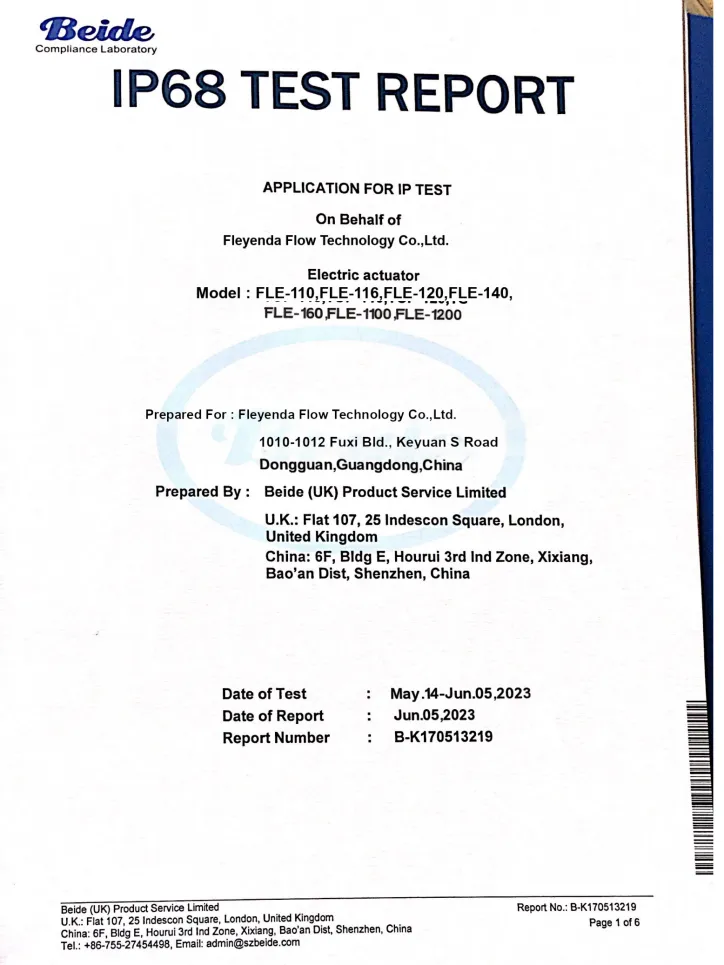
| Certification | CE / ROHS / ISO / SIL / TÜV / IP68 (étanche) |
| Personnalisation | Vous trouverez ci-dessus des exemples de paramètres standard. Si vous avez des paramètres et des matériaux spécifiques, nous pouvons les adapter à vos besoins. |
| Modèle d'actionneur | Temps standard / Couple | Temps/couple (en option) | Plage d'angles de rotation | Poids de l'actionneur | Alimentation électrique | Circuit de commande en option |
|---|---|---|---|---|---|---|
| FLE-105 | 25 S/50 Nm | 4S/20 Nm 10 S/30 Nm | Réglable de 0 à 90° | 2,2 kg |
24 V CC 24 V CA 110 V CA 220 V CA AC380V |
Un type Type B Type C Type D Type E Type F |
| FLE-110 | 25 S/100 Nm | 15 S/50 Nm | 5,1 kg | |||
| FLE-116 | 25 S / 160 Nm | 15 S/80 Nm | 5,1 kg | |||
| FLE-120 | 25 S/200 Nm | 15 S/100 Nm | 7,5 kg | |||
| FLE-140 | 25 S/400 Nm | 15 S/200 Nm | 7,5 kg | |||
| FLE-160 | 25 S / 600 Nm | 15 S/300 Nm | 8,1 kg | |||
| FLE-1100 | 50 S/1 000 Nm | 25 S/500 Nm | 12,7 kg | |||
| FLE-1200 | 50 S/2 000 Nm | 25 S/1 000 Nm | 12,7 kg | |||
| Type | Marche/Arrêt, Régulation, Intelligent | |||||
| Résistance d'isolement | 100 MΩ/500 V CC | |||||
| Rigidité diélectrique | 1 500 V CA pendant 1 min. | |||||
| Niveau de protection | IP67 (IP68 en option) | |||||
| Lieu d'installation | Installation à 360°, quel que soit l'angle | |||||
| Interface électrique | Raccord métallique 2-G1/2 : les raccords de câbles métalliques correspondants doivent être installés en fonction des câbles choisis. | |||||
| Température ambiante | de -20 °C à +60 °C | |||||
| Antidéflagrant (en option) | Ex d II BT4 / CT4 / CT6 Gb | |||||
| Fonction de réinitialisation en cas de coupure d'alimentation (sécurité intégrée) | Ouverture en cas de défaillance, fermeture en cas de défaillance ou sans réinitialisation (sélectionnable en usine) | |||||
| Fonctions optionnelles | Protection contre le couple excessif, chauffage de déshumidification, interrupteur à contact passif, volant de commande | |||||
Une qualité certifiée pour les applications de vannes industrielles
Les vannes et actionneurs électriques Fleyenda sont conçus pour offrir des performances stables, un fonctionnement fiable et une utilisation industrielle à long terme. Bénéficiant d’un soutien qualité certifié, ils conviennent aux applications de traitement de l’eau, de traitement chimique, d’automatisation et aux systèmes de contrôle des processus industriels.
Questions fréquentes susceptibles d'intéresser les utilisateurs du modèle 80%
1. What’s the difference between an L-port and T-port in an Electric 3-Way UPVC Ball Valve and how do I know which one to choose?
• The Electric 3-Way UPVC Ball Valve offers L-port for flow diversion and T-port for flow mixing or distribution.
• Choose an L-port when directing one inlet to two outlets; use a T-port for blending or splitting flow.
• T-port types are preferred in chemical and water systems for smoother flow control.
• Confirm actuator position settings before installation to ensure correct flow direction.
2. How can I install an Electric 3-Way UPVC Ball Valve to prevent leaks and electrical issues?
• Flush pipelines to remove debris and protect the UPVC seats from damage.
• Verify actuator voltage compatibility and secure wiring according to IP67/IP68 protection.
• Hand-tighten unions before applying torque to avoid cracking the valve body.
• Perform pressure and insulation tests to ensure sealing and electrical reliability.
3. Why is the Electric 3-Way UPVC Ball Valve popular in water treatment and chemical dosing systems?
• UPVC body resists acids, alkalis, and saltwater, ensuring long-term chemical compatibility.
• Electric actuation enables automatic flow switching without manual operation.
• Lightweight and corrosion-proof design reduces installation effort and maintenance.
• Proven to offer longer service life and lower failure rates in chemical environments.
4. What should I do if my Electric 3-Way UPVC Ball Valve stops switching or shows actuator errors?
• Disconnect power and check wiring and overload protection.
• Inspect limit switches and confirm alignment with the valve stem.
• Clean internal debris that may jam the UPVC ball or seals.
• Lubricate O-rings and seats regularly to restore smooth operation.