Fleyenda FLE Series Electric Actuator
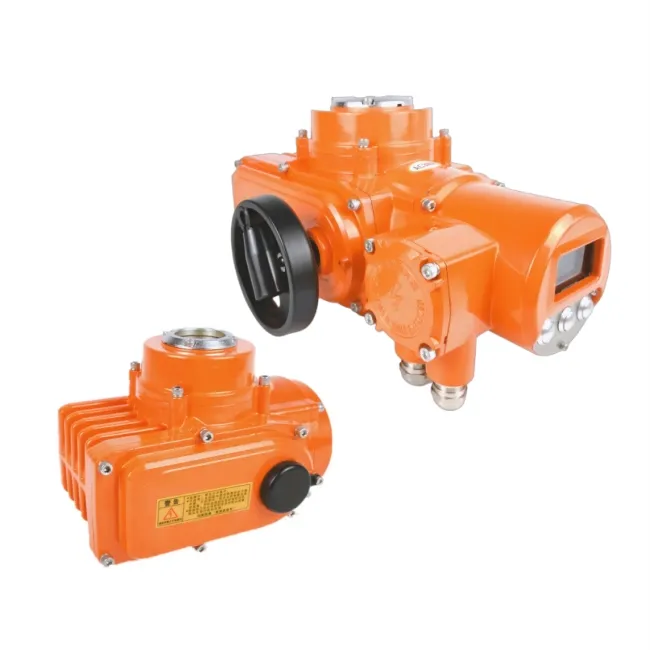
Fleyenda FLE series electric actuators provide precise 0–90° control for butterfly, ball, and damper valves. Available in ON/OFF, regulating, and intelligent types, they deliver high torque up to 4000 Nm and support AC/DC power with 4–20mA or 0–10V control signals. Optional features include IP68 protection, explosion-proof design, and power-off reset, ensuring reliable and efficient valve operation.
| Output Torque Range | 50 Nm – 3000 Nm |
| Rotation Angle | 0° – 90° (±5° adjustable) |
| Ambient Temperature Range | -20°C to +70°C |
| Body Material | Die-cast Aluminum Alloy with Powder-Coated Finish |
| Connection Standard | ISO 5211 Direct Mounting Interface |
| Actuator Type: | Quarter-turn Electric Actuator |
| Voltage Options | AC 220 V / AC 110 V / DC 24 V |
| Control Signal Type | On/Off (2-position) or Modulating (4–20 mA / 0–10 V) |
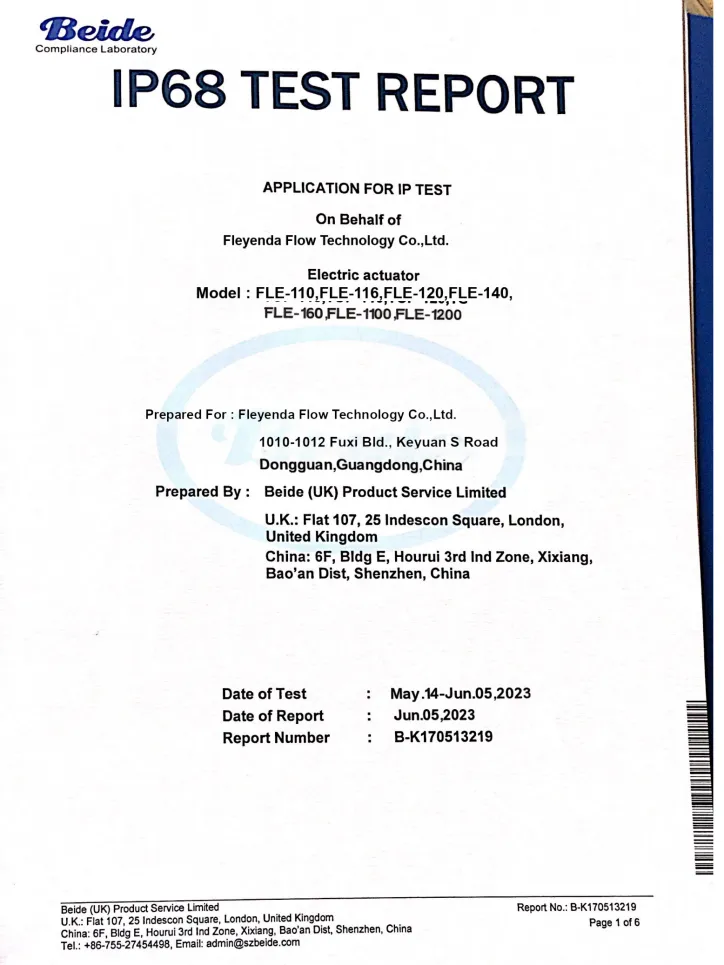
| Protection Grade | IP67 (Optional IP68 for waterproof applications) |
| Design Standard | IEC 60034 / ISO 5211 / EN 60529 |
| Testing Standard | ISO 9001 Quality System & CE / RoHS Compliance |
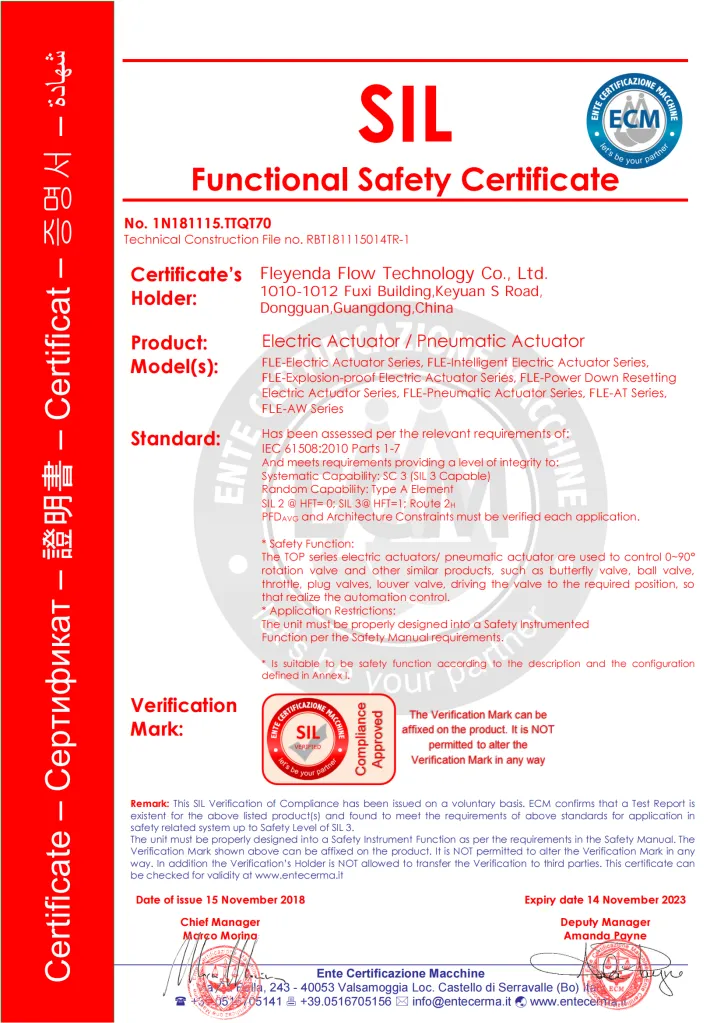
| Certification | CE / RoHS / ISO 9001 / IP65 (Actuator) |
| Customization | Above Are Standard Parameter Samples. If You Have Specific Parameters And Materials, We Can Customize Them All. |
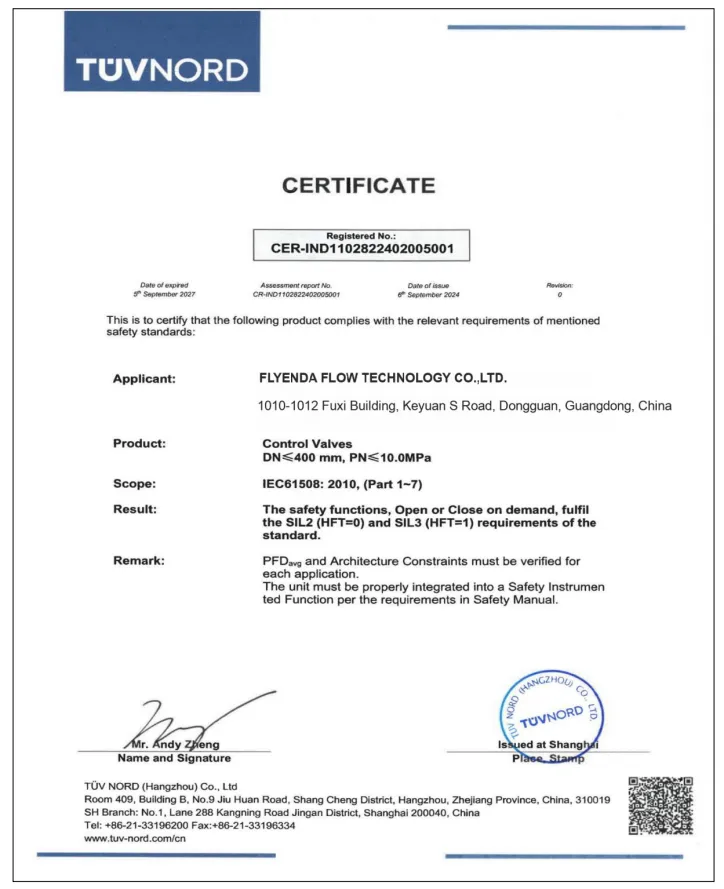
Certified Quality for Industrial Valve Applications
Fleyenda valves and electric actuators are built for stable performance, reliable operation, and long-term industrial use. With certified quality support, they are suitable for water treatment, chemical processing, automation, and industrial process control systems.
FAQs That 80% Users Interest
1. What are the key considerations when selecting an electric actuator for industrial valve automation systems?
• Evaluate required torque and valve size to ensure the electric actuator can handle full open/close loads.
• Confirm ISO 5211 mounting compatibility between actuator and valve.
• Check IP65+ protection and temperature range for electric valve actuator in harsh environments.
• Choose between on/off or modulating control for precise integration with automation systems.
2. How does an electric actuator compare to pneumatic or hydraulic systems?
• Electric actuators eliminate air or fluid systems, reducing energy use and maintenance.
• Provide precise and repeatable positioning for accurate flow control.
• Offer cleaner operation with no leaks, ideal for sterile or indoor applications.
• Pneumatic options may still perform better in ultra-fast or high-cycle applications.
3. What maintenance practices extend the service life of an electric actuator?
• Inspect electrical connections, seals, and gear alignment regularly.
• Keep the motorized actuator clean and protected from moisture or dust.
• Test manual override periodically to ensure operation during power loss.
• Watch for unusual noise or vibration indicating wear or misalignment.
4. Can an electric actuator be used outdoors or in hazardous environments?
• Use models with ATEX or explosion-proof certification for hazardous areas.
• Ensure enclosure rating of IP65 or higher for outdoor use.
• Select corrosion-resistant materials for chemical or marine applications.
• Confirm manual override and feedback remain reliable in extreme conditions.