


CHEMICAL PROCESSING / INDUSTRIAL VALVE ENGINEERING
How to Select Valves for Sulphuric Acid Service
Selecting valves for sulphuric acid service requires more than choosing a corrosion-resistant body material. Acid concentration, operating temperature, flow velocity, pressure, contaminants and valve function all influence long-term performance. A valve suitable for concentrated acid storage may not be suitable for hot dilute acid, chemical dosing or high-velocity transfer.
Sulphuric acid (H₂SO₄), also commonly spelled sulfuric acid, is widely used in fertilizer production, metallurgy, chemical manufacturing, petroleum refining and battery processing. Each application creates different requirements for valve construction, sealing materials and corrosion protection.
This guide explains how to evaluate valve materials, PTFE and PFA linings, valve designs and operating conditions before specifying industrial valves for sulphuric acid pipelines.
For available industrial configurations and application support, explore Fleyenda’s valves for sulphuric acid service.
ENGINEERING SELECTION PRINCIPLE
Start with the complete process condition
Why Sulphuric Acid Valve Selection Is Different
Sulphuric acid does not create one uniform corrosion condition. Its interaction with metals and polymer linings changes according to concentration, temperature and the surrounding process environment.
For example, certain carbon steel constructions may perform in specific cold, concentrated acid applications under controlled conditions. However, this does not make carbon steel a universal solution. Hot dilute acid, water ingress, high flow velocity and local turbulence can create substantially different corrosion conditions.
Likewise, standard 304 and 316 stainless steel should not automatically be selected for sulphuric acid service. Their suitability depends on the actual operating window and requires service-specific corrosion verification.
Five operating variables that influence valve performance
| FACTOR | WHAT TO CHECK | WHY IT MATTERS |
|---|---|---|
| Acid concentration | Minimum, normal and maximum H₂SO₄ concentration. | Material corrosion behavior can change significantly across different concentration ranges. |
| Temperature | Normal operating temperature and maximum upset temperature. | Higher temperatures can reduce the acceptable operating window of metallic materials and polymer linings. |
| Flow velocity | Pipeline velocity, pump discharge conditions and local turbulence. | High velocity and turbulent flow can accelerate corrosion and damage protective surface films. |
| Contamination | Chlorides, dissolved metals, solids, oxidizers and process carryover. | Additional chemicals and particles can change material compatibility and sealing performance. |
| Operating pressure | Design pressure, differential pressure, vacuum and pressure cycling. | These conditions influence body strength, seat performance and the reliability of lined valve construction. |
Concentration alone is not enough to establish material compatibility. A proper selection should evaluate the full operating range, including startup, shutdown, cleaning, dilution and unexpected process conditions.
Valve Materials for Sulphuric Acid Service
Material selection should cover every component exposed to the process medium. Choosing a suitable body material while overlooking the ball, disc, stem, seats, packing or gaskets can still result in premature leakage and equipment failure.
Carbon Steel
Carbon steel may be considered for certain concentrated sulphuric acid applications, particularly under controlled temperature and relatively low-velocity conditions where a protective surface film can remain stable.
However, its performance is highly dependent on operating conditions. Water ingress, dilution, elevated temperature, turbulence and process disturbances can compromise the protective film. It should never be specified for all sulphuric acid services without a detailed compatibility review.
Stainless Steel 304 and 316
Stainless steel 304 and 316 are widely used in industrial piping, but their general corrosion resistance does not make them universally suitable for sulphuric acid.
Under unfavorable combinations of concentration and temperature, these materials can experience significant corrosion. Their use in wetted valve components should be supported by reliable corrosion data for the exact process conditions.
For this reason, selecting a valve simply because it is manufactured from SS304 or SS316 is not a sufficient basis for sulphuric acid service.
Alloy 20 and Other Corrosion-Resistant Alloys
Alloy 20 is a nickel-iron-chromium alloy developed for applications involving sulphuric acid. It may be evaluated for specific concentration and temperature ranges where its corrosion performance is suitable.
Other high-performance alloys may also be considered for demanding chemical applications. However, alloy selection must account for the complete process composition, temperature, flow conditions and mechanical requirements.
There is no single metallic alloy that should be treated as the universal choice for every sulphuric acid pipeline.
PTFE-Lined Valve Construction
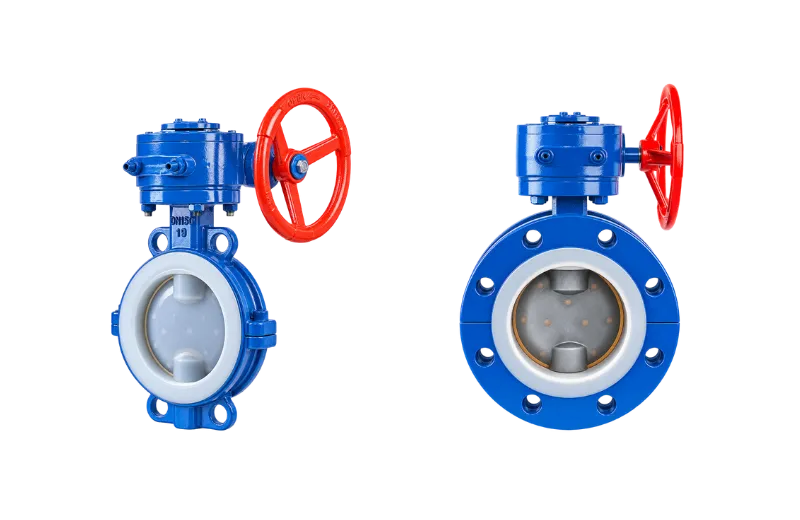
PTFE is widely used as a corrosion-resistant barrier in industrial chemical valves. In a PTFE-lined valve, the metallic outer body provides structural strength while the fluoropolymer lining protects designated internal surfaces from direct contact with the process medium.
This construction can be considered for many sulphuric acid applications, provided that the selected lining system is compatible with the actual acid concentration, temperature, pressure and operating conditions.
Important design considerations include:
- Continuity and coverage of the PTFE lining along the wetted flow path.
- Liner thickness, mechanical retention and resistance to permeation.
- Compatibility of the ball, disc, seats and stem sealing components.
- Pressure, vacuum and temperature limitations.
- Resistance to thermal cycling and operating pressure changes.
- Flange-face protection and gasket compatibility.
PFA, FEP and Other Fluoropolymer Linings
PFA, FEP and other fluoropolymer systems can be evaluated for specific chemical service requirements. Their suitability depends on the valve design, molding process, temperature limits, mechanical properties and compatibility with the complete process environment.
PFA may be considered where a particular lined geometry or performance requirement is specified. However, the liner name alone does not establish whether a valve is suitable for the application.
How to Choose the Right Valve Type
Material compatibility is only one part of the selection process. The valve mechanism must also match the required operating function, flow characteristics and maintenance requirements.
| VALVE TYPE | MAIN FUNCTION | SELECTION CONSIDERATIONS |
|---|---|---|
| Robinet à bille | Pipeline isolation, acid transfer and positive shutoff. | Evaluate ball material, seats, stem sealing, full-port requirements and lined construction. |
| Vanne papillon | Isolation in larger-diameter process pipelines. | Check disc and liner compatibility, shaft sealing, pressure rating and flange arrangement. |
| Globe / Control Valve | Flow regulation, dosing and process control. | Pay particular attention to local velocity, pressure drop, trim erosion and material compatibility. |
| Clapet anti-retour | Prevention of reverse flow in process pipelines. | Review disc, spring, hinge, seat and internal wetted components. |
| Vanne à guillotine | Full-bore pipeline isolation. | Evaluate body and trim materials, seat sealing and suitability for the specified isolation duty. |
Ball Valves for Acid Transfer and Isolation
Ball valves are frequently considered where reliable shutoff and straightforward operation are required. They can be used in acid storage outlets, transfer pipelines, loading systems and process isolation points.
For corrosive service, the complete wetted assembly must be evaluated. A corrosion-resistant body does not guarantee that the ball, seats, stem and seals will provide the same level of protection.
Butterfly Valves for Large Pipelines
Butterfly valves can offer a compact solution for larger pipeline diameters. PTFE-lined and PFA-lined configurations may be considered for suitable chemical duties.
The disc, shaft, seat, liner coverage and flange sealing arrangement should all be reviewed before selection.
Control Valves for Dosing and Throttling
Control valves operate under different conditions from simple isolation valves. When a valve continuously regulates flow, pressure reduction and local turbulence can create severe conditions around the trim and sealing surfaces.
For this reason, a valve suitable for acid storage isolation should not automatically be assumed suitable for continuous throttling or dosing.
Valve Selection by Sulphuric Acid Process Application
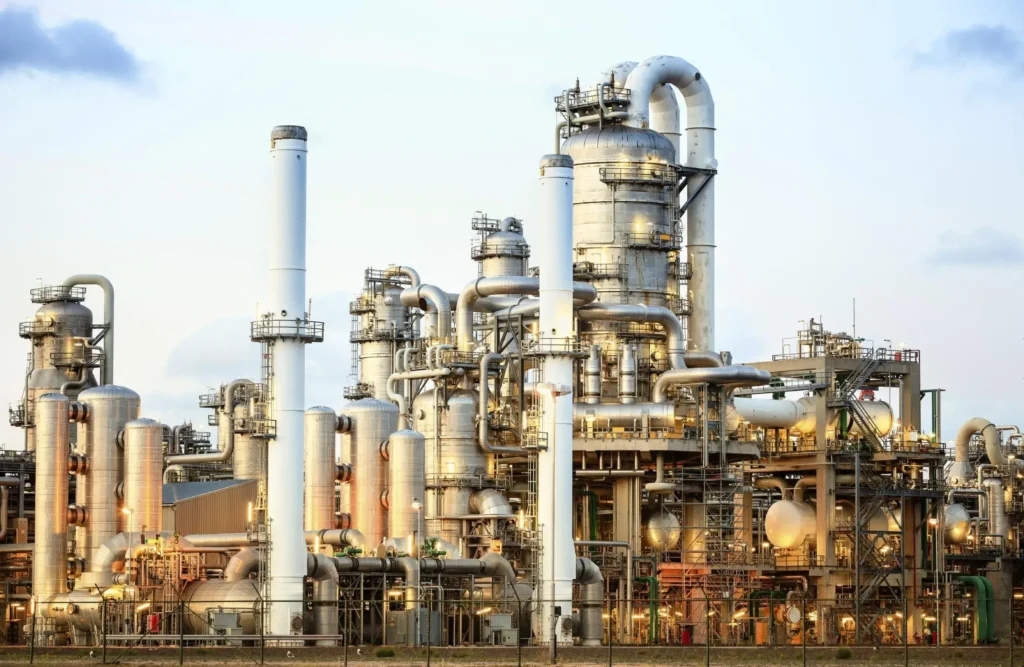
Valves installed in different sections of the same chemical plant may experience very different operating conditions. Understanding the actual process location helps engineers select an appropriate construction.
Acid Storage Tanks
Storage tank inlet, outlet and recirculation lines often require dependable isolation. The selection should consider acid concentration, static head, tank temperature, drainage requirements and maintenance access.
Review: Body or liner compatibility, seat materials, stem sealing and tank connection requirements.
Loading, Unloading and Transfer Pipelines
Transfer systems can experience pump discharge pressure, frequent valve operation, higher flow velocity and pressure fluctuations. These conditions may differ significantly from relatively static tank service.
Review: Pressure class, flow velocity, full-port requirements, operating torque and sealing performance.
Acid Dilution and Chemical Dosing
Dilution and dosing systems require additional attention because local concentration and temperature can change during mixing. Reaction heat and flow turbulence may create more demanding conditions around the valve.
Review: Temperature excursions, control-valve trim, liner limits and compatibility of all wetted components.
Process Acid and Spent Acid Pipelines
Process and spent acid may contain dissolved metals, suspended solids, hydrocarbons or other chemical contaminants. Their behavior can differ from that of clean commercial sulphuric acid.
Review: Actual chemical composition, solids content, corrosion data, flushing requirements and internal component design.
Why Sulphuric Acid Valves Fail Prematurely
Premature valve failure is not always caused by an unsuitable body material. In many cases, the problem comes from an incomplete review of the entire wetted assembly or a mismatch between the valve design and the process duty.
1. Selecting Materials Based Only on Acid Concentration
A material that performs well in one concentration range may be unsuitable at a different temperature or flow velocity. Minimum, normal, maximum and upset conditions should all be considered.
2. Ignoring Internal Components
Valve body material is only one part of the corrosion protection system. The ball, disc, seats, stem, packing, gaskets and internal fasteners may have different material requirements.
3. Using an Isolation Valve for Continuous Throttling
A standard on/off valve may not be designed for continuous flow regulation. Local pressure drop and turbulence can damage seats, liners and other wetted components.
4. Overlooking Liner Limitations
PTFE or PFA lining does not automatically make a valve suitable for every acid service condition. Temperature, pressure, vacuum, permeation, mechanical retention and thermal cycling must be checked against the selected construction.
5. Ignoring Water Ingress and Process Upsets
Unexpected dilution, cleaning operations and changes in process composition can create conditions outside the normal operating range. The valve specification should account for foreseeable upset scenarios.
Technical Checklist Before Ordering a Sulphuric Acid Valve
Before requesting a quotation, prepare the following information. A complete specification allows the manufacturer to evaluate material compatibility, valve construction and actuation requirements more accurately.
01Acid concentration
Minimum, normal and maximum H₂SO₄ concentration.
02Temperature
Normal operating, minimum, maximum and upset temperatures.
03Pressure
Operating pressure, design pressure, differential pressure and vacuum conditions.
04Valve size
DN/NPS, pressure class and end connection.
05Process duty
Isolation, transfer, dosing, throttling, check or emergency shutoff.
06Process composition
Contaminants, suspended solids, dissolved metals and other chemicals.
07Wetted construction
Body alloy, lining, ball or disc, seats, stem, packing and gaskets.
08Actuation
Manual, pneumatic or electric operation, control signals and fail position.
For lined valves, additional information about vacuum conditions, pressure cycling, liner coverage and the exact valve construction is particularly important.
For a detailed review of available configurations, see Fleyenda’s valves for sulphuric acid service.
Foire aux questions
What is the best valve for sulphuric acid service?
There is no single best valve for every sulphuric acid application. Ball, butterfly, globe, check and gate valves can all be considered depending on the required function. The body, internal components and sealing materials must be compatible with the actual concentration, temperature, pressure and process conditions.
Can PTFE-lined valves be used for sulphuric acid?
PTFE-lined valves are widely considered for corrosive chemical applications, including many sulphuric acid duties. However, the exact valve model, liner coverage, temperature, pressure, vacuum conditions and wetted components must be verified before specifying the equipment.
Is stainless steel 316 suitable for sulphuric acid?
316 stainless steel should not be treated as a universal material for sulphuric acid service. Its suitability depends on concentration, temperature and other operating conditions. Corrosion data and engineering verification are necessary before using it for directly wetted components.
When should Alloy 20 be considered?
Alloy 20 can be evaluated for selected sulphuric acid applications where its corrosion resistance is appropriate. Its suitability should be confirmed against the actual acid concentration, temperature, flow velocity and contaminants.
What is the difference between PTFE-lined and PFA-lined valves?
Both use fluoropolymer materials to provide a corrosion-resistant barrier between the process medium and the underlying metallic pressure body. Their mechanical properties, manufacturing methods, temperature capabilities and application limits differ. The final choice depends on the complete valve construction and service conditions.
Can a standard ball valve be used for sulphuric acid transfer?
Only when the valve’s body, ball, seats, stem seals and other wetted components are compatible with the specified acid service. A standard stainless steel ball valve should not be assumed suitable simply because it is manufactured from corrosion-resistant-looking metal.
What information is required for a sulfuric acid valve quotation?
Provide the acid concentration, temperature, pressure, valve size, process duty, contaminants, preferred material or lining, end connection and actuation requirements. Additional process information may be required for demanding applications.
Why is valve selection different for acid storage and transfer?
Storage lines may experience relatively stable conditions, while transfer lines can involve higher velocity, pump pressure, frequent operation and turbulence. These differences can affect corrosion mechanisms and valve sealing performance.
FLEYENDA / CHEMICAL PROCESS VALVES
Find the Right Valve for Your Sulphuric Acid Application
Reliable sulphuric acid valve selection requires a complete understanding of the process medium, operating conditions and valve construction. Material compatibility, lining performance, internal sealing and the intended valve duty must be evaluated together.
Fleyenda provides industrial valve solutions for chemical processing and corrosive media applications, including metallic and fluoropolymer-lined constructions for specified service conditions.
Whether your project involves acid storage, transfer, dosing, process isolation or flow control, providing the actual operating data is the first step toward selecting a suitable valve configuration.