


INDONESIA INDUSTRIAL PIPELINE GUIDE
Motor Valve for Pipeline in Indonesia: Types, Applications & Selection Guide
A motor valve is an industrial valve operated by an electric actuator instead of a manual lever, handwheel or pneumatic actuator. In pipeline automation, motor valves are commonly used for remote shutoff, flow diversion, equipment sequencing and, when the valve and actuator are designed for it, modulating flow control.
For industrial projects in Indonesia, motor valves can be applied in water treatment plants, mining and mineral processing, oil and gas facilities, power generation, palm oil processing and general industrial utility systems. The correct valve depends on much more than pipe diameter: medium, pressure, temperature, valve function, actuator torque, control signal and installation environment must all be considered.
This guide explains the main motor valve types used in industrial pipelines, how they work, where different designs are suitable, and what engineers should check before selecting an electric valve for a project in Indonesia.
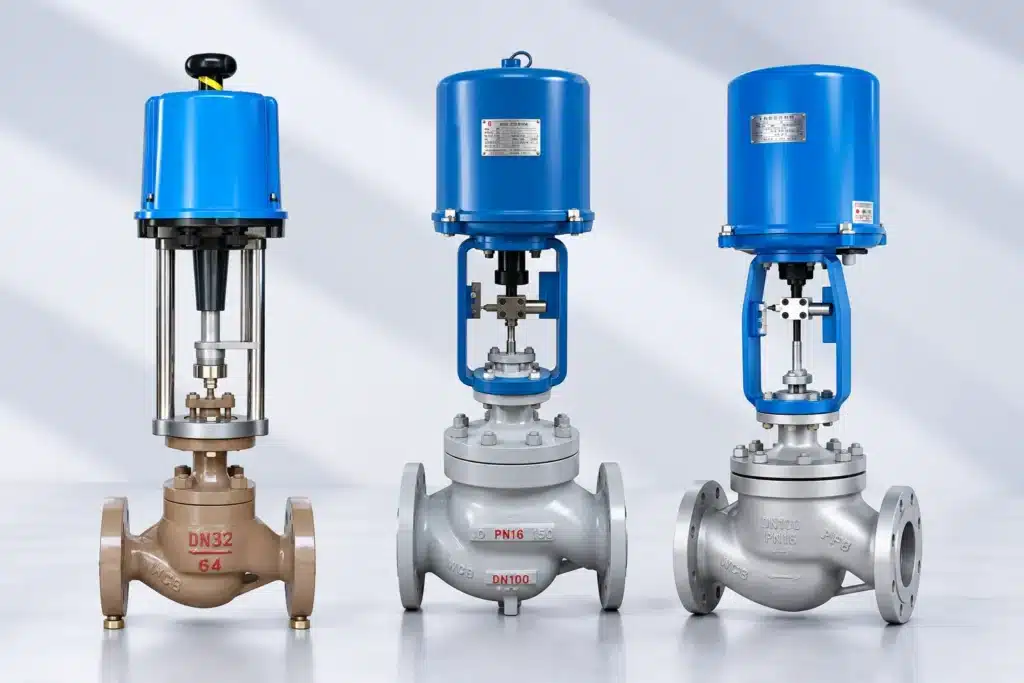
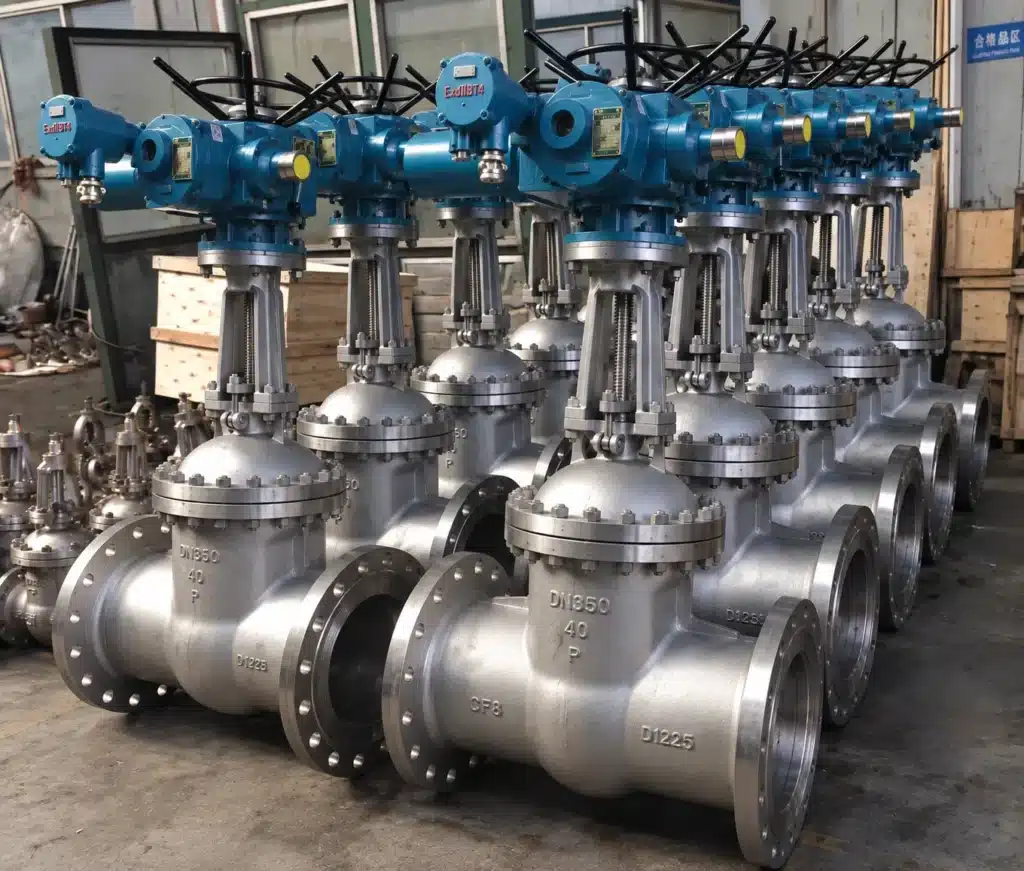
What Is a Motor Valve?
In industrial pipeline terminology, a motor valve generally refers to a valve operated automatically by an electric motor actuator. The same basic concept may also be described as a motorized valve, electric valve, electric actuated valve or motor-operated valve.
The electric actuator converts electrical energy into mechanical movement. Depending on the valve type, this movement may be approximately 90 degrees of rotary travel, multiple shaft rotations or linear stem movement.
The valve itself still determines the hydraulic function. The actuator only provides the force and movement required to position the valve. Therefore, choosing a motor valve starts with the pipeline duty first and the actuator second.
Motor Valve vs Motorized Valve
In many industrial searches, the terms motor valve and motorized valve are used to describe the same general category of electrically operated valves. The exact terminology varies by supplier and market.
For engineering specifications, it is better to describe the complete requirement: valve type, size, pressure rating, body and seat materials, actuator type, voltage, control mode and feedback requirements.
How Does a Motor Valve Work?
A motor valve receives electrical power and a control command from a switch, control panel, PLC, DCS or other automation system. The actuator then moves the valve to the required position.
01
Control Signal
The control system sends an open, close or positioning command to the electric actuator.
02
Electric Motor Starts
The actuator motor converts electrical energy into rotational movement.
03
Gear Reduction
A gearbox reduces motor speed and increases usable output torque.
04
Valve Moves
The output drive rotates or moves the valve stem according to the valve design.
05
Position Stops or Holds
Limit switches, position sensors or control electronics stop the actuator at the required position and can provide feedback to the control system.
Quarter-turn electric actuators are commonly used on ball valves and butterfly valves. Multi-turn electric actuators are typically used where the valve requires multiple stem rotations, such as many gate valve applications.
Main Motor Valve Types for Industrial Pipelines
The best motor valve depends on the function required from the pipeline. An isolation valve, control valve and three-way routing valve solve different engineering problems and should not be selected interchangeably.
1. Motorized Ball Valve
A motorized ball valve uses a quarter-turn electric actuator to rotate a ball approximately 90 degrees between open and closed positions. Ball valves provide a relatively direct flow path and are widely used for automated isolation in water, oil, gas and chemical pipelines.
Two-way motorized ball valves are typically selected for pipeline shutoff. Three-way configurations can be used for diversion, bypass and process-line routing.
Standard full-port ball valves should not automatically be treated as precision control valves. If continuous flow regulation is required, a suitable V-port or purpose-designed control valve may provide better control characteristics.
Explore Fleyenda’s Electric Ball Valve range.
2. Motorized Butterfly Valve
A motorized butterfly valve combines a butterfly valve with a quarter-turn electric actuator. Its compact body and relatively low weight make it particularly useful as pipeline diameter increases.
Butterfly valves are commonly used for water, wastewater, cooling water and industrial utility pipelines. Wafer, lug and flanged body designs can be selected according to the piping arrangement.
Seat and disc materials must be matched to the medium. For example, EPDM is commonly considered for many water applications, while corrosive chemicals may require a different seat, lining or valve material.
For a water-service example, see the FLE-D-CEW Electric Wafer EPDM Butterfly Valve.
3. Electric Gate Valve
Electric gate valves are generally used for full-open or full-closed isolation rather than frequent throttling. The electric actuator operates the gate through multiple stem rotations or another compatible multi-turn arrangement.
They can be suitable for large process pipelines, water systems and other applications where a relatively unobstructed flow path is important when the valve is open.
When selecting an electric gate valve, check stem travel, required operating torque or thrust, valve closing time, actuator duty cycle and available installation height.
4. Motorized Knife Gate Valve
Motorized knife gate valves are designed for selected slurry, wastewater, pulp, mining and solids-containing services where a thin gate moves through the flow path.
They can be particularly relevant to mineral processing and industrial wastewater applications, but solids concentration, particle size, abrasion, pressure and sealing direction should be reviewed carefully.
Fleyenda’s FLE-Z30-KG Electric Knife Gate Valve is designed for automated isolation in applications including mining and wastewater treatment.
5. Electric Globe and Control Valves
Where the objective is continuous flow regulation rather than simple isolation, an electric globe or other purpose-designed control valve may be more appropriate.
The valve should be sized according to required flow, differential pressure and Cv or Kv rather than pipeline diameter alone. The actuator must also be suitable for repeated positioning or modulating duty.
6. Three-Way Motor Valve
A three-way motor valve can route flow between three pipeline connections. L-port and T-port ball configurations can be used for selected diversion, bypass, distribution or mixing functions.
Before ordering, define which ports must connect in each actuator position. A piping sketch or P&ID is often more useful than simply requesting a “three-way valve.”
See Fleyenda’s Electric 3-Way Flanged Ball Valve for an industrial routing configuration.
Motor Valve Types at a Glance
| Motor Valve Type | Main Duty | Typical Pipeline Use | Wichtiger Auswahlpunkt |
|---|---|---|---|
| Kugelhahn | Isolation / diversion | Water, oil, gas, chemicals | Seat material and required torque |
| Absperrklappe | Large-line isolation / selected control | Water, wastewater, utilities | Disc, seat, pressure and size |
| Absperrschieber | Full-open / full-close isolation | Large process and utility pipelines | Stem travel and actuator output |
| Messerabsperrschieber | Slurry / solids isolation | Mining, wastewater, pulp | Solids, abrasion and sealing direction |
| Regelventil | Continuous regulation | Process flow and pressure control | Cv/Kv, pressure drop and control characteristic |
| 3-Way Ball Valve | Diversion / bypass | Tank, filter and process routing | L-port / T-port flow logic |
ON/OFF vs Modulating Motor Valves
Motor valves can provide different control functions depending on the actuator electronics and the valve design.
ON/OFF Motor Valve
An ON/OFF motor valve normally moves between fully open and fully closed positions. It is commonly used for remote pipeline isolation, equipment sequencing, tank filling and automatic system shutdown.
Limit switches can provide open and closed feedback to a PLC or control panel.
Modulating Motor Valve
A modulating actuator can position a compatible valve at intermediate positions according to a control signal such as 4–20 mA or 0–10 V.
This can be used for flow, pressure, temperature or level control when the valve itself has suitable regulating characteristics.
Motor Valve Control and Power Options
Industrial electric actuators are available with different voltage and control configurations. Fleyenda’s current electric actuator range includes AC and DC options, ON/OFF control and modulating signals such as 4–20 mA and 0–10 V. Selected configurations also offer higher ingress protection and explosion-protected options.
| Requirement | Typical Option | What to Confirm |
|---|---|---|
| Power supply | DC24V / AC110V / AC220V and other model-dependent options | Actual site power and actuator model |
| ON/OFF control | Open / close command | Wiring logic and feedback |
| Modulating control | 4–20 mA / 0–10 V on suitable models | Valve characteristic and positioning duty |
| Positionsrückmeldung | Limit or continuous feedback depending on model | PLC / DCS interface |
| Outdoor protection | IP67 / selected IP68 configurations | Rain, flooding, washdown and cable-entry requirements |
| Hazardous area | Selected explosion-protected actuator configurations | Required project hazardous-area classification |
Electrical specifications should be confirmed from the actual project rather than assuming that one voltage or control mode applies to every facility in Indonesia.
Motor Valve Applications in Indonesia
Indonesia has a broad industrial base with very different pipeline conditions. Motor valve selection should therefore be based on the process rather than simply purchasing one standard electric valve for every project.
Wasser- und Abwasseraufbereitung
Electric butterfly valves and ball valves can automate intake, filtration, backwash, treated-water distribution and pumping systems. Larger water pipelines often favor butterfly valves because of their compact construction, while ball valves can provide reliable automated isolation in smaller process lines.
For outdoor pumping stations and treatment facilities, actuator enclosure protection, cable entries, corrosion exposure and possible flooding conditions should be evaluated.
Mining and Nickel Processing
Mining and mineral-processing facilities may require motor valves for process water, slurry-related systems, chemical dosing, cooling water and utility pipelines.
Knife gate valves can be considered for suitable solids-bearing media, while butterfly and ball valves can serve cleaner water and chemical utility lines. Abrasion, suspended solids and chemical concentration should be checked before choosing valve materials.
Oil, Gas and Petrochemical Pipelines
Motor-operated ball, gate and control valves can be used for automated isolation, process routing and selected regulation duties.
Projects involving flammable media or classified areas may require suitable explosion-protected actuators and electrical accessories. Pressure class, fire-safe requirements, material compatibility and failure philosophy must be defined by the project specification.
Palm Oil Processing
Palm oil mills and downstream processing facilities use extensive piping for oil transfer, water, steam, condensate and utility systems. Motorized ball, butterfly and control valves can support automatic tank transfer, equipment sequencing and process-line isolation.
Viscosity and temperature are important. A valve selected for hot oil should be checked for suitable seat, seal and body materials under the actual operating conditions.
Power Plants and Industrial Utilities
Electric valves can automate cooling water, service water and other plant utility pipelines. Gate valves may be selected for full isolation, butterfly valves for larger water lines and control valves for regulating duties.
Food and Beverage Processing
Where hygienic flow handling is required, sanitary electric ball or butterfly valve configurations may be used. Materials, seals, connections and cleaning procedures should be verified for the actual product and facility requirements.
How to Select a Motor Valve for a Pipeline in Indonesia
01
Define the Valve Duty
Determine whether the valve is required for isolation, diversion, slurry service or continuous process regulation.
02
Specify the Process Medium
Identify water, wastewater, oil, gas, chemicals, slurry, steam or another process fluid.
03
Confirm Pressure and Temperature
Provide normal and maximum operating pressure, differential pressure and temperature.
04
Select the Valve Type
Choose ball, butterfly, gate, knife gate, control or three-way valve according to the required function.
05
Select Materials
Match body, ball or disc, stem, seat and seals to the medium and operating conditions.
06
Calculate Actuator Output
Use actual valve torque or thrust data under the maximum expected differential pressure rather than selecting an actuator only from nominal valve size.
07
Choose ON/OFF or Modulating
Define whether the valve must only open and close or continuously adjust position.
08
Confirm Power and Signals
Specify voltage, wiring logic, control input, position feedback and PLC or DCS requirements.
09
Check Environmental Protection
Consider outdoor rain, humidity, dust, flooding, corrosive atmosphere and hazardous-area requirements.
10
Confirm Connection Standards
Specify ANSI, DIN, JIS or other required flange standards, threaded connections or sanitary connections according to the project.
How to Choose the Right Motor Valve by Pipeline Duty
| Pipeline Requirement | Recommended Starting Point | Why |
|---|---|---|
| Small or medium line isolation | Electric ball valve | Quarter-turn operation and strong shutoff capability |
| Large water pipeline | Electric butterfly valve | Compact and relatively lightweight at larger sizes |
| Large full-bore isolation | Electric gate valve | Suitable for full-open / full-close pipeline isolation |
| Slurry or solids | Electric knife gate valve | Designed for selected solids-bearing services |
| Flow regulation | Control valve or V-port valve | Better suited to continuous process control |
| Two destination lines | 3-way motorized ball valve | Allows automated routing or bypass |
Outdoor Motor Valves for Indonesia’s Climate
Many Indonesian industrial projects operate in outdoor, coastal, wet or humid environments. The electric actuator and valve materials should therefore be selected for the actual installation environment rather than only the process fluid.
For outdoor applications, consider enclosure protection, cable-gland sealing, actuator coating, external fasteners, corrosion resistance and the possibility of heavy rain or temporary water exposure.
IP ratings define specific ingress-protection test conditions, but IP67 or IP68 markings should not be treated as a substitute for correct installation. Cable entries, junction boxes and field wiring must maintain the required level of protection.
Coastal or chemically aggressive atmospheres may also require additional corrosion protection even when the internal process medium is relatively mild.
Explosion-Proof Motor Valves for Oil, Gas and Chemical Projects
Motor valves installed in hazardous areas may require explosion-protected electric actuators and electrical accessories appropriate to the specified area classification.
This requirement should be defined by the project engineer. An actuator described as waterproof is not automatically explosion protected, and one explosion-protection certification does not automatically satisfy every hazardous location.
When requesting an explosion-proof motor valve, provide the hazardous-area classification, required temperature class, gas group, voltage, control signal and any emergency failure requirements.
Common Motor Valve Selection Mistakes
Selecting Only by Pipe Size
The same DN valve can require very different actuator torque depending on valve type, seat material and differential pressure.
Using a Ball Valve for Every Application
Ball valves are effective isolation valves, but large water pipelines, slurry service and precision regulation may require different designs.
Ignoring Minimum and Maximum Flow
This is particularly important for control valves, where oversizing can reduce useful control range.
Assuming All Electric Valves Modulate
An ON/OFF actuator cannot automatically provide proportional control. The actuator and valve must both be suitable for modulation.
Ignoring Actuator Duty Cycle
Frequent positioning generates more motor heat than occasional pipeline isolation.
Choosing the Highest IP Rating Without Checking Installation
Correct cable glands, wiring and enclosure installation are essential to maintain ingress protection.
Ignoring Failure Position
Critical processes should define what the valve should do during loss of electrical power.
Not Providing the P&ID for 3-Way Valves
Port arrangement must match the intended routing logic, particularly for L-port and T-port ball valves.
FLEYENDA MOTOR VALVE OPTIONS
Motor Valve Solutions for Industrial Pipelines
Fleyenda provides electric actuated ball, butterfly, gate, globe, knife gate and control valves for automated pipeline applications, with different valve materials, actuator configurations and control functions available according to project requirements.
Electric Ball Valves
2-way, 3-way, threaded, flanged, sanitary, UPVC and V-port configurations for automated isolation, diversion and selected control duties.
Electric Butterfly Valves
Compact electric valve solutions for water treatment, industrial utility and other medium- to large-diameter pipeline applications.
FLE-Z30-KG Electric Knife Gate Valve
Multi-turn electric knife gate valve designed for selected wastewater, mining, pulp, chemical and solids-bearing applications.
FLE-Q-TF Electric 3-Way Flanged Ball Valve
L-port and T-port options for automated diversion, distribution, bypass and selected mixing duties.
Motor Valve FAQs
What is a motor valve?
A motor valve is an industrial valve operated by an electric motor actuator. It can be used for automatic isolation, diversion or process control depending on the valve and actuator configuration.
Is a motor valve the same as a motorized valve?
In many industrial contexts, the terms are used interchangeably. Electric actuated valve and motor-operated valve are also commonly used for electrically automated valves.
Which motor valve is best for a water pipeline?
Electric butterfly valves are commonly considered for medium- and large-diameter water lines, while electric ball valves can be suitable for smaller lines and applications requiring strong shutoff. Final selection depends on pressure, size, materials and duty.
Which motor valve is suitable for mining?
The answer depends on the medium. Knife gate valves may suit selected slurry or solids-bearing services, while ball and butterfly valves may be more appropriate for process water and cleaner utility lines.
Can a motor valve regulate flow?
Yes, when both the valve and actuator are designed for modulating service. Suitable control valves or V-port ball valves are generally better choices for continuous regulation than standard isolation valves.
What voltage is available for motor valves?
Industrial electric actuators are available in different AC and DC configurations. Fleyenda actuator options include DC24V, AC110V and AC220V on selected models, with other configurations depending on product type.
Can motor valves be installed outdoors in Indonesia?
Yes, provided the actuator enclosure, cable entries, materials and installation method are appropriate for the actual outdoor environment. IP67 or selected IP68 configurations may be considered where required.
Do motor valves need a PLC?
No. A simple ON/OFF motor valve can be controlled by switches, relays or a control panel. PLC or DCS integration becomes useful when automatic sequencing, remote feedback or modulating control is required.
What information should I send when requesting a motor valve quotation?
Provide valve type if known, pipe size, medium, operating pressure and temperature, connection standard, required function, voltage, control signal, feedback requirement, environmental conditions and quantity.
How do I choose between a motorized ball valve and butterfly valve?
Ball valves are commonly selected for strong shutoff and relatively direct flow paths, while butterfly valves provide a compact solution that becomes attractive for larger pipe sizes. Medium, pressure, seat material, torque and required control function should determine the final choice.
Select the Motor Valve Around the Pipeline Duty
A reliable motor valve should be selected as a complete valve-and-actuator assembly. Valve type, medium compatibility, differential pressure, operating temperature, actuator torque, voltage, control mode, environmental protection and pipeline connection all affect long-term performance.
For projects in Indonesia, the correct solution can vary significantly between water treatment, mining and nickel processing, oil and gas, palm oil, power and food-processing applications. Specifying the actual process conditions before purchasing helps avoid oversized actuators, unsuitable valve materials and unreliable control.
Fleyenda supplies electric actuated valves for automated industrial pipelines and can assist with valve and actuator selection based on your operating conditions.