


What Are Electric Actuated Butterfly Valves?
Electric actuated butterfly valves are quarter-turn butterfly valves operated automatically by an electric actuator. Instead of using a manual lever or gearbox, an electric motor generates the torque required to rotate the valve shaft and disc between open, closed or intermediate positions.
These valves are widely used in industrial pipelines because butterfly valves provide a compact body design, relatively low weight and practical flow capacity, especially as pipe diameter increases. Adding electric actuation allows the valve to be operated remotely from a PLC, DCS, control panel or other automation system.
Electric actuated butterfly valves are commonly found in water treatment plants, pump stations, industrial utility systems, chemical processing facilities, large process pipelines and automated equipment where remote valve control is required.
This article explains how electric actuated butterfly valves work, their main components and body styles, the difference between on-off and modulating operation, common industrial applications and the most important factors to check before selecting a valve.
The valve and actuator should be selected as one complete operating assembly. Valve torque, differential pressure, seat material, actuator output, power supply, control mode and environmental protection all affect reliable operation.
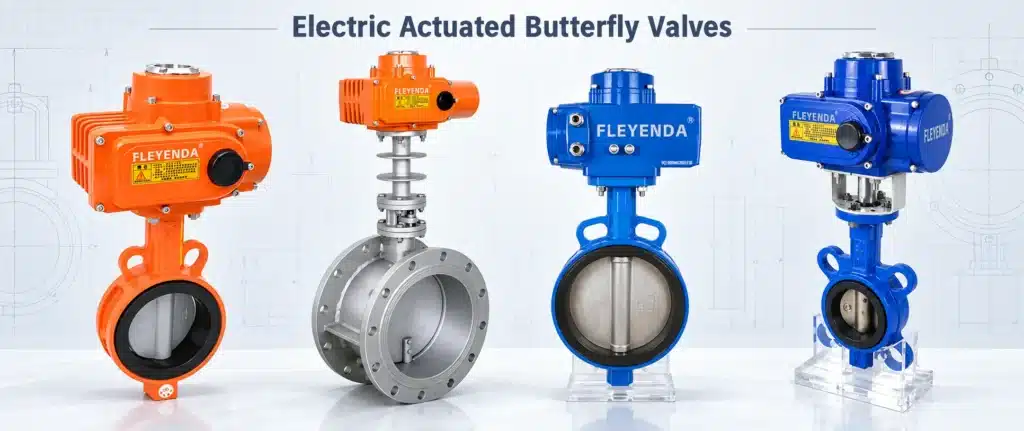
What Are Electric Actuated Butterfly Valves?
Electric actuated butterfly valves combine a butterfly valve body with a rotary electric actuator. The electric actuator rotates the valve shaft, which turns the internal disc approximately 90 degrees between closed and open positions.
Unlike ball valves, butterfly valves use a thin circular disc that remains inside the flow path even when the valve is fully open. This allows butterfly valves to use a shorter body and lower overall weight, which becomes increasingly valuable in medium- and large-diameter pipelines.
The electric actuator allows the valve to operate automatically without instrument air. Electrical power and control signals can be connected directly to the actuator, making electric actuated butterfly valves particularly useful where centralized electrical automation is already available.
Depending on the actuator and valve configuration, the assembly can provide simple open-close isolation, intermediate positioning or modulating flow control.
How Do Electric Actuated Butterfly Valves Work?
The basic operating principle is straightforward. An electric motor inside the actuator produces rotational movement. Internal reduction gearing increases the available output torque and transfers that torque to the butterfly valve shaft.
When the shaft rotates, the valve disc rotates inside the pipeline. At approximately 0 degrees the disc is normally in the closed position, while approximately 90 degrees of rotation moves the disc toward the fully open position.
Limit switches or electronic position sensors stop the actuator at the required end positions. Many electric actuators also provide mechanical position indicators and manual override mechanisms for commissioning or emergency operation.
Typical Operating Sequence
- The PLC, switch or control system sends an electrical command.
- The electric motor inside the actuator starts.
- Reduction gears increase torque and rotate the output shaft.
- The valve shaft rotates the butterfly disc.
- The actuator stops when the required valve position is reached.
- Position feedback can be returned to the control system.
For modulating applications, the actuator can stop at controlled intermediate positions instead of moving only between fully open and fully closed.
Main Components of an Electric Actuated Butterfly Valve
Butterfly Valve Body
The valve body forms the pressure-containing structure and connects the valve to the pipeline. Common designs include wafer, lug and flanged butterfly valves.
Disc
The disc is the primary flow-control component. Rotating the disc changes the available flow area through the pipeline. Disc material should be selected according to corrosion, temperature and mechanical requirements.
Valve Seat
The seat creates the sealing interface around the disc. Common options include EPDM, NBR, PTFE and metal seating depending on the fluid, pressure and temperature conditions.
Shaft
The shaft connects the valve disc to the electric actuator and transfers actuator torque into disc movement. Shaft strength and valve operating torque should be considered when the actuator is sized.
مشغل كهربائي
The electric actuator contains the motor, reduction gears, control components, limit switches and output mechanism required to rotate the valve. Depending on the model, it may support on-off operation, modulating control, feedback signals, manual override and additional protection functions.
Main Types of Electric Actuated Butterfly Valves
Electric actuated butterfly valves are available in several body styles. The correct configuration depends on pipeline construction, maintenance requirements, pressure rating and installation method.
| نوع الصمام | Main Characteristic | Typical Use | Selection Focus |
|---|---|---|---|
| Wafer Butterfly Valve | Compact body installed between flanges | Water and industrial utilities | Flange compatibility and disc clearance |
| Lug Butterfly Valve | Threaded lugs around the valve body | Equipment isolation and maintenance | Pressure and end-of-line requirements |
| Flanged Butterfly Valve | Integral pipeline flanges | Medium and large pipelines | Flange standard and pressure class |
| PTFE-Lined Butterfly Valve | Corrosion-resistant wetted surfaces | Chemical processing | Chemical compatibility |
| Metal-Seated Butterfly Valve | Metal sealing system | Higher-temperature service | Temperature and shut-off requirement |
| Sanitary Butterfly Valve | Hygienic connection and cleanable design | Food, beverage and pharmaceutical systems | Surface finish and connection standard |
Wafer Electric Butterfly Valve
A wafer butterfly valve is installed between two pipeline flanges. Its compact body and relatively low weight make it a common choice for water systems and industrial utilities.
Flanged Electric Butterfly Valve
Flanged electric actuated butterfly valves provide integral flanged connections and are frequently used on larger pipelines where secure alignment and conventional bolted flange installation are preferred.
Lug Electric Butterfly Valve
A lug-style valve has threaded mounting lugs around the valve body. Depending on the valve design and pressure requirements, this can simplify equipment isolation and selected end-of-line applications.
On-Off vs Modulating Electric Actuated Butterfly Valves
One of the most important decisions when selecting electric actuated butterfly valves is whether the application requires simple isolation or controlled intermediate positioning.
On-Off Electric Butterfly Valve
An on-off actuator drives the butterfly valve between defined open and closed positions. This configuration is commonly used for pipeline isolation, pump sequencing, tank switching and automatic process shut-off.
Modulating Electric Butterfly Valve
A modulating actuator can hold the butterfly disc at intermediate positions according to a control signal. Depending on the actuator, common control interfaces can include signals such as 4–20 mA or 0–10 V.
Modulating valve selection requires more than simply stopping the disc at an intermediate angle. The valve must also provide suitable flow characteristics for the required control range and differential pressure.
If the process requires accurate flow regulation, provide minimum, normal and maximum flow rates together with upstream and downstream pressure. Valve position alone does not define actual flow-control performance.
Seat and Material Options for Electric Actuated Butterfly Valves
Electric actuated butterfly valves can handle many different media because the body, disc and seat materials can be changed according to the application.
EPDM Seat
EPDM is commonly used in water and many general utility applications. It provides resilient sealing but should always be checked against the actual fluid and operating temperature.
NBR Seat
NBR can be suitable for selected oils, water and industrial fluids. Compatibility depends on the exact medium and temperature.
PTFE Seat
PTFE provides useful chemical resistance and is commonly selected for corrosive or chemically demanding applications where conventional elastomer seats may not be suitable.
Metal Seat
Metal-seated butterfly valves are used where elevated temperatures or demanding process conditions exceed the practical limits of resilient seats. Leakage requirements and operating torque should be reviewed carefully.
Applications of Electric Actuated Butterfly Valves
The compact construction of butterfly valves makes electric actuation particularly attractive for medium- and large-diameter pipeline systems.
Electric actuated butterfly valves are widely used for raw-water lines, filtration systems, treated-water pipelines, tank isolation and automated treatment sequences.
EPDM-seated wafer or flanged butterfly valves are common starting points for compatible water-service applications.
Electric butterfly valves can provide automatic pump isolation, discharge-line control, bypass switching and equipment sequencing.
Closing time should be reviewed carefully on liquid pipelines to reduce the risk of pressure surge.
PTFE-lined or suitable stainless-steel electric actuated butterfly valves may be selected for compatible acids, alkalis and process chemicals.
Material compatibility must be checked against chemical concentration, temperature and operating pressure.
Electric actuated butterfly valves are used on cooling water, process utilities and general plant piping where remote isolation or automatic sequencing is required.
Sanitary electric butterfly valves with suitable stainless-steel construction and hygienic connections can be used in food, beverage, dairy and pharmaceutical process systems.
One major advantage of butterfly valves is their relatively compact construction at larger nominal diameters. Electric actuation allows large isolation valves to be controlled remotely without requiring operators at the valve location.
Advantages and Limitations of Electric Actuated Butterfly Valves
Main Advantages
- Compact valve construction
- Suitable for medium- and large-diameter pipelines
- Remote electrical operation
- No compressed-air infrastructure required
- On-off and modulating actuator options
- Easy PLC or DCS integration
- Position feedback options
- Manual override available on many actuators
- Multiple body, disc and seat materials
Important Limitations
The butterfly disc remains inside the flow path even when fully open, so the valve does not provide the same unobstructed bore as a full-port ball valve.
Butterfly valves also require sufficient clearance for disc rotation. Improper mating flanges, internal pipe liners or nearby fittings can interfere with the disc.
For modulating duty, flow characteristics should be checked rather than assuming any butterfly valve can provide accurate regulation simply because the actuator can stop at intermediate positions.
Featured Electric Actuated Butterfly Valve
For medium- and large-diameter industrial pipelines, a flanged electric butterfly valve provides a practical combination of compact valve construction and automated operation. The Fleyenda FLE60D combines a flanged butterfly valve with an electric rotary actuator for remote isolation and suitable regulating service.
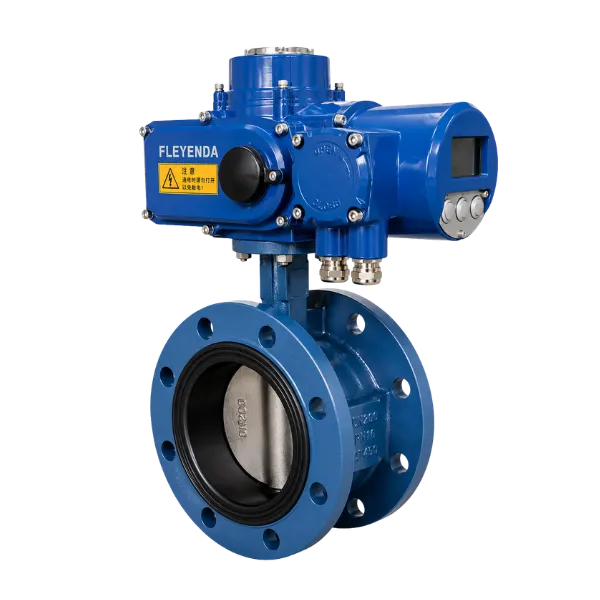
Butterfly
ذو حواف
Electric
The FLE60D is an electric actuated butterfly valve developed for remote opening, closing and suitable regulating service on medium- and large-diameter industrial pipelines.
Its flanged construction provides stable pipeline installation, while different body, disc and seat materials allow the valve configuration to be matched to the working medium and temperature.
Electric actuator configurations can support simple on-off operation or regulating control depending on project requirements. Protection options are also available for wet industrial environments and selected hazardous-area applications.
DN40–DN1200
ذو حواف
EPDM / PTFE / Metal
On-Off / Regulation
Typical applications: water treatment, pump stations, industrial utilities, process pipelines and medium- to large-diameter automated piping systems.
DN40–DN1200
3–10 s Options
Cast Iron / WCB / CF8 / CF8M
On-Off / Regulation
IP67 / IP68 / Ex Options
How to Select Electric Actuated Butterfly Valves
Selecting electric actuated butterfly valves should begin with the process and pipeline conditions rather than selecting an actuator only from nominal valve diameter.
1. Confirm the Process Medium
Identify the fluid, chemical concentration, solids content and any corrosive or abrasive characteristics. These conditions determine suitable body, disc and seat materials.
2. Define Pressure and Temperature
Specify normal pressure, maximum pressure, maximum differential pressure and minimum and maximum process temperature. Seat material limits should be checked under actual operating conditions.
3. Choose the Body Style
Decide whether the installation requires wafer, lug or flanged construction. Confirm mating flange dimensions and ensure sufficient clearance for disc movement.
4. Determine Valve Torque
The electric actuator must provide sufficient output torque to move the disc under the maximum expected differential pressure. Seat friction, pressure and valve size can all increase operating torque.
5. Select On-Off or Modulating Control
Use on-off control for basic isolation. If the valve must hold intermediate positions, specify a modulating actuator and provide the required control and feedback signals.
6. Confirm the Power Supply
Available actuator voltage must match the site electrical system. Common industrial actuator configurations may include DC and AC supply options depending on the actuator model.
7. Define Environmental Protection
Outdoor, wet, dusty or corrosive locations may require enhanced enclosure protection. Hazardous areas may require an appropriately certified explosion-proof actuator configuration.
8. Check Operating Speed
Faster operation is not always better. Rapid closure on large liquid pipelines can contribute to pressure surge, so actuation time should be selected according to the process.
Electric Butterfly Valve RFQ Checklist
- Valve size / DN / NPS
- Process medium
- Operating and maximum pressure
- الضغط التفاضلي الأقصى
- Operating temperature
- Wafer, lug or flanged connection
- Flange standard
- Body, disc and seat material
- Required valve torque
- On-off or modulating operation
- Power supply voltage
- Control input and feedback signal
- Required opening / closing time
- IP protection level
- Explosion-proof requirement
- Manual override requirement
- Quantity
Electric Actuated Butterfly Valves FAQs
What are electric actuated butterfly valves?
Electric actuated butterfly valves are butterfly valves operated automatically by an electric rotary actuator. The actuator rotates the valve shaft and disc to open, close or position the flow passage.
How does an electric butterfly valve work?
An electric motor and reduction gearbox generate torque that rotates the butterfly valve shaft. Approximately 90 degrees of rotation normally moves the disc between closed and open positions.
What is the difference between an electric butterfly valve and a motorized butterfly valve?
In most industrial contexts, the terms refer to the same basic concept: a butterfly valve operated by an electric motor actuator rather than manually or pneumatically.
Can electric actuated butterfly valves regulate flow?
Yes, when the valve and actuator are suitable for modulating duty. A modulating actuator can hold intermediate positions, but proper valve sizing and flow characteristics should also be evaluated.
What is the difference between wafer and flanged butterfly valves?
A wafer valve is clamped between pipeline flanges and provides a compact installation. A flanged butterfly valve has integral flanges that bolt directly to the pipeline.
What seat materials are available?
Common options include EPDM, NBR, PTFE and metal seats. Selection depends on medium compatibility, operating pressure, temperature and required shut-off performance.
Do electric actuated butterfly valves require compressed air?
No. Electric actuators use electrical power rather than compressed air, making them useful where instrument-air infrastructure is unavailable.
Can electric butterfly valves connect to a PLC?
Yes. Depending on the actuator, electric butterfly valves can support remote commands, position feedback and modulating control interfaces for PLC or DCS integration.
Where are electric actuated butterfly valves commonly used?
Common applications include water treatment, pump systems, industrial utilities, chemical processing, large process pipelines and automated equipment.
How do I choose an electric actuated butterfly valve?
Specify the medium, size, pressure, temperature, body style, flange standard, body and seat materials, actuator torque, power supply, control mode, environmental protection and required operating speed.
Need an Electric Actuated Butterfly Valve for Your Project?
The correct valve configuration depends on the pipeline size, process medium, pressure, temperature, connection type, seat material, actuator torque, power supply and control requirements.
Fleyenda provides electric butterfly valve solutions for water treatment, pump systems, industrial utilities, chemical processing and large automated pipelines.
Send your valve size, medium, pressure, temperature, connection standard, actuator voltage, control mode and quantity for technical selection.
Conclusion: Understanding Electric Actuated Butterfly Valves
Electric actuated butterfly valves combine the compact quarter-turn construction of a butterfly valve with the convenience of electrical automation. This makes them particularly useful for medium- and large-diameter industrial pipelines where remote operation is required.
Wafer, lug and flanged body styles provide different installation options, while EPDM, PTFE and metal seats allow the valve to be adapted to different process media and temperatures.
On-off electric actuators are appropriate for automated isolation, while modulating actuators can provide intermediate positioning when the valve is properly selected for control duty.
For reliable operation, engineers should evaluate the valve and electric actuator as one system. Medium compatibility, differential pressure, torque, power supply, operating speed, control signals and environmental protection should all be confirmed before ordering.