


FAT-Q-S Pneumatic 2-Way Tri-Clamp Sanitary Ball Valve
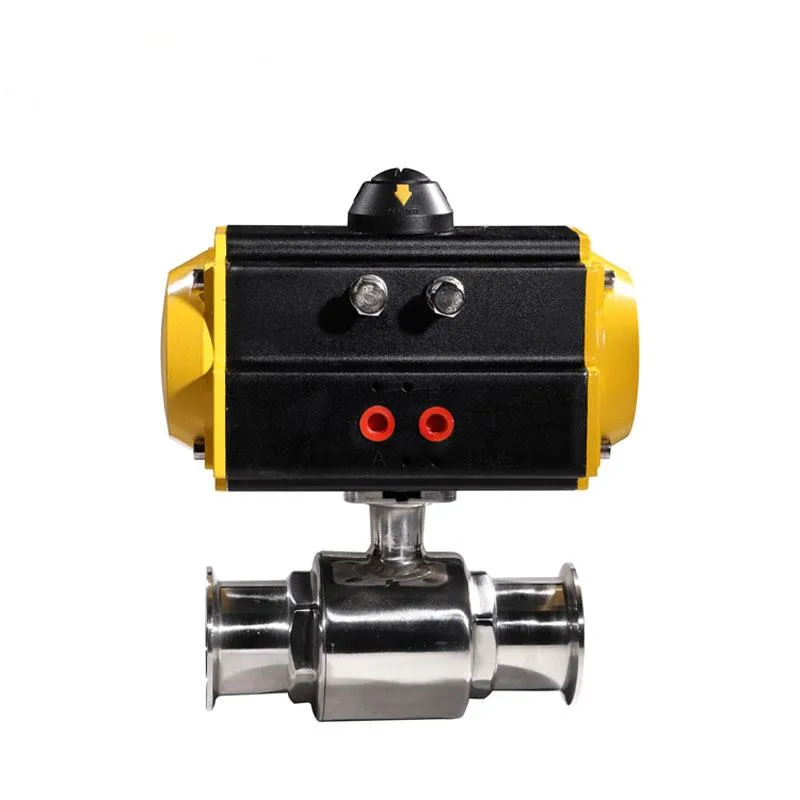
FAT-Q-S Pneumatic 2-Way Tri-Clamp Sanitary Ball Valve
The Pneumatic 2-Way Tri-Clamp Sanitary Ball Valve uses a 316L stainless-steel full-bore body with polished interior for clean, residue-free flow, ensuring hygienic operation and easy CIP/SIP cleaning, with an IP65 pneumatic actuator tested for 100,000 cycles under EN 12266-1 and certified to 3A, FDA, and ISO 9001 standards.
| Boyut Aralığı | 1/2″–4″ (DN15–DN100) |
| Çalışma Basıncı Aralığı: | Up to 10 bar (145 psi) |
| Çalışma Sıcaklık Aralığı: | -20 °C ile +180 °C arası |
| Gövde Malzemesi: | Stainless Steel 304 / 316L |
| Bağlantı Türü: | Tri-Clamp (Sanitary Clamp / ISO / DIN / 3A Standard) |
| Uygulanabilir Ortam: | Food, Beverage, Dairy, Pharmaceutical, Biotech, Pure Water |
| Aktüatör Türü: | Double-Acting or Spring-Return Pneumatic Actuator |
| Gerilim Seçenekleri | Air Supply 4–8 bar; Solenoid Valve 24V DC / 110V AC / 220V AC |
| Tasarım Standardı | 3A / ISO 2852 / DIN 11850 / ASME BPE |
| Test Standardı | EN 12266-1 / API 598 |
| Yangına Dayanıklı Tasarım | Not Required for Sanitary Applications |
| Sertifikasyon | CE / RoHS / ISO 9001 / IP65 (Aktüatör) |
| Özelleştirme | Yukarıda standart parametre örnekleri yer almaktadır. Özel parametreleriniz ve malzemeleriniz varsa, bunların hepsini size göre uyarlayabiliriz. |
| Series | AT | AW | Linear | Pneumatic Cylinder | Hijyenik |
|---|---|---|---|---|---|
| Valf Gövdesi | Ball valve, butterfly valve, plug valve | Gate valve, Global valve | Knife gate valve | Sanitary butterfly valve | |
| Function | Double Acting, Single Acting (Failure Resetting FO or FC) | ||||
| Kontrol Aksesuarları |
• Solenoid Valve, Filter Regulator Lubricator (F.R.L.), Positioner, Limit Switch, Handwheel • Solenoid Valve & Positioner are with Explosion-proof grade and Signal Feedback type for choice | ||||
| Operating Medium |
Clean and dry or lubricated air or inert gas. Any non-corrosive gas that is compatible with the internal parts of the actuator and the lubricant. The dew point temperature of the operating medium is -20°C, and the size of impurity particles is no more than 30u. When selecting a positioner, the impurity particle size should be no more than 5u. | ||||
| Air Source Pressure | 3bar to 8bar | ||||
| Operating Environment Temperature |
• Standard type: -20°C to +80°C • Low-temperature type: -40°C to +80°C • High-temperature type: -20°C to +160°C | ||||
| Lubrication |
Under normal operating conditions, the standard type does not require additional lubricant. For low-temperature or high-temperature environments, special lubricants are required. | ||||
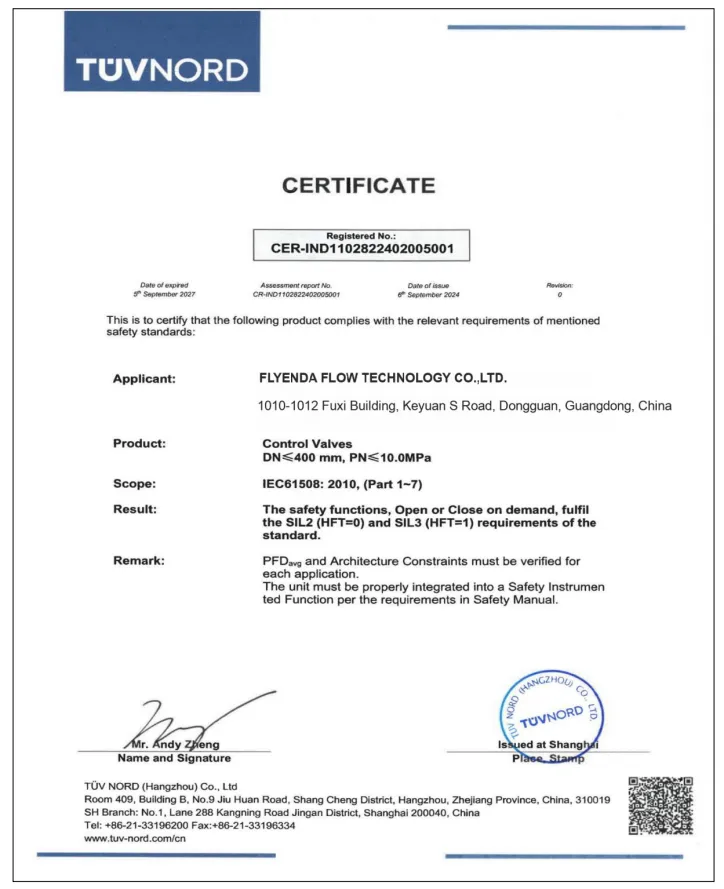
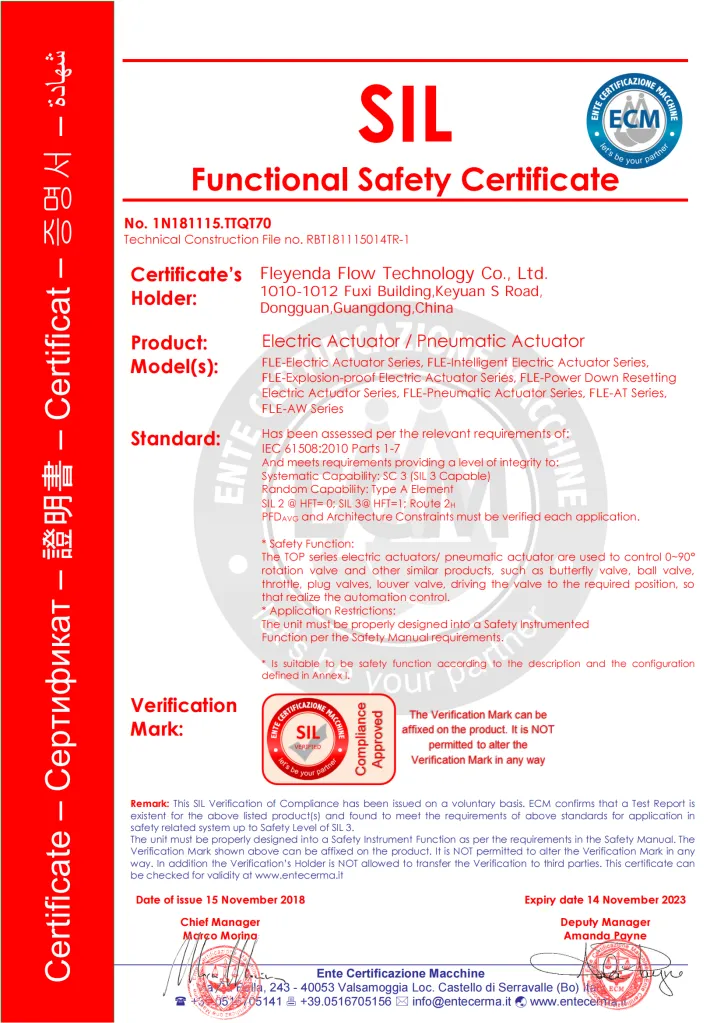
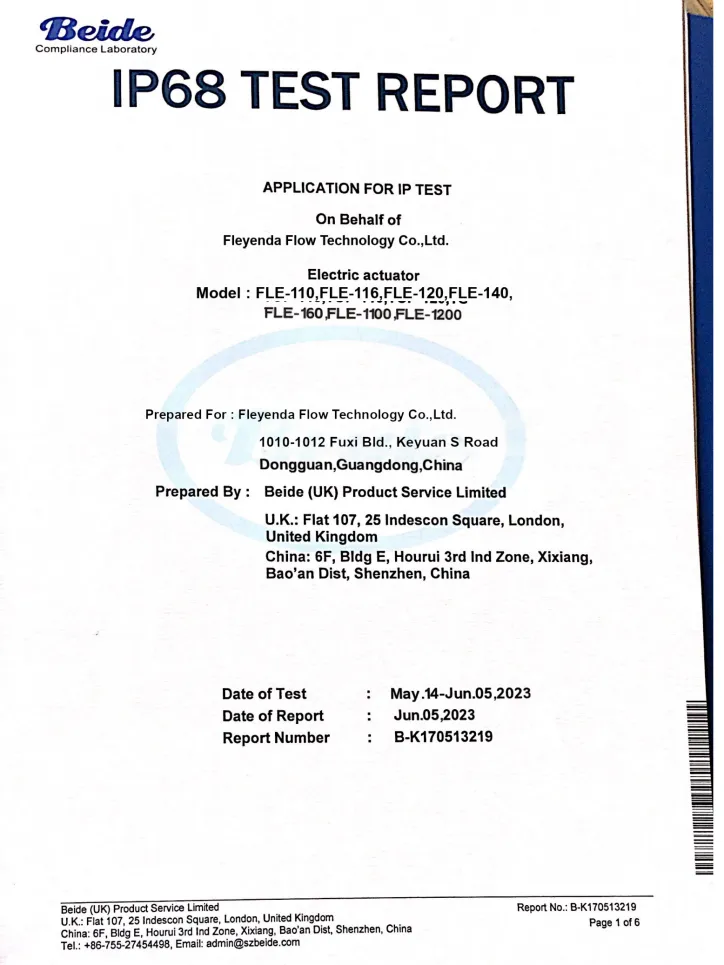
Endüstriyel Vana Uygulamaları için Sertifikalı Kalite
Fleyenda vanaları ve elektrikli aktüatörleri, istikrarlı performans, güvenilir çalışma ve uzun vadeli endüstriyel kullanım için üretilmiştir. Sertifikalı kalite desteği sayesinde, su arıtma, kimyasal işleme, otomasyon ve endüstriyel proses kontrol sistemleri için uygundur.
80% Kullanıcılarının İlgisini Çeken Sık Sorulan Sorular
1. What are the key indicators that a sanitary tri-clamp ball valve needs servicing?
• When the tri-clamp sanitary ball valve fails to open or close smoothly, it often indicates actuator air contamination or worn PTFE/EPDM seats.
• Increased torque or slower movement signals internal buildup or gasket wear.
• Residual media after CIP/SIP cycles suggest bacterial risk—high-quality sanitary pneumatic valves eliminate such dead zones.
• Loose or corroded clamps can cause leaks, reducing reliability of the pneumatic sanitary ball valve in food and beverage use.
2. How to choose the right air-actuated hygienic valve for stable flow?
• Use a full-port pneumatic tri-clamp valve to maintain low pressure drop.
• Match the valve size (½″–4″ or DN15–DN100) to the pipeline for full flow.
• Keep actuator air pressure within 5–8 bar for quick and accurate response.
• Select 304/316L stainless steel with polished interior to ensure hygiene and durability.
3. Where is a sanitary pneumatic ball valve most effectively used?
• Ideal for food, beverage, dairy, and pharmaceutical production.
• Performs well with steam, pure water, and clean gases in sanitary automation.
• The air-operated sanitary ball valve integrates with solenoid and feedback systems for reliable control.
• A sanitary tri-clamp valve resists cleaning chemicals and maintains purity in CIP systems.
4. What are the cleaning and maintenance best practices?
• Inspect gaskets after CIP cycles; replace worn seals in the tri-clamp sanitary valve promptly.
• Supply clean, dry air to the actuator to extend the air-operated valve lifespan.
• Regularly test for leaks under API 598 or EN 12266-1 standards.
• Avoid overtightening clamps to prevent gasket deformation.