


Tek bir vana aktüatörü farklı boyutlardaki vanalara uyabilir mi?
A valve actuator is often selected from a manufacturer’s sizing table that links actuator models to valve diameters. This can create the impression that one actuator belongs to one valve size. In practice, the relationship is much more flexible.
The same valve actuator may be capable of operating several different valve sizes if its available torque or thrust, mounting interface, travel, operating speed and control characteristics are suitable for each valve. At the same time, two valves with exactly the same nominal diameter can require completely different actuators.
A DN100 soft-seated ball valve operating at low differential pressure may require less torque than a smaller metal-seated valve working under severe conditions. A butterfly valve of the same nominal size will have a different torque curve again, while a gate valve requires linear thrust rather than quarter-turn torque.
For this reason, valve actuator selection should never be based on DN alone. The correct approach is to match the actuator to the mechanical demand of the valve under actual operating conditions.
Valve size is only an initial reference. The real matching parameters are torque or thrust, operating pressure, valve design, seat material, travel, mounting dimensions, duty cycle and required fail-safe behavior.
Can One Valve Actuator Operate Different Valve Sizes?
Yes. One valve actuator can often be used with several valve sizes, provided the actuator has sufficient output and the mechanical connection is compatible.
For example, one quarter-turn electric actuator may be capable of operating a DN50 ball valve, a DN65 ball valve and a DN80 ball valve if all three valves remain within the actuator’s available torque range.
The same actuator might also operate a butterfly valve, although the required mounting adapter, stem coupling and torque evaluation may be different.
What cannot be assumed is that every valve of those sizes will work with the same actuator. Valve design and operating conditions can change the required torque significantly.

Why Valve Size Alone Is Not Enough
Nominal valve size describes the approximate flow passage and connection size. It does not directly describe how much mechanical force is required to operate the valve.
The force required at the stem depends on how the closure element contacts the seat, how much differential pressure acts across the valve, the coefficient of friction between moving surfaces and the geometry of the valve mechanism.
This is why a manufacturer’s actuator sizing chart may show different actuator models for valves of the same DN but different pressure classes or seat materials.
A valve actuator therefore needs to be selected from the actual torque or thrust requirement, not simply from the outside diameter of the valve.
Valve Torque Is the Main Starting Point
For quarter-turn valves such as ball valves and butterfly valves, actuator sizing normally begins with torque.
Torque is the rotational force required to turn the valve stem. It is usually expressed in N·m or another equivalent unit.
Valve torque is not always constant during movement. A ball valve may require relatively high breakaway torque when the ball first begins moving against the seats. Torque may then decrease through the middle of the stroke and rise again as the valve reaches the opposite seated position.
Butterfly valves also have their own torque curve. Seat friction, disc position and hydrodynamic forces can all change the torque requirement as the disc rotates.
The actuator must provide sufficient output at every important point in the valve stroke, not only at one nominal torque value.
How Differential Pressure Changes Actuator Size
Differential pressure is one of the main reasons that identical valve sizes can require different actuators.
When pressure acts across a closed valve, it creates mechanical loading on the ball, disc, plug or gate. The resulting load influences seat friction and the force required to initiate movement.
A valve operating with only a small pressure difference may be relatively easy to move. The same valve at its maximum design differential pressure may require considerably more torque.
The actuator should therefore be sized for the highest differential pressure that can realistically occur during operation, including abnormal but credible process conditions.
Why Seat Material Changes Valve Actuator Requirements
Seat material has a direct effect on valve friction and therefore on actuator sizing.
Soft-seated ball valves using materials such as PTFE typically have different torque characteristics from valves using PEEK, PPL or metal seats.
Metal-seated valves used for high-temperature, abrasive or severe service can require substantially more torque than a similar valve using a soft seat.
Temperature also matters because seat materials can expand, soften or change friction characteristics as the process temperature changes.
If the seat design is changed, the existing valve actuator should not automatically be assumed suitable even when the nominal valve size remains unchanged.
Can the Same Valve Actuator Fit Different Ball Valve Sizes?
Ball valves are one of the clearest examples of why one actuator can sometimes cover several valve sizes.
A quarter-turn actuator only needs to rotate the ball approximately 90 degrees, so several ball valve sizes may share the same actuator travel requirement. If their torque values fall within the actuator’s available output, the same actuator model can potentially be used.
However, floating ball valves, trunnion-mounted ball valves, V-port ball valves and metal-seated ball valves can have very different torque characteristics.
A large trunnion-mounted ball valve may have a different seat-loading mechanism from a smaller conventional valve. A V-port valve used for throttling must also consider control accuracy and positioning performance in addition to maximum torque.
Example
Suppose an actuator provides enough usable torque to operate valves requiring up to 300 N·m under the specified conditions. If a DN50 ball valve requires 80 N·m, a DN80 requires 150 N·m and a DN100 requires 240 N·m after the required engineering margin is applied, the same actuator model may potentially operate all three.
If another DN80 metal-seated valve requires 340 N·m, that valve would require a larger actuator even though its nominal size is smaller than the DN100 valve in the first group.
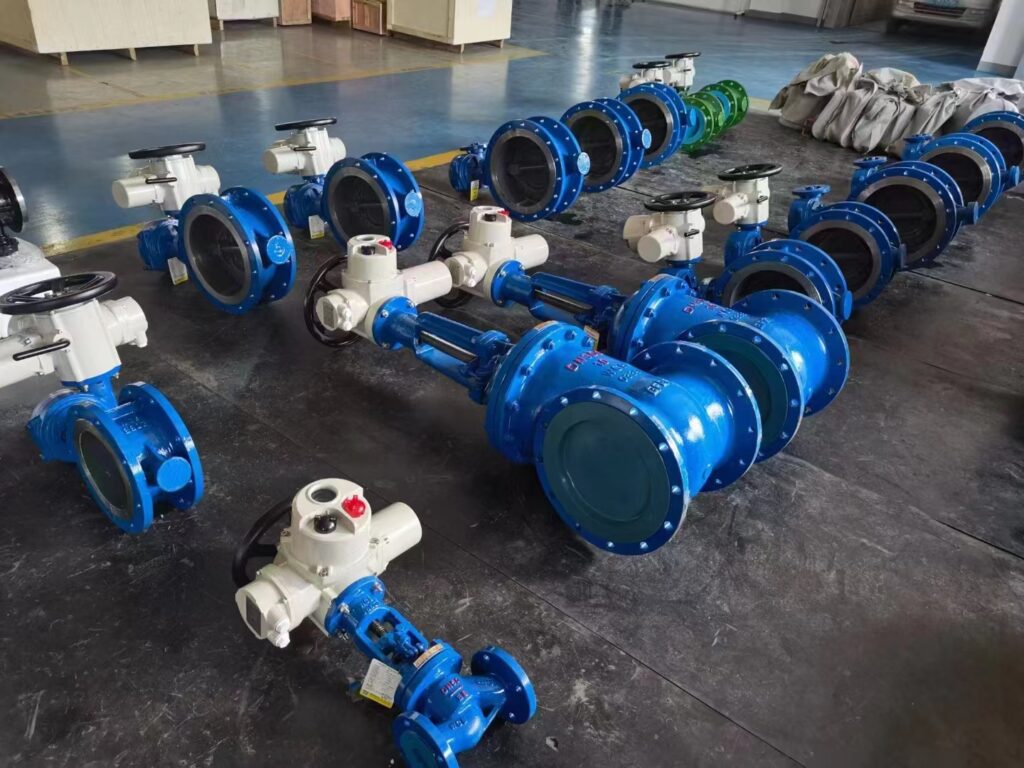
Can the Same Valve Actuator Fit Different Butterfly Valve Sizes?
Butterfly valves are also commonly paired with quarter-turn actuators, so one actuator model can frequently cover several valve sizes.
The matching process still depends on actual valve torque. A resilient-seated butterfly valve used in water service may have very different torque requirements from a high-performance double-offset or triple-offset butterfly valve.
Differential pressure, seat compression, disc geometry and bearing friction all influence the required actuator output.
Large butterfly valves may also experience significant dynamic torque from the flowing medium, particularly when the disc operates at intermediate angles.
What About Gate Valves?
Gate valves require a different type of actuator sizing because the stem generally moves through multiple turns rather than a simple 90-degree rotation.
A motorized gate valve actuator must produce enough output torque to rotate the stem while also generating sufficient stem thrust to lift or seat the gate.
Stem diameter, thread geometry, packing friction, valve differential pressure and required seating force all influence the actuator requirement.
One multi-turn valve actuator may still fit several gate valve sizes, but torque, thrust and number of stem turns must all remain within the actuator’s capabilities.
Quarter-Turn, Multi-Turn and Linear Valve Actuators
Before comparing valve sizes, it is essential to confirm that the actuator motion matches the valve mechanism.
| Vana Tipi | Typical Motion | Main Sizing Parameter |
|---|---|---|
| Ball valve | Quarter turn | Torque |
| Butterfly valve | Quarter turn | Torque |
| Plug valve | Quarter turn | Torque |
| Gate valve | Multi-turn linear stem movement | Torque and thrust |
| Globe valve | Linear movement | Thrust and travel |
| Control valve | Linear or rotary depending on design | Thrust or torque plus positioning accuracy |
An actuator designed only for 90-degree quarter-turn movement cannot directly replace a multi-turn gate valve actuator simply because the torque rating appears similar.
Mounting Interface Matters as Much as Output
Even when a valve actuator has sufficient torque, it still needs a compatible mechanical interface.
Quarter-turn valves commonly use standardized mounting patterns such as ISO 5211. The actuator flange pattern, valve mounting pad and coupling must be compatible.
Stem shape and dimensions also need to match. Square stems, keyed shafts and double-D connections may require different couplings.
Adapter brackets can allow one actuator model to be used across different valve sizes, but the bracket and coupling must be designed to transmit the required torque without excessive deflection or stress.
Travel and Rotation Angle Must Match
Output torque alone does not guarantee compatibility. The actuator must also provide the correct mechanical travel.
Most ball and butterfly valves require approximately 90 degrees of rotation. Three-way valves may require different angular positions depending on the port configuration and control sequence.
Linear valves require a defined stem travel, while multi-turn valves require a specific number of output rotations.
An actuator may therefore have sufficient force but still be unsuitable if its mechanical travel cannot match the valve.
Electric Valve Actuator Selection Across Different Valve Sizes
An electric valve actuator converts motor output through a gearbox to produce the required torque or thrust.
Manufacturers often offer actuator series with overlapping torque ranges. One electric actuator model may therefore be used with several valve sizes, provided the operating torque remains within its rated output.
Electric actuator selection should also consider voltage, operating time, duty cycle, motor thermal protection, control mode and environmental protection.
An actuator selected for occasional on-off operation may not be suitable for frequent modulating service even when its torque rating is adequate.
For outdoor, wet or hazardous-area installations, IP rating and explosion-protection requirements can also determine whether an actuator is suitable for reuse on another valve.
Pneumatic Valve Actuator Selection Across Different Valve Sizes
Pneumatic actuator output depends strongly on available air pressure.
One pneumatic valve actuator may operate several valve sizes if sufficient torque is available at the minimum guaranteed instrument-air pressure.
A double-acting actuator and a spring-return actuator of similar physical size do not necessarily provide the same output characteristics. Spring torque must be considered throughout the stroke.
For this reason, pneumatic actuator sizing should compare the valve torque curve against the actuator torque curve at the actual supply pressure.
Solenoid valve flow capacity, tubing size and desired stroke time should also be considered because they influence how quickly the actuator can move the valve.
Can a Valve Actuator Be Too Large?
Yes. Selecting an actuator with more output than necessary may appear conservative, but extreme oversizing can introduce its own problems.
A very large actuator can impose excessive torque on the valve stem, coupling, mounting bracket or internal components if travel stops are incorrectly adjusted or a mechanical obstruction occurs.
Oversized actuators may also increase equipment cost, installation weight, air consumption or electrical power requirements.
In control applications, excessive actuator size can affect positioning behavior and make the complete assembly less efficient than necessary.
More actuator torque is not automatically better. The selected output should provide an appropriate operating margin without exceeding the mechanical limits of the valve and mounting components.
How Operating Speed Affects Valve Actuator Selection
The same actuator may have enough torque for several valve sizes but may not provide the same operating time on each valve.
Larger valves generally have more rotating mass and may require different gearbox ratios or pneumatic airflow to achieve the desired stroke time.
In liquid piping, extremely fast closure can also contribute to pressure surge or water hammer.
This means actuator suitability should include the required opening and closing time rather than torque alone.
Duty Cycle Can Change the Answer
A valve actuator used once per day does not experience the same thermal and mechanical loading as one operating every few minutes.
Electric actuators must be checked for motor duty rating because repeated starts can produce heat faster than the motor can dissipate it.
Pneumatic actuators are less affected by motor heating but repeated cycling increases seal wear and compressed-air consumption.
A valve actuator that is suitable for several valve sizes in occasional on-off service may therefore not be suitable for the same valves in high-frequency modulating duty.
Fail-Safe Requirements Also Affect Actuator Size
The required safety position can significantly change actuator selection.
A spring-return pneumatic actuator must generate enough spring torque to move the valve toward its required fail position even when air pressure is lost.
Electric valve actuators may use spring-return mechanisms, stored electrical energy, battery systems or other power-failure strategies depending on the design.
An actuator that fits several valve sizes during normal powered operation may not provide sufficient fail-safe output for all of them.
Can You Reuse an Existing Valve Actuator on a Different Valve?
Reusing an existing valve actuator can be practical, but compatibility must be checked systematically.
Start with the actuator nameplate and technical data. Confirm available torque or thrust, output travel, duty rating, supply voltage or air pressure and control configuration.
Then obtain the torque or thrust requirement for the new valve under maximum operating conditions.
The mounting flange, stem connection and coupling geometry must also be checked. Even if the actuator output is sufficient, an unsuitable bracket or coupling can create misalignment or excessive stress.
Finally, verify end-stop adjustment, limit switches, fail-safe action and control signals before returning the assembly to service.
How to Match One Valve Actuator to Several Valve Sizes
If a project aims to standardize several valve sizes around fewer actuator models, the selection should be based on the worst-case valve in each actuator group.
Begin by collecting the maximum required torque or thrust for each valve under its specified pressure, temperature and seat condition.
Compare those values with the actuator output at the actual power or air-supply condition.
Then verify travel, mounting interface, control mode, required operating time and environmental rating.
| Parameter | What to Check | Why It Matters |
|---|---|---|
| Valve Size | DN or NPS | Initial mechanical reference only |
| Required Torque | Maximum valve torque | Main quarter-turn sizing parameter |
| Required Thrust | Stem thrust for linear or multi-turn valves | Critical for gate and globe valves |
| Differential Pressure | Maximum pressure across the valve | Can significantly increase required force |
| Seat Material | Soft, PEEK, PPL, metal or other design | Affects friction and torque |
| Actuator Output | Torque or thrust at actual supply condition | Determines mechanical capability |
| Mounting Interface | Flange, bracket and stem connection | Determines mechanical compatibility |
| Travel | 90°, multi-turn or linear stroke | Must match valve movement |
| Operating Time | Required opening and closing speed | Affects process response |
| Duty Cycle | Cycles per hour and control duty | Affects actuator life and thermal load |
| Fail Position | Fail open, fail close or stay put | Can change required actuator output |
Common Mistakes When Matching a Valve Actuator
The most common mistake is assuming that actuator size follows valve DN directly. This ignores the effects of pressure, valve construction and seat friction.
Another mistake is using normal operating torque instead of the maximum torque required to start or fully seat the valve.
Pneumatic actuators are sometimes sized using normal plant air pressure instead of the minimum pressure available at the valve.
Electric actuators may be selected with sufficient torque but an unsuitable duty cycle for frequent operation.
Mechanical compatibility is also frequently overlooked. An actuator with adequate torque can still fail prematurely if the bracket or coupling is misaligned.
Finally, oversizing without checking maximum allowable stem torque can create a different failure risk.
What Information Should Be Provided for Valve Actuator Selection?
A useful actuator RFQ should contain enough process and valve information to calculate the required output accurately.
Include valve type, nominal size, pressure class, body and seat material, process medium, minimum and maximum temperature and maximum differential pressure.
If available, provide the valve manufacturer’s torque or thrust data rather than asking the actuator supplier to estimate it from DN alone.
For electric actuators, specify voltage, control mode, operating time, duty cycle, position feedback and environmental protection.
For pneumatic actuators, specify minimum air pressure, double-acting or spring-return operation, required fail position, solenoid configuration and desired stroke time.
If several valve sizes are intended to share one actuator model, list every valve and its maximum torque or thrust. The actuator should be checked against the worst-case condition in the group.
Sık Sorulan Sorular
Can one valve actuator fit several valve sizes?
Yes. The same actuator can operate several valve sizes if its torque or thrust, travel, mounting interface and control characteristics are suitable for each valve.
Does actuator size always increase with valve size?
Not necessarily. Larger valves often require more actuator output, but pressure, seat material and valve design can cause a smaller valve to require more torque than a larger one.
Can the same actuator operate a ball valve and butterfly valve?
Potentially yes, because both commonly use quarter-turn motion. However, torque requirements, mounting interfaces and stem connections must be checked separately.
Can a ball valve actuator be used on a gate valve?
A standard quarter-turn actuator cannot normally operate a gate valve because gate valves require multi-turn stem movement and axial thrust.
What is the most important parameter when sizing a valve actuator?
For quarter-turn valves, maximum required valve torque is one of the main parameters. For linear or multi-turn valves, both torque and stem thrust may need to be considered.
Can an actuator be oversized?
Yes. Excessive actuator output can increase cost and may expose valve stems, couplings or internal components to unnecessary mechanical load.
Can I reuse an old valve actuator on a new valve?
Yes, if output torque or thrust, travel, interface, duty rating, control system and environmental requirements are all compatible with the new valve.
Why can two valves of the same size need different actuators?
Differences in pressure, seat material, valve geometry, temperature and service conditions can produce very different operating torque or thrust requirements.
Sonuç
One valve actuator can often operate several different valve sizes, but nominal diameter is not the parameter that determines compatibility.
For quarter-turn valves, the actuator must provide sufficient torque throughout the complete valve stroke. For gate, globe and other linear or multi-turn valves, stem thrust and travel also become critical.
Differential pressure, seat material, temperature and valve construction can cause two valves of the same size to require very different actuator outputs.
Mounting interface, travel, operating speed, duty cycle, fail-safe behavior and control requirements must also match before the same valve actuator can be standardized across multiple valve sizes.
The most reliable selection method is therefore to treat valve size as a reference and make the final decision from actual torque or thrust data under the worst expected operating condition.