


FAT-Q-S Pneumatic 2-Way Tri-Clamp Sanitary Ball Valve
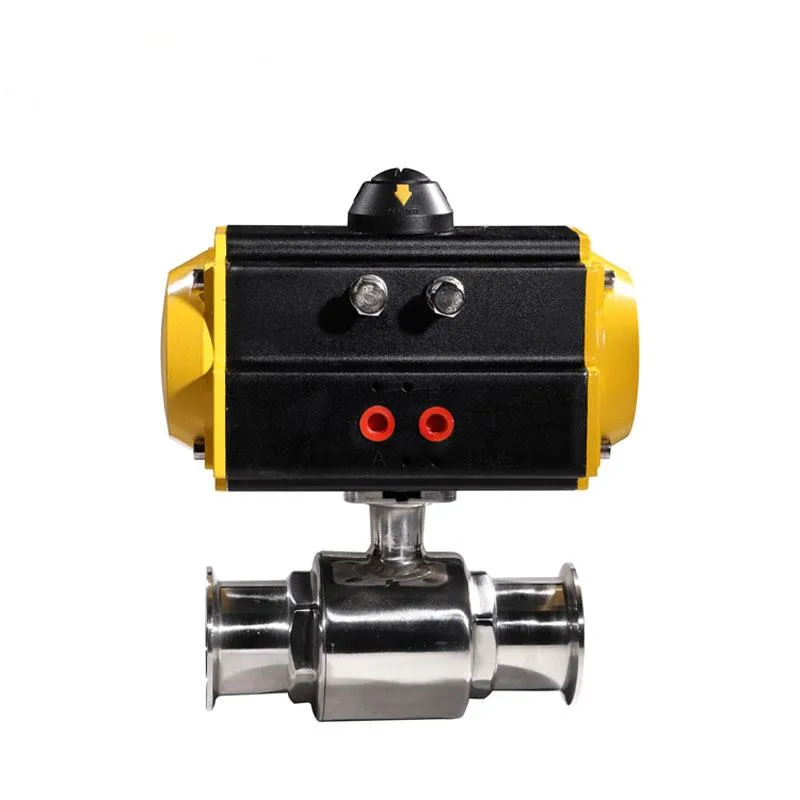
FAT-Q-S Pneumatic 2-Way Tri-Clamp Sanitary Ball Valve
The Pneumatic 2-Way Tri-Clamp Sanitary Ball Valve uses a 316L stainless-steel full-bore body with polished interior for clean, residue-free flow, ensuring hygienic operation and easy CIP/SIP cleaning, with an IP65 pneumatic actuator tested for 100,000 cycles under EN 12266-1 and certified to 3A, FDA, and ISO 9001 standards.
| Size Range | 1/2″–4″ (DN15–DN100) |
| Working Pressure Range: | Up to 10 bar (145 psi) |
| Working Temperature Range: | -20°C to +180°C |
| Body Material: | Stainless Steel 304 / 316L |
| Connection Type: | Tri-Clamp (Sanitary Clamp / ISO / DIN / 3A Standard) |
| Applicable Medium: | Food, Beverage, Dairy, Pharmaceutical, Biotech, Pure Water |
| Actuator Type: | Double-Acting or Spring-Return Pneumatic Actuator |
| Voltage Options | Air Supply 4–8 bar; Solenoid Valve 24V DC / 110V AC / 220V AC |
| Design Standard | 3A / ISO 2852 / DIN 11850 / ASME BPE |
| Testing Standard | EN 12266-1 / API 598 |
| Fire-Safe Design | Not Required for Sanitary Applications |
| Certification | CE / RoHS / ISO 9001 / IP65 (Actuator) |
| Customization | Above Are Standard Parameter Samples. If You Have Specific Parameters And Materials, We Can Customize Them All. |
| Series | AT | AW | Linear | Pneumatic Cylinder | Санитарный |
|---|---|---|---|---|---|
| Valve Body | Ball valve, butterfly valve, plug valve | Gate valve, Global valve | Knife gate valve | Sanitary butterfly valve | |
| Function | Double Acting, Single Acting (Failure Resetting FO or FC) | ||||
| Вспомогательное оборудование для систем управления |
• Solenoid Valve, Filter Regulator Lubricator (F.R.L.), Positioner, Limit Switch, Handwheel • Solenoid Valve & Positioner are with Explosion-proof grade and Signal Feedback type for choice | ||||
| Operating Medium |
Clean and dry or lubricated air or inert gas. Any non-corrosive gas that is compatible with the internal parts of the actuator and the lubricant. The dew point temperature of the operating medium is -20°C, and the size of impurity particles is no more than 30u. When selecting a positioner, the impurity particle size should be no more than 5u. | ||||
| Air Source Pressure | 3bar to 8bar | ||||
| Operating Environment Temperature |
• Standard type: -20°C to +80°C • Low-temperature type: -40°C to +80°C • High-temperature type: -20°C to +160°C | ||||
| Lubrication |
Under normal operating conditions, the standard type does not require additional lubricant. For low-temperature or high-temperature environments, special lubricants are required. | ||||
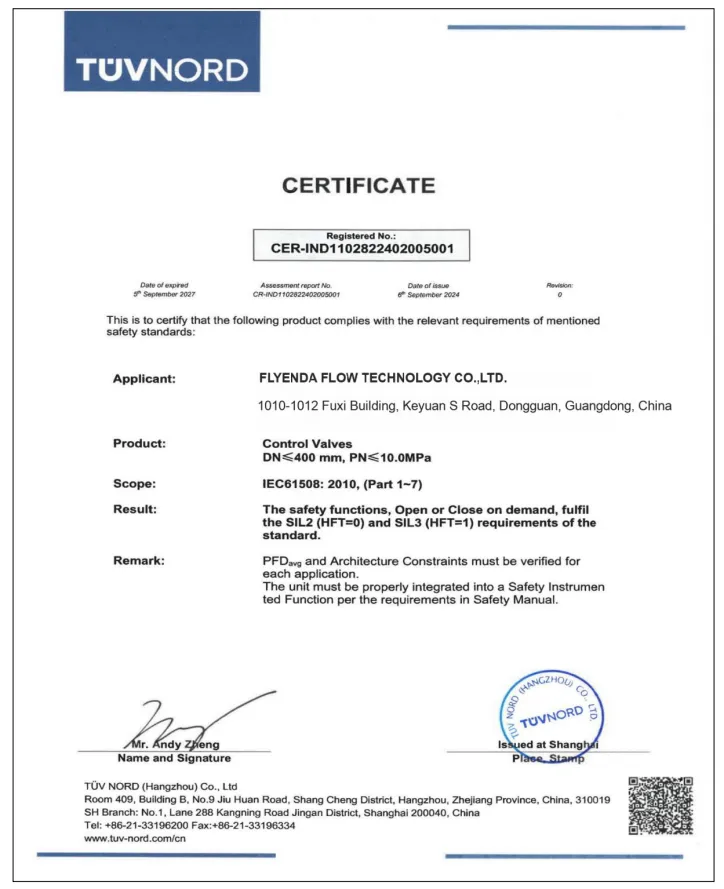
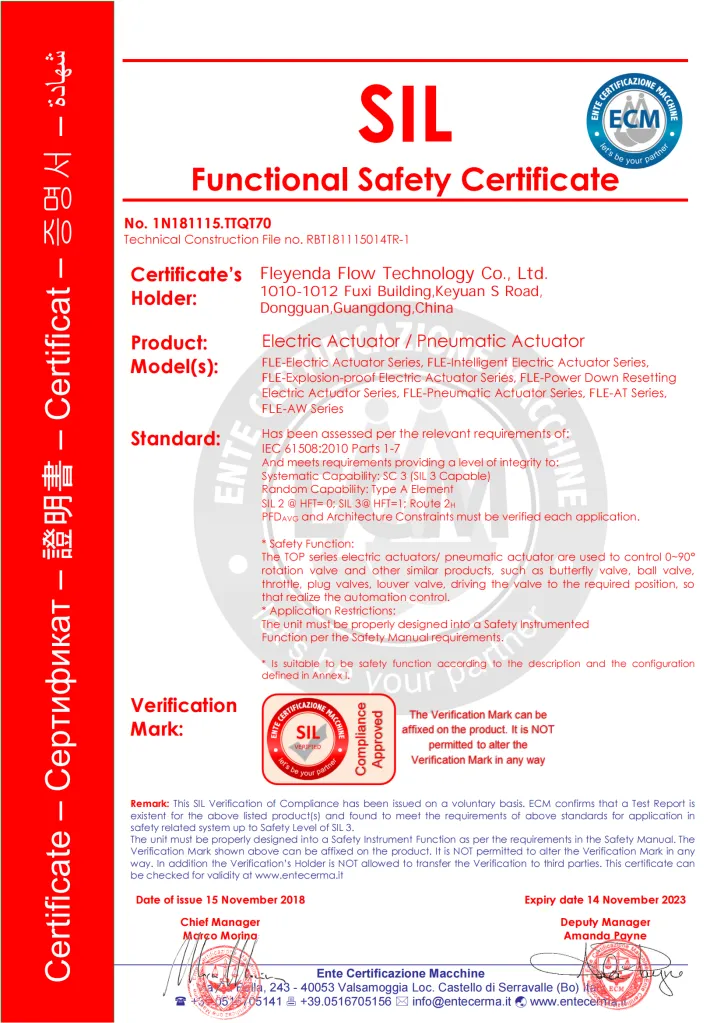
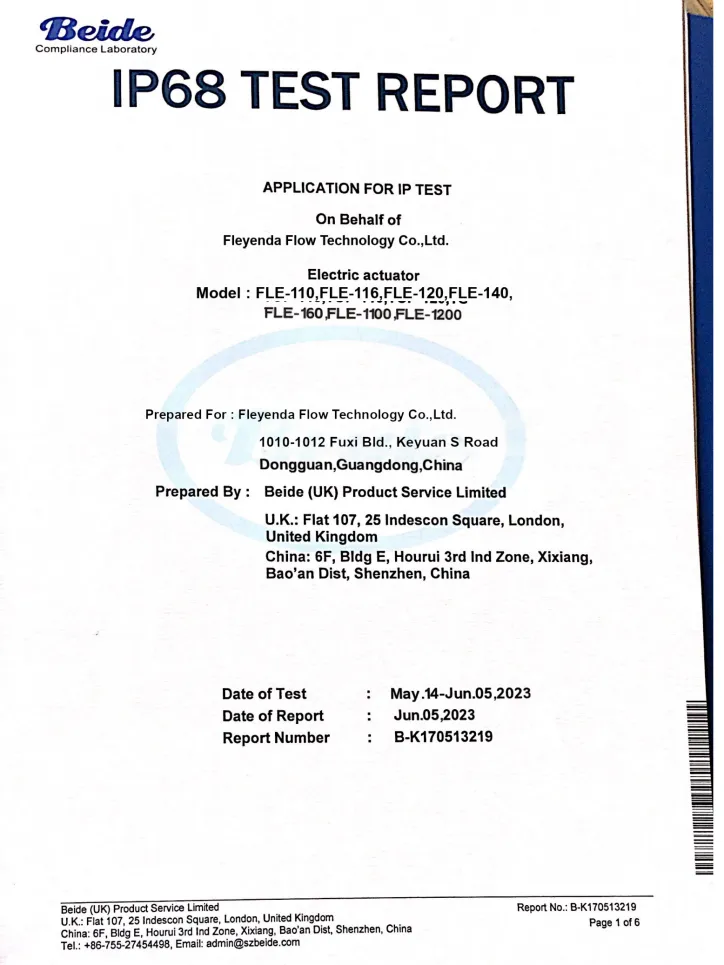
Certified Quality for Industrial Valve Applications
Fleyenda valves and electric actuators are built for stable performance, reliable operation, and long-term industrial use. With certified quality support, they are suitable for water treatment, chemical processing, automation, and industrial process control systems.
FAQs That 80% Users Interest
1. What are the key indicators that a sanitary tri-clamp ball valve needs servicing?
• When the tri-clamp sanitary ball valve fails to open or close smoothly, it often indicates actuator air contamination or worn PTFE/EPDM seats.
• Increased torque or slower movement signals internal buildup or gasket wear.
• Residual media after CIP/SIP cycles suggest bacterial risk—high-quality sanitary pneumatic valves eliminate such dead zones.
• Loose or corroded clamps can cause leaks, reducing reliability of the pneumatic sanitary ball valve in food and beverage use.
2. How to choose the right air-actuated hygienic valve for stable flow?
• Use a full-port pneumatic tri-clamp valve to maintain low pressure drop.
• Match the valve size (½″–4″ or DN15–DN100) to the pipeline for full flow.
• Keep actuator air pressure within 5–8 bar for quick and accurate response.
• Select 304/316L stainless steel with polished interior to ensure hygiene and durability.
3. Where is a sanitary pneumatic ball valve most effectively used?
• Ideal for food, beverage, dairy, and pharmaceutical production.
• Performs well with steam, pure water, and clean gases in sanitary automation.
• The air-operated sanitary ball valve integrates with solenoid and feedback systems for reliable control.
• A sanitary tri-clamp valve resists cleaning chemicals and maintains purity in CIP systems.
4. What are the cleaning and maintenance best practices?
• Inspect gaskets after CIP cycles; replace worn seals in the tri-clamp sanitary valve promptly.
• Supply clean, dry air to the actuator to extend the air-operated valve lifespan.
• Regularly test for leaks under API 598 or EN 12266-1 standards.
• Avoid overtightening clamps to prevent gasket deformation.