


Electric V-Port Ball Valve for Precise Flow Control
The FLE-VQ-F electric V-port ball valve combines a characterized V-notch segmented ball with a modulating electric actuator for accurate, repeatable flow regulation. Its progressive opening characteristic provides more usable control travel than a conventional round-port ball valve in dosing, feed-flow, steam, slurry and process-control applications.
- 15° / 30° / 60° / 90° V-Port Options
- Electric Modulating Actuator
- 4–20 mA Control Options
- PLC / DCS Integration
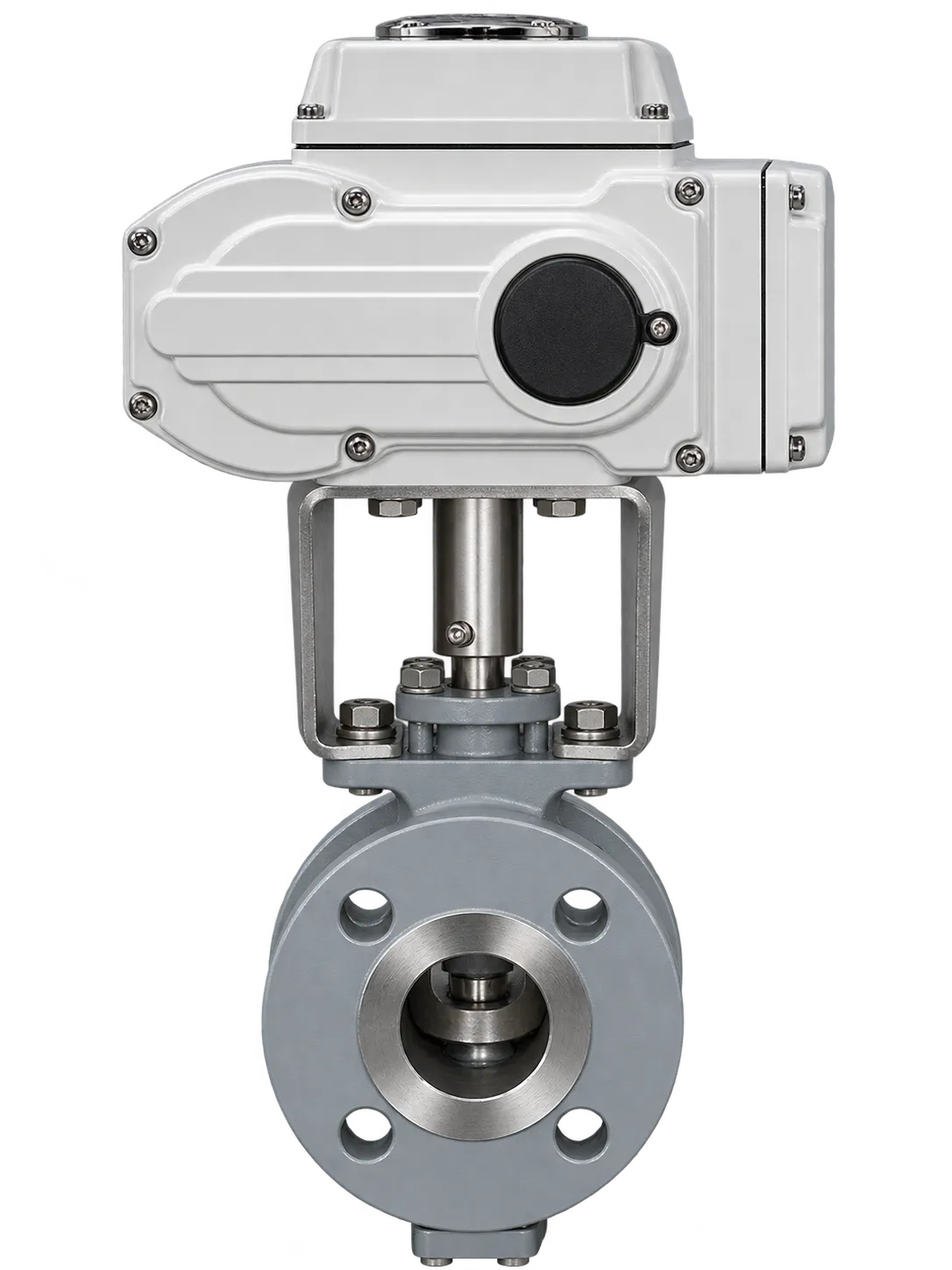
Designed for Modulating Control, Not Just On/Off Isolation
The V-shaped notch changes the effective flow area progressively as the ball rotates. This characteristic helps the control system make finer adjustments through the valve travel, supporting more stable regulation when process demand varies.
Progressive V-Notch Opening
Characterized 15°, 30°, 60° and 90° openings provide different balances between fine low-flow regulation and higher flow capacity.
Shearing Flow Geometry
The segmented V-ball creates a shearing action at the seat, which can help in selected pulp, slurry and particle-bearing process services.
Repeatable Positioning
Electric quarter-turn actuation supports remote positioning and selected modulating configurations for automated process loops.
PLC / DCS Integration
Selected actuator configurations support 4–20 mA input, position feedback and intelligent control interfaces.
Multiple Cv Requirements
V-port angle and valve size can be matched to the required minimum, normal and maximum flow rather than pipe size alone.
Broad Industrial Media
Available for compatible water, steam, gas, oil, pulp, slurry and chemical-liquid applications with suitable body and seat materials.
Choose the V-Port Angle Around Your Required Flow Range
V-port geometry affects the relationship between valve travel and flow capacity. A smaller notch is generally selected for finer low-flow adjustment, while a larger opening provides greater capacity. Final selection should consider Cv, pressure drop, media and the normal operating point.
- 15°: Fine regulation where small flow adjustments are required.
- 30°: Low-to-medium flow duties such as dosing and process feed.
- 60°: General modulating service requiring a broader control range.
- 90°: Higher-Cv applications requiring greater flow capacity.
For low-flow duties and precise adjustment around a smaller operating range.
Balances controllability with additional flow capacity.
For process loops that require a broader operating range.
For applications with higher Cv requirements.
FLE-VQ-F Electric V-Port Ball Valve Specifications
Valve body, seat material, V-port geometry and actuator are configured together according to the process medium, flow range and control-loop requirements.
| Parameter | Specification |
|---|---|
| Model | FLE-VQ-F |
| Valve type | Electric actuated V-port segmented ball valve / motorized V-port control ball valve |
| Nominal size | 1″–12″ / DN25–DN300 |
| Working pressure | PN16–PN40 / ANSI Class 150–300 |
| Working temperature | −20°C to +250°C, depending on seat material and service conditions |
| Body material | Stainless steel CF8 / CF8M / Carbon steel WCB |
| Seat options | PTFE or selected metal-seat configurations |
| V-port options | 15°, 30°, 60°, 90° |
| Connection | Flanged — ANSI / DIN / JIS options |
| Applicable media | Water, steam, gas, oil, slurry, pulp and compatible chemical liquids |
| Actuation | Electric quarter-turn actuator; on/off, regulating and intelligent configurations |
| Voltage options | DC24V, AC24V, AC110V, AC220V, AC380V |
| Control options | On/off, selected 4–20 mA regulating control, position feedback and intelligent configurations |
| Design references | IEC 60534 / GB/T 12237 / API 6D, as applicable |
| Testing | API 598 / EN 12266-1 |
| Fire-safe option | Selected API 607 configurations available |
| Protection | IP67 standard on selected actuators; IP68 optional |
| Explosion-proof option | Selected Ex d II BT4 / CT4 / CT6 Gb actuator configurations |
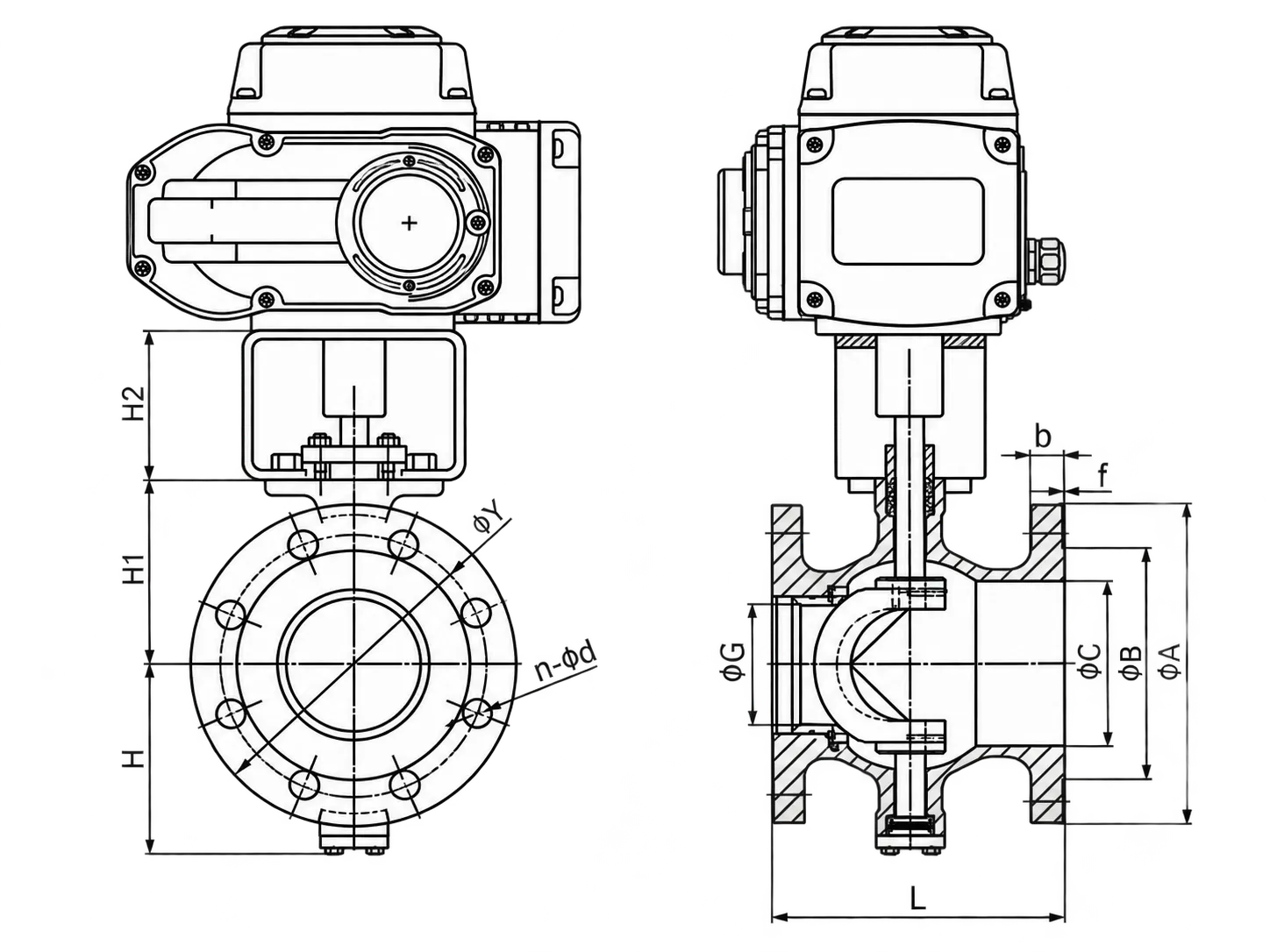
FLE-VQ-F Outline & Connection Drawing
View the valve outline, flange connection and installation dimensions for pipeline layout and equipment integration.
Request the dimensional drawing by emailMain Outline and Connecting Flange Dimensions
Unit: mm| DN | DN25 | DN32 | DN40 | DN50 | DN65 | DN80 | DN100 | DN125 | DN150 | DN200 |
|---|---|---|---|---|---|---|---|---|---|---|
| Inch | 1″ | 1-1/4″ | 1-1/2″ | 2″ | 2-1/2″ | 3″ | 4″ | 5″ | 6″ | 8″ |
| A | 115 | 140 | 150 | 165 | 185 | 200 | 220 | 250 | 285 | 340 |
| B | 65 | 76 | 84 | 99 | 118 | 132 | 156 | 184 | 211 | 266 |
| C | 38 | 45 | 50 | 62 | 73 | 90 | 115 | 134 | 164 | 206 |
| G | 20 | 25 | 32 | 40 | 55 | 62 | 80 | 100 | 125 | 155 |
| Y | 85 | 100 | 110 | 125 | 145 | 160 | 180 | 210 | 240 | 295 |
| b | 16 | 18 | 18 | 20 | 20 | 20 | 22 | 22 | 24 | 24 |
| f | 2 | 2 | 2 | 2 | 2 | 2 | 2 | 2 | 2 | 2 |
| n–φd | 4–φ14 | 4–φ18 | 4–φ18 | 4–φ18 | 8–φ18 | 8–φ18 | 8–φ18 | 8–φ18 | 8–φ22 | 12–φ22 |
| L | 102 | 102 | 114 | 124 | 145 | 165 | 194 | 194 | 229 | 243 |
| H | 81 | 86 | 90 | 93 | 108 | 123 | 138 | 128 | 170 | 200 |
| H1 | 178 | 183 | 185 | 195 | 210 | 223 | 235 | 250 | 270 | 320 |
| H2 | 28 | 30 | 30 | 26 | 28 | 31 | 33 | 25 | 31 | 31 |
Electric Actuator Torque and Operating Time
0–90° rotation| Actuator model | Standard time / torque | Optional time / torque | Weight |
|---|---|---|---|
| FLE-105 | 25 s / 50 Nm | 4 s / 20 Nm; 10 s / 30 Nm | 2.2 kg |
| FLE-110 | 25 s / 100 Nm | 15 s / 50 Nm | 5.1 kg |
| FLE-116 | 25 s / 160 Nm | 15 s / 80 Nm | 5.1 kg |
| FLE-120 | 25 s / 200 Nm | 15 s / 100 Nm | 7.5 kg |
| FLE-140 | 25 s / 400 Nm | 15 s / 200 Nm | 7.5 kg |
| FLE-160 | 25 s / 600 Nm | 15 s / 300 Nm | 8.1 kg |
| FLE-1100 | 50 s / 1000 Nm | 25 s / 500 Nm | 12.7 kg |
| FLE-1200 | 50 s / 2000 Nm | 25 s / 1000 Nm | 12.7 kg |
Electric V-Port Ball Valve vs Standard Electric Ball Valve
Both designs use quarter-turn actuation, but their flow characteristics and primary duties are different. The FLE-VQ-F is selected when modulation and proportional control are central to the process.
Electric V-Port Ball Valve
- V-notch / segmented ball geometry
- Designed for proportional flow regulation
- More usable travel for partial-opening control
- Typical duties: dosing, feed flow, steam, slurry and temperature loops
- Selected 4–20 mA modulating actuator options
Standard Round-Port Electric Ball Valve
- Conventional circular bore
- Primarily used for pipeline isolation
- Flow can change rapidly through part of the travel
- Typical duties: open / close switching and shutoff
- On/off actuation with optional position feedback
Where Electric V-Port Ball Valves Are Used
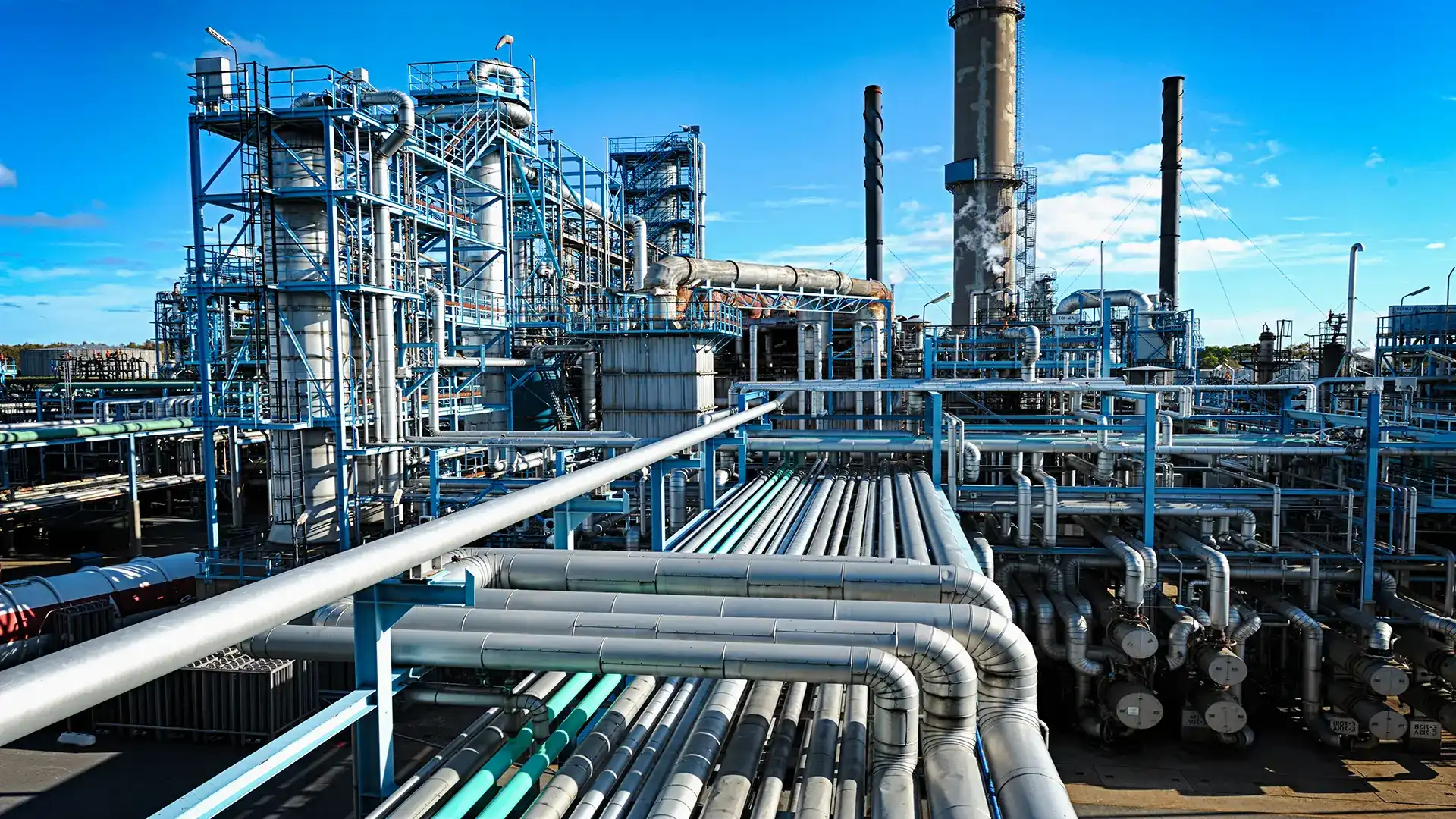
The FLE-VQ-F is suited to process lines that need repeatable throttling, remote electric actuation and controlled adjustment as flow demand changes.
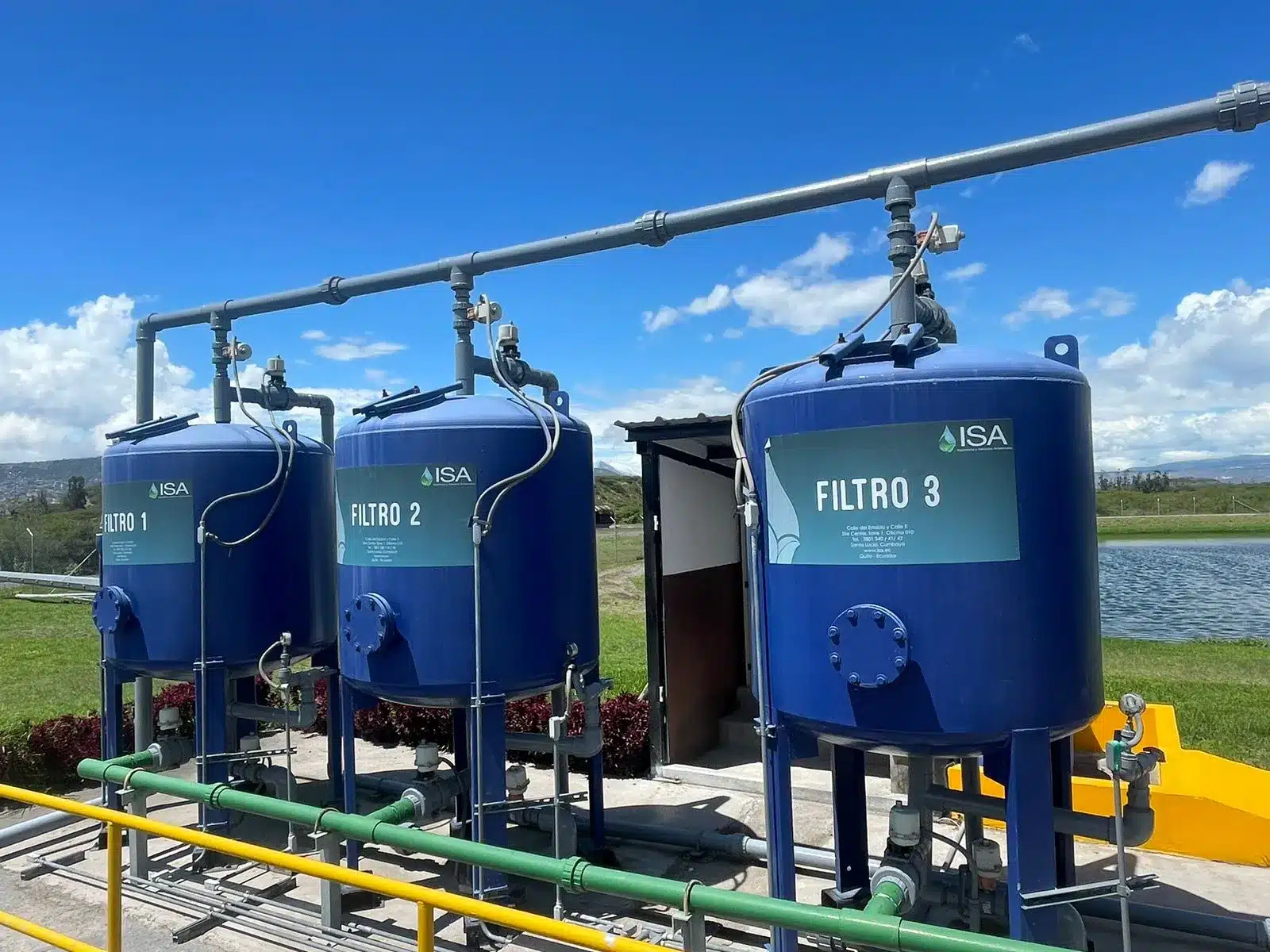
Water & Wastewater
Filter flow, chemical dosing, neutralization and process-water regulation.
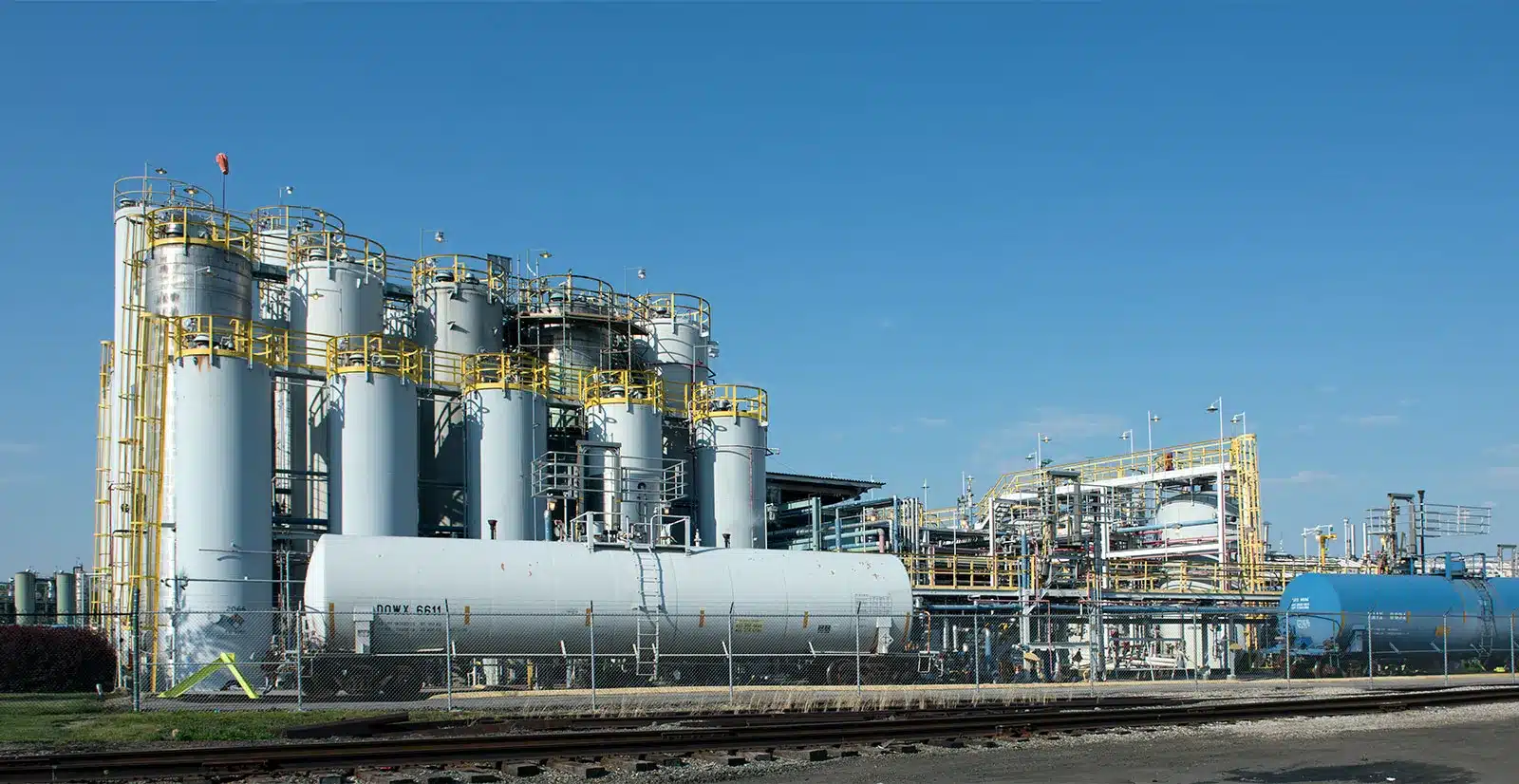
Chemical Processing
Controlled transfer, blending and feed-flow adjustment for compatible media.
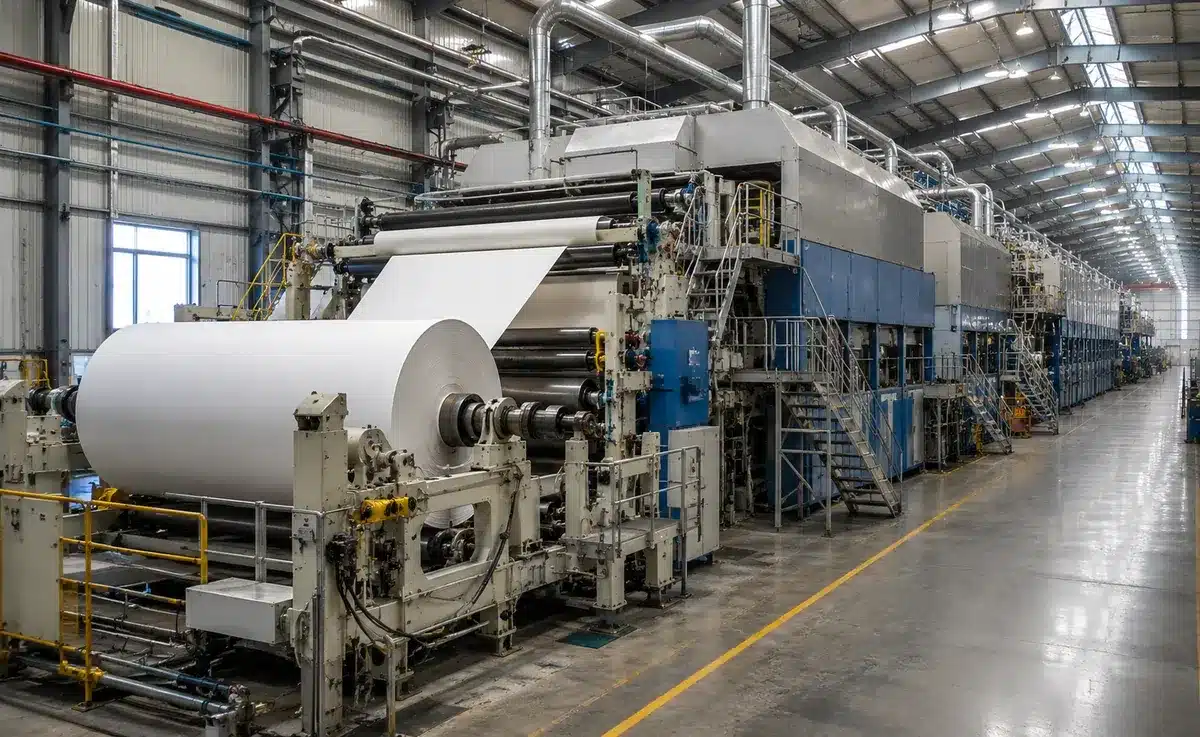
Pulp & Paper
Selected pulp, stock and slurry lines requiring modulation and shearing flow geometry.

Energy & Utilities
Steam, heating and plant utility flow or temperature-loop regulation.
Size the V-Port Valve Around the Actual Operating Point
Nominal pipe diameter alone is not enough to select a control valve. The minimum, normal and maximum flow rates, together with pressure drop, determine the required Cv and suitable V-port geometry.
Identify liquid, gas, steam, pulp or slurry, including concentration and suspended solids.
Provide minimum, normal and maximum flow rates for the process duty.
Share upstream and downstream pressure at the main operating points.
Match body and seat materials to temperature, medium and wear conditions.
Select 15°, 30°, 60° or 90° according to Cv and usable control range.
Specify torque, voltage, signal, feedback, fail position and operating frequency.
Standard Ball vs V-Port Ball: See the Difference
The key difference is the shape of the flow opening. A standard ball uses a circular bore for straightforward shutoff, while the V-port ball has a shaped notch that changes the available flow area progressively as the ball turns.
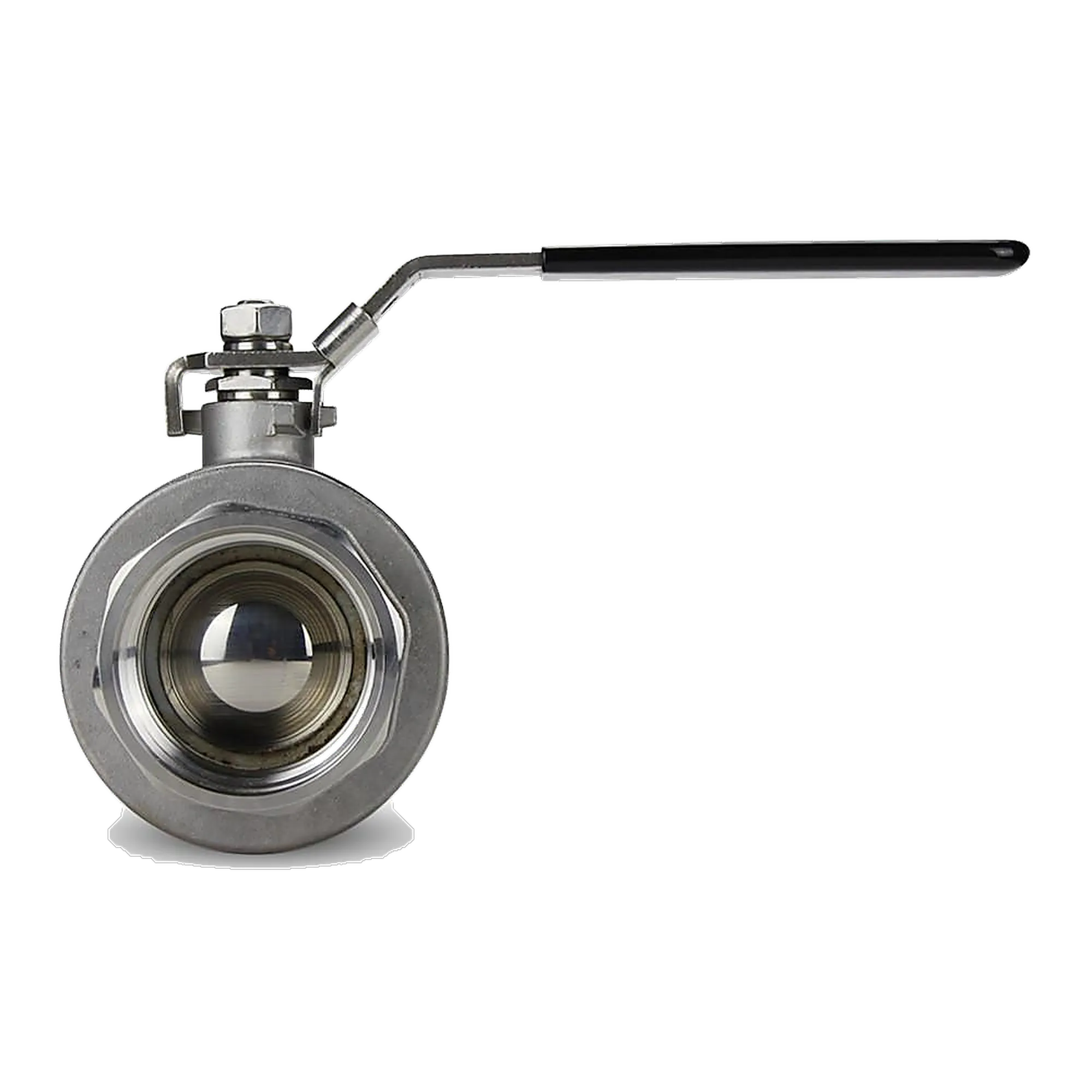
Standard Ball
Round-port designA conventional spherical ball with a circular through-bore. As the ball rotates, the opening is exposed or closed to provide pipeline isolation.
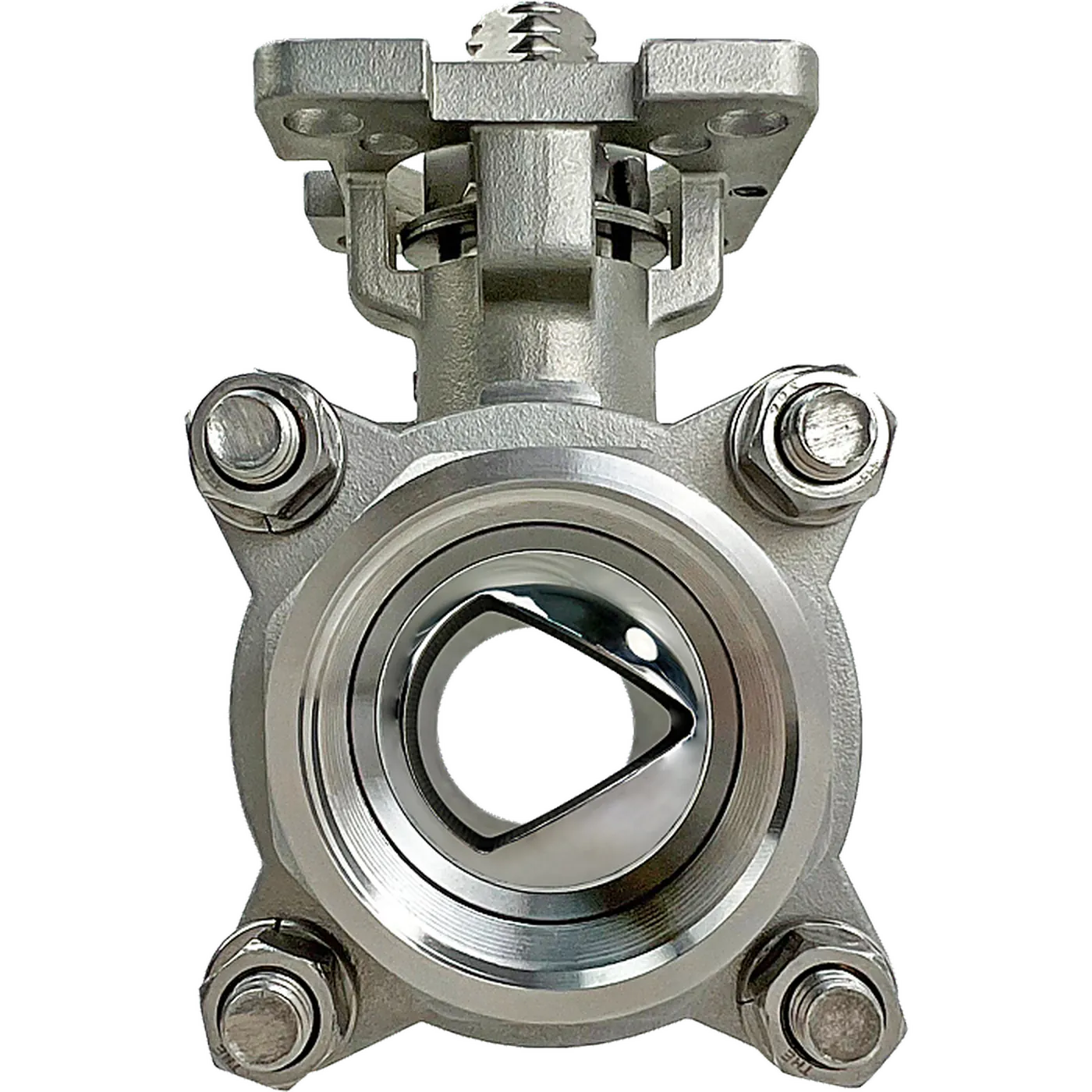
V-Port Segmented Ball
Characterized V-notchA segmented ball with a precision V-shaped notch. The notch progressively changes the effective flow area through the rotation, supporting modulating flow control.
Electric V-Port Ball Valve FAQs
What is an electric V-port ball valve?
An electric V-port ball valve combines a V-notch or segmented ball with a quarter-turn electric actuator. The V-shaped opening creates a characterized flow area as the ball rotates, making it suitable for proportional flow regulation as well as selected automated switching duties.
What is the difference between a V-port ball valve and a standard ball valve?
A standard round-port ball valve is generally used for isolation. A V-port ball valve is designed for modulating service, where its shaped opening provides a more progressive change in flow area through the operating travel.
Which V-port angle should I choose?
The FLE-VQ-F offers 15°, 30°, 60° and 90° V-port options. Smaller angles are generally used for finer low-flow regulation, while larger angles provide greater flow capacity. The final choice should be based on Cv, pressure drop and minimum, normal and maximum flow.
Can an electric V-port ball valve use 4–20 mA control?
Selected regulating actuator configurations support 4–20 mA input and position feedback. Specify the required control signal, feedback, power supply and PLC or DCS interface when requesting a quotation.
Can a V-port segmented ball valve handle slurry or pulp?
The segmented V-ball geometry produces a shearing action at the seat and can suit selected slurry, pulp and suspended-solid services. Suitability depends on particle characteristics, solids concentration, velocity, seat material, pressure drop and wear conditions.
What information is needed to size an electric V-port control valve?
Provide the process medium, minimum / normal / maximum flow, inlet and outlet pressure, temperature, pipe size, body and seat material requirements, control signal, supply voltage and operating frequency.
What actuator options are available for the FLE-VQ-F?
Actuator options include on/off, selected modulating and intelligent configurations, with voltage choices including DC24V, AC24V, AC110V, AC220V and AC380V. IP68 and selected explosion-proof configurations are available as options.
Need an Electric V-Port Ball Valve for Your Process?
Send your flow range, pressure drop, medium and control signal for FLE-VQ-F selection.