


3-Way Tri-Clamp Sanitary Electric Ball Valve
The FLE-Q-3S 3-way sanitary electric ball valve is designed for hygienic process lines that need automated flow diversion, selection or routing with quick-release Tri-Clamp connections. Its stainless-steel construction and cleanable seat arrangement support compatible food, beverage, dairy and sanitary process duties.

Automated Flow Routing with Sanitary Tri-Clamp Connections
For process equipment that needs to direct product or utility flow between connected lines, a 3-way sanitary ball valve combines a compact quarter-turn valve arrangement with quick-release hygienic connections. Confirm the required flow path and port configuration before ordering.
Quick Tri-Clamp Assembly
Tri-Clamp / Tri-Clover ends allow quick installation and disassembly for inspection, cleaning and maintenance in compatible sanitary piping systems.
Three-Port Switching
Use the three-port arrangement for diverting, selecting or routing flow. The actual flow pattern depends on the selected ball port and port-position configuration.
Stainless Steel Body
SS304 and SS316L body options support different process media and corrosion requirements. Select wetted materials against the actual product and cleaning chemistry.
CIP / SIP-Compatible Design
Cavity-filled PTFE seat design supports cleanability in compatible applications. Verify cleaning temperature, chemical concentration and the complete wetted-material specification.
Electric Quarter-Turn Actuation
Electric actuation enables remote switching from a control panel or PLC, with ON/OFF, regulating or intelligent control options subject to the selected actuator circuit.
Quick Access for Service
Clamp connections simplify valve removal from the line for inspection or replacement, reducing intervention time where the piping layout allows access.
Built Around Cleanability, Material Compatibility and Fast Service
Sanitary valve selection is not based on the connection alone. The valve body, ball, seats, stem seals, gaskets and surface condition must all be suitable for the product and the cleaning process.
- SS304 or SS316L body options according to corrosion and process requirements
- Cavity-filled PTFE seat arrangement for compatible hygienic service
- Tri-Clamp / Tri-Clover connection for quick line assembly and disassembly
- Electric actuator voltage and control circuit selected to match the plant automation system
- Confirm internal surface finish, drainability and elastomer compatibility for each hygienic duty
FLE-Q-3S Technical Specifications
| Parameter | Specification |
|---|---|
| Model | FLE-Q-3S |
| Valve type | 3-way sanitary electric ball valve |
| Nominal size | ½″–4″ (DN15–DN100) |
| Working pressure | 0–10 bar (145 psi), subject to size and configuration |
| Working temperature | −10°C to +120°C, subject to seat and seal selection |
| Body material | Stainless steel SS304 / SS316L |
| Подключение | Tri-Clamp / Tri-Clover |
| Seat arrangement | Cavity-filled PTFE seats |
| Applicable media | Water, beverage, dairy, wine, edible oil and compatible CIP/SIP fluids |
| Actuator type | Electric quarter-turn actuator |
| Voltage options | DC24V, AC110V, AC220V; other options subject to confirmation |
| Control options | ON/OFF, regulating, intelligent |
| Mounting interface | ISO 5211 |
| Design references | ASME BPE / 3A sanitary design references, according to supplied configuration |
| Testing references | EN 12266-1 / API 598, according to applicable product configuration |
| Защита | IP67 standard; IP68 optional |
| Optional actuator features | Fail-open / fail-closed reset, over-torque protection, heater, passive contacts and manual override, subject to configuration |
Sanitary Tri-Clamp Main Outline and Connection Size Table
Add this section when you want the product page to rank for dimensional and specification-related searches. The values below are for reference and should be confirmed against the final approved drawing for the selected size and configuration.

Recommended: transparent PNG or high-resolution WebP.
Tri-Clamp Connection Dimensions
Overall dimensions for the sanitary connection sizes are listed below. The drawing and table are intended to help engineers check installation space and select the matching tube connection.
Main Outline and Connecting Dimensions
Unit: mm| Size | 3/4″ | 1″ | 1-1/4″ | 1-1/2″ | 2″ | 2-1/2″ | 3″ | 3-1/2″ | 4″ |
|---|---|---|---|---|---|---|---|---|---|
| Ø19 | Ø25 | Ø32 | Ø38 | Ø51 | Ø63 | Ø76 | Ø89 | Ø102 | |
| d | 16.5 | 22 | 28.5 | 35 | 47.5 | 58.2 | 72 | 84.8 | 98.3 |
| D | 50.5 | 50.5 | 50.5 | 50.5 | 64 | 77.5 | 91 | 106 | 119 |
| L | 105 | 126 | 137 | 155 | 184 | 184 | 220 | 240 | 266 |
| L1 | 60 | 61.5 | 69 | 77 | 90 | 92 | 122 | 135 | 150 |
| H | 45 | 48 | 52.5 | 65 | 74 | 84 | 102 | 112 | 122 |
All dimensions are in millimetres. Confirm final face-to-face and installation dimensions against the approved drawing for the ordered valve configuration.
Confirm the 3-Way Flow Pattern Before Selecting the Valve
A 3-way ball valve can be configured for different routing functions. Do not select by the “3-way” description alone: provide the required connection diagram and switching positions so the correct ball-port arrangement can be confirmed.
Flow diversion / selection
Direct a common inlet toward one of two outlets, or select between two supply paths where the internal port arrangement permits.
- Confirm common port and outlet ports
- Confirm each actuator position and flow path
- Check whether one port must remain isolated
Mixing / combining
Combine two inlet streams toward a common outlet only when the selected internal port geometry and process requirements support that function.
- Provide a P&ID or simple port sketch
- Confirm simultaneous or alternate flow requirements
- Review pressure balance and media compatibility
L-port and T-port are common 3-way ball configurations, but availability and flow paths must be confirmed for this specific sanitary model before specifying either option.
Sanitary Process Applications
FLE-Q-3S is intended for compatible hygienic and process utility lines where quick-clamp connections and automated three-port routing are required.
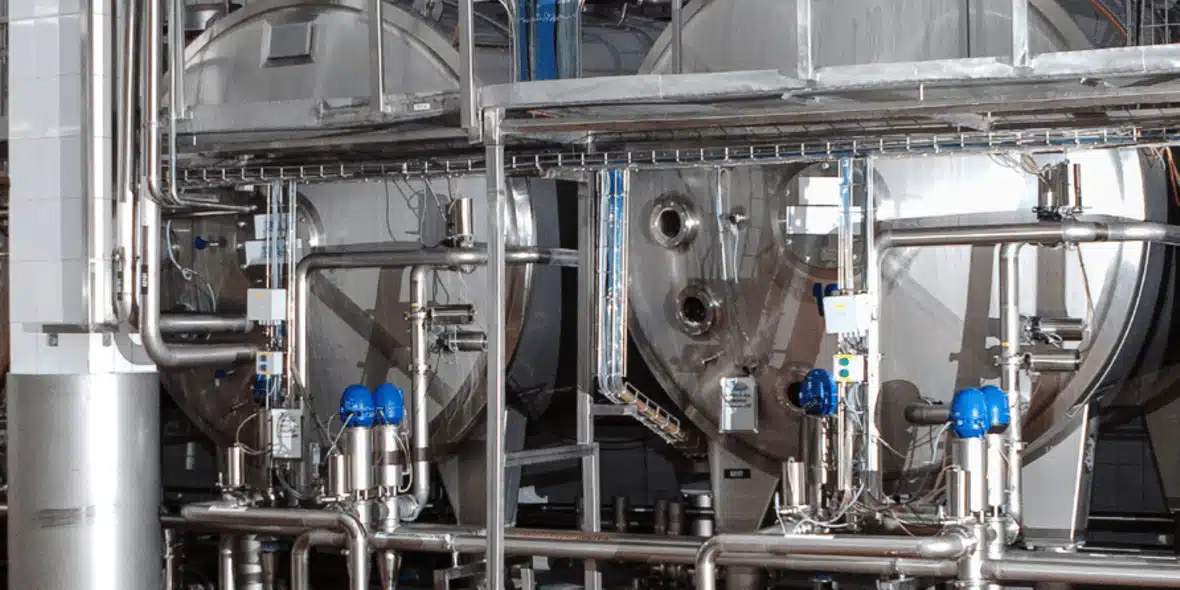
Dairy Processing
Product transfer, tank selection and process-line routing.

Food & Beverage
Hygienic liquid handling and automated line switching.
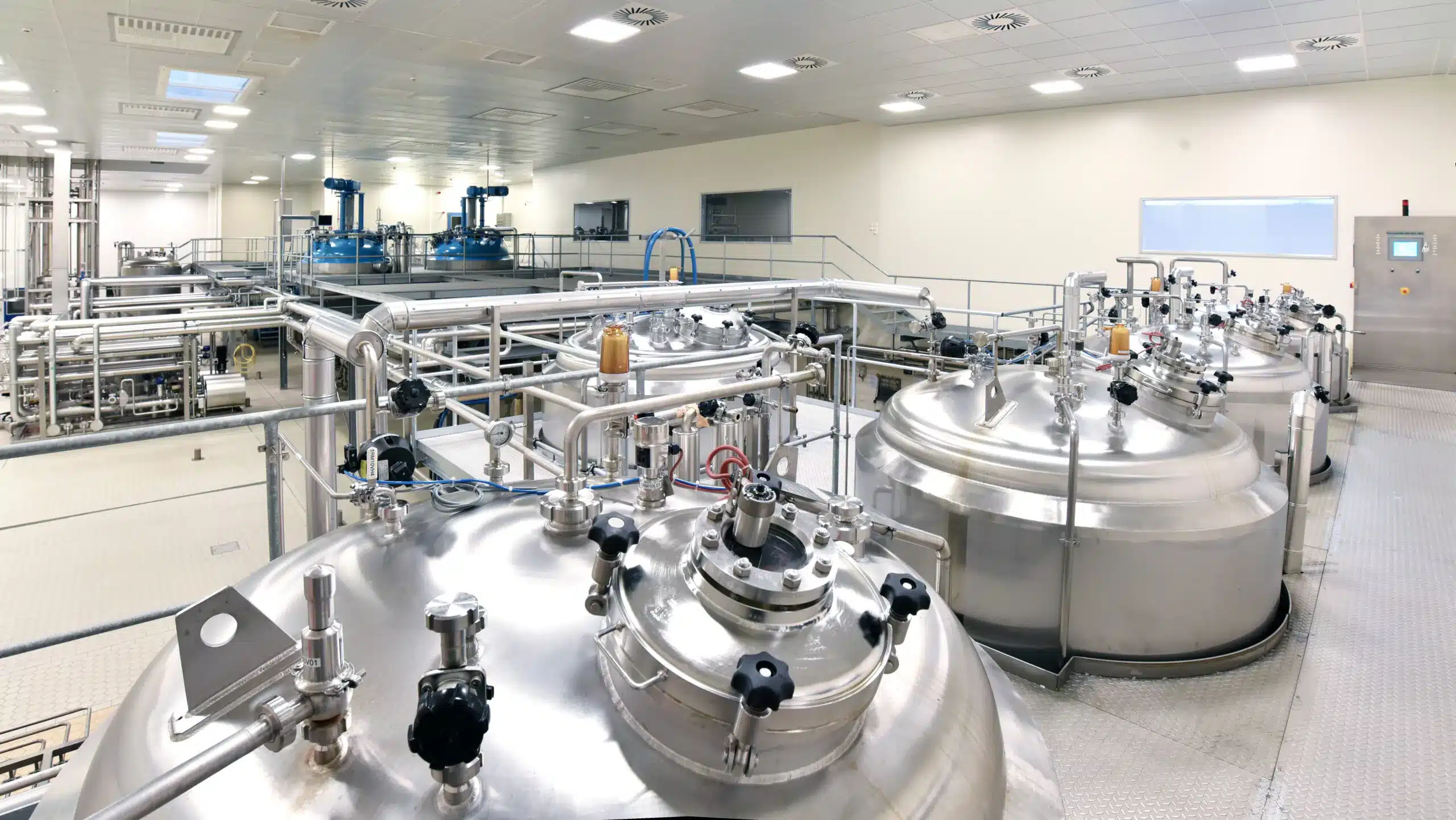
Pharmaceutical & Biotech
Sanitary utility and compatible process-fluid routing.

CIP / SIP Utility Lines
Cleaning-fluid distribution in compatible sanitary systems.
What to Confirm Before Ordering
Providing complete process information helps us check the valve configuration, wetted materials and electric actuator before quotation.
Product type, concentration, viscosity and cleaning chemicals.
Tri-Clamp size, tube outside diameter and applicable clamp standard.
Port diagram, inlet/outlet assignment and required switching positions.
Voltage, ON/OFF or modulating control, feedback and fail position.
3-Way Tri-Clamp Sanitary Electric Ball Valve FAQs
What is a 3-way Tri-Clamp sanitary electric ball valve used for?
It is used to switch, divert or select flow between connected sanitary process lines. Typical applications include food and beverage, dairy, compatible pharmaceutical process utilities and CIP lines. The actual function depends on the internal port arrangement.
What is the difference between a 2-way and 3-way sanitary ball valve?
A 2-way valve has two main ports and is generally used for shutoff or flow isolation. A 3-way valve has three ports and can route flow between different paths, subject to its ball-port configuration.
Does the FLE-Q-3S support L-port and T-port configurations?
L-port and T-port are common 3-way ball designs. Availability for the FLE-Q-3S must be confirmed against the required flow diagram and current product configuration. Send your port connection sketch when requesting a quotation.
What materials are available for the sanitary valve body and seats?
The published configuration lists SS304 / SS316L body options and cavity-filled PTFE seats. Gaskets, stem seals and other wetted components should be confirmed against the process medium and cleaning chemicals.
Can the valve be used in CIP or SIP systems?
The design is intended for compatible CIP/SIP service, but suitability depends on cleaning temperature, chemical concentration, exposure time, seat and gasket materials, and the complete hygienic design. Confirm the actual cleaning cycle before selection.
What electric actuator voltages and controls are available?
The product information lists DC24V, AC110V and AC220V options, with ON/OFF, regulating and intelligent control options. Confirm the required input signal, feedback, cycle time and fail position for the selected actuator.
What information is needed for a quotation?
Provide valve size, Tri-Clamp standard and tube outside diameter, medium, operating pressure and temperature, required flow path, actuator voltage, control mode and quantity. A P&ID or simple port sketch is especially helpful for a 3-way valve.
Need a 3-Way Sanitary Valve for Your Process Line?
Send your connection size, flow diagram and operating conditions for a configuration review.