


PTFE Lined Valve: Complete Guide to Design, Applications, and Selection
Why PTFE Lined Valves Matter in Corrosive Systems
In many industrial processes, standard metal valves fail when exposed to aggressive chemicals. Acids, alkalis, and solvents can quickly degrade internal surfaces, leading to leakage, contamination, and downtime.
PTFE lined valves are designed to solve this problem by combining the strength of metal bodies with the chemical resistance of fluoropolymer linings. They are widely used where corrosion resistance is critical but full alloy construction would be too costly.
What Is a PTFE Lined Valve
A PTFE lined valve is a valve whose internal wetted surfaces are coated or lined with Polytetrafluoroethylene (PTFE).
Instead of relying solely on metal resistance, the valve uses a non-reactive lining layer to isolate the process media from the valve body.
Key Characteristics:
- Excellent chemical resistance
- Low friction coefficient
- Non-stick surface
- Wide compatibility with corrosive media
This design significantly extends valve service life in harsh environments.
How PTFE Lining Works in Practice
Rather than changing the entire valve material, PTFE lining acts as a protective barrier.
Inside the valve:
- The metal body provides structural strength
- The PTFE layer prevents chemical attack
- Sealing components ensure tight shut-off
This approach allows industries to achieve high corrosion resistance at a more economical cost compared to exotic alloys.
Types of PTFE Lined Valves
PTFE lining can be applied to several valve types depending on system requirements.
Lined Ball Valves
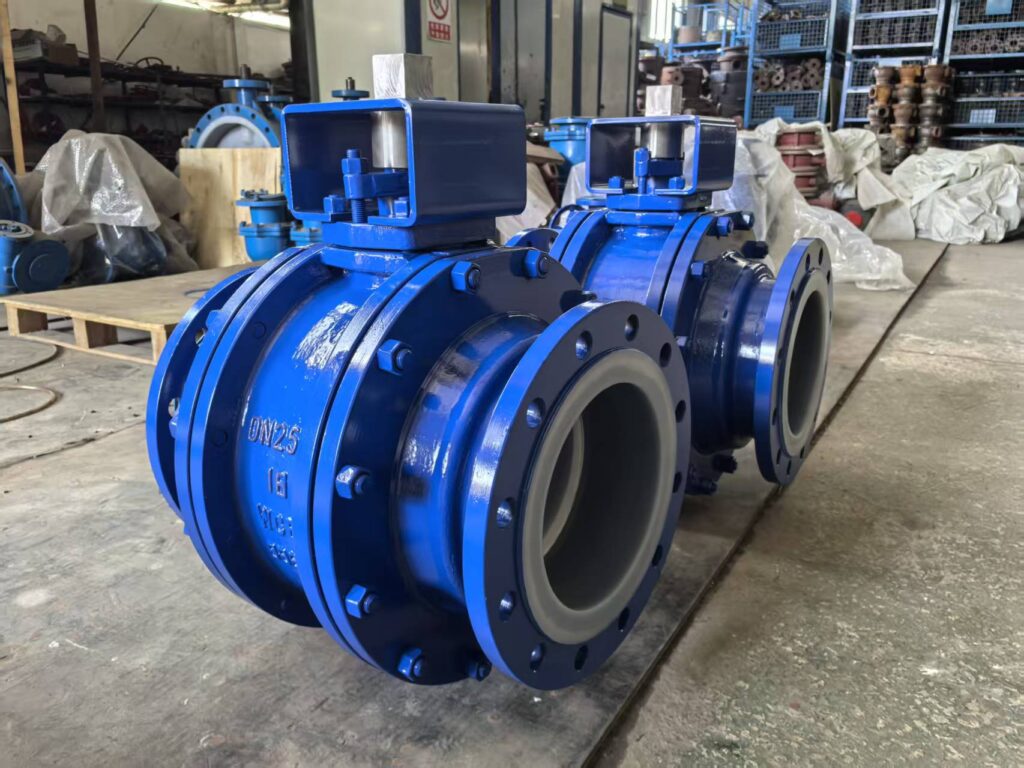
- Suitable for shut-off applications
- Provide tight sealing
- Common in chemical pipelines
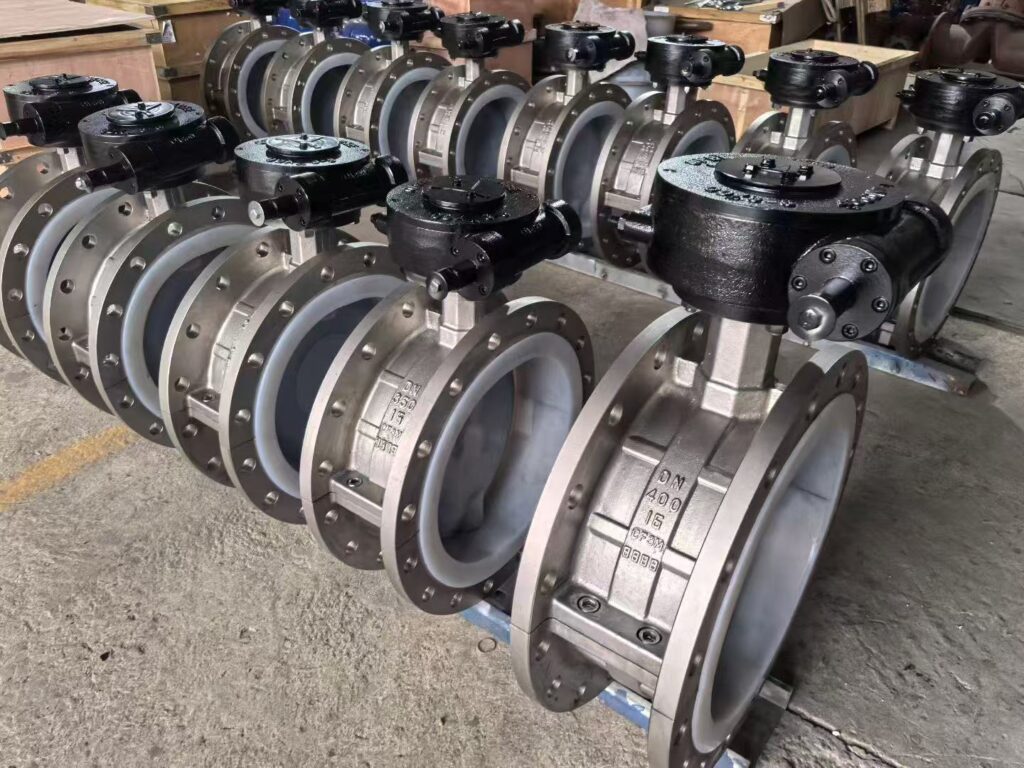
Lined Butterfly Valves
- Lightweight and cost-effective
- Ideal for large-diameter systems
- Often used in water treatment and chemical plants
Lined Plug Valves
- Good for handling viscous or abrasive media
- Simple structure with reliable sealing
Lined Diaphragm Valves
- Excellent for ultra-pure or highly corrosive fluids
- Minimal dead zones
Where PTFE Lined Valves Are Used
PTFE lined valves are typically found in industries where corrosion is a major concern.
Chemical Processing
Handling strong acids, solvents, and reactive chemicals.
Water Treatment
Managing chlorinated water and chemical dosing systems.
Pharmaceutical Industry
Ensuring contamination-free fluid handling.
Oil & Gas (Specific Segments)
Used in refining and chemical injection systems.
Performance Advantages
PTFE lined valves offer several benefits compared to standard metal valves.
1. Superior Corrosion Resistance
PTFE is resistant to most chemicals, including strong acids and alkalis.
2. Reduced Maintenance
The non-reactive surface reduces scaling and buildup.
3. Longer Service Life
Less material degradation leads to extended operational lifespan.
4. Cost Efficiency
More economical than high-grade alloy valves in many applications.
Limitations You Should Know
Despite their advantages, PTFE lined valves are not suitable for every condition.
Temperature Limits
PTFE typically operates up to around 200°C (depending on design).
Pressure Constraints
Not ideal for extremely high-pressure systems.
Mechanical Sensitivity
Lining may be damaged by sharp particles or mechanical stress.
PTFE vs PFA vs FEP: What’s the Difference
While PTFE is the most common lining material, other fluoropolymers are also used.
- PTFE → Best overall chemical resistance
- PFA → Better flexibility and smoother finish
- FEP → Lower cost but slightly reduced performance
Selecting the right lining depends on temperature, chemical exposure, and process conditions.
How to Select the Right PTFE Lined Valve
Choosing the right valve requires more than just material selection.
Step 1: Identify the Media
Understand chemical composition, concentration, and reactivity.
Step 2: Check Temperature and Pressure
Ensure operating conditions fall within PTFE limits.
Step 3: Choose the Valve Type
- Shut-off → Ball valve
- Flow control → Butterfly or diaphragm valve
Step 4: Evaluate Lining Quality
Look for:
- Uniform thickness
- Strong adhesion to body
- High-quality manufacturing process
Step 5: Verify Certifications
Ensure compliance with relevant standards and testing requirements.
Common Mistakes in Selection
- Assuming PTFE works for all conditions
- Ignoring temperature limits
- Selecting incorrect valve type
- Overlooking mechanical damage risks
Avoiding these mistakes can significantly improve system reliability.
How PTFE Lined Valves Support System Efficiency
By preventing corrosion and reducing maintenance, PTFE lined valves help:
- Maintain consistent flow performance
- Reduce downtime
- Lower total operating costs
They are particularly valuable in systems where media compatibility is a critical factor.
Where Fleyenda Valve Adds Value
Fleyenda Valve provides PTFE lined valve solutions designed for corrosive environments, including:
- Lined ball valves and butterfly valves
- Reliable sealing performance
- Customization for chemical applications
- Integration with pneumatic actuators
These solutions are engineered to deliver stable performance in demanding industrial conditions.
Final Takeaway
PTFE lined valves offer a practical and cost-effective solution for handling corrosive media.
By combining metal strength with chemical resistance, they provide:
- Improved durability
- Enhanced safety
- Long-term operational efficiency
Selecting the right PTFE lined valve requires careful evaluation of operating conditions, but when properly applied, it becomes a key component in maintaining reliable industrial systems.