


FAT-D-CFW Pneumatic Cast Iron Wafer PTFE Butterfly Valve
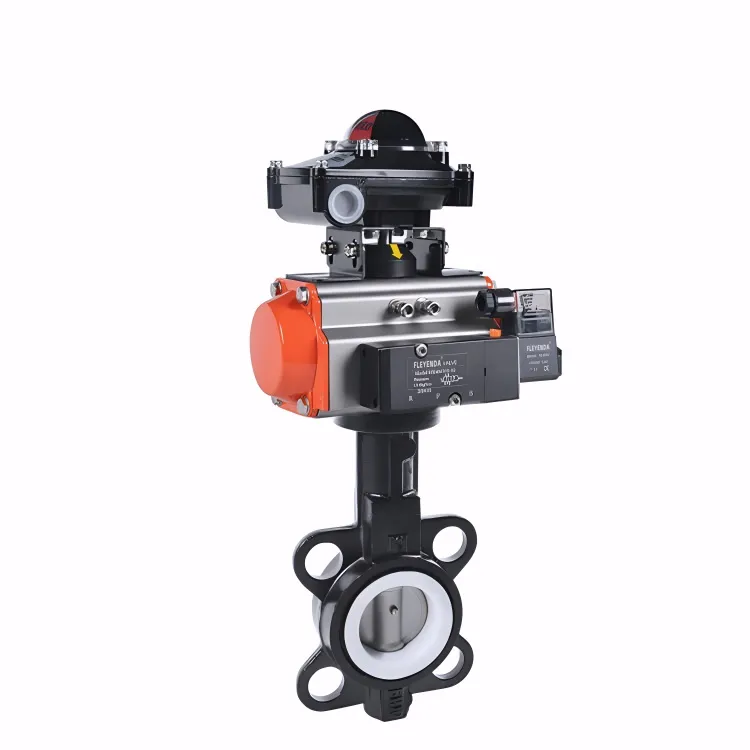
FAT-D-CFW Pneumatic Cast Iron Wafer PTFE Butterfly Valve
The Pneumatic Cast Iron Wafer PTFE Butterfly Valve features a PTFE-lined seal for corrosion resistance and tight shutoff, ensuring reliable operation in chemical and wastewater systems, while its pneumatic actuator enables precise flow control and reduced maintenance—tested to API 598 and EN 12266-1 for zero-leak performance under 16 bar.
| Size Range | DN50–DN300 (2″–12″) |
| Working Pressure Range: | PN10 / PN16 (10–16 bar) |
| Working Temperature Range: | −20°C ~ +180°C |
| Body Material: | Cast Iron |
| Connection Type: | Wafer Type |
| Applicable Medium: | Corrosive chemicals, acids, alkalis, seawater, pure water, solvents, air |
| Actuator Type: | Double-acting or Spring-return Pneumatic Actuator |
| Voltage Options | 24V DC / 110V AC / 220V AC |
| Design Standard | ISO 5211 / EN 558 / API 609 |
| Testing Standard | API 598 / EN 12266-1 |
| Fire-Safe Design | Not Fire-Safe |
| Certification | CE / RoHS / ISO 9001 / IP65 (Actuator) |
| Customization | Above Are Standard Parameter Samples. If You Have Specific Parameters And Materials, We Can Customize Them All. |
| Series | AT | AW | Linear | Pneumatic Cylinder | Sanitário |
|---|---|---|---|---|---|
| Valve Body | Ball valve, butterfly valve, plug valve | Gate valve, Global valve | Knife gate valve | Sanitary butterfly valve | |
| Function | Double Acting, Single Acting (Failure Resetting FO or FC) | ||||
| Acessórios de controle |
• Solenoid Valve, Filter Regulator Lubricator (F.R.L.), Positioner, Limit Switch, Handwheel • Solenoid Valve & Positioner are with Explosion-proof grade and Signal Feedback type for choice | ||||
| Operating Medium |
Clean and dry or lubricated air or inert gas. Any non-corrosive gas that is compatible with the internal parts of the actuator and the lubricant. The dew point temperature of the operating medium is -20°C, and the size of impurity particles is no more than 30u. When selecting a positioner, the impurity particle size should be no more than 5u. | ||||
| Air Source Pressure | 3bar to 8bar | ||||
| Operating Environment Temperature |
• Standard type: -20°C to +80°C • Low-temperature type: -40°C to +80°C • High-temperature type: -20°C to +160°C | ||||
| Lubrication |
Under normal operating conditions, the standard type does not require additional lubricant. For low-temperature or high-temperature environments, special lubricants are required. | ||||
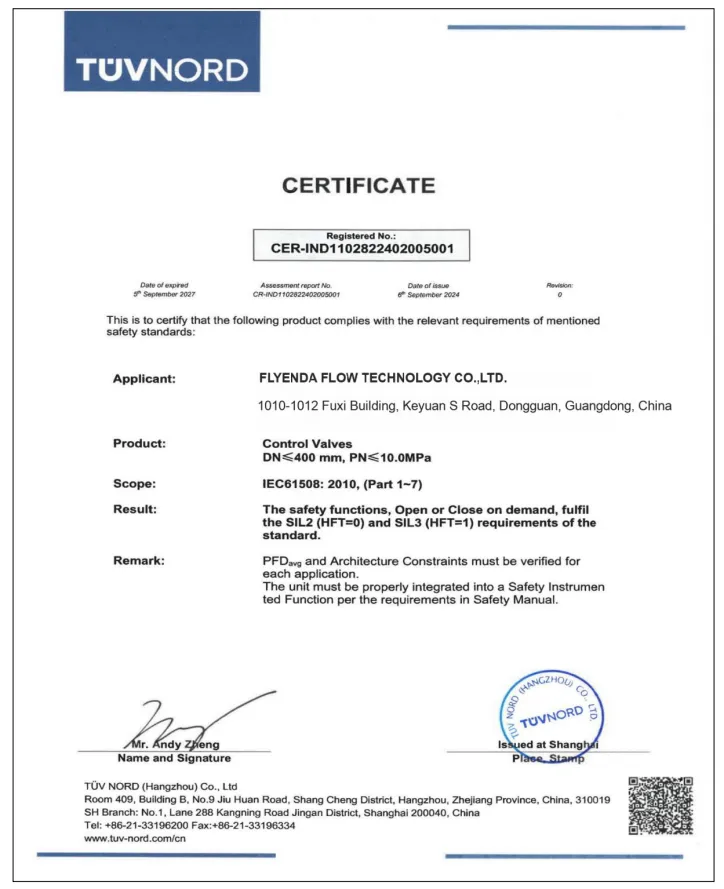
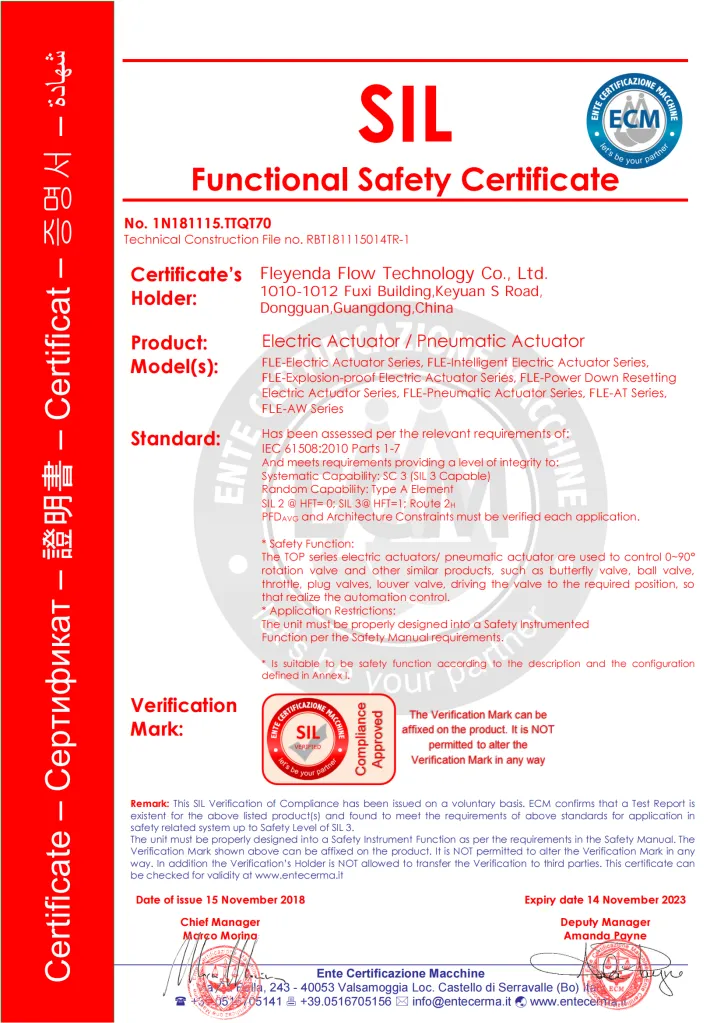
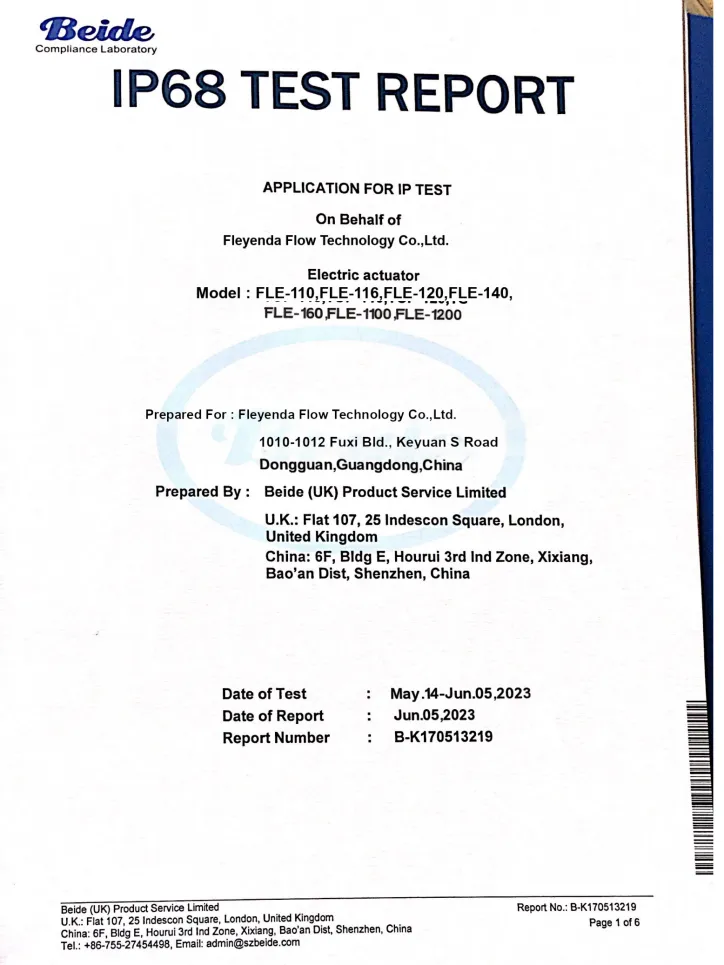
Certified Quality for Industrial Valve Applications
Fleyenda valves and electric actuators are built for stable performance, reliable operation, and long-term industrial use. With certified quality support, they are suitable for water treatment, chemical processing, automation, and industrial process control systems.
FAQs That 80% Users Interest
1. What size and pressure ratings should I select for a PTFE-lined wafer butterfly valve?
• Choose sizes from DN50–DN300 (2″–12″) to fit standard pipeline systems.
• Ensure the pressure rating PN10 / PN16 matches your system pressure.
• Verify actuator torque to prevent leakage or incomplete closure.
• Check manufacturer data for accurate pressure and flow compatibility.
2. Can the pneumatic cast iron wafer butterfly valve handle aggressive chemicals?
• The PTFE lining resists strong acids, alkalis, and solvents.
• Low-friction liner surface prevents buildup and ensures smooth flow.
• Wafer design allows easy sealing and installation in corrosive pipelines.
• Ideal for chemical, wastewater, and process industries.
3. How to select the right actuator for an air-operated wafer butterfly valve?
• Use ISO 5211 mounting to ensure direct actuator installation.
• Choose spring-return or double-acting type based on control needs.
• Confirm actuator torque exceeds valve operating torque.
• Match voltage options 24 V DC, 110 V AC, 220 V AC for automation systems.
4. What maintenance ensures long service life of a PTFE-lined butterfly valve?
• Inspect the PTFE liner regularly for cracks or deformation.
• Maintain correct flange alignment and torque during installation.
• Monitor torque variation to detect early seat or disc wear.
• Keep actuator parts clean and air supply stable.