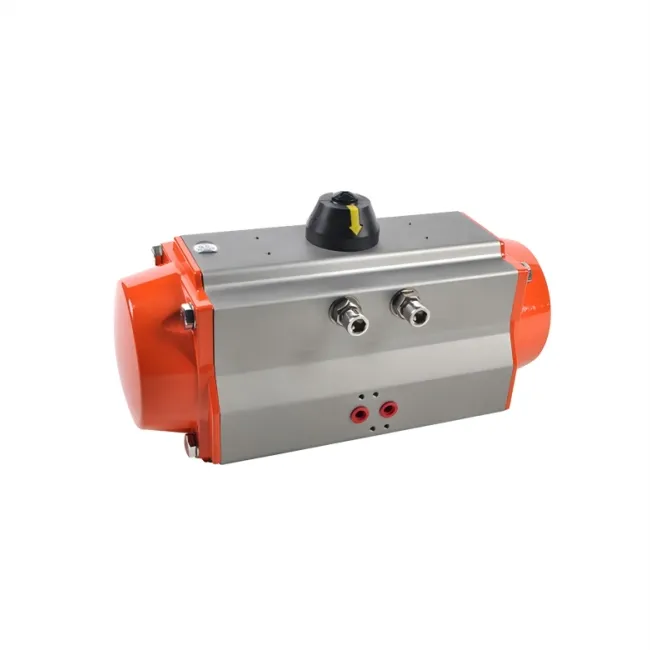
Atuador pneumático da série AT da Fleyenda
The Atuador pneumático da série AT da Fleyenda delivers precise and fast valve automation with a dual-piston rack-and-pinion design. It supports double-acting and single-acting (spring return) modes, offers adjustable rotation angles, and complies with ISO5211, DIN3337, and NAMUR standards. Ideal for driving ball valves and butterfly valves in industrial, HVAC, and water treatment applications.
| Faixa de torque de saída | 10 Nm – 4000 Nm |
| Ângulo de rotação | 90° ± 5° adjustable |
| Faixa de temperatura ambiente | −20 °C to +80 °C |
| Material da carroceria | Hard-anodized aluminum alloy |
| Padrão de conexão | ISO 5211 / NAMUR VDI/VDE 3845 |
| Tipo de atuador: | Rack and pinion, double-acting or spring-return |
| Opções de tensão | 24 V DC (for solenoid valve control) |
| Tipo de sinal de controle | 3/2-way or 5/2-way pneumatic; 4–20 mA or 0–10 V with positioner |
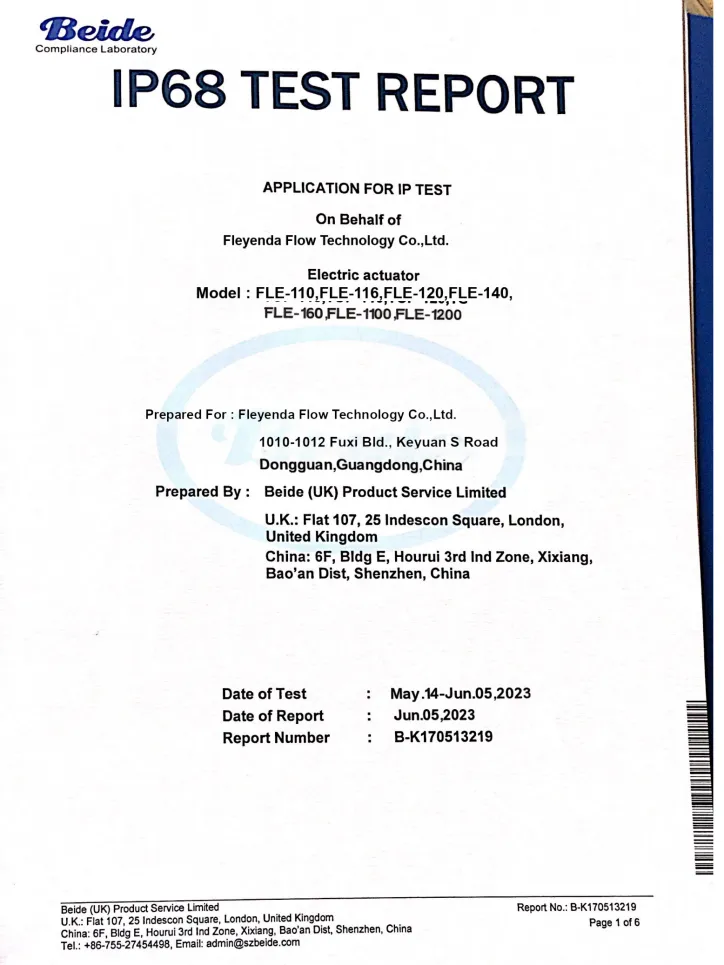
| Nível de proteção | IP65 / IP67 (optional IP68) |
| Padrão de projeto | ISO 5211 / EN 15714-3 |
| Norma de ensaio | ISO 9001 / EN 12266 / API 598 |
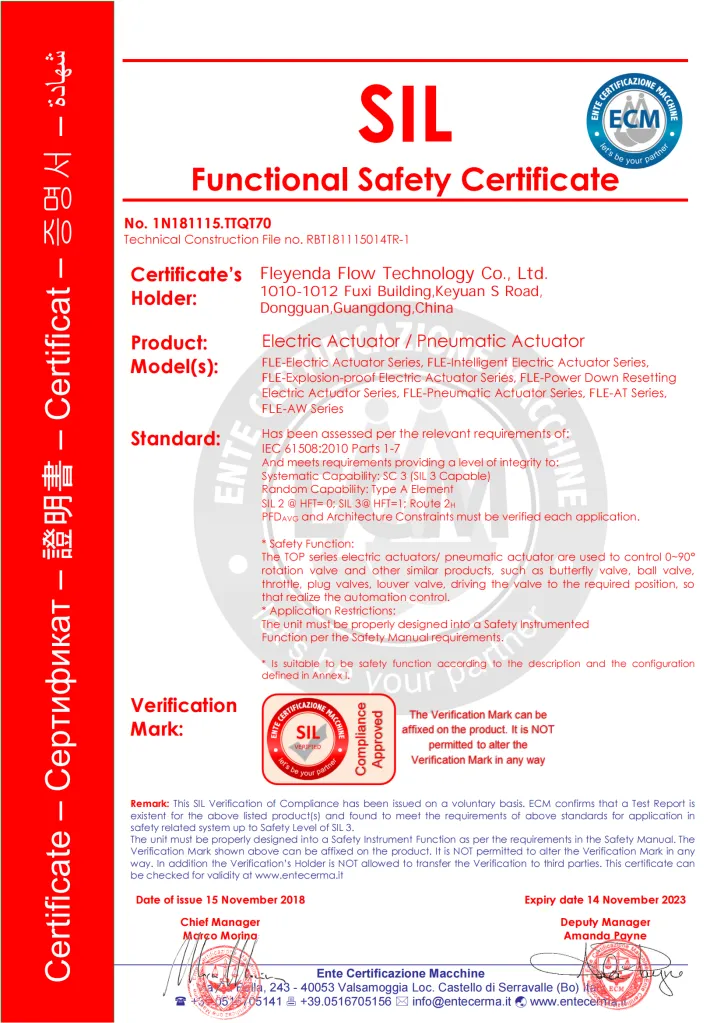
| Certificação | CE / RoHS / ISO 9001 / IP65 (atuador) |
| Personalização | Acima estão exemplos de parâmetros padrão. Se você tiver parâmetros e materiais específicos, podemos personalizar todos eles. |
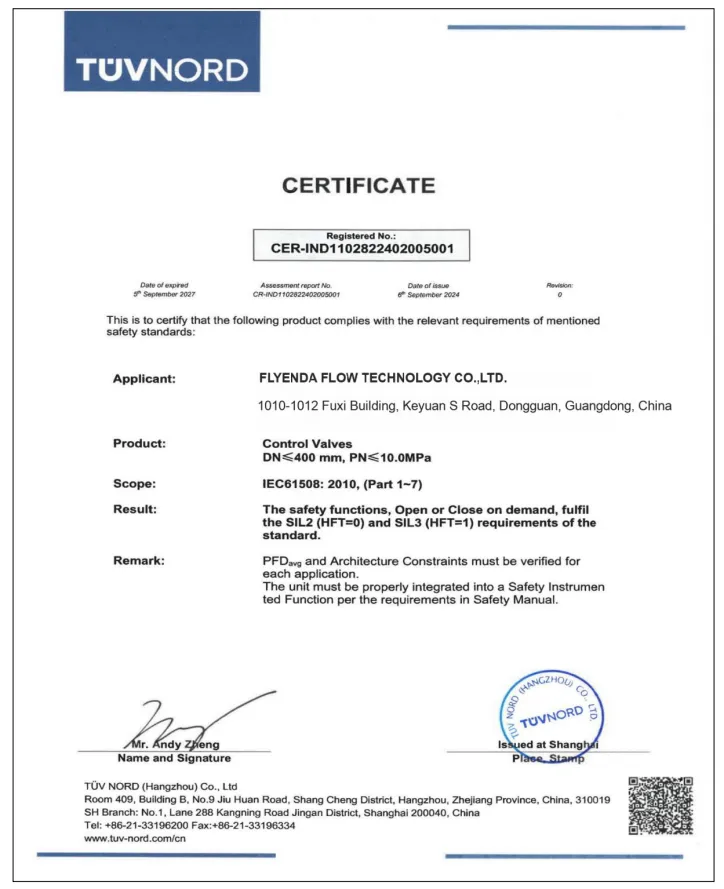
Qualidade certificada para aplicações em válvulas industriais
As válvulas e os atuadores elétricos da Fleyenda são projetados para oferecer desempenho estável, operação confiável e uso industrial de longo prazo. Com suporte de qualidade certificada, são adequados para tratamento de água, processamento químico, automação e sistemas de controle de processos industriais.
Perguntas frequentes que interessam aos usuários do 80%
1. What factors determine how fast a Pneumatic Actuator can operate?
• Cycle speed depends on air pressure, bore size, and flow rate within the system.
• Rotary types are affected by travel angle and spring tension in spring-return models.
• Smooth airflow through valves and flow controllers improves actuation response.
• Proper sizing and precise alignment reduce friction and ensure consistent performance.
2. How do I choose the right size and mounting for my Pneumatic Actuator?
• Determine valve torque and rotation angle before selecting actuator size.
• Match the mounting interface to ISO 5211 or NAMUR VDI/VDE 3845 standards.
• Choose quarter-turn, multi-turn, or linear actuation based on valve type.
• Select between double-acting and spring-return types depending on safety needs.
3. What maintenance extends the lifespan of a Pneumatic Valve Actuator?
• Keep compressed air clean, dry, and oil-free to protect seals and bearings.
• Inspect seals, bolts, and end-caps regularly to prevent air leakage or corrosion.
• Monitor actuator stroke and travel stops for wear or misalignment.
• Use proper lubrication and ensure filters are maintained for smooth cycling.
4. Can a Pneumatic Actuator work in harsh or hazardous environments?
• Industrial-grade models operate under extreme temperatures, moisture, and dust.
• Check IP65/IP67 protection for outdoor or corrosive applications.
• Use ATEX or SIL-certified versions for explosive or safety-critical zones.
• Select corrosion-resistant coatings and materials for chemical or marine use.