


FLE-Q-3PS Electric Actuated 3 Pieces Ball Valve
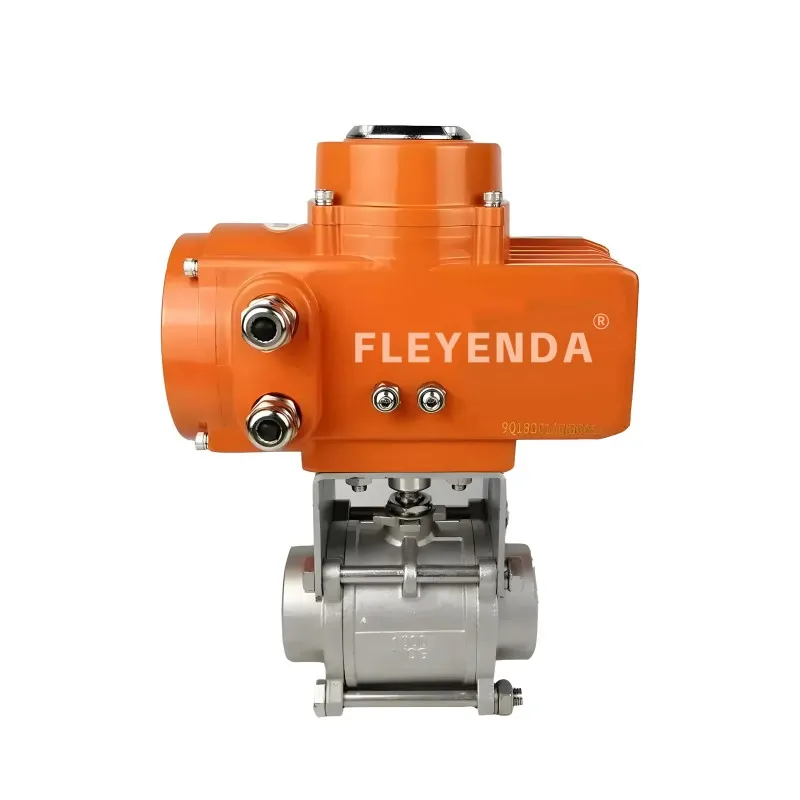
FLE-Q-3PS Electric Actuated 3 Pieces Ball Valve
Fleyenda FLE-Q-3PS Electric Actuated 3 Pieces Ball Valve features an integrated design, compact size, and lightweight structure. Operated by 4-20mA, 0-10V, or 1-5V signals, as well as single-phase power supply, it ensures reliable performance, easy actuator matching, and large flow capacity. Ideal for cost-effective industrial automation and precise fluid control.
| Size Range (Nominal Diameter) | 1/4″ – 4″ (DN8–DN100) |
| Working Pressure Range: | Up to 1000 psi (≈69 bar) |
| Working Temperature Range: | ‘-40°C to +177°C |
| Body Material: | tainless Steel CF8M / 316SS |
| Connection Type: | Threaded (NPT/BSP), Socket Weld, or Flanged |
| Applicable Medium: | Water, Air, Oil, and General Chemicals |
| Actuator Type: | Electric Actuator |
| Voltage Options | 24V DC, 110V AC, 220V AC, 24–240V AC/DC |
| Design Standard | ISO 5211, ASME/ANSI, DIN |
| Testing Standard | API 598 |
| Fire-Safe Design | API 607 / ISO 10497 |
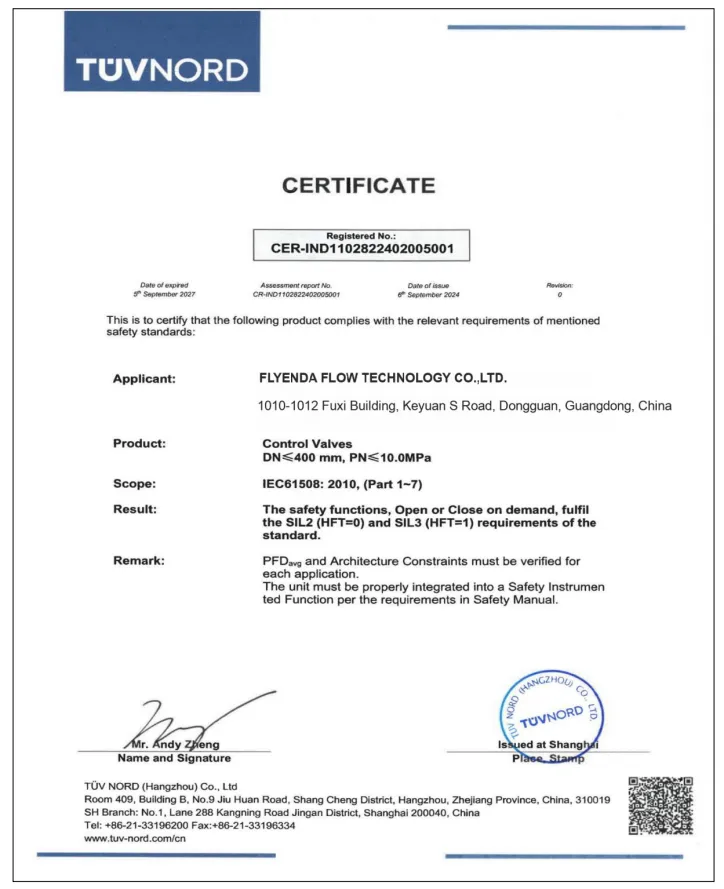
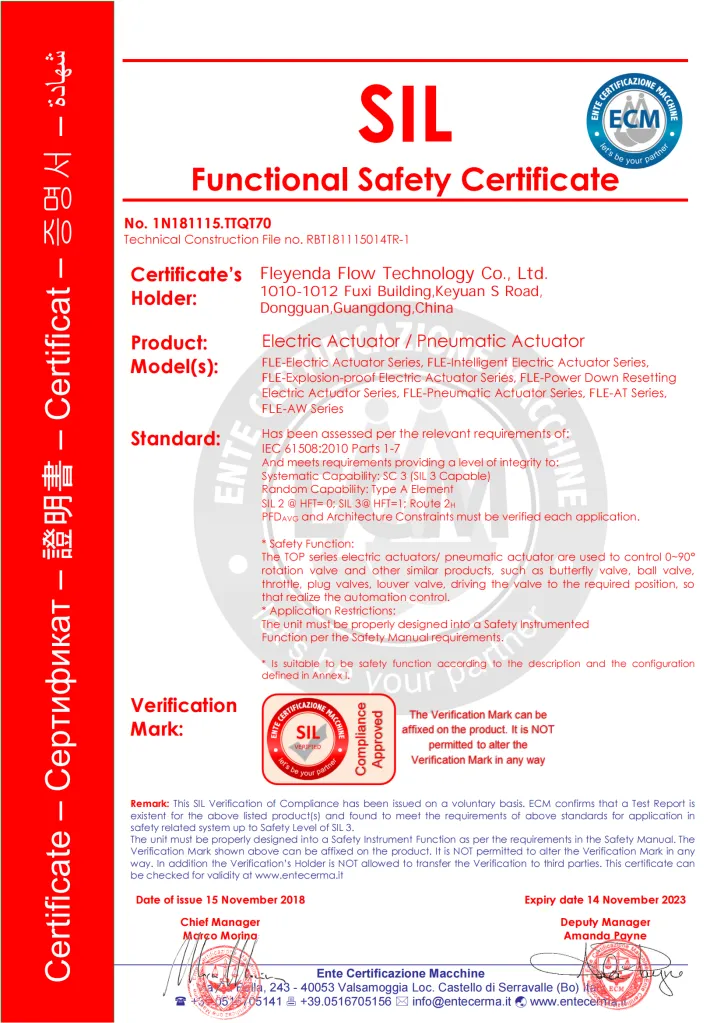
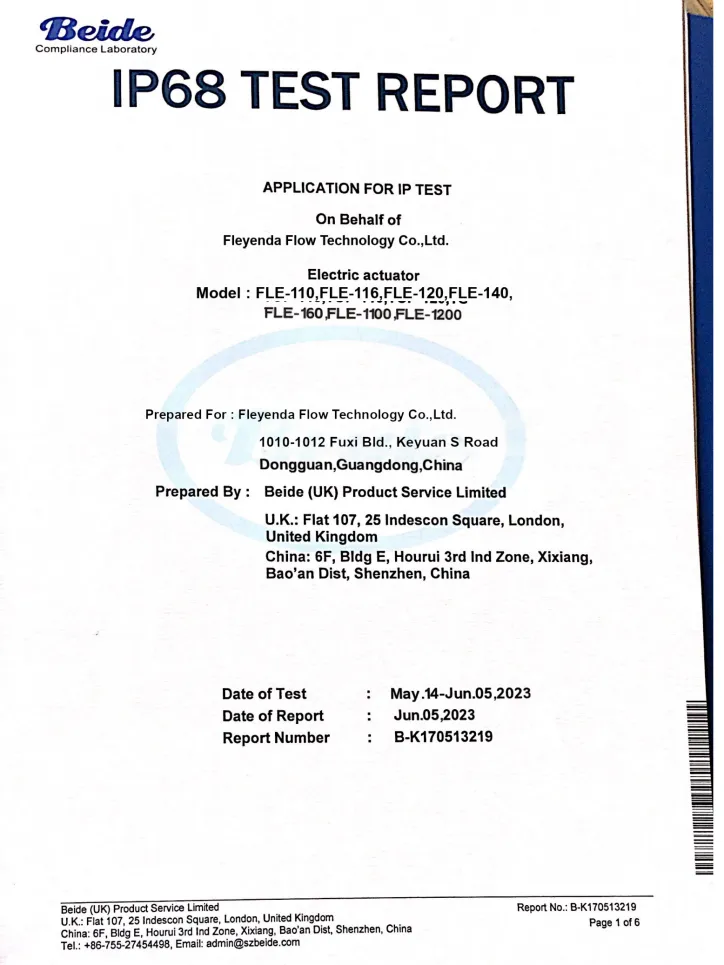
| Certification | CE / ROHS / ISO / SIL / TUV /IP68 Waterproof |
| Customization | Above Are Standard Parameter Samples. If You Have Specific Parameters And Materials, We Can Customize Them All. |
| Actuator Model | Standard Time/Torque | Optional Time/Torque | Rotation Angle Range | Actuator Weight | Power Supply | Optional Control Circuit |
|---|---|---|---|---|---|---|
| FLE-105 | 25S/50Nm | 4S/20Nm 10S/30Nm |
0-90° Adjustable | 2.2kg |
DC24V AC24V AC110V AC220V AC380V |
A type B type C type D type E type F type |
| FLE-110 | 25S/100Nm | 15S/50Nm | 5.1kg | |||
| FLE-116 | 25S/160Nm | 15S/80Nm | 5.1kg | |||
| FLE-120 | 25S/200Nm | 15S/100Nm | 7.5kg | |||
| FLE-140 | 25S/400Nm | 15S/200Nm | 7.5kg | |||
| FLE-160 | 25S/600Nm | 15S/300Nm | 8.1kg | |||
| FLE-1100 | 50S/1000Nm | 25S/500Nm | 12.7kg | |||
| FLE-1200 | 50S/2000Nm | 25S/1000Nm | 12.7kg | |||
| Type | ON/OFF, Regulating, Intelligent | |||||
| Insulation Resistance | 100MΩ/500VDC | |||||
| Dielectric Strength | 1500V AC 1min. | |||||
| Level of Protection | IP67 (IP68 optional) | |||||
| Installed Location | 360° Installation at any Angle | |||||
| Electrical Interface | 2-G1/2 Metal Fitting, the corresponding metal cable joints should be installed according to the selected cables | |||||
| Ambient temperature | -20°C to +60°C | |||||
| Optional Explosion Proof | Ex d II BT4 / CT4 / CT6 Gb | |||||
| Power-loss reset (fail-safe) function | Fail-open, Fail-closed or No-reset (factory-selectable) | |||||
| Optional functions | Overtorque protection, dehumidification heater, passive contact switch, operating handwheel | |||||
Certified Quality for Industrial Valve Applications
Fleyenda valves and electric actuators are built for stable performance, reliable operation, and long-term industrial use. With certified quality support, they are suitable for water treatment, chemical processing, automation, and industrial process control systems.
FAQs That 80% Users Interest
What operational inefficiencies does an Electric Actuated 3 Pieces Ball Valve eliminate?
• The three-piece body design allows the mid-section to be removed for maintenance without uninstalling the entire valve, thereby reducing pipeline downtime and operational disruption.
• Electric actuation automates opening and closing actions, which removes reliance on manual intervention and helps eliminate human error in process control.
• Full-port or optimized bore variants of three-piece ball valves minimise pressure drop and flow restriction, improving throughput and energy efficiency.
• By integrating seamlessly into control systems (PLC/SCADA) with compatible signal interfaces, the valve supports faster system responses and improves overall automation efficiency.
How does this valve improve maintenance scheduling and reduce lifecycle costs?
• Because the three-piece valve body allows easier access to internal components (ball, seats, seals), maintenance can be scheduled proactively rather than reactively, reducing unplanned downtime.
• Electric actuation eliminates the need for external pneumatic infrastructure (compressors, air lines), reducing auxiliary equipment costs and maintenance burden.
• Robust material choices—such as stainless steel bodies and PTFE seats—offer higher durability in corrosive or high-cycle environments, extending service life and reducing total cost of ownership.
• Lower torque requirements of the ball valve mechanism decrease actuator stress, which reduces wear on both valve and actuator over time and lowers replacement/spare-parts costs.
In what safety-critical or harsh environments does this valve offer enhanced reliability?
• The electric actuator option provides consistent torque and accurate control, helping prevent failure in high-cycle or remote installations where manual access is difficult.
• Three-piece ball valves provide tight shut-off capabilities that help contain hazardous media and reduce risk of leaks or fugitive emissions, improving safety compliance.
• The modular body design allows rapid inspection and repair in the field, which is critical in emergency or hazardous-area installations.
• The valve’s metered compatibility with global standards (e.g., end-connections, materials, actuator interfaces) ensures it can be configured for extreme conditions such as high pressure, high temperature, or aggressive fluids.
How versatile is the Electric Actuated 3 Pieces Ball Valve across industries and applications?
• Suitable for a wide range of media—water, oil, gas, steam, chemicals—thanks to configurable body materials and seat options, making it adaptable for multiple industries including chemical, wastewater, oil & gas, and power plants.
• Available in multiple end-connection types (flanged, threaded, welded) and size ranges, facilitating straightforward integration into global pipeline systems and retrofit projects.
• Equipped with automation-ready features (electric actuator, position feedback, mounting ISO 5211 compatibility) enabling integration into both new and existing control infrastructures.
• Its design supports both simple on/off isolation and modulating flow control, enabling it to fulfil dual roles in a system and thereby reduce the number of different valve SKUs required.