


Motorized V-Port Ball Valve
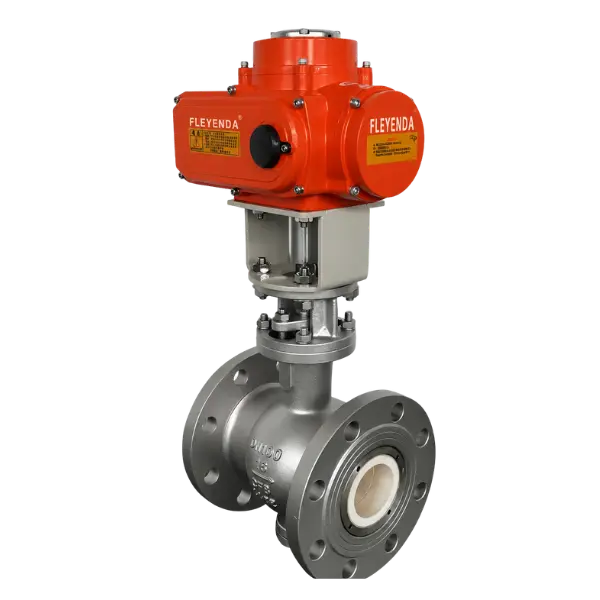
Motorized V-Port Ball Valve
FLE-VQ-F Series | Precision Electric Flow Control
Fleyenda FLE-VQ-F Motorized V-Port Segmented Ball Valves are engineered for accurate
modulating flow control in water, chemical, and industrial process systems. With an
integrated V-notch port structure, the valve delivers stable flow characteristics,
reduced seat wear, and reliable performance under continuous operation.
The series is available with 15°, 30°, 60°, and 90° V-port options, supporting a wide
control range from fine regulation to high-Cv flow applications. Body materials include
stainless steel 304, 316, and 316L, with PTFE sealing for dependable media compatibility.
- Size range: 1″–12″ / DN25–DN300
- Pressure range: 10–16 bar
- Temperature range: -10°C to 180°C
- Applications: water treatment, chemical processing, and industrial process control
Motorized V-Port Segmented Ball Valve Specifications
Standard technical parameters and actuator options for FLE-VQ-F motorized V-port segmented ball valves.
Custom materials, pressure ratings, voltages, and control functions are available upon request.
| Parameter | Specification |
| Size Range | 1″ – 12″ / DN25 – DN300 |
| Working Pressure | PN16 – PN40 / ANSI Class 150 – 300 |
| Working Temperature | -20°C to +250°C, depending on seat material |
| Body Material | Stainless Steel CF8 / CF8M / Carbon Steel WCB |
| Connection Type | Flanged, ANSI / DIN / JIS standards |
| Applicable Medium | Water, steam, gas, oil, slurry, pulp, chemical liquids |
| Actuator Type | Electric motorized actuator |
| Voltage Options | AC220V, AC110V, AC380V, DC24V |
| Design Standard | IEC 60534 / GB/T 12237 / API 6D |
| Testing Standard | API 598 / EN 12266-1 |
| Fire-Safe Design | Optional per API 607 standard |
| Certification | CE / ROHS / ISO / SIL / TÜV / IP68 Waterproof |
Above are standard parameter samples. Specific materials, pressure ratings, sealing options,
actuator configurations, and control functions can be customized according to project requirements.
Electric Actuator Model Selection
Multiple actuator models are available for different torque, speed, voltage, and control requirements.
| Actuator Model | Standard Time / Torque | Optional Time / Torque | Actuator Weight |
| FLE-105 | 25S / 50Nm | 4S / 20Nm, 10S / 30Nm | 2.2kg |
| FLE-110 | 25S / 100Nm | 15S / 50Nm | 5.1kg |
| FLE-116 | 25S / 160Nm | 15S / 80Nm | 5.1kg |
| FLE-120 | 25S / 200Nm | 15S / 100Nm | 7.5kg |
| FLE-140 | 25S / 400Nm | 15S / 200Nm | 7.5kg |
| FLE-160 | 25S / 600Nm | 15S / 300Nm | 8.1kg |
| FLE-1100 | 50S / 1000Nm | 25S / 500Nm | 12.7kg |
| FLE-1200 | 50S / 2000Nm | 25S / 1000Nm | 12.7kg |
Why Choose FLE-VQ-F Motorized V-Port Ball Valves
Precision Flow Control & Smart Regulation
- Accurate throttling for stable, repeatable flow control.
- V-shaped ball design ensures precise modulation of liquid, gas, or slurry.
- Equal-percentage flow curve maintains consistent process response.
- Electric actuator feedback enables precise valve positioning.
Durability & Safety
- Stainless or carbon steel body resists corrosion and pressure.
- PTFE or metal seat provides tight sealing in demanding media.
- Fire-safe and anti-static design supports industrial safety.
- Tungsten-coated ball edge helps extend service life.
Automation & Energy Efficiency
- Supports multi-voltage control and 4–20 mA signal integration.
- Works with SCADA and PLC systems for automated monitoring.
- Compact structure simplifies installation and maintenance.
- Electric drive reduces noise and energy use.
Maintenance & Cost Efficiency
- Self-cleaning V-port minimizes clogging in slurry or particulate fluids.
- Replaceable seats and long cycle life reduce downtime.
- Low operating torque lowers actuator load and power consumption.
- Flanged or wafer connection supports quick installation.
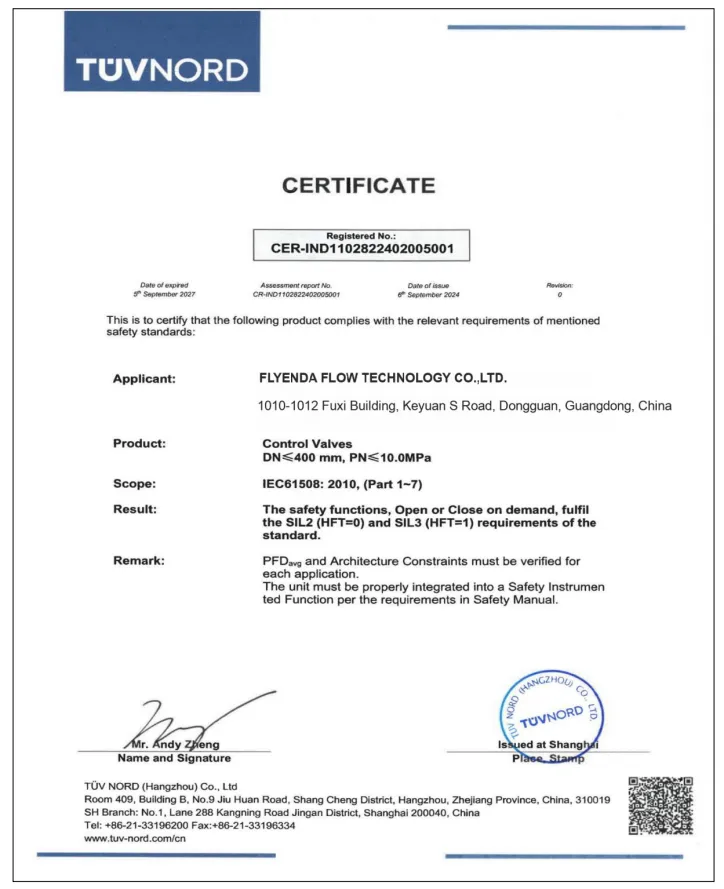
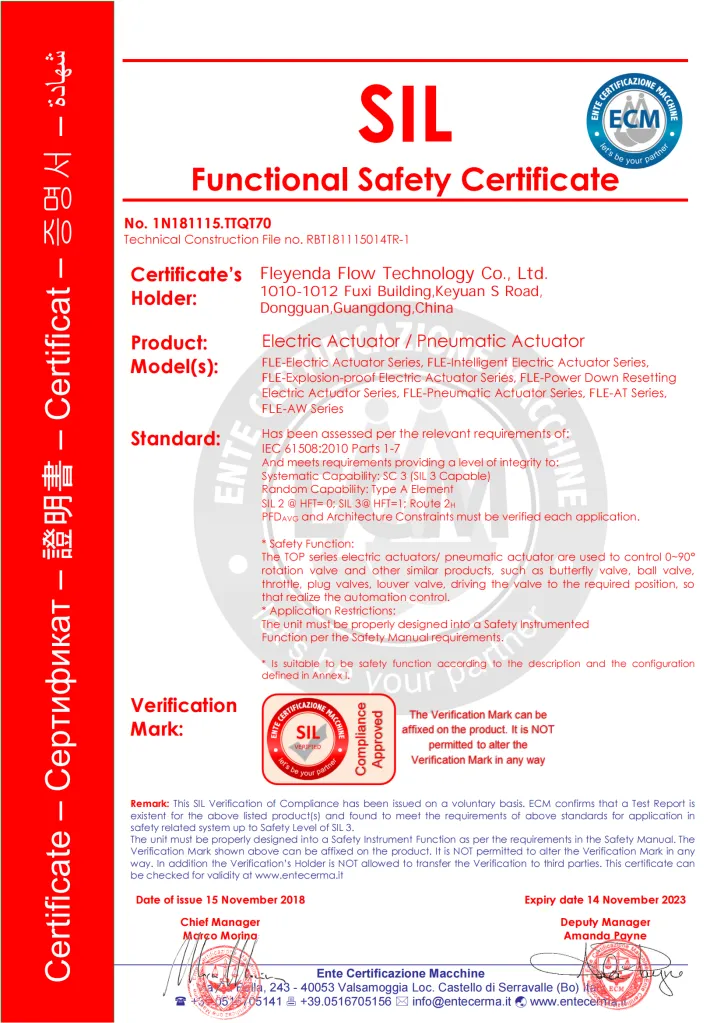
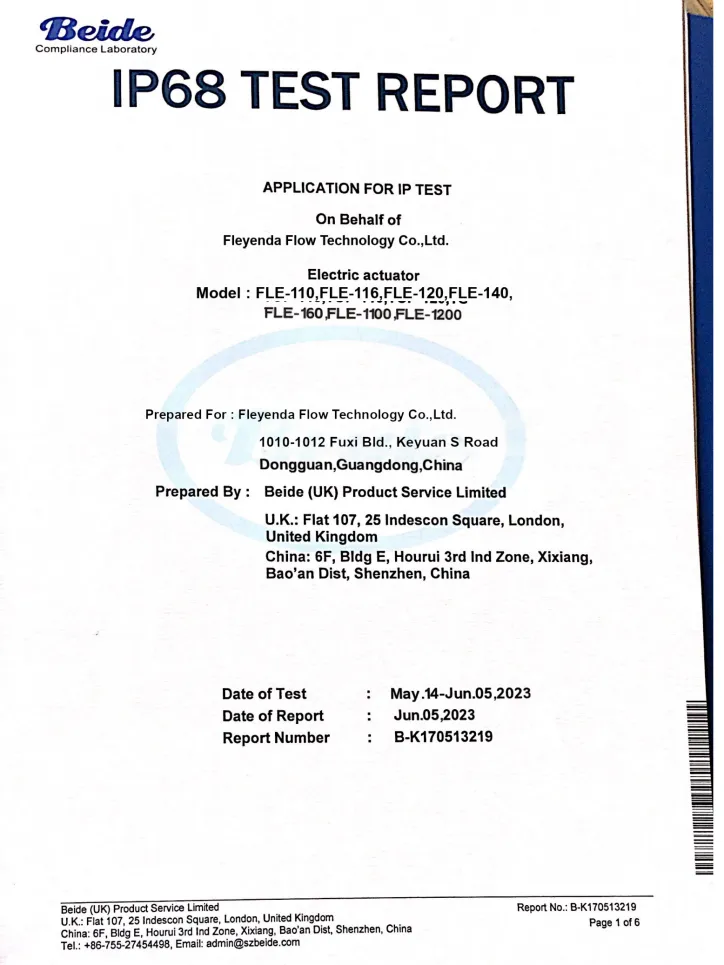
Certified Quality for Industrial Valve Applications
Fleyenda valves and electric actuators are built for stable performance, reliable operation, and long-term industrial use. With certified quality support, they are suitable for water treatment, chemical processing, automation, and industrial process control systems.
FAQs That 80% Users Interest
1. What makes the Motorized V-Port Segmented Ball Valve different from a regular electric control valve?
• Unlike standard on/off electric ball valves, the Motorized V-Port Segmented Ball Valve offers precision flow modulation through its V-notch design for fine adjustment instead of full open/close.
• It delivers smoother process control in industrial automation systems where flow stability and repeatability are critical.
• The segmented ball reduces turbulence and cavitation, extending service life under high-pressure or variable-flow conditions.
• Commonly used in chemical dosing, steam, and slurry applications to enhance efficiency.
2. How does a Motorized V-Port Segmented Ball Valve improve flow control accuracy in automation systems?
• The V-shaped port geometry provides a near-linear flow curve for accurate proportional control even at small openings.
• Integrated with a smart electric actuator, it supports 4–20 mA or Modbus feedback for precise loop control.
• It minimizes overshoot and hysteresis, improving PID stability and process accuracy.
• Ideal for upgrading from pneumatic to fully motorized modulating valves in automated plants.
3. What are the ideal applications for a Motorized V-Port Segmented Ball Valve in modern industries?
• Common in HVAC, water treatment, pulp and paper, and chemical processing, where both precision and automation are needed.
• The segmented design handles liquids, gases, and slurries with minimal clogging and a self-cleaning shear action.
• High rangeability ensures accurate control from small to large flow volumes, optimizing energy use in process plants.
• Effective for temperature control loops and feed-flow regulation, often replacing globe valves.
4. What maintenance does a Motorized V-Port Segmented Ball Valve require for long-term performance?
• Inspect the V-notch surface and seat for wear from high-velocity or abrasive media.
• Check actuator alignment, torque, and feedback signals for accurate modulation.
• Lubricate moving parts and protect electrical connections from moisture or corrosion.
• Predictive maintenance through smart actuator diagnostics reduces downtime in continuous operations.