


Electric 2 Way Flange Ball Valve
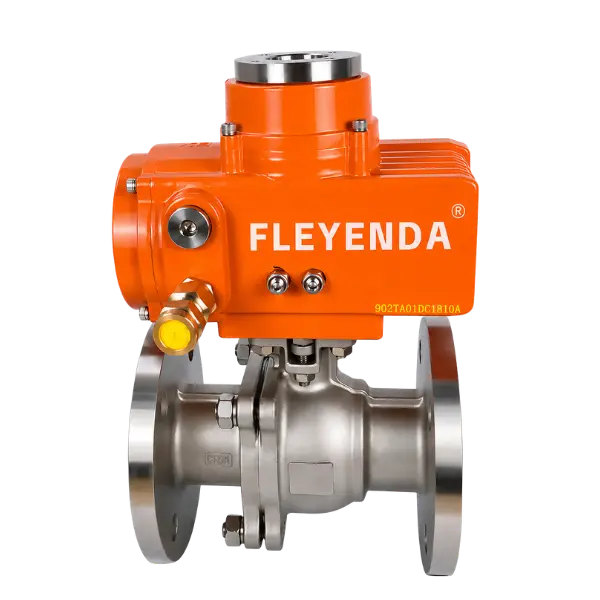
Electric 2 Way Flange Ball Valve
FLE-Q-F Series
Fleyenda FLE-Q-F Electric 2 Way Flange Ball Valve is engineered for reliable automated flow control in water, oil, gas, chemical, and industrial process systems. Featuring a stainless-steel full-bore design, the valve delivers high flow capacity, low pressure loss, zero leakage performance, and long-term durability under demanding operating conditions.
Equipped with an ISO 5211 electric actuator, the FLE-Q-F Series supports precise 0–90° control for efficient remote operation and pipeline automation. Tested according to API 598 and API 607 standards, this electric flanged ball valve ensures dependable sealing, fire-safe performance, and stable operation from –20°C to 180°C under PN40 pressure.
- Size range: 1/2″–12″ / DN15–DN300
- Pressure range: PN16–PN40
- Temperature range: -20°C to 180°C
- Body material: stainless steel 304, 316, and 316L
- Operation: ISO 5211 electric actuator, 0–90° on/off control
- Standards: API 598 leakage test and API 607 fire-safe test
- Applications: water treatment, chemical processing, HVAC, oil & gas, and industrial automation systems
Electric 2 Way Flange Ball Valve Specifications
Standard technical parameters and actuator options for FLE-Q-F electric 2way flange ball valves.
Custom materials, pressure ratings, voltages, and control functions are available upon request.
| Parameter | Specification |
| Size Range | ½” – 12″ / DN15 – DN300 |
| Working Pressure | PN16 – PN40 / ANSI Class 150 – 300 |
| Working Temperature | -20°C to +180°C, depending on seat material |
| Body Material | Stainless Steel 304 / 316 or Carbon Steel WCB |
| Connection Type | Flanged (ANSI B16.5 / DIN PN16 / JIS 10K) |
| Applicable Medium | Water, Oil, Air, Gas, Steam, Weak Acid & Alkali |
| Actuator Type | Electric Actuator (On/Off or Modulating) |
| Voltage Options | AC 220 V, AC 110 V, DC 24 V, AC 380 V |
| Design Standard | API 6D / GB/T 12237 / ISO 5211 |
| Testing Standard | API 598 / GB/T 13927 |
| Fire-Safe Design | API 607 Certified (Optional) |
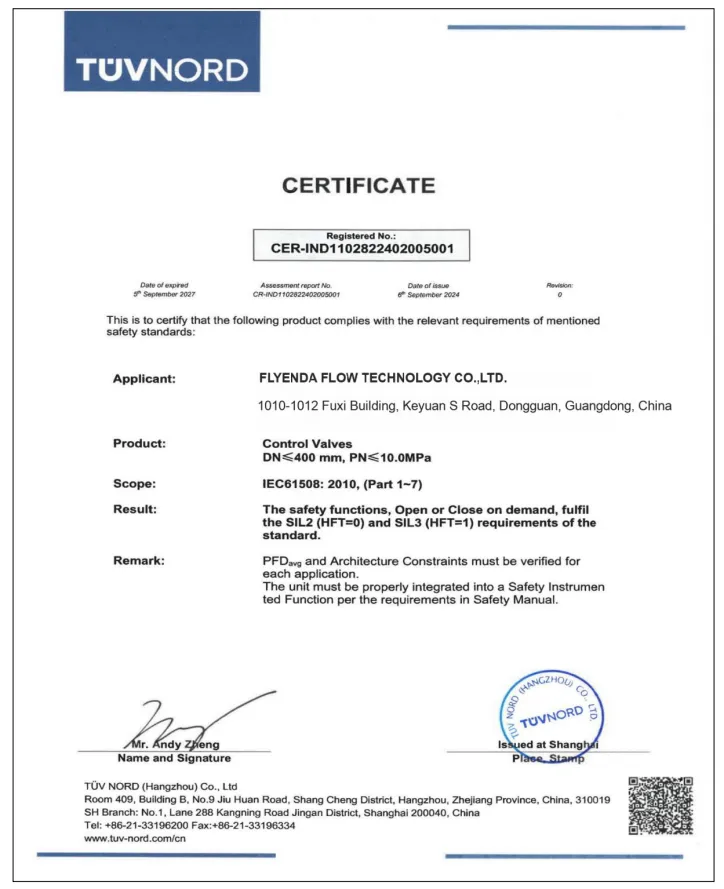
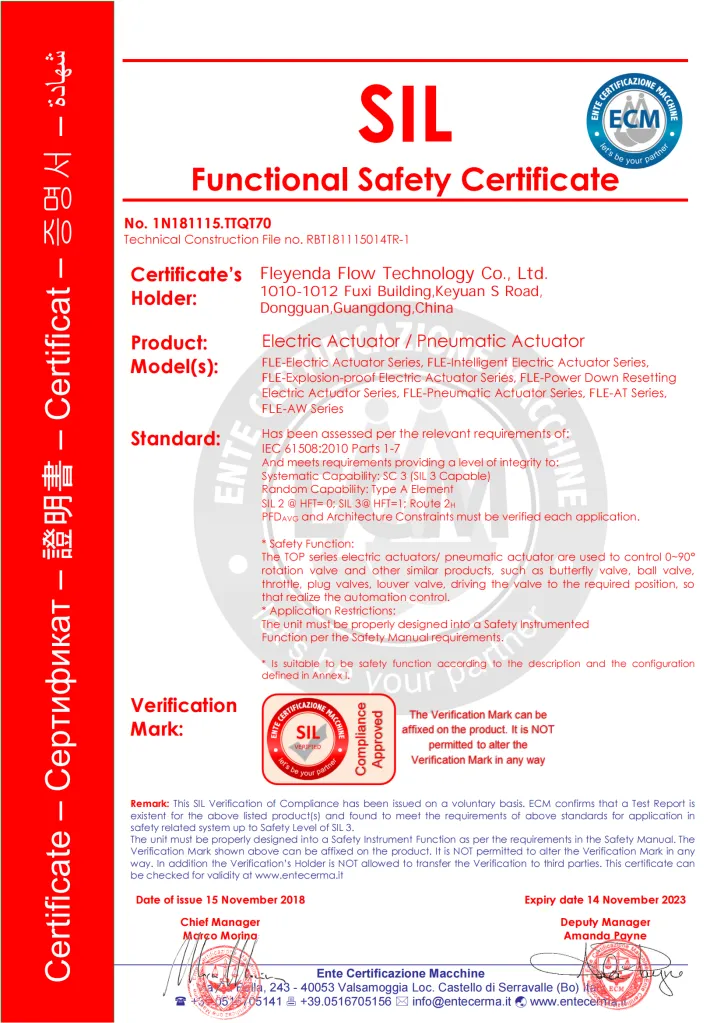
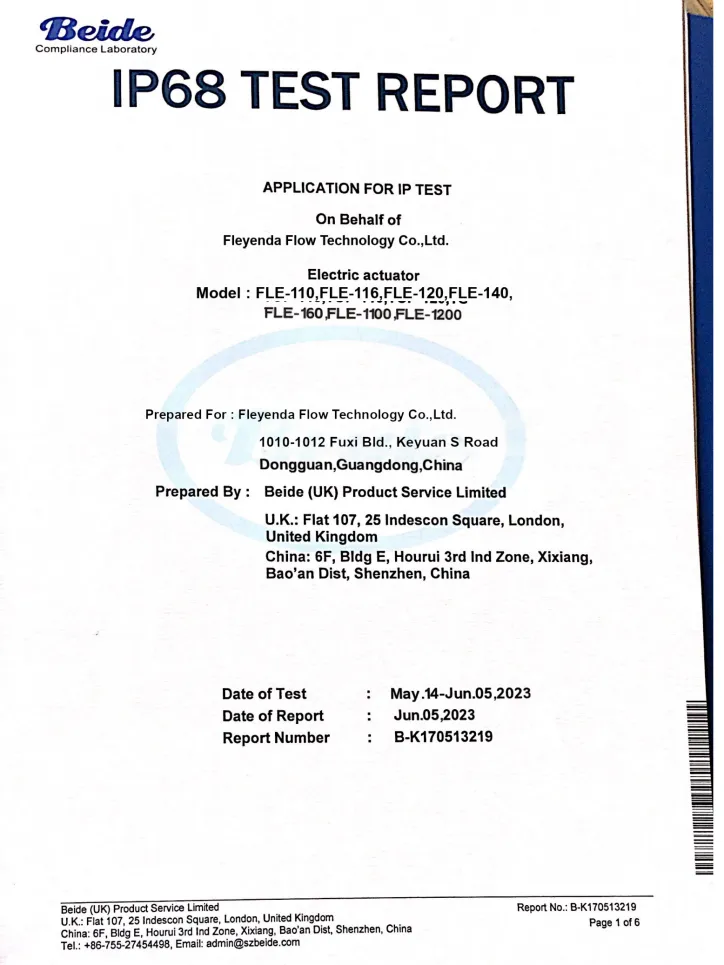
| Certification | CE / ROHS / ISO / SIL / TUV /IP68 Waterproof |
Above are standard parameter samples. Specific materials, pressure ratings, sealing options,
actuator configurations, and control functions can be customized according to project requirements.
Electric Actuator Model Selection
Multiple actuator models are available for different torque, speed, voltage, and control requirements.
| Actuator Model | Standard Time / Torque | Optional Time / Torque | Actuator Weight |
| FLE-105 | 25S / 50Nm | 4S / 20Nm, 10S / 30Nm | 2.2kg |
| FLE-110 | 25S / 100Nm | 15S / 50Nm | 5.1kg |
| FLE-116 | 25S / 160Nm | 15S / 80Nm | 5.1kg |
| FLE-120 | 25S / 200Nm | 15S / 100Nm | 7.5kg |
| FLE-140 | 25S / 400Nm | 15S / 200Nm | 7.5kg |
| FLE-160 | 25S / 600Nm | 15S / 300Nm | 8.1kg |
| FLE-1100 | 50S / 1000Nm | 25S / 500Nm | 12.7kg |
| FLE-1200 | 50S / 2000Nm | 25S / 1000Nm | 12.7kg |
Why Choose FLE-Q-F Electric 2 Way Flange Ball Valves
Precision Flow Control & Smart Regulation
- Electric actuator ensures accurate 0–90° rotation for reliable on/off.
- Automated operation minimizes human error and allows remote or centralized process control.
- Fast response time improves system efficiency in industrial pipelines and HVAC applications.
- Supports integration with PLC or DCS systems for smart plant automation.
Durability & Safety
- Full stainless-steel or WCB body resists corrosion, wear, and high pressure up to PN40.
- PTFE or metal seat provides tight sealing in demanding media.
- Fire-safe and anti-static design supports industrial safety.
- Tested under API 598 and API 607 standards to ensure long-term reliability.
Installation & Maintenance
- Flanged connection (ANSI/DIN/JIS) allows easy alignment and secure bolting during installation.
- WISO 5211 mounting pad enables direct actuator replacement or upgrade without modification.
- Compact design saves space in complex piping systems.
- Low-torque operation reduces actuator wear and maintenance costs.
Broad Compatibility & Flexibility
- Suitable for water, air, oil, gas, steam, and weak acid/alkali media.
- Available in multiple voltages (AC 220 V, AC 110 V, DC 24 V, AC 380 V) for global compatibility.
- Operates reliably in temperature ranges from –20 °C to 180 °C.
- Certified to CE, ISO 9001, and API 607 standards for international compliance and safety.
Certified Quality for Industrial Valve Applications
Fleyenda valves and electric actuators are built for stable performance, reliable operation, and long-term industrial use. With certified quality support, they are suitable for water treatment, chemical processing, automation, and industrial process control systems.
FAQs That 80% Users Interest
1. What factors should I consider when selecting an Electric 2 Way Flange Ball Valve for automation?
• Match flange standard, size, and pressure rating (ANSI 150–300 / PN16–40) to avoid leakage and flow loss.
• Choose actuator mounting with ISO 5211 compatibility for easy integration.
• Ensure power compatibility (AC 220 V, DC 24 V, AC 110 V, AC 380 V).
• Verify material suitability (SS304/316 or WCB) for fluid type and temperature range.
2. How can I ensure reliable sealing and long service life?
• Select PTFE / RTFE seats with precision-machined stainless-steel ball for tight shut-off.
• Use API 607 fire-safe and anti-static design for chemical and gas industries.
• Confirm API 598 pressure and leakage tests for performance guarantee.
• Maintain periodic actuator torque and stem seal inspections.
3. Can the Electric 2 Way Flange Ball Valve be used for flow control instead of on/off?
• Yes, use a modulating actuator with feedback signal for precise throttling.
• Ensure valve design supports partial opening without seat damage.
• Apply V-port or characterised ball versions for linear flow control.
• Integrate with PLC / DCS system for automated regulation.
4. What are the key installation and wiring considerations?
• Align flange standards (ANSI / DIN / JIS) to prevent stress and leakage.
• Follow correct actuator wiring per voltage and control signal requirements.
• Provide mechanical support to avoid vibration damage to actuator.
• Calibrate open-close limits and test for zero-leak operation before