


FAT-D-SH Pneumatic Stainless Steel Hard-Seated Butterfly Valve
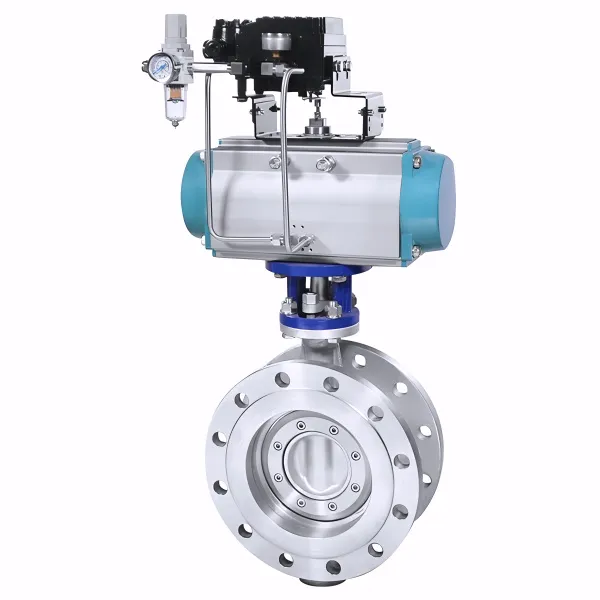
FAT-D-SH Pneumatic Stainless Steel Hard-Seated Butterfly Valve
The Pneumatic Stainless Steel Hard-Seated Butterfly Valve uses a metal seat for tight sealing in high temperature and pressure, ensuring long life, low maintenance, and API 609 and API 607 fire-safe certified reliability.
| Size Range | DN50–DN600 (2″–24″) |
| Working Pressure Range: | PN10–PN40 / Class 150–300 |
| Working Temperature Range: | -29°C to +450°C |
| Body Material: | Stainless Steel |
| Connection Type: | Wafer or Flanged (ASME, DIN, JIS) |
| Applicable Medium: | Steam, Gas, Oil, Corrosive Fluids, High-Temperature Media |
| Actuator Type: | Double-Acting or Spring-Return Pneumatic Actuator |
| Voltage Options | 24V DC, 110V AC, 220V AC |
| Design Standard | API 609 / ISO 5752 |
| Testing Standard | API 598 / EN 12266-1 |
| Fire-Safe Design | Yes (API 607) |
| Certification | CE / RoHS / ISO 9001 / IP65 (Actuator) |
| Customization | Above Are Standard Parameter Samples. If You Have Specific Parameters And Materials, We Can Customize Them All. |
| Series | AT | AW | Linear | Pneumatic Cylinder | Sanitario |
|---|---|---|---|---|---|
| Valve Body | Ball valve, butterfly valve, plug valve | Gate valve, Global valve | Knife gate valve | Sanitary butterfly valve | |
| Function | Double Acting, Single Acting (Failure Resetting FO or FC) | ||||
| Accesorios de control |
• Solenoid Valve, Filter Regulator Lubricator (F.R.L.), Positioner, Limit Switch, Handwheel • Solenoid Valve & Positioner are with Explosion-proof grade and Signal Feedback type for choice | ||||
| Operating Medium |
Clean and dry or lubricated air or inert gas. Any non-corrosive gas that is compatible with the internal parts of the actuator and the lubricant. The dew point temperature of the operating medium is -20°C, and the size of impurity particles is no more than 30u. When selecting a positioner, the impurity particle size should be no more than 5u. | ||||
| Air Source Pressure | 3bar to 8bar | ||||
| Operating Environment Temperature |
• Standard type: -20°C to +80°C • Low-temperature type: -40°C to +80°C • High-temperature type: -20°C to +160°C | ||||
| Lubrication |
Under normal operating conditions, the standard type does not require additional lubricant. For low-temperature or high-temperature environments, special lubricants are required. | ||||
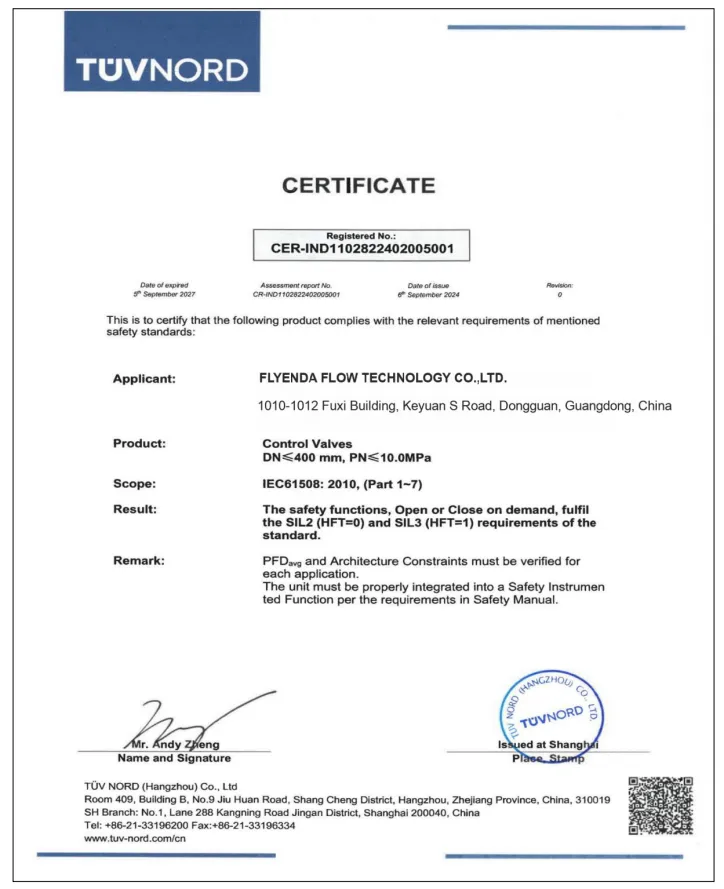
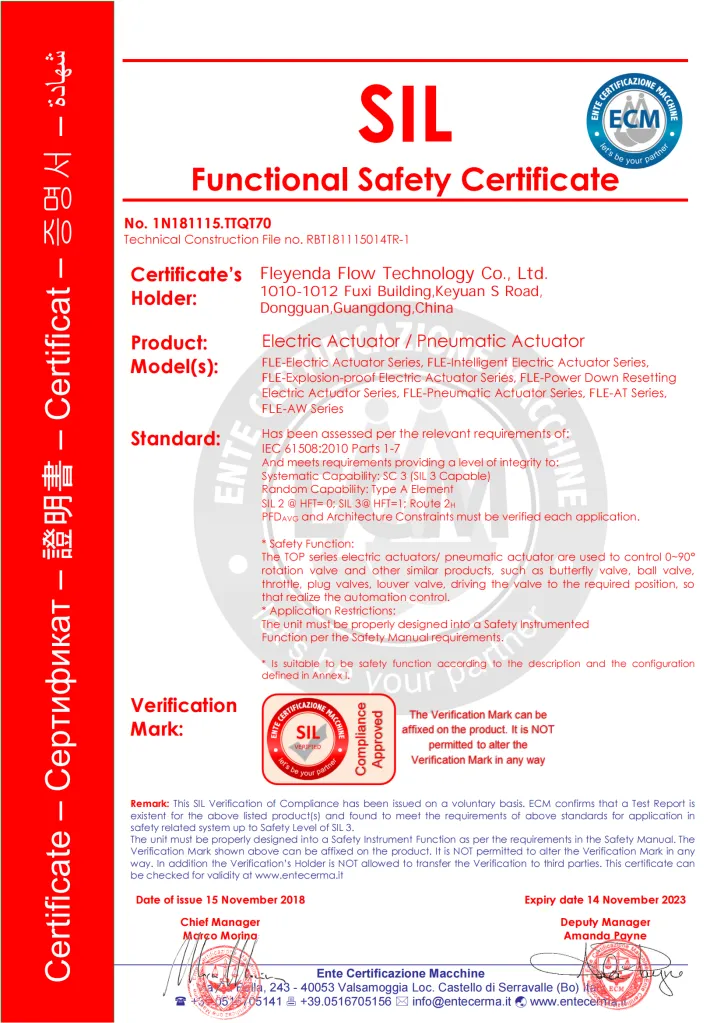
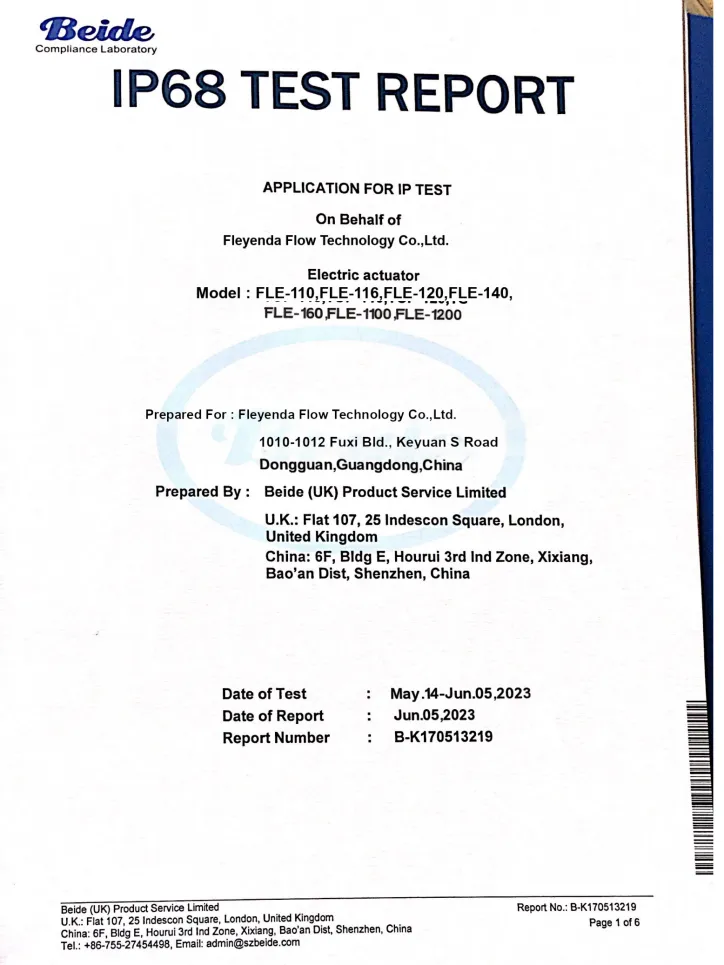
Certified Quality for Industrial Valve Applications
Fleyenda valves and electric actuators are built for stable performance, reliable operation, and long-term industrial use. With certified quality support, they are suitable for water treatment, chemical processing, automation, and industrial process control systems.
FAQs That 80% Users Interest
1. What maintenance is required for a Pneumatic Stainless Steel Hard-Seated Butterfly Valve to ensure long-term reliability?
• Inspect the metal-seated butterfly valve regularly to prevent wear from high-pressure cycles.
• Clean internal surfaces and lubricate the pneumatic actuator valve for stable torque and smooth operation.
• Check actuator calibration and air pressure to ensure complete valve stroke.
• Verify fire-safe and anti-blowout components for safe use in steam or hazardous media.
2. How does a hard-seated pneumatic valve perform under high temperature and pressure compared to soft-seated designs?
• The stainless steel butterfly valve maintains tight sealing above 400°C without seat deformation.
• Metal-to-metal sealing resists abrasive flow, suitable for steam, gas, and slurry applications.
• Certified to API 609 and API 598 for reliable high-pressure performance.
• The pneumatic control valve actuator ensures consistent shutoff under demanding conditions.
3. What are the key advantages of a Pneumatic Metal-Seated Butterfly Valve for industrial automation?
• The pneumatic stainless steel valve delivers fast response and accurate flow control.
• Hard-seat design minimizes maintenance and extends service life in continuous operation.
• High sealing pressure prevents leakage, improving energy efficiency.
• Supports integration with smart actuator systems for automated monitoring and control.
4. How to select the correct actuator configuration for a pneumatic hard-seated butterfly valve?
• Choose double-acting or spring-return actuators based on safety and process needs.
• Match actuator torque to pressure and media for stable operation.
• Ensure mounting follows ISO 5211 for easy integration with accessories.
• Use actuators with SIL or ATEX certification for explosive or high-risk areas.