


FAT-Q-G Pneumatic High-Pressure 2-Ways Ball Valves
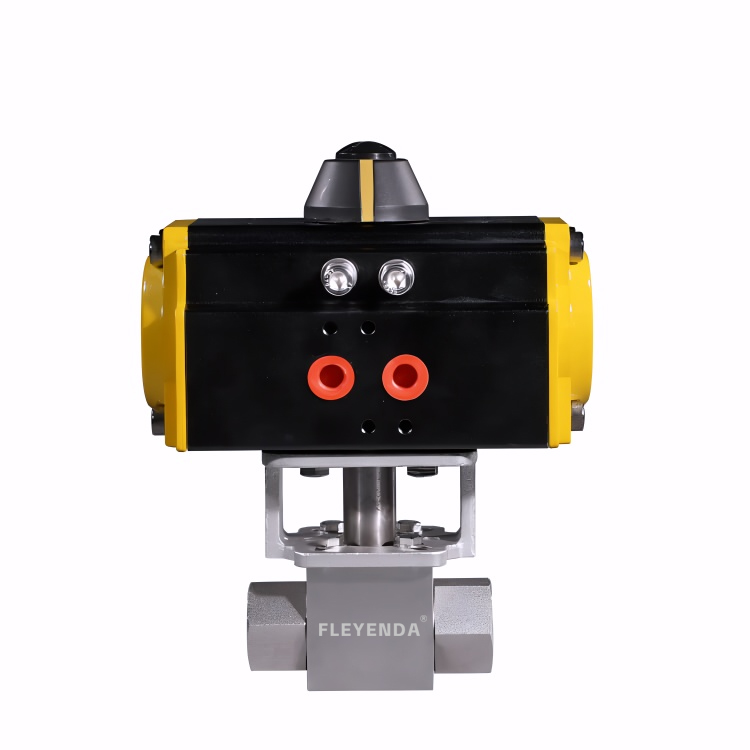
FAT-Q-G Pneumatic High-Pressure 2-Ways Ball Valves
The Pneumatic High-Pressure 2-Way Ball Valve uses a stainless-steel body and rack-and-pinion actuator for reliable shut-off under 1000 PSI, delivering fast automation and safe flow control—tested to API 598 and certified CE / RoHS / ISO 9001 for proven performance.
| Gama de tallas | 1/4″–4″ (DN8–DN100) |
| Rango de presión de trabajo: | Up to 1000 PSI (69 Bar) |
| Rango de temperatura de funcionamiento: | –20°C to +180°C |
| Material del cuerpo: | CF8M / SS316 Stainless Steel |
| Tipo de conexión: | Threaded (BSPP, NPT, BSPT) or Flanged (DIN / ANSI / JIS) |
| Medio aplicable: | Air, Water, Oil, Gas, Steam, Corrosive Fluids |
| Tipo de actuador: | Rack and Pinion Pneumatic Actuator |
| Opciones de voltaje | 24V DC, 110V AC, 220V AC |
| Norma de diseño | ISO 5211, ASME B16.34, API 608 |
| Norma de ensayo | API 598, EN 12266-1 |
| Diseño a prueba de incendios | API 607 / API 6FA (Optional) |
| Certificación | CE / RoHS / ISO 9001 / IP65 (actuador) |
| Personalización | Las siguientes son muestras de parámetros estándar. Si tienes parámetros y materiales específicos, podemos personalizarlos todos. |
| Series | AT | AW | Linear | Pneumatic Cylinder | Sanitario |
|---|---|---|---|---|---|
| Cuerpo de válvulas | Ball valve, butterfly valve, plug valve | Gate valve, Global valve | Knife gate valve | Sanitary butterfly valve | |
| Función | Double Acting, Single Acting (Failure Resetting FO or FC) | ||||
| Accesorios de control |
• Solenoid Valve, Filter Regulator Lubricator (F.R.L.), Positioner, Limit Switch, Handwheel • Solenoid Valve & Positioner are with Explosion-proof grade and Signal Feedback type for choice | ||||
| Operating Medium |
Clean and dry or lubricated air or inert gas. Any non-corrosive gas that is compatible with the internal parts of the actuator and the lubricant. The dew point temperature of the operating medium is -20°C, and the size of impurity particles is no more than 30u. When selecting a positioner, the impurity particle size should be no more than 5u. | ||||
| Air Source Pressure | 3bar to 8bar | ||||
| Operating Environment Temperature |
• Standard type: -20°C to +80°C • Low-temperature type: -40°C to +80°C • High-temperature type: -20°C to +160°C | ||||
| Lubrication |
Under normal operating conditions, the standard type does not require additional lubricant. For low-temperature or high-temperature environments, special lubricants are required. | ||||
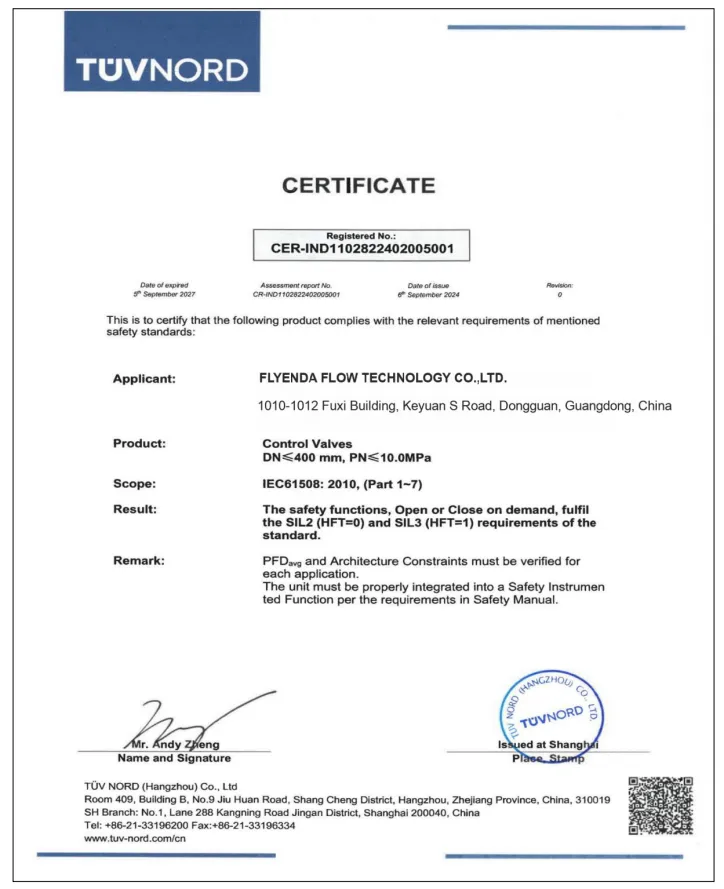
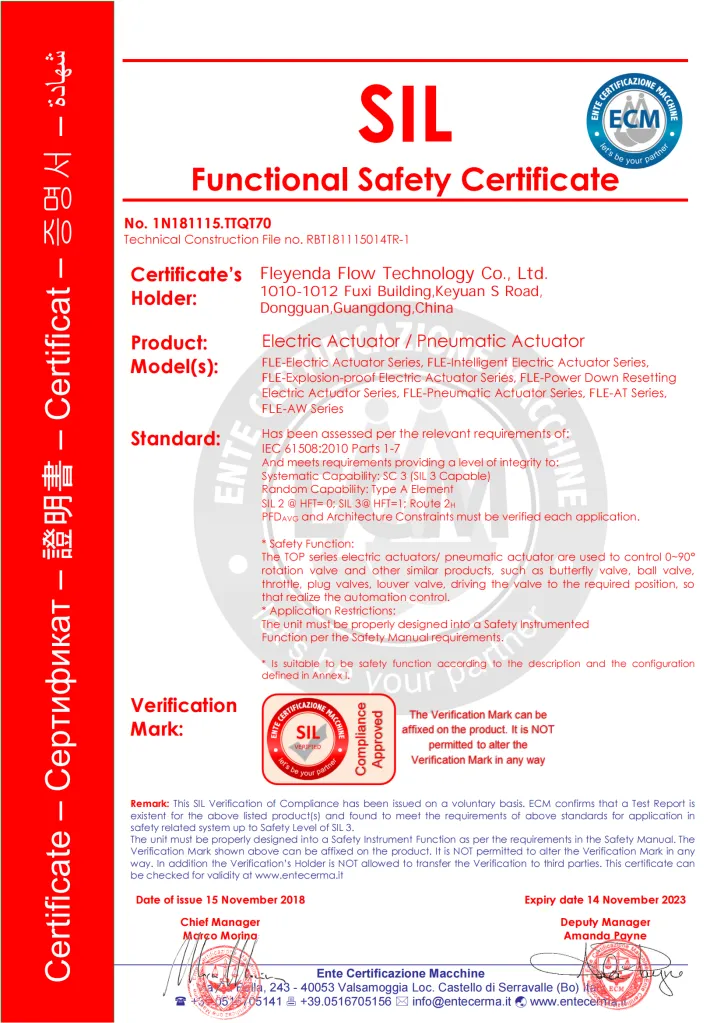
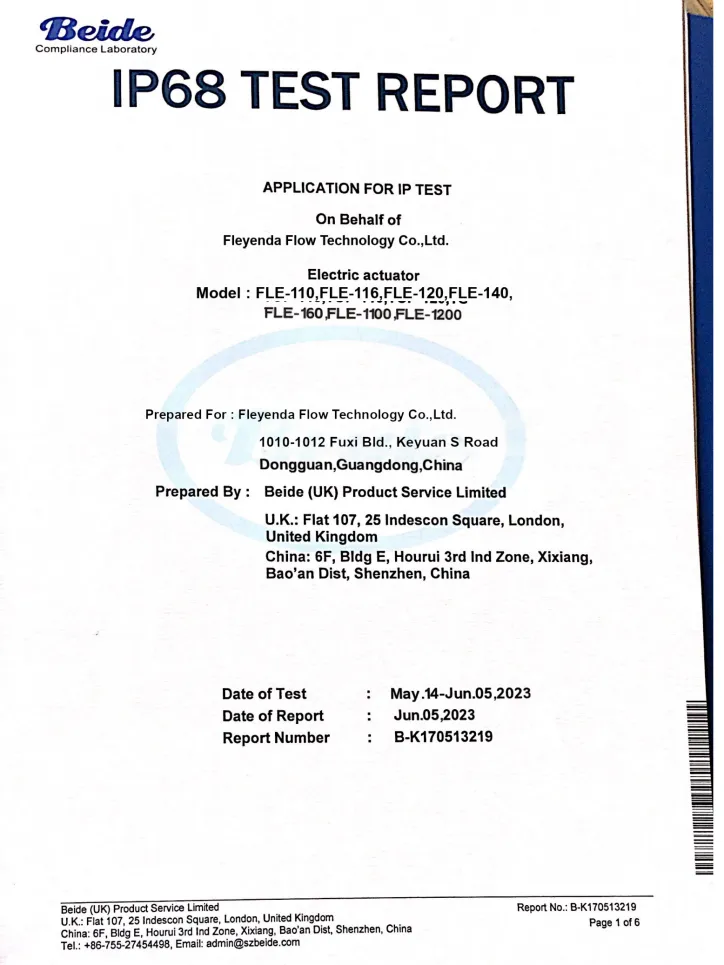
Calidad certificada para aplicaciones de válvulas industriales
Las válvulas y los actuadores eléctricos de Fleyenda están diseñados para ofrecer un rendimiento estable, un funcionamiento confiable y un uso industrial a largo plazo. Con un respaldo de calidad certificada, son adecuados para el tratamiento de agua, el procesamiento químico, la automatización y los sistemas de control de procesos industriales.
Preguntas frecuentes que interesan a los usuarios del 80%
1. What key factors should I evaluate when choosing the Pneumatic High-Pressure 2-Way Ball Valve for critical pipeline control?
• Confirm pressure and flow rating to match system demand.
• Select actuator type and torque suitable for full pressure operation.
• Match connection type and bore design to existing piping.
• Verify compliance with API 598, EN 12266 or ISO 5211 standards.
2. How does automation improve performance in industrial applications?
• Air-actuated high-pressure ball valve enables remote on/off control via PLC or SCADA.
• Fast quarter-turn motion ensures reliable shut-off under high pressure.
• ISO 5211 mounting allows actuator interchangeability.
• Pneumatic operation performs safely in heat or explosive environments.
3. Can the Pneumatic High-Pressure 2-Way Ball Valve handle corrosive or extreme media?
• Stainless-steel body and PTFE or PEEK seats resist chemical corrosion.
• Full-port design minimizes pressure loss in viscous or high-pressure flow.
• Actuator and mounting are rated for –20 °C to +200 °C conditions.
• Reinforced seals reduce wear and prevent leakage during cycling.
4. What installation or maintenance issues should be addressed?
• Maintain proper air supply pressure for full actuator stroke.
• Align actuator and valve mounting to avoid stem wear.
• Inspect seats and seals regularly in high-pressure service.
• Apply correct torque and gasket material for threaded or flanged joints.