


INDUSTRIAL BALL VALVE SELECTION GUIDE
Electric Ball Valve vs. Pneumatic Ball Valve: 5 Differences
Choosing between an electric ball valve and a pneumatic ball valve affects operating speed, control options, installation requirements, maintenance and long-term operating costs. Both use a quarter-turn ball valve to control pipeline flow, but they rely on different energy sources and actuator mechanisms.
An electric ball valve uses an electric actuator, while a pneumatic ball valve uses compressed air. The right choice depends on whether your facility has a reliable air supply, how frequently the valve must operate, whether proportional control is required and what should happen when power or air is lost.
This guide compares electric ball valve vs. pneumatic ball valve systems across five practical factors, explains their industrial applications and helps engineers, OEMs and purchasing teams choose the right valve configuration.
FLEYENDA VALVE SOLUTIONS
Electric and Pneumatic Ball Valve Products
For applications requiring modulating flow control, Fleyenda offers both electric and pneumatic V-port ball valve configurations. Comparing these two products helps illustrate how different actuation methods can serve similar process-control duties. For standard on/off isolation, other 2-way electric and pneumatic ball valve configurations may be more appropriate.
| Product | Key Specifications | Actuation and Applications | Product Details |
|---|---|---|---|
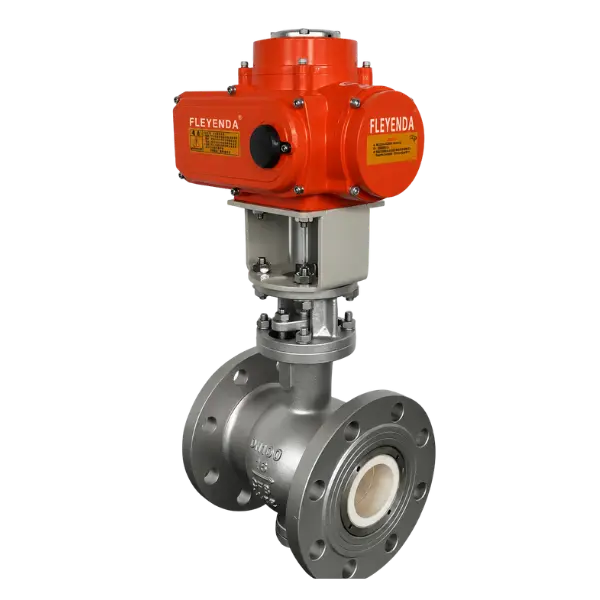 FLE-VQ-F Electric V-Port Ball Valve Electric actuation for automated flow regulation and selected modulating duties. | SizeDN25–DN300 PresiónPN16–PN40 Temperatura−20°C to +250°C, depending on seat and service ConnectionFlanged, ANSI / DIN / JIS options | ActuadorElectric quarter-turn ControlON/OFF or selected modulating configurations SignalSelected 4–20 mA and position-feedback options Typical dutyProcess-flow regulation, chemical processing and industrial automation | View Product |
 FAT-VQ-F Pneumatic V-Port Ball Valve Compressed-air actuation for fast operation and compatible process-control applications. | SizeDN15–DN200 PresiónPN16–PN40 Temperaturade −20 °C a +180 °C Body materialStainless steel CF8 / CF8M ConnectionFlanged, ANSI / DIN / JIS options | ActuadorDouble-acting or spring-return pneumatic Air supply3–8 bar ControlON/OFF or modulation with a suitable positioner Typical dutyProcess regulation, chemical flow control and automated production | View Product |
Specifications depend on the selected configuration. Confirm valve size, flow capacity, differential pressure, temperature, material compatibility, actuator sizing and required control accessories before ordering.

What Is the Difference Between an Electric Ball Valve and a Pneumatic Ball Valve?
The main difference is the actuator, not necessarily the ball valve body itself. An electric ball valve uses a motor-driven actuator to rotate the valve stem. A pneumatic ball valve uses compressed air to produce the movement.
Both types can provide automatic isolation and flow switching. With the appropriate valve design and control accessories, either can also support selected modulating applications. However, actuator speed, available utilities, positioning method, failure response and maintenance requirements can differ considerably.
| Comparison Factor | Válvula de bola eléctrica | Pneumatic Ball Valve |
|---|---|---|
| 1. Power source | Electrical supply | Aire comprimido |
| 2. Operating speed | Depends on motor, gearing and actuator configuration | Often faster, depending on air pressure and actuator sizing |
| 3. Control options | ON/OFF; selected modulating signals and feedback | ON/OFF; positioner required for compatible proportional control |
| 4. Failure response | Automatic return requires a suitable fail-safe arrangement | Spring-return options can provide a defined position on air loss |
| 5. Installation and cost | No compressed-air network required | Requires a suitable air supply and pneumatic accessories |
These are general tendencies rather than absolute rules. Actual performance depends on the selected valve body, actuator, operating conditions and control system.
1. Power Source and Installation Requirements
Electric Ball Valve: Operates on Electrical Power
An electric ball valve uses a motor and transmission mechanism to generate the torque needed to rotate the ball. The actuator connects to a suitable electrical supply and can receive open/close commands or other supported control signals.
This configuration is often practical for remote pipelines, water-treatment installations, equipment skids and facilities where electrical power is available but compressed air is not. It can simplify installation by eliminating the need for dedicated pneumatic piping and air preparation equipment.
Before ordering, confirm the actuator voltage, electrical connections, enclosure protection, operating time and available torque. Outdoor or hazardous-area installations also require the appropriate environmental protection and certification for the specific actuator.
Pneumatic Ball Valve: Operates on Compressed Air
A pneumatic ball valve uses compressed air to drive a rotary actuator. The actuator transfers torque to the valve stem, typically rotating the ball through approximately 90 degrees between open and closed positions.
The installation requires a suitable compressed-air source, correctly sized air lines and compatible control accessories. Depending on the actuator and operating environment, the assembly may also need a solenoid valve, filter regulator lubricator, limit-switch box or pneumatic positioner.
Pneumatic actuation is attractive when a reliable instrument-air system is already available. However, installing a new air supply solely for a small number of valves may increase overall project cost.
2. Operating Speed and Cycling Frequency
When Is an Electric Ball Valve Suitable?
Electric actuators are useful for remote isolation, scheduled switching and automated equipment where the required operating time matches the actuator’s rated performance. Their speed depends on motor design, gearing, torque demand and the selected operating configuration.
Some electric actuators support fast operating options, while others are designed for slower movement or positioning. Always check the specified opening and closing times for the actual valve size and actuator model rather than assuming that every electric ball valve operates at the same speed.
When Is a Pneumatic Ball Valve Suitable?
Pneumatic actuators can provide rapid quarter-turn movement and are often preferred for repetitive switching or high-cycle industrial applications. Their actual speed depends on actuator size, minimum available air pressure, pilot-valve capacity, tubing and any flow-control accessories.
For applications that require frequent operation, verify the actuator’s duty rating and maintenance requirements. Fast closure is not automatically desirable in every pipeline: liquid systems may experience pressure surges or water hammer if valve movement is too rapid.
Selection tip: Specify the required opening and closing times, operating frequency and process response. Choose the actuator around the real duty rather than selecting the fastest available option.
3. Control Modes and Positioning Capability
Electric Actuated Ball Valve Control
A standard electric ball valve is commonly used for ON/OFF operation. When commanded to open or close, the actuator drives the ball toward the relevant end position and stops according to its configured limit or control mechanism.
Selected electric actuator configurations also support modulating control through signals such as 4–20 mA or 0–10 V. These options can allow the actuator to position the valve in response to a controller, provided the actuator, valve geometry and application are suitable for regulating service.
For continuous flow control, a V-port ball valve is generally a better starting point than a conventional round-port isolation valve. Valve sizing, flow characteristics, differential pressure and actuator positioning performance must all be checked.
Pneumatic Actuated Ball Valve Control
A pneumatic ball valve can use a solenoid valve to direct compressed air for ON/OFF operation. Limit switches can report open and closed status to a PLC or DCS.
For proportional positioning, the pneumatic actuator normally requires a compatible positioner that converts a control command into the pneumatic adjustment needed to move the valve. A standard pneumatic ON/OFF ball valve should not be assumed to provide accurate modulation simply because the ball can physically stop at an intermediate position.
Electric and pneumatic ball valves can both be integrated into industrial automation systems. The required control signal, position feedback, communication interface and accessories should be specified as part of the complete assembly.
4. Fail-Safe Operation and Process Safety
The required valve position after a loss of power, compressed air or control signal can be a decisive factor in electric versus pneumatic ball valve selection.
Electric Ball Valve Failure Response
A conventional electric actuator does not necessarily move the valve to a predetermined position when electrical power is lost. Depending on its design, it may remain near its last position until power is restored or another mechanism acts.
If the application requires automatic movement to a defined position, specify an electric actuator configuration with a suitable stored-energy or fail-safe arrangement. Confirm the supported failure behavior for the exact model and operating conditions.
Pneumatic Ball Valve Failure Response
A spring-return pneumatic actuator can use stored spring force to move the valve toward a predetermined position when the required air supply is removed. Depending on the actuator and valve arrangement, this may be configured as fail-open or fail-closed.
A double-acting pneumatic actuator generally uses compressed air for movement in both directions and does not automatically guarantee a defined failure position. The control circuit, solenoid valve and any auxiliary equipment must be evaluated together.
Neither actuator type should be assumed to be fail-safe by default. Define the required response to loss of utilities, loss of signal and emergency shutdown before finalizing the valve specification.
5. Installation Cost, Maintenance and Total Cost of Ownership
Electric Ball Valve Costs
Electric ball valves can reduce installation complexity where electrical power is readily available and a compressed-air network is unnecessary. They may be suitable for distributed valves, remote facilities and equipment that requires straightforward electrical integration.
Maintenance commonly focuses on the actuator motor, gearbox, electrical connections, seals and position-control components, depending on the model. Environmental exposure, operating frequency and actuator duty rating can affect service requirements.
Pneumatic Ball Valve Costs
Pneumatic ball valves can be economical when the facility already has a reliable compressed-air system. They may also be attractive for high-cycle applications where rapid operation is required and the actuator is correctly sized.
The total cost must include air generation where applicable, air preparation, tubing, solenoid valves, positioners, air leakage and routine inspection. Moisture or contamination in the air supply can also affect performance and maintenance needs.
How to Compare the Real Cost
Compare the complete installed assembly rather than only the valve purchase price. Include actuator cost, installation labor, available utilities, control accessories, energy use, expected cycling, maintenance access, spare parts and potential downtime.
If a plant already has instrument air, a pneumatic valve may have a lower incremental installation cost. If no compressed-air infrastructure exists, an electric ball valve may be the more straightforward option. The result depends on the application and expected service life.
Electric Ball Valve vs. Pneumatic Ball Valve: Which Is Better for Your Application?
Neither option is universally better. The appropriate choice depends on the available utilities, required operating speed, control function, safety response and lifecycle cost.
| Application Requirement | Válvula de bola eléctrica | Pneumatic Ball Valve |
|---|---|---|
| Remote isolation without compressed air | Often a practical choice | Requires a suitable air source |
| Frequent, rapid switching | Check rated speed and duty cycle | Often suitable with correct sizing |
| Proportional flow control | Modulating actuator and suitable valve required | Suitable positioner and control-valve design required |
| Defined position after loss of supply | Requires a suitable fail-safe arrangement | Spring-return options available |
| Existing instrument-air network | May still be appropriate | May reduce incremental infrastructure cost |
| Distributed or remote equipment | Useful where electrical supply is available | Depends on air-line availability and reliability |
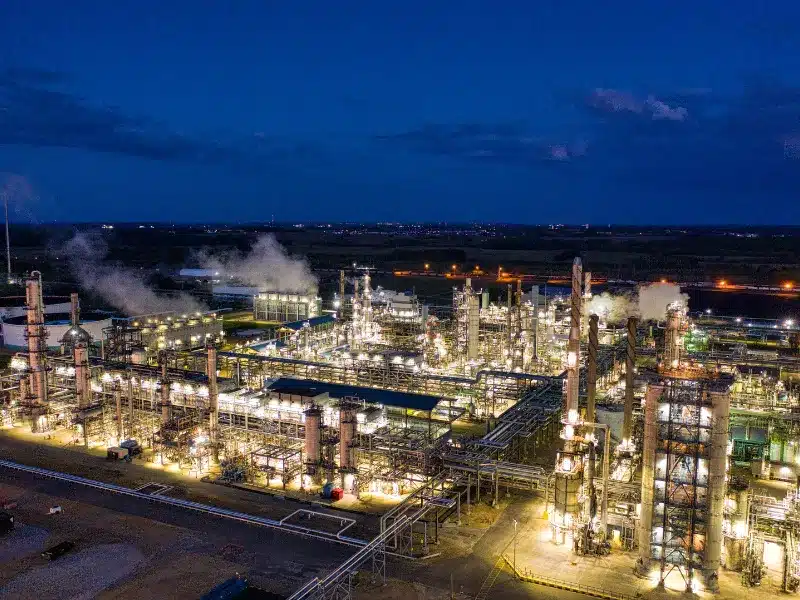
Industrial Applications of Electric and Pneumatic Ball Valves
Tratamiento de agua y aguas residuales
Electric ball valves can automate isolation and flow switching in remote treatment facilities, distribution lines and packaged equipment where electrical power is available. Pneumatic ball valves can support repetitive switching, filtration sequences and dosing operations where instrument air is available.
For either type, confirm the medium, pressure, water chemistry, seat compatibility and required operating time. Fast valve closure should be evaluated against the potential for pressure surges.
Procesamiento químico
Both electric and pneumatic ball valves can be used for chemical transfer, pipeline isolation and automated routing. The body, ball, seats and seals must be compatible with the chemical composition, concentration, pressure and temperature.
For hazardous areas, verify the required equipment certification. Pneumatic actuation alone does not make the entire valve assembly suitable for a hazardous location; electrical accessories and other components must also meet the applicable requirements.
Petróleo y gas
Pneumatic actuators may be attractive for rapid switching and selected shutdown functions where reliable instrument air and the required failure response are available. Electric actuators can also be suitable for compatible applications with the correct protection and certification.
Valve pressure rating, differential pressure, operating torque and the required shutdown behavior should be confirmed before ordering.
Pump Systems and Industrial Equipment
Electric and pneumatic ball valves can automate pump isolation, bypass switching, equipment sequencing and process routing. Electric models can simplify installation where compressed air is unavailable, while pneumatic models can be useful for frequent switching in systems with established air infrastructure.
Automated Process Control
When a process requires proportional flow regulation rather than simple isolation, consider a suitable V-port ball valve with a compatible modulating actuator or positioner. The valve’s flow characteristic and sizing must match the actual control duty.
How to Choose the Right Electric or Pneumatic Ball Valve
1. Define the Valve Function
Determine whether the valve is required for simple isolation, flow diversion, frequent switching or proportional regulation. Select a 2-way, 3-way or suitable V-port configuration according to the required flow path and control duty.
2. Confirm Process Conditions
Specify the medium, minimum and maximum operating pressure, differential pressure, temperature, pipe size and connection standard. Include fluid concentration, corrosive characteristics and solids where relevant.
3. Check Available Utilities
Confirm the electrical supply for an electric actuator or the minimum reliable air pressure for a pneumatic actuator. If compressed air is not available, include the cost and maintenance of supplying it in the comparison.
4. Size the Actuator Correctly
Actuator selection must be based on the valve’s required torque under the actual operating conditions. For pneumatic actuators, use the minimum available air pressure; for electric actuators, verify rated output, power supply and duty requirements.
5. Specify the Control and Feedback
Define ON/OFF commands or the required modulating signal, such as 4–20 mA, along with position feedback, PLC/DCS integration and any required control accessories. Confirm that the selected valve and actuator are designed for the intended duty.
6. Define Failure Behavior
Specify what the valve must do if electrical power, compressed air or a control signal is lost. Confirm whether the system needs fail-open, fail-closed or another defined response and verify that the complete assembly supports it.
7. Review Installation and Maintenance
Check actuator clearance, environmental protection, wiring or air-line routing, access for maintenance and spare-part availability. Consider the expected operating frequency and the cost of downtime throughout the service life.
Common Selection Mistakes to Avoid
Choosing Only by Valve Size
Nominal diameter alone does not determine actuator suitability. Differential pressure, seat friction and operating conditions affect the required torque, so the valve and actuator should be selected as a complete assembly.
Assuming Every Ball Valve Can Modulate Accurately
A conventional round-port ball valve is commonly optimized for isolation. For proportional control, evaluate a suitable V-port design, the required flow characteristic and the actuator’s positioning capability.
Ignoring Utility Availability
A pneumatic actuator needs a suitable air supply, while an electric actuator needs a compatible power source. Consider the reliability and lifecycle cost of the utility at the installation location.
Assuming Fail-Safe Behavior
Not every electric actuator automatically returns to a safe position when power is lost, and not every pneumatic actuator has spring return. Specify and verify the exact failure response.
Comparing Purchase Price Instead of Total Cost
Include installation, utility infrastructure, control accessories, maintenance, spare parts and downtime. The lowest initial price may not deliver the lowest lifecycle cost.
Preguntas frecuentes
What is the main difference between an electric ball valve and a pneumatic ball valve?
An electric ball valve uses an electric actuator, while a pneumatic ball valve uses compressed air. The main differences involve available utilities, operating speed, control accessories, failure response and total cost of ownership.
Is a pneumatic ball valve faster than an electric ball valve?
Pneumatic actuators often provide faster switching, but actual speed depends on actuator size, available air pressure, control accessories and valve torque. Electric actuators also have different speed options, so compare the specified opening and closing times for the actual models.
Which is better for frequent valve operation?
Pneumatic ball valves are often suitable for frequent cycling when a reliable air supply is available. However, the selected actuator must meet the required duty rating, and the valve must be sized for the operating conditions. Electric models may also be suitable when their rated duty meets the application.
Can an electric ball valve replace a pneumatic ball valve?
In some applications, yes. Confirm that the replacement meets the required pressure rating, flow function, connections, materials, actuator torque, operating time, control interface and failure behavior. The actuators are not automatically interchangeable without engineering review.
Can a pneumatic ball valve provide modulating control?
Yes, if the valve and actuator are suitable for the duty and a compatible positioner is provided. A V-port ball valve is generally a better starting point for proportional flow control than a conventional round-port ball valve intended mainly for isolation.
Does an electric ball valve need compressed air?
No. An electric actuator uses electrical power for operation and does not require compressed air for its movement. Other equipment in the wider process may still use instrument air.
Does a pneumatic ball valve need electricity?
The pneumatic actuator uses compressed air to produce movement. However, the complete assembly may include electrically powered accessories, such as a solenoid valve or electronic positioner, depending on the control arrangement.
What happens when the actuator loses power or air?
The response depends on the actuator and control configuration. A spring-return pneumatic actuator can move the valve toward a configured position when air is lost. An electric actuator requires a suitable fail-safe arrangement if automatic movement after power loss is required.
Which valve is more cost-effective?
The result depends on the project. Electric ball valves can be economical where electrical power is available but compressed air is not. Pneumatic ball valves may offer advantages where an air network already exists and frequent, rapid switching is required. Compare total installed and operating costs.
What information is needed for a quotation?
Provide the valve size, medium, operating pressure, differential pressure, temperature, connection standard, body and seat materials, required control mode, available power or air pressure, actuator function, feedback requirements and quantity.
Choose the Right Ball Valve Actuation for Your Application
Electric ball valves and pneumatic ball valves can both provide dependable automated flow control when the complete valve assembly matches the process conditions. Electric actuation is often practical where electrical power is available without compressed air, while pneumatic actuation can be advantageous for fast switching, frequent cycling and selected spring-return applications.
The best decision depends on the required valve function, operating speed, control method, failure response and total cost of ownership. For modulating service, confirm the valve’s flow characteristics and the actuator’s positioning capability rather than selecting on actuator type alone.
Fleyenda supplies electric and pneumatic ball valve configurations for industrial isolation, flow routing and selected control duties. Share your valve size, medium, pressure, temperature, required operating time and available utilities to identify a suitable configuration.
Request a Ball Valve Recommendation
Explore Electric Ball Valve Products