Fleyenda FLE Series Electric Actuator
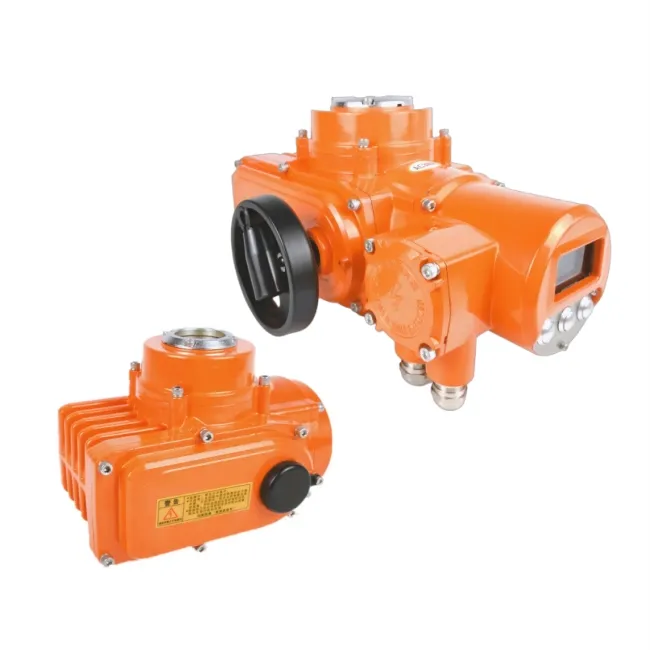
Fleyenda FLE series electric actuators provide precise 0–90° control for butterfly, ball, and damper valves. Available in ON/OFF, regulating, and intelligent types, they deliver high torque up to 4000 Nm and support AC/DC power with 4–20mA or 0–10V control signals. Optional features include IP68 protection, explosion-proof design, and power-off reset, ensuring reliable and efficient valve operation.
| Output Torque Range | 50 Nm – 3000 Nm |
| Rotation Angle | 0° – 90° (±5° adjustable) |
| Ambient Temperature Range | -20°C to +70°C |
| Gehäusematerial | Die-cast Aluminum Alloy with Powder-Coated Finish |
| Connection Standard | ISO 5211 Direct Mounting Interface |
| Antriebstyp: | Quarter-turn Electric Actuator |
| Spannungsoptionen | AC 220 V / AC 110 V / DC 24 V |
| Control Signal Type | On/Off (2-position) or Modulating (4–20 mA / 0–10 V) |
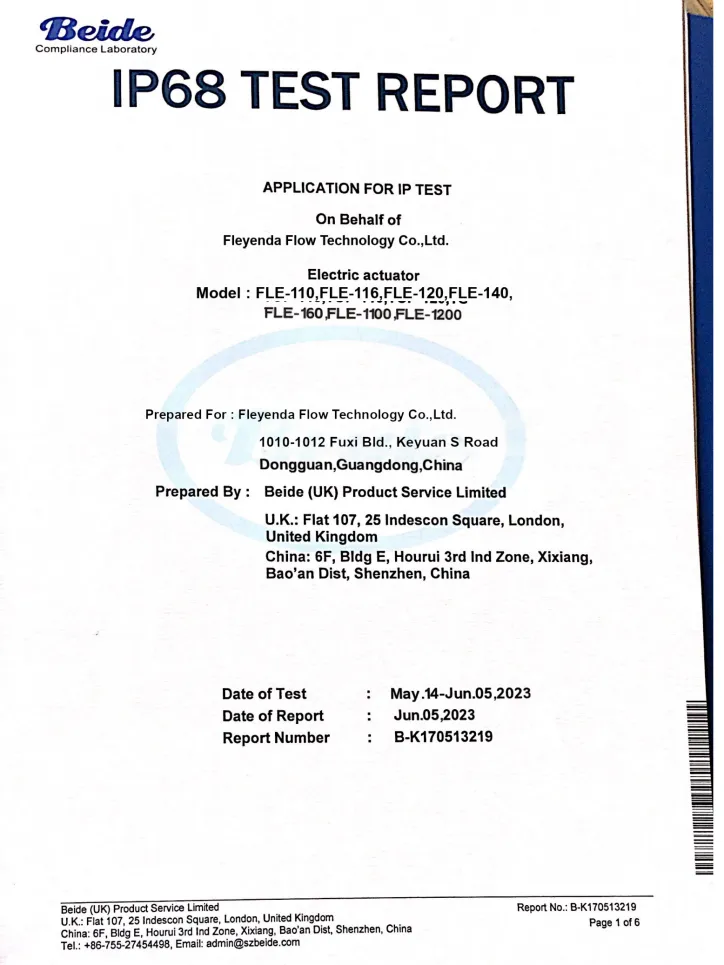
| Protection Grade | IP67 (Optional IP68 for waterproof applications) |
| Designstandard | IEC 60034 / ISO 5211 / EN 60529 |
| Prüfnorm | ISO 9001 Quality System & CE / RoHS Compliance |
| Zertifizierung | CE / RoHS / ISO 9001 / IP65 (Antrieb) |
| Anpassung | Oben finden Sie Beispiele für Standardparameter. Wenn Sie bestimmte Parameter und Materialien haben, können wir diese individuell anpassen. |
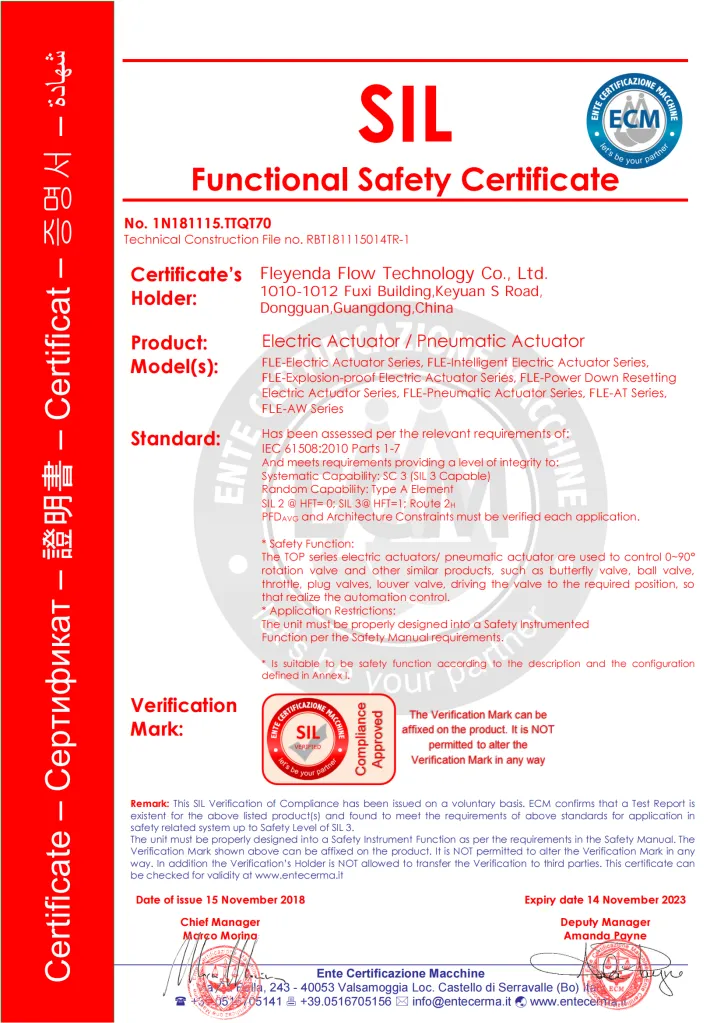
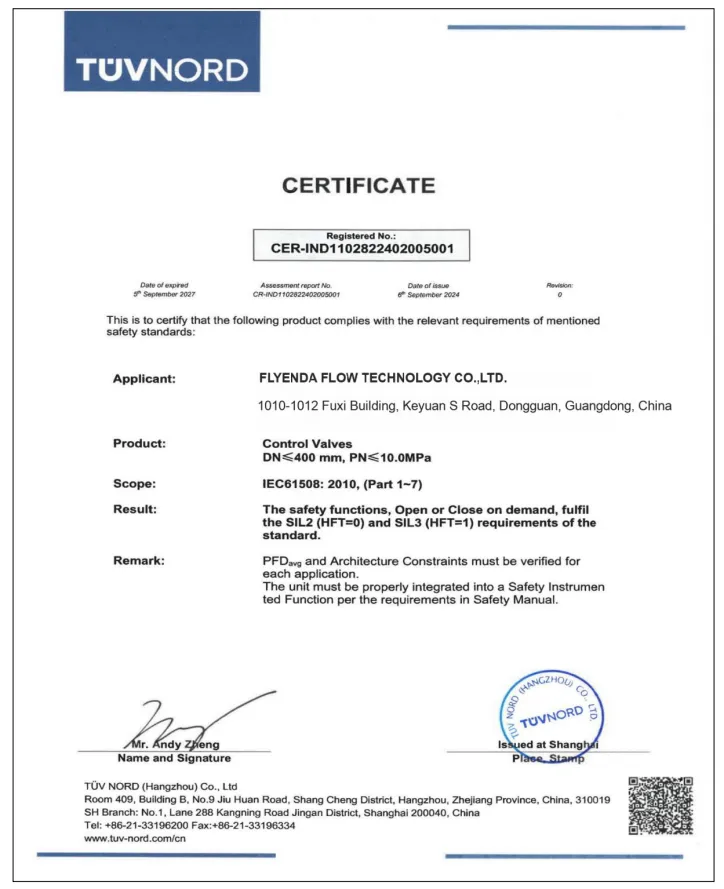
Zertifizierte Qualität für industrielle Ventilanwendungen
Ventile und elektrische Stellantriebe von Fleyenda sind auf stabile Leistung, zuverlässigen Betrieb und den langfristigen industriellen Einsatz ausgelegt. Dank zertifizierter Qualitätssicherung eignen sie sich für die Wasseraufbereitung, die chemische Verarbeitung, die Automatisierung sowie industrielle Prozessleitsysteme.
Häufig gestellte Fragen, die für Nutzer des 80% von Interesse sind
1. What are the key considerations when selecting an electric actuator for industrial valve automation systems?
• Evaluate required torque and valve size to ensure the electric actuator can handle full open/close loads.
• Confirm ISO 5211 mounting compatibility between actuator and valve.
• Check IP65+ protection and temperature range for electric valve actuator in harsh environments.
• Choose between on/off or modulating control for precise integration with automation systems.
2. How does an electric actuator compare to pneumatic or hydraulic systems?
• Electric actuators eliminate air or fluid systems, reducing energy use and maintenance.
• Provide precise and repeatable positioning for accurate flow control.
• Offer cleaner operation with no leaks, ideal for sterile or indoor applications.
• Pneumatic options may still perform better in ultra-fast or high-cycle applications.
3. What maintenance practices extend the service life of an electric actuator?
• Inspect electrical connections, seals, and gear alignment regularly.
• Keep the motorized actuator clean and protected from moisture or dust.
• Test manual override periodically to ensure operation during power loss.
• Watch for unusual noise or vibration indicating wear or misalignment.
4. Can an electric actuator be used outdoors or in hazardous environments?
• Use models with ATEX or explosion-proof certification for hazardous areas.
• Ensure enclosure rating of IP65 or higher for outdoor use.
• Select corrosion-resistant materials for chemical or marine applications.
• Confirm manual override and feedback remain reliable in extreme conditions.