


F-ZJHQ Diaphragm 3-way Control Valve
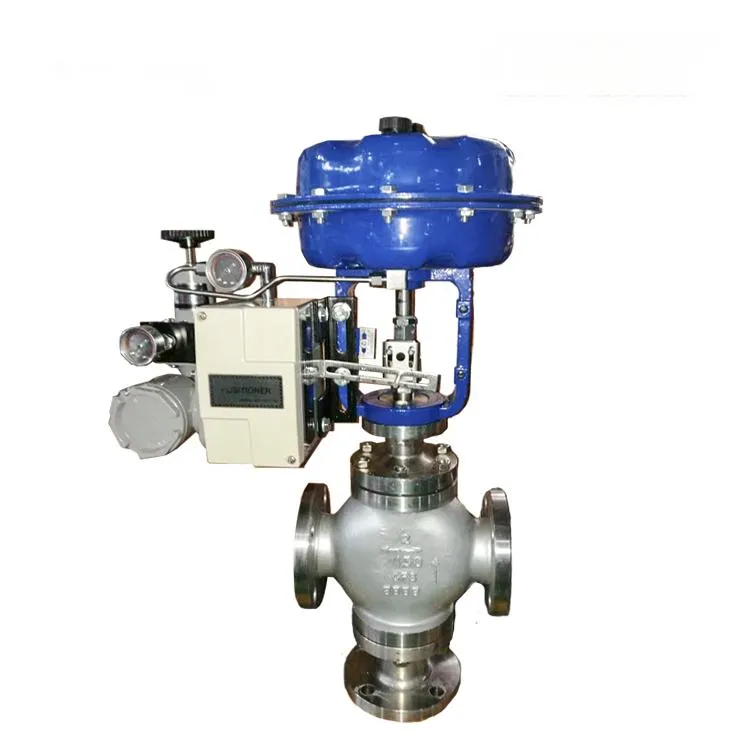
F-ZJHQ Diaphragm 3-way Control Valve
The Diaphragm 3-Way Control Valve uses a pneumatic actuator and three-port body for precise flow control and zero leakage, ensuring efficient mixing or diverting in corrosive or high-temperature systems; its stainless-steel body with PTFE or EPDM diaphragm
| Size Range | DN15 – DN300 (½″ – 12″) |
| Working Pressure Range: | 0.6 MPa – 6.4 MPa (6 – 64 bar) |
| Working Temperature Range: | −20 °C to +220 °C (−4 °F to +428 °F) |
| Body Material: | Carbon Steel / Stainless Steel (SS304, SS316) |
| Connection Type: | Flanged / Threaded / Welded (per customer requirement) |
| Applicable Medium: | Steam, Water, Air, Oil, Corrosive Fluids, Chemical Solutions |
| Actuator Type: | Pneumatic Diaphragm Actuator (with Positioner) |
| Voltage Options | 24 VDC / 110 VAC / 220 VAC |
| Design Standard | GB/T 12238 / IEC 534 / ANSI B16.34 / DIN EN 1349 |
| Testing Standard | GB/T 13927 / API 598 / EN 12266-1 |
| Fire-Safe Design | Optional Fire-Safe Construction per API 607 |
| Certification | CE / RoHS / ISO 9001 / IP65 (Actuator) |
| Customization | Above Are Standard Parameter Samples. If You Have Specific Parameters And Materials, We Can Customize Them All. |
| Series | AT | AW | Linear | Pneumatic Cylinder | الصحية |
|---|---|---|---|---|---|
| Valve Body | Ball valve, butterfly valve, plug valve | Gate valve, Global valve | Knife gate valve | Sanitary butterfly valve | |
| Function | Double Acting, Single Acting (Failure Resetting FO or FC) | ||||
| ملحقات التحكم |
• Solenoid Valve, Filter Regulator Lubricator (F.R.L.), Positioner, Limit Switch, Handwheel • Solenoid Valve & Positioner are with Explosion-proof grade and Signal Feedback type for choice | ||||
| Operating Medium |
Clean and dry or lubricated air or inert gas. Any non-corrosive gas that is compatible with the internal parts of the actuator and the lubricant. The dew point temperature of the operating medium is -20°C, and the size of impurity particles is no more than 30u. When selecting a positioner, the impurity particle size should be no more than 5u. | ||||
| Air Source Pressure | 3bar to 8bar | ||||
| Operating Environment Temperature |
• Standard type: -20°C to +80°C • Low-temperature type: -40°C to +80°C • High-temperature type: -20°C to +160°C | ||||
| Lubrication |
Under normal operating conditions, the standard type does not require additional lubricant. For low-temperature or high-temperature environments, special lubricants are required. | ||||
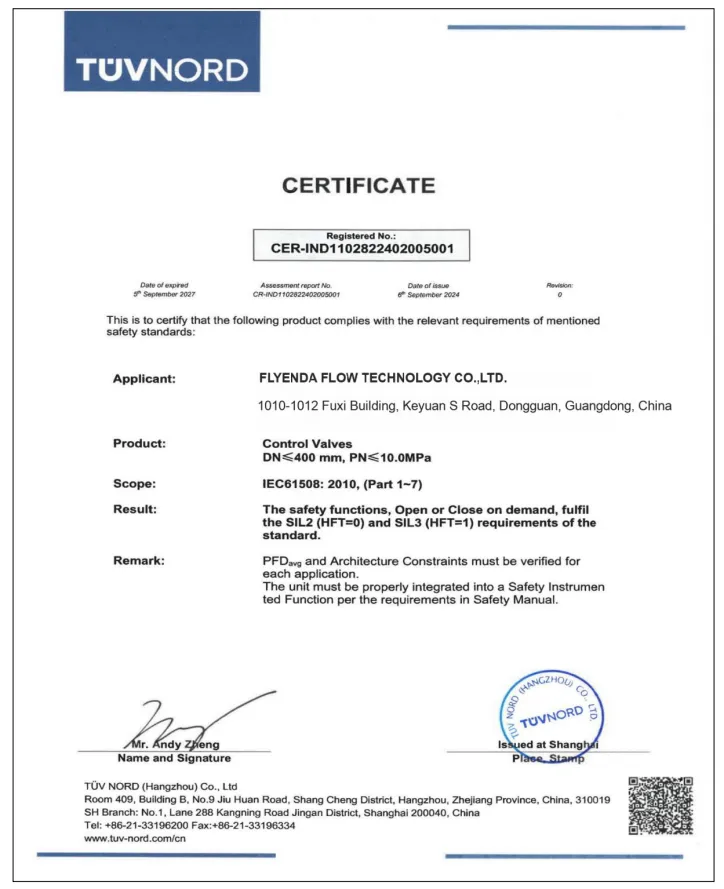
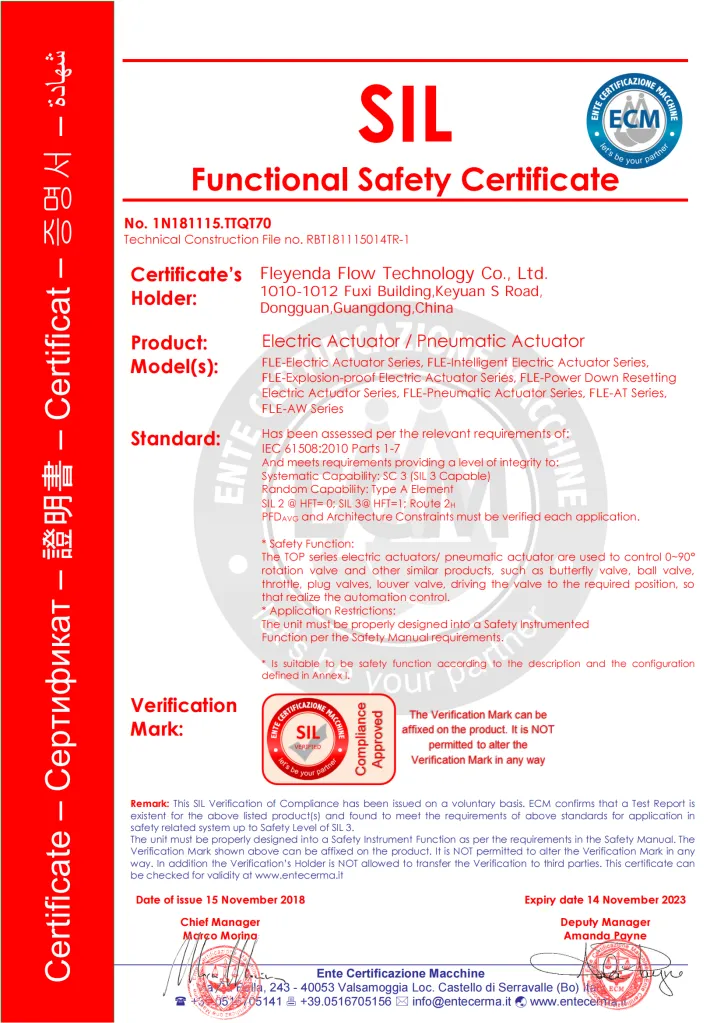
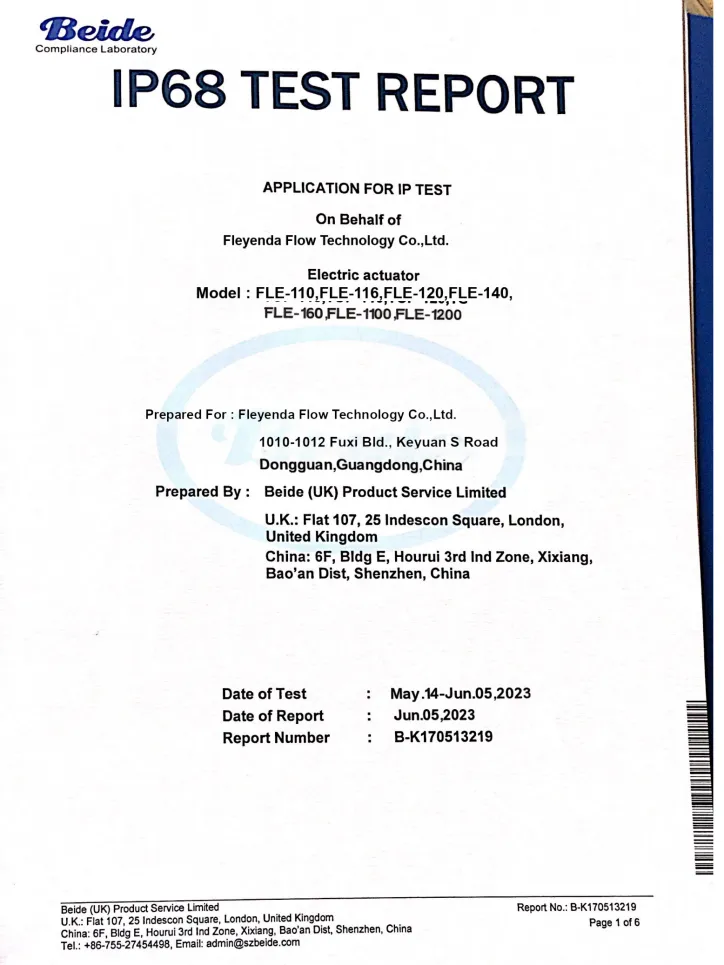
Certified Quality for Industrial Valve Applications
Fleyenda valves and electric actuators are built for stable performance, reliable operation, and long-term industrial use. With certified quality support, they are suitable for water treatment, chemical processing, automation, and industrial process control systems.
FAQs That 80% Users Interest
1. What causes performance issues in a diaphragm 3-way control valve and how can they be avoided?
• Diaphragm wear or fatigue can lead to air leakage and reduced flow accuracy; regular inspection and replacement prevent failure.
• Cavitation and erosion under high differential pressure shorten service life; correct valve sizing avoids this.
• Wrong selection between mixing and diverting types causes unstable flow; confirm configuration before installation.
• Stable air supply and accurate actuator calibration ensure reliable operation.
2. How do I select the correct size and actuator for a 3-way diaphragm control valve?
• Define whether your system requires mixing flow or diverting operation, as this determines port layout.
• Calculate flow coefficient (Cv), pressure range, and temperature to select the proper size.
• Choose a pneumatic actuator for fast response or an electric actuator for precise automation control.
• Match valve body and seat materials with the working medium to improve durability and sealing.
3. Can a 3-way diaphragm valve handle corrosive or high-temperature fluids?
• Yes, the diaphragm-actuated valve isolates the medium from the actuator, ideal for corrosive and clean-in-place systems.
• PTFE, EPDM, or Viton diaphragms provide chemical and thermal resistance.
• Stainless steel or lined carbon steel bodies protect against corrosion in chemical or water treatment applications.
• Proper diaphragm selection ensures tight shut-off and stable operation under extreme conditions.
4. What are the best maintenance practices for a pneumatic 3-way control valve?
• Inspect the diaphragm assembly for cracks or deformation to maintain sealing.
• Check actuator feedback and travel accuracy to prevent positioning errors.
• Monitor for vibration, cavitation, or seat wear as indicators of process imbalance.
• Use genuine spare parts and follow preventive maintenance schedules to reduce downtime.