


FAT-VQ-F Pneumatic V-Port Ball Valve

FAT-VQ-F Pneumatic V-Port Ball Valve
The Pneumatic V-Port Ball Valve uses a V-shaped ball for precise flow control, ensuring accurate modulation, lower pressure loss, and 30% higher control efficiency, verified by ISO 5211 and API 598 standards.
| Size Range | ½” – 8″ (DN15–DN200) |
| Working Pressure Range: | PN16–PN40 / 150–600 PSI |
| Working Temperature Range: | −20°C to +180°C |
| Body Material: | Stainless Steel CF8 / CF8M (AISI 304 / 316) |
| Connection Type: | Flanged (ANSI, DIN, JIS optional) |
| Applicable Medium: | Water, Steam, Air, Gas, Oil, Chemical, Pulp, Slurry |
| نوع المشغل: | Double Acting or Spring Return Pneumatic Actuator |
| خيارات الجهد الكهربائي | 24 فولت تيار مستمر، 110 فولت تيار متردد، 220 فولت تيار متردد |
| معايير التصميم | ISO 5211, ASME B16.34 |
| معيار الاختبار | API 598 / EN12266-1 |
| تصميم مقاوم للحريق | API 607 / ISO 10497 compliant |
| الشهادة | CE / RoHS / ISO 9001 / IP65 (المشغل) |
| التخصيص | ما ورد أعلاه عبارة عن أمثلة للمعلمات القياسية. إذا كانت لديك معلمات ومواد محددة، فيمكننا تخصيصها جميعًا. |
| Series | AT | AW | Linear | Pneumatic Cylinder | الصحية |
|---|---|---|---|---|---|
| جسم الصمام | Ball valve, butterfly valve, plug valve | Gate valve, Global valve | Knife gate valve | Sanitary butterfly valve | |
| الوظيفة | Double Acting, Single Acting (Failure Resetting FO or FC) | ||||
| ملحقات التحكم |
• Solenoid Valve, Filter Regulator Lubricator (F.R.L.), Positioner, Limit Switch, Handwheel • Solenoid Valve & Positioner are with Explosion-proof grade and Signal Feedback type for choice | ||||
| Operating Medium |
Clean and dry or lubricated air or inert gas. Any non-corrosive gas that is compatible with the internal parts of the actuator and the lubricant. The dew point temperature of the operating medium is -20°C, and the size of impurity particles is no more than 30u. When selecting a positioner, the impurity particle size should be no more than 5u. | ||||
| Air Source Pressure | 3bar to 8bar | ||||
| Operating Environment Temperature |
• Standard type: -20°C to +80°C • Low-temperature type: -40°C to +80°C • High-temperature type: -20°C to +160°C | ||||
| Lubrication |
Under normal operating conditions, the standard type does not require additional lubricant. For low-temperature or high-temperature environments, special lubricants are required. | ||||
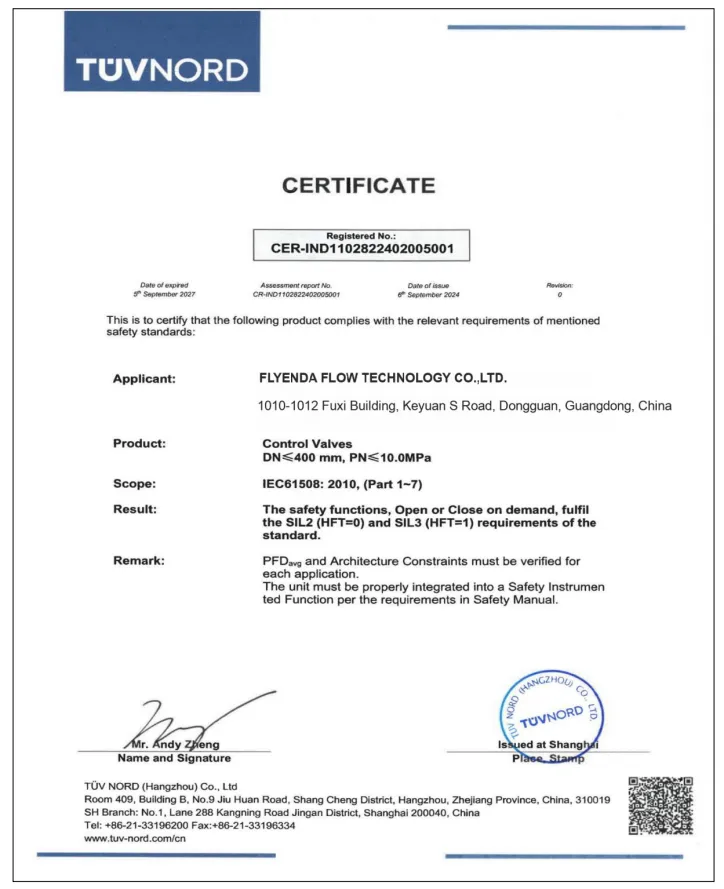
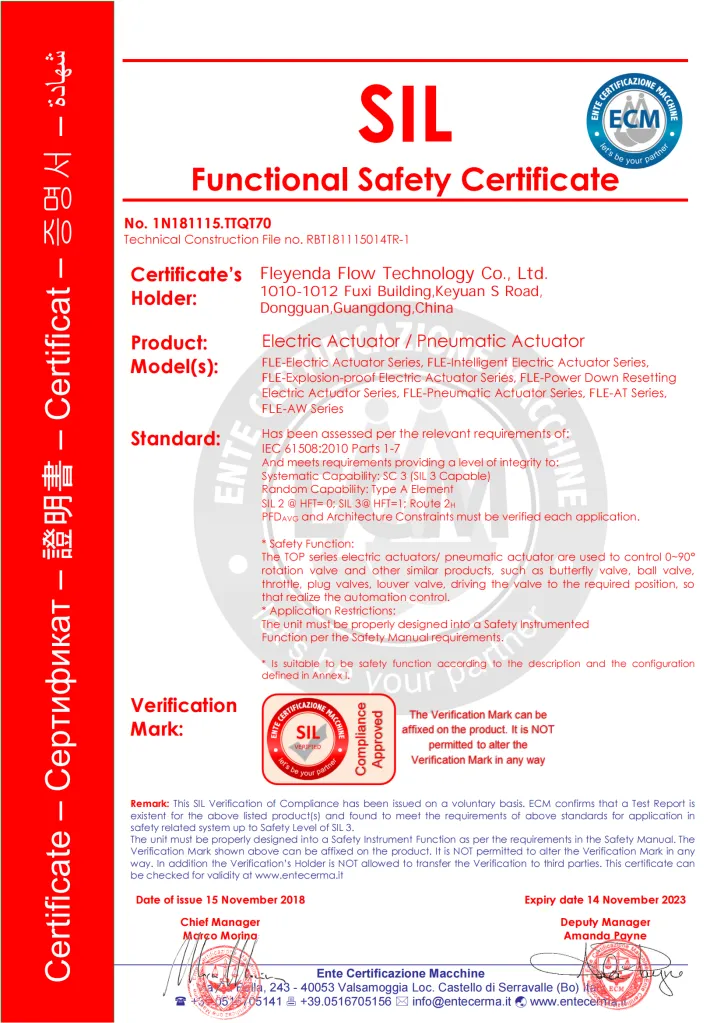
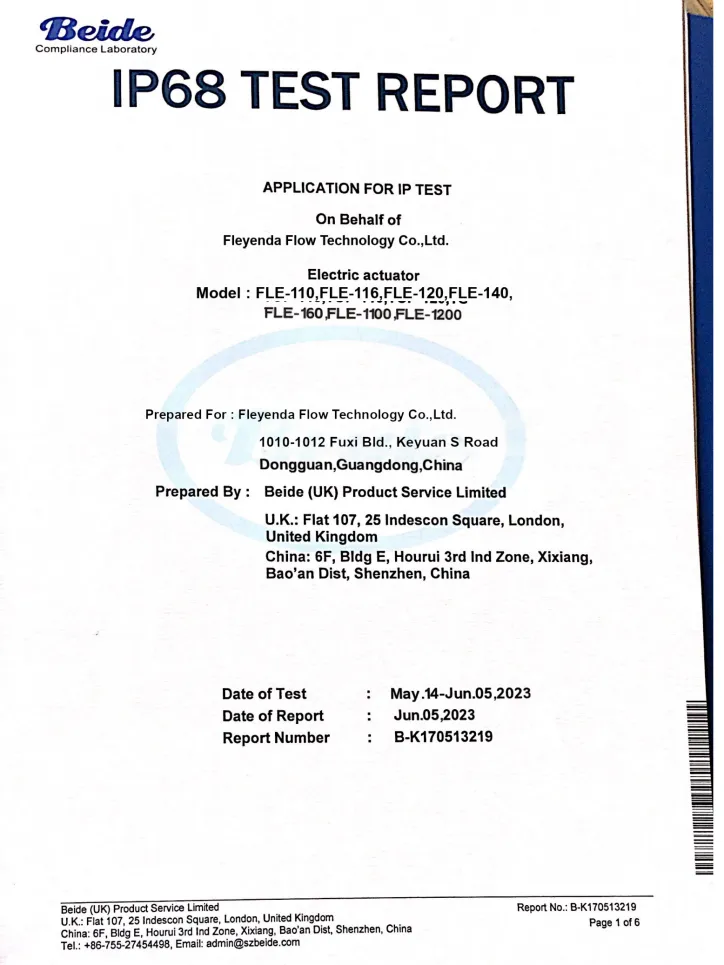
جودة معتمدة لتطبيقات الصمامات الصناعية
صُممت صمامات ومشغلات كهربائية «فلييندا» لتوفير أداء مستقر، وتشغيل موثوق، واستخدام صناعي طويل الأمد. وبفضل الدعم المعتمد في مجال الجودة، فهي مناسبة لمعالجة المياه، والمعالجة الكيميائية، والأتمتة، وأنظمة التحكم في العمليات الصناعية.
الأسئلة الشائعة التي تهم مستخدمي طراز 80%
1. When should I choose a Pneumatic V-Port Ball Valve instead of a standard control valve?
• The V-notch ball design delivers precise throttling and proportional flow control.
• Provides linear or equal-percentage flow characteristics for stable regulation of liquids and gases.
• The sharp V-edge minimizes clogging in slurry or fibrous media.
• Compact and fast-acting, suitable for automated process systems requiring accurate modulation.
2. What are the best practices for installing a Pneumatic V-Port Ball Valve in automation systems?
• Match the ISO 5211 mounting interface to ensure actuator compatibility.
• Connect the actuator to PLC or DCS with 4–20 mA or digital signals for precise control.
• Keep correct pipeline alignment and straight runs to reduce turbulence.
• Verify rangeability and leakage class before commissioning.
3. How does a V-Port Control Valve perform with abrasive or corrosive media?
• Stainless-steel body and reinforced seats resist corrosion and wear.
• Metal-seated ball options extend service life in high-pressure, high-velocity flow.
• Streamlined passage minimizes pressure loss and erosion.
• Fire-safe and anti-blowout stem designs enhance operational safety.
4. What maintenance steps keep a Pneumatic V-Port Ball Valve running efficiently?
• Check actuator air supply, feedback, and torque settings regularly.
• Clean the V-notch ball and seat to prevent buildup and sticking.
• Inspect seats for leakage and replace worn seals promptly.
• Keep spare actuator and positioner parts ready for quick servicing.