


FAT-Q-TG Pneumatic High-Pressure 3-Ways Ball Valve
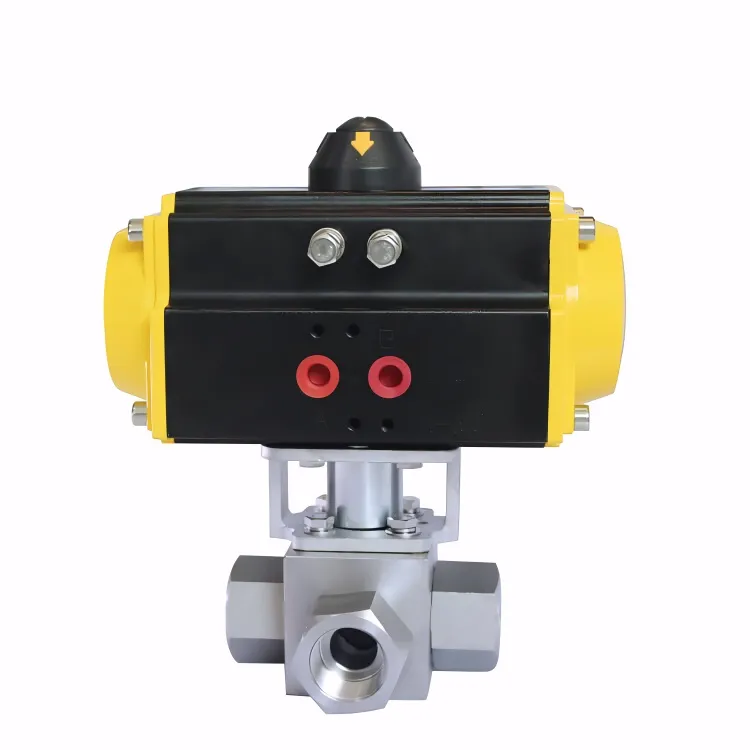
FAT-Q-TG Pneumatic High-Pressure 3-Ways Ball Valve
The Pneumatic High-Pressure 3-Way Ball Valve features a stainless steel body and reinforced seal, ensuring leak-free control up to 1000 PSI; it provides reliable flow diversion or mixing in oil, gas, and chemical systems, reducing maintenance costs and downtime—verified by ISO 5211, API 598, and API 607 certifications.
| Size Range | 1/4″–4″ (DN8–DN100) |
| Working Pressure Range: | Up to 1000 PSI (PN63) |
| Working Temperature Range: | -20°C to +180°C |
| Body Material: | Stainless Steel (CF8M/SS316) |
| Connection Type: | Female Thread (BSP/NPT), Flanged, or Welded Ends |
| Applicable Medium: | Water, Oil, Gas, Steam, Corrosive Fluids |
| نوع المشغل: | Double Acting or Spring Return Pneumatic Actuator |
| خيارات الجهد الكهربائي | 24 فولت تيار مستمر، 110 فولت تيار متردد، 220 فولت تيار متردد |
| معايير التصميم | ISO 5211, DIN 3357, ASME B16.34 |
| معيار الاختبار | API 598, EN 12266-1 |
| تصميم مقاوم للحريق | API 607 / ISO 10497 Compliant |
| الشهادة | CE / RoHS / ISO 9001 / IP65 (المشغل) |
| التخصيص | ما ورد أعلاه عبارة عن أمثلة للمعلمات القياسية. إذا كانت لديك معلمات ومواد محددة، فيمكننا تخصيصها جميعًا. |
| Series | AT | AW | Linear | Pneumatic Cylinder | الصحية |
|---|---|---|---|---|---|
| جسم الصمام | Ball valve, butterfly valve, plug valve | Gate valve, Global valve | Knife gate valve | Sanitary butterfly valve | |
| الوظيفة | Double Acting, Single Acting (Failure Resetting FO or FC) | ||||
| ملحقات التحكم |
• Solenoid Valve, Filter Regulator Lubricator (F.R.L.), Positioner, Limit Switch, Handwheel • Solenoid Valve & Positioner are with Explosion-proof grade and Signal Feedback type for choice | ||||
| Operating Medium |
Clean and dry or lubricated air or inert gas. Any non-corrosive gas that is compatible with the internal parts of the actuator and the lubricant. The dew point temperature of the operating medium is -20°C, and the size of impurity particles is no more than 30u. When selecting a positioner, the impurity particle size should be no more than 5u. | ||||
| Air Source Pressure | 3bar to 8bar | ||||
| Operating Environment Temperature |
• Standard type: -20°C to +80°C • Low-temperature type: -40°C to +80°C • High-temperature type: -20°C to +160°C | ||||
| Lubrication |
Under normal operating conditions, the standard type does not require additional lubricant. For low-temperature or high-temperature environments, special lubricants are required. | ||||
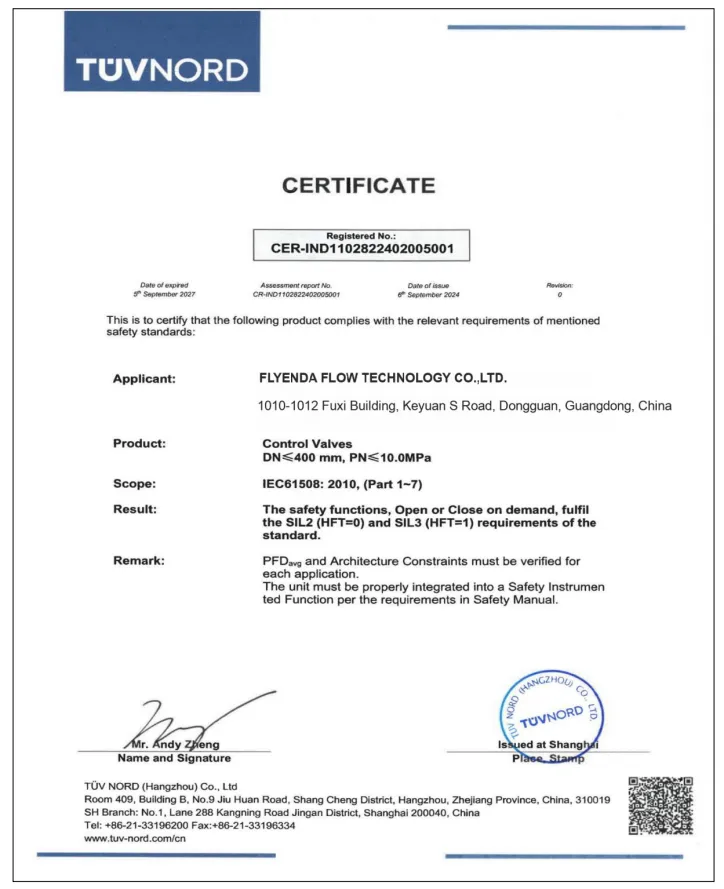
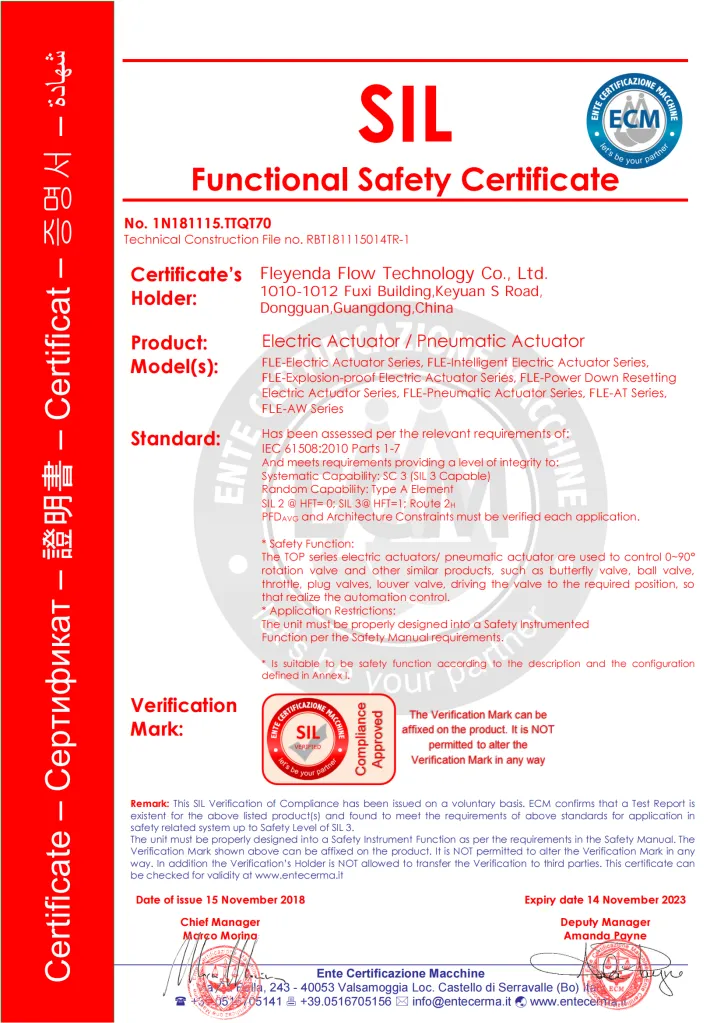
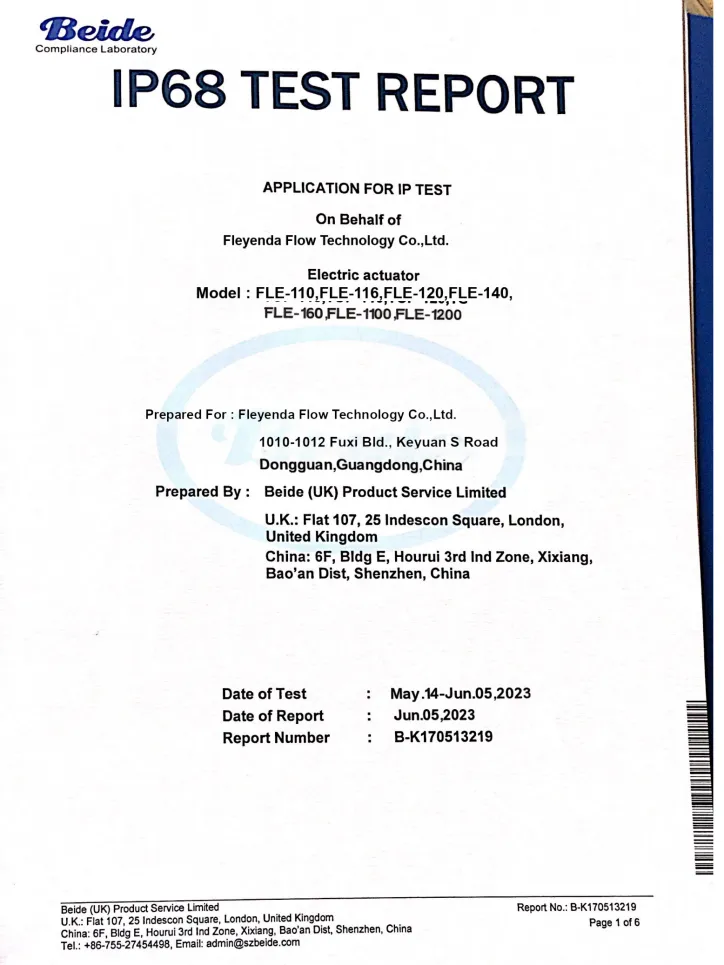
جودة معتمدة لتطبيقات الصمامات الصناعية
صُممت صمامات ومشغلات كهربائية «فلييندا» لتوفير أداء مستقر، وتشغيل موثوق، واستخدام صناعي طويل الأمد. وبفضل الدعم المعتمد في مجال الجودة، فهي مناسبة لمعالجة المياه، والمعالجة الكيميائية، والأتمتة، وأنظمة التحكم في العمليات الصناعية.
الأسئلة الشائعة التي تهم مستخدمي طراز 80%
1.What makes the Pneumatic High-Pressure 3-Way Ball Valve suitable for high-duty fluid systems?
• Designed for ultra-high operating pressures up to 5800 PSI, ensuring reliable sealing under extreme conditions.
• The 3-port configuration supports both mixing and diverting functions, reducing valve quantity in complex pipelines.
• Built with 304/316 stainless steel and PTFE/PFA seats for corrosion resistance in aggressive media.
• Compatible mounting interface allows quick pneumatic actuator installation and long cycle life.
2.How should I select the correct size and flow pattern (L-port vs T-port)?
• Use an L-port for diverting flow between two outlets or alternating inlets.
• Choose a T-port when mixing two sources or splitting one source into two destinations.
• Match valve diameter and flow coefficient to system pressure drop to avoid cavitation or loss of capacity.
• Select the connection type (threaded, flanged, welded) that fits existing pipeline standards.
3.What are common issues with a high-pressure 3-way valve and how to avoid them?
• Seat leakage occurs when using improper sealing materials or overpressure operation.
• Insufficient actuator air pressure can cause incomplete switching and partial flow.
• Wrong port orientation may lead to system imbalance or reverse flow.
• Impurities in the medium can damage the ball and seat; install filters before the valve.
4.How can I integrate this valve into an automated control system?
• The pneumatic actuator offers fast response and stable control for frequent switching.
• Add limit switches or feedback modules for remote status monitoring and system safety.
• Configure the control logic for mixing or diverting functions to prevent pressure shocks.
• Choose actuator components rated for air supply, temperature, and environmental conditions.