


الصمام المبطّن بـ PTFE في قطاع التعدين: الدليل الصناعي الشامل للتحكم في التدفق المقاوم للأحماض
ملخص تنفيذي
تستهلك صناعة التعدين العالمية كمية من حمض الكبريتيك تفوق ما يستهلكه أي قطاع صناعي آخر على وجه الأرض. بدءًا من تكرير الفوسفات في المغرب وفلوريدا وصولًا إلى استخراج الليثيوم في صحراء أتاكاما التشيلية، ومن عملية الترشيح الكيميائي لليورانيوم في كازاخستان إلى معالجة العناصر الأرضية النادرة في سيتشوان بالصين — فإن كيمياء استخراج المعادن الحديثة هي، في جوهرها، كيمياء تفاعل الأحماض القوية مع المعادن والمواد المقاومة. وتُعد البنية التحتية التي توجه هذه التدفقات المسببة للتآكل وتتحكم فيها وتنظمها العمود الفقري غير المُقدَّر لكل منجم ومصنع لمعالجة المعادن.
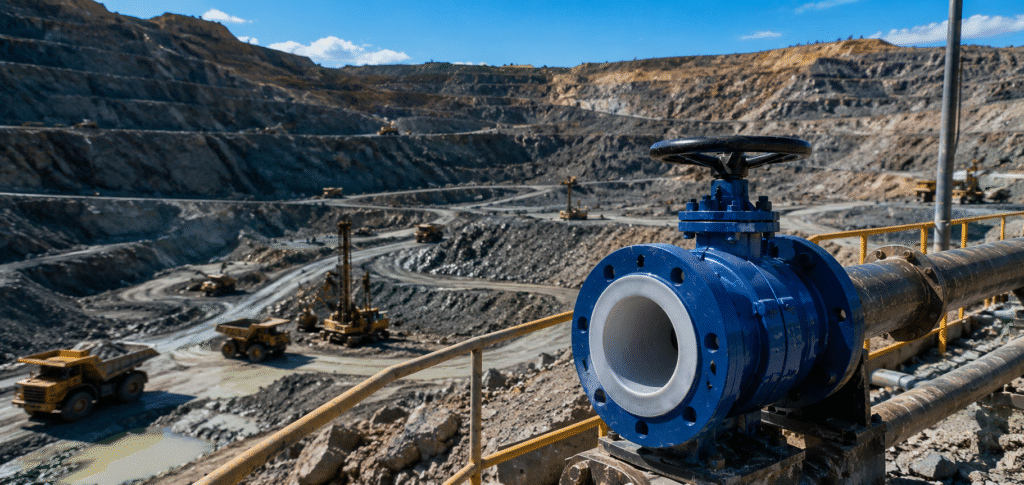
من بين جميع الصمامات والأنابيب والتجهيزات التي تشكل هذه البنية التحتية،, صمامات مبطنة بـ PTFE (الصمامات المبطنة بالبولي تترافلوروإيثيلين) تحتل مكانة حاسمة وفريدة من نوعها. فهي تقع عند نقطة التقاء بين الخمول الكيميائي والموثوقية الميكانيكية — وهو مزيج تتطلبه البيئات الحمضية القاسية وذات الأحجام الكبيرة في مجالي التعدين والمعالجة المعدنية المائية. يستكشف هذا المقال، بعمق، الأسباب التي جعلت الصمامات المبطنة بـ PTFE المعيار الصناعي للتحكم في الوسائط المسببة للتآكل في مجال التعدين، وكيف تقارن هذه الصمامات بـ صمامات مبطنة بـ PFA والبدائل الأخرى المبطنة بالبوليمرات الفلورية، وما يجب أن تعرفه فرق المشتريات والهندسة عند تحديد مواصفاتها للاستخدامات العملية.
جدول المحتويات
- الاقتصاد الحمضي في قطاع التعدين الحديث
- لماذا تفشل الصمامات التقليدية في البيئات الحمضية في قطاع التعدين
- ما هو الصمام المبطّن بـ PTFE؟ المواد، والتصميم، والأداء
- تطبيقات الصمامات المبطنة بـ PTFE حسب نوع المنجم
- 4.1 تعدين الفوسفات
- 4.2 معالجة التيتانيوم (الإلمنيت)
- 4.3 ترشيح اليورانيوم
- 4.4 معالجة سبودومين الليثيوم
- 4.5 تعدين العناصر الأرضية النادرة
- الصمام المبطّن بـ PTFE مقابل الصمام المبطّن بـ PFA: كيفية الاختيار
- أنواع الصمامات المستخدمة في أنظمة الأحماض في مجال التعدين
- المواصفات والمعايير الفنية الرئيسية
- التعدين في أمريكا الجنوبية: دراسة حالة حول الطلب على صمامات الحمض
- التكلفة الإجمالية للملكية: الصمامات المبطنة بـ PTFE مقارنةً بالبدائل
- دليل المشتريات: ما الذي يجب الانتباه إليه عند شراء الصمامات المبطنة بـ PTFE
- اتجاهات الصناعة ومستقبل الصمامات المبطنة بالفلور في قطاع التعدين
- الأسئلة الشائعة
- الخلاصة
1. الاقتصاد الحمضي في قطاع التعدين الحديث
حامض الكبريتيك: المادة الكيميائية الخفية التي تحرك عجلة عالم التعدين
لفهم السبب صمامات مبطنة بـ PTFE تعتبر هذه المواد لا غنى عنها في مجال التعدين، لذا يجب عليك أولاً أن تفهم الدور الاستثنائي الذي يلعبه حمض الكبريتيك في صناعة المعادن على مستوى العالم. فحمض الكبريتيك (H₂SO₄) ليس مجرد مادة كيميائية تُستخدم في التعدين — بل هو، من نواحٍ عديدة، شريان الحياة التشغيلي لهذه الصناعة بأسرها.
على الصعيد العالمي، يمثل قطاعا التعدين والأسمدة معاً أكثر من 60% من الاستهلاك العالمي لحمض الكبريتيك. وبالقيمة المطلقة، يُترجم هذا إلى مئات الملايين من الأطنان المترية سنويًا — وهو حجم يتفوق بشكل كبير على جميع الاستخدامات الكيميائية الصناعية الأخرى تقريبًا. والسبب واضح: يتميز حمض الكبريتيك بفعالية فريدة في تكسير الهياكل المعدنية المعقدة، وفصل العناصر المستهدفة عن الصخور غير المفيدة، وتحويل المراحل المعدنية غير القابلة للذوبان إلى أشكال قابلة للذوبان والاستخلاص.
يلخص الجدول أدناه القطاعات الرئيسية في مجال التعدين وعلاقتها بحمض الكبريتيك:
| قطاع التعدين | العملية الأساسية | دور حمض الكبريتيك | مستوى الاستهلاك |
|---|---|---|---|
| تعدين الفوسفات | حمض الفوسفوريك المُنتج بالطريقة الرطبة (WPA) | يقوم بتفكيك الهيكل الفوسفاتي للكالسيوم، ويحل محل حمض الفوسفوريك | مرتفع للغاية (المؤشر الصناعي #1 على الصعيد العالمي) |
| التيتانيوم (الإلمنيت) | ثاني أكسيد التيتانيوم (أبيض التيتانيوم) المُنتج بطريقة الكبريتات | الهضم الحمضي للخام في درجات حرارة عالية، وفصل الحديد والتيتانيوم | مرتفع (3–4 أطنان من الحمض لكل طن من المنتج) |
| تعدين اليورانيوم | الترشيح الكمي / الاستخلاص في الموقع (ISR) | يقوم بحل اليورانيوم من الخامات منخفضة الجودة، ويشكل مركبات كبريتات اليورانيل القابلة للذوبان | مرتفع (يختلف حسب قلوية الخام) |
| الليثيوم (السبودومين) | عملية التحميص الحمضي | يحول التبادل الأيوني عند درجة حرارة عالية الليثيوم إلى كبريتات الليثيوم | متوسط–مرتفع (يتزايد بسرعة مع تزايد الطلب على المركبات الكهربائية) |
| تعدين العناصر الأرضية النادرة | التحميص/التكرير باستخدام حمض الكبريتيك المركّز (H₂SO₄) | يدمر الشبكات البلورية المعقدة المكونة من الفلوروكربون والسيريت، ويستخلص عناصر التربة النادرة | متوسط |
| تعدين النحاس | الترشيح بالكومة / SX-EW | يستخلص النحاس من خامات الأكسيد | مرتفع |
| النيكل/الكوبالت | الترشيح الحمضي عالي الضغط (HPAL) | يستخلص النيكل والكوبالت من خامات اللاتريت عند درجة حرارة 250 درجة مئوية، وضغط يتراوح بين 4 و5 ميجا باسكال | مرتفع للغاية |
لهذه الحقيقة المتعلقة بالتركيزات العالية من الحمض آثار هائلة على معدات المعالجة. فكل خط أنابيب، ومضخة، ومفاعل، وخزان تخزين، و— والأهم من ذلك — كل صمام يتعامل مع هذه المواد يجب أن يكون قادرًا على تحمل حمض الكبريتيك المركّز والساخن والملوث في كثير من الأحيان دون أن يتعرض للتآكل أو التسرب أو التعطل. وهنا يكمن صمامات مبطنة بـ PTFE و صمامات مبطنة بـ PFA أن تصبح الحل الهندسي المفضل.
“صمام الحمض” كفئة صناعية
تبلغ قيمة سوق صمامات التعدين العالمية عدة مليارات من الدولارات سنويًّا، حيث يستحوذ قطاع الصمامات المقاومة للتآكل — الذي يشمل الصمامات المبطنة بالبوليمرات الفلورية، والصمامات المصنوعة من السبائك المعدنية، والصمامات المبطنة بالمطاط — على حصة كبيرة ومتنامية. كما أن انتشار المشاريع الجديدة لاستخراج الليثيوم والنيكل والعناصر الأرضية النادرة في أنحاء أمريكا الجنوبية وأفريقيا وجنوب شرق آسيا يسهم في تسريع الطلب على معدات التحكم في التدفق المقاومة للأحماض.
من بين الحلول المختلفة المتاحة،, صمامات مبطنة بالفلور — هذه المجموعة التي تشمل الصمامات المبطنة بـ PTFE، والصمامات المبطنة بـ PFA، والأنواع المبطنة بـ PVDF — قد برزت كخيار مفضل في معظم تطبيقات معالجة حمض الكبريتيك عند درجات حرارة أقل من 200 درجة مئوية. وتعود الأسباب إلى عوامل كيميائية واقتصادية على حد سواء، ومن الجدير فهمها بالتفصيل.
2. لماذا تفشل الصمامات التقليدية في البيئات الحمضية في قطاع التعدين
مشكلة التآكل بالأرقام
قبل دراسة الحل، يجدر بنا تحديد حجم المشكلة كمياً. تشير التقديرات إلى أن الأعطال المرتبطة بالتآكل في مصانع العمليات الكيميائية والتعدينية تكلف الصناعة العالمية عشرات المليارات من الدولارات سنوياً. وفي أي مصنع نموذجي للترشيح الحمضي أو معالجة المعادن، تستحوذ الصمامات على حصة كبيرة بشكل غير متناسب من تكاليف الصيانة للأسباب التالية:
- وهي مكونات ميكانيكية عاملة تتعرض لكل من التآكل الكيميائي والتآكل الميكانيكي
- وهي موجودة بأعداد هائلة (قد يحتوي مصنع كبير لإنتاج الأحماض على آلاف الصمامات)
- غالبًا ما يكون عطل الصمام مفاجئًا، وقد يؤدي إلى توقف الإنتاج أو وقوع حوادث تتعلق بالسلامة
- يستغرق استبدال الأجزاء في بيئة العمل التي تتضمن أحماضًا خطرة وقتًا طويلاً ويتطلب إجراءات متخصصة
تم توثيق أنماط فشل المواد التقليدية في البيئات الحمضية المستخدمة في التعدين توثيقًا جيدًا:
الفولاذ الكربوني يبدأ في التآكل فورًا في حمض الكبريتيك المخفف، ويتلف بسرعة حتى عند تركيزات حمض الكبريتيك (H₂SO₄) التي تتجاوز 5%. عند التركيزات الأعلى (فوق ~93%)، يُظهر الفولاذ الكربوني حالة من التخميل، لكن تركيزات التشغيل في معظم عمليات التعدين (10–80%) هي بالضبط المنطقة الأكثر تآكلًا.
الفولاذ المقاوم للصدأ (304، 316) يوفر مقاومة أفضل، لكنه لا يزال عرضة للتآكل النقطي، والتآكل الشقي، والتشقق الناتج عن التآكل تحت الإجهاد في حمض الكبريتيك الساخن والمركّز. وفي وجود أيونات الكلوريد — الشائعة في العديد من مصادر مياه المناجم — يتدهور الفولاذ المقاوم للصدأ بوتيرة أسرع.
الحديد الزهر كما أن هذا النوع غير ملائم أيضًا: فعلى الرغم من استخدامه تاريخيًّا في التطبيقات التي تتضمن أحماضًا مخففة، إلا أنه يتآكل بسرعة في التركيزات المستخدمة في معالجة المعادن، وهو غير مناسب تمامًا للتطبيقات التي تتطلب تركيزات أعلى من 30% من حمض الكبريتيك (H₂SO₄).
السبائك النادرة (هاستيلوي، إنكونيل، الفولاذ المقاوم للصدأ دوبلكس، التيتانيوم) توفر مقاومة ممتازة للتآكل، ولكن بأسعار تجعلها غير عملية بالنسبة لمخزونات الصمامات على نطاق واسع. يمكن أن تبلغ تكلفة صمام كروي واحد من نوع هاستيلوي C-276 بقطر 4 بوصات ما بين 10 إلى 20 ضعف سعر صمام مكافئ مبطّن بـ PTFE، دون أن يكون لها أي ميزة مقابلة في معظم ظروف الاستخدام الحمضية.
الصمامات المبطنة بالمطاط تتميز هذه المواد بفعاليتها من حيث التكلفة وتستخدم على نطاق واسع في تطبيقات الملاط، لكن المطاط الطبيعي ومعظم أنواع المطاط الصناعي تتعرض لتآكل شديد بفعل حمض الكبريتيك المركز، لا سيما عند درجات الحرارة المرتفعة. فحدها الأقصى للمقاومة الكيميائية منخفض للغاية بالنسبة للعديد من تطبيقات التعدين.
ظهور البوليمرات الفلورية: ثورة كيميائية في تبطين الصمامات
أدى تطوير مادة البولي تترافلوروإيثيلين (PTFE) في عام 1938 — وتسويقها تحت العلامة التجارية «تيفلون®» (Teflon®) التابعة لشركة دوبونت — إلى فتح فصل جديد تمامًا في هندسة العمليات الكيميائية. ويمنح البناء الجزيئي لـ PTFE، الذي يتكون من سلسلة كربونية أساسية محمية بالكامل بذرات الفلور، هذا المركب مستوى من الخمول الكيميائي لا مثيل له تقريبًا بين البوليمرات الهندسية.
تُعد الرابطة الكربونية-الفلورية واحدة من أقوى الروابط التساهمية في الكيمياء العضوية (حوالي 544 كيلوجول/مول). إن قوة هذه الرابطة، مقترنةً بـ“درع” ذرة الفلور شديد التماسك والتجانس المحيط بسلسلة الكربون، تعني أنه لا توجد أي مادة كيميائية تقريبًا قادرة على اختراق مادة PTFE أو التفاعل معها أو تحللها. وتتميز هذه المادة بمقاومتها لجميع الأحماض تقريبًا (بما في ذلك H₂SO₄ المركّز، وHF، وHCl، وHNO₃)، وجميع القواعد تقريبًا، وجميع المذيبات العضوية تقريبًا، ومعظم عوامل الأكسدة والاختزال.
عند استخدام مادة PTFE لتبطين الأسطح الداخلية الملامسة للسائل في الصمام — تجويف الجسم، والكرة أو القرص، والساق، وجميع أسطح الإحكام — فإن النتيجة هي صمام مقاوم للأحماض التي لا تعرض سوى مادة PTFE (أو بوليمر فلوري آخر) لسائل العملية. تستمد الصمامات قدرتها على تحمل الأحمال الهيكلية من الغلاف المعدني (عادةً ما يكون من الحديد الزهر أو الفولاذ الكربوني أو الفولاذ المقاوم للصدأ)، بينما تستمد مقاومتها الكيميائية من البطانة المصنوعة من البوليمر الفلوري. يوفر هذا المزيج أداءً متميزًا بتكلفة لا تمثل سوى جزء بسيط من تكلفة التصميم المصنوع من السبائك الصلبة النادرة.
3. ما هو الصمام المبطّن بـ PTFE؟ المواد، والتصميم، والأداء
تركيب صمام مبطّن بـ PTFE
A صمام مبطّن بـ PTFE هو جهاز للتحكم في التدفق تكون فيه جميع الأسطح الملامسة للسائل — أي تلك التي تتلامس مباشرة مع سائل العملية — مطلية أو مبطنة بمادة البولي تترافلوروإيثيلين. ويتألف التصميم النموذجي من:
الغلاف الخارجي (الهيكل): عادةً ما تكون مصنوعة من الحديد الزهر (GG25، GG20) أو الفولاذ الكربوني (WCB)، مما يوفر القوة الميكانيكية، والقدرة على احتواء الضغط، ووصلات ذات حواف مع نظام الأنابيب. وتستخدم بعض الإصدارات المتميزة أغلفة خارجية من الفولاذ المقاوم للصدأ لتوفير مزيد من الأمان في ظروف التشغيل ذات الضغط العالي أو درجات الحرارة المرتفعة.
بطانة PTFE: يُطبق على التجويف الداخلي للجسم، وقرص الصمام أو الكرة، والساق، وجميع أسطح مانعة التسرب الخاصة بالحشوات. وفي الصمامات عالية الجودة، تكون البطانة عبارة عن غلاف من مادة PTFE متجانس وغير ملحوم أو قطعة مدمجة مصبوبة، دون أي تعرض للمعدن لسائل العملية على الإطلاق. يتراوح سمك البطانة عادةً بين 3 مم و6 مم، اعتمادًا على حجم الصمام وشدة ظروف التشغيل.
الساق والتعبئة: في الصمامات المبطنة بـ PTFE، عادةً ما يكون الجذع مغلفًا بـ PTFE أو مصنوعًا من الفولاذ المقاوم للصدأ المطلي بـ PTFE. وتستخدم حشوة الجذع (المانع للتسرب بين الجذع الدوار/الترددي وجسم الصمام) حلقات شيفرون من مادة PTFE أو موانع تسرب مكافئة من البوليمرات الفلورية لمنع التسرب.
الفلنجات: تُعد الأطراف المزودة بشفاه معيارًا قياسيًّا في تطبيقات التعدين والعمليات الكيميائية، حيث تتيح سهولة التركيب والفك والاستبدال. ويتم تبطين سطح الشفة بمادة PTFE، بما في ذلك سطح الإحكام، بحيث لا يتعرض أي جزء معدني من واجهة الحشية للوسائط المسببة للتآكل.
واجهة المشغل: يمكن تزويد الصمامات المبطنة بـ PTFE بعجلات يدوية أو أذرع تشغيل أو مشغلات هوائية/كهربائية للتشغيل عن بُعد أو التشغيل الآلي — وهي ميزة مهمة في منشآت التعدين حيث يسهم التشغيل عن بُعد للصمامات المستخدمة في التطبيقات الحمضية في تعزيز السلامة.
طرق تبطين مادة PTFE
تعتمد جودة وأداء الصمام المبطّن بـ PTFE بشكل كبير على طريقة تصنيع البطانة وطريقة تركيبها:
القولبة بالضغط (الضغط الساخن): يتم ضغط مسحوق البولي تيترافلوروإيثيلين (PTFE) لتشكيل قطعة أولية ثم يتم تلبيدها داخل القالب. وينتج عن ذلك بطانات كثيفة خالية من الفراغات تتميز بتوحيد ممتاز في السماكة وقوة ربط عالية. وتُعد هذه الطريقة هي المفضلة لصناعة الصمامات المبطنة بالـ PTFE عالية الجودة والمخصصة للاستخدام في مجال التعدين.
الضغط الإيزوستاتيكي: يتم ضغط مادة PTFE تحت ضغط متجانس من جميع الاتجاهات، مما ينتج عنه كثافة وتشطيب سطحي متجانسان للغاية. تُستخدم في التطبيقات عالية الدقة.
بثق المعجون: في بعض الأشكال الهندسية، يتم بثق معجون PTFE لتشكيله. ولا يُستخدم هذا الأسلوب كثيرًا في بطانات الصمامات، لكنه يُستخدم في بعض المكونات الأنبوبية.
الطلاء بالرش الكهروستاتيكي: يُطبق مادة PTFE كطلاء رشّي ثم يتم تلبيدها. تنتج هذه الطريقة طبقات أرقّ، وهي أكثر ملاءمةً للتطبيقات التي لا تتطلب الغمر؛ أما بالنسبة للاستخدامات التي تتطلب الغمر الكامل في الأحماض في مجال التعدين، فإن البطانات المصبوبة بالضغط تُعدّ أفضل بكثير.
الخصائص الفيزيائية والكيميائية الرئيسية لمادة PTFE في تطبيقات الصمامات
| العقارات | قيمة PTFE | أهميتها في مجال التعدين |
|---|---|---|
| مقاومة المواد الكيميائية | مقاوم لجميع الأحماض والقلويات والمذيبات تقريبًا | آمن للاستخدام مع حمض الكبريتيك (H₂SO₄) بجميع تركيزاته حتى درجة حرارة تصل إلى حوالي 200 درجة مئوية |
| أقصى درجة حرارة للتشغيل المستمر | 200 درجة مئوية (260 درجة مئوية لفترة قصيرة) | مناسبة لمعظم عمليات الترشيح الحمضي وعمليات WPA |
| معامل الاحتكاك | 0.04–0.10 (من أدنى القيم بين جميع المواد الصلبة) | يضمن التشغيل السلس للصمام؛ ولا يتطلب عزم دوران كبير |
| مؤشر الأكسجين | >95% | مثبط للهب |
| مقاومة النفاذية | معتدل (تتفوق تقنية PFA في حالة الجزيئات الصغيرة) | مناسبة لمعظم خدمات التعدين |
| قوة الشد | 20–35 ميجا باسكال | أقل متانة من المعادن؛ ويتطلب تعزيزًا معدنيًّا في التطبيقات الإنشائية |
| التدفق البارد (الزحف) | معتدل | اعتبارات مهمة في تصميم الحواف ومقاعد الصمامات |
| إدارة الغذاء والدواء الأمريكية (FDA) / ملائم للاستخدام الغذائي | نعم | لا علاقة له بالتعدين، لكنه يُشير إلى درجة النقاء |
| العزل الكهربائي | ممتاز | مفيد في تطبيقات العمليات الإلكتروليتية |
قيم الضغط ودرجة الحرارة
عادةً ما تكون الصمامات القياسية المبطنة بـ PTFE والمخصصة للاستخدام في مجال التعدين مصنفة وفقًا لما يلي:
- الضغط: من PN10 (150 psi) إلى PN16 (230 psi)، مع إصدارات مخصصة للاستخدام الشاق مصنفة حتى PN25
- درجة الحرارة: من −40 درجة مئوية إلى +150 درجة مئوية بشكل مستمر، مع ارتفاعات قصيرة الأمد تصل إلى 180 درجة مئوية في بعض التصاميم
- الفراغ: خدمة تفريغ كاملة (مهمة لتطبيقات المبخر والمرشح الفراغي في معالجة المعادن)
من المهم ملاحظة أن الخصائص الميكانيكية لـ PTFE تتدهور مع ارتفاع درجة الحرارة، وأن الجمع بين درجة الحرارة المرتفعة والضغط المرتفع يتطلب مراجعة هندسية دقيقة لكل تطبيق محدد.
4. تطبيقات الصمامات المبطنة بـ PTFE حسب نوع المنجم
4.1 تعدين الفوسفات وحمض الفوسفوريك الناتج عن المعالجة الرطبة (WPA)
تعد صناعة الفوسفات أكبر مستهلك منفرد لحمض الكبريتيك على مستوى العالم، وبالتالي فهي واحدة من أكبر مستخدمي صمامات مبطنة بـ PTFE و صمامات مبطنة بـ PFA.
عملية WPA ومتطلباتها من الأحماض
يتضمن إنتاج حمض الفوسفوريك بالطريقة الرطبة تفاعل صخور الفوسفات (الفلوراباتيت، Ca₅(PO₄)₃F) مع حمض الكبريتيك المركز (عادةً 93–98% H₂SO₄) لإنتاج حمض الفوسفوريك (H₃PO₄) وكبريتات الكالسيوم (الجبس):
Ca₅(PO₄)₃F + 5H₂SO₄ + 10H₂O → 3H₃PO₄ + 5CaSO₄·2H₂O + HF
يُعد الملاط الناتج — وهو خليط من حمض الفوسفوريك (عادةً ما يتراوح محتواه من 28 إلى 32% من P₂O₅)، والجبس، ومركبات الفلور — أحد أكثر البيئات الكيميائية تآكلاً التي تُواجه في أي عملية صناعية. وهو يحتوي على:
- 28–54% حمض الفوسفوريك
- أيونات الفلوريد (من مادة الفلوراباتيت الأولية)
- حمض الكبريتيك المتبقي
- درجات حرارة مرتفعة (60–80 درجة مئوية في المفاعل، وأعلى من ذلك في مراحل التبخير)
يجب أن يتعامل كل صمام في وحدة WPA — صمامات تغذية حمض الكبريتيك، وصمامات مخرج المفاعل، وصمامات منتج حمض الفوسفوريك، وصمامات إعادة المرشح، وصمامات ملاط الجبس — مع مكون واحد على الأقل من مكونات هذا النظام شديد التآكل.
متطلبات الصمامات المبطنة بـ PTFE في محطات WPA
بالنسبة لخطوط تغذية حمض الكبريتيك (93–98% H₂SO₄)، تُعد الصمامات الفراشية المبطنة بـ PTFE والصمامات الكروية المبطنة بـ PTFE هي الخيار القياسي بأحجام تتراوح من DN50 إلى DN400. أما بالنسبة لعمليات معالجة حمض الفوسفوريك (بما في ذلك التبخير والتركيز)، فتُستخدم أنواع الصمامات نفسها، مع الانتباه إلى درجات الحرارة المحددة في قسم التبخير.
تقوم محطات WPA الكبيرة في المغرب (مجموعة OCP)، وتونس، وفلوريدا (شركة Mosaic)، والمملكة العربية السعودية (شركة معادن) بتشغيل ما بين مئات وآلاف من الصمامات المستخدمة في العمليات الحمضية في كل منها، مما يجعلها أهدافًا رئيسية للمشتريات بالنسبة لمصنعي الصمامات المبطنة بـ PTFE على مستوى العالم.
الخدمات الرئيسية المتعلقة بالصمامات في محطة WPA:
- صمامات مخرج وصمامات الجرعات لخزان تخزين حمض الكبريتيك
- صمامات التغذية والتصريف للمفاعل
- صمامات تغذية المرشح وإعادة تدوير المرشح
- صمامات مدخل/مخرج المبخر وصمامات المكثفات
- صمامات تخزين ونقل حمض الفوسفوريك
- صمامات مناولة حمض الفلوروسيليك (H₂SiF₆)
- صمامات التحكم في ملاط الجبس (غالبًا ما تكون مبطنة بالمطاط لمقاومة التآكل، لكنها مصنوعة من مادة PTFE في نقاط التلامس مع الأحماض)
4.2 إنتاج ثاني أكسيد التيتانيوم (TiO₂) عبر عملية الكبريتات
تُعد عملية الكبريتات المستخدمة في إنتاج ثاني أكسيد التيتانيوم واحدة من أكثر العمليات استهلاكًا للأحماض في صناعة الكيماويات والتعدين بأكملها. تستهلك هذه العملية ما بين 3 و4 أطنان مترية من حمض الكبريتيك لكل طن من منتج TiO₂ — وهي نسبة استهلاك تُترجم مباشرةً إلى متطلبات هائلة للبنية التحتية المقاومة للأحماض.
كيمياء العمليات والتعرض للصمامات
يتم تحلل خام الإلمنيت (FeTiO₃) أو خبث التيتانيوم في حمض الكبريتيك المركز الساخن (80–95% H₂SO₄) عند درجات حرارة تتراوح بين 150 و180 درجة مئوية. يحتوي المحلول الناتج على كبريتات التيتانيلي وكبريتات الحديدوز/الحديديك، والتي تُعالج بعد ذلك عبر مراحل التحلل المائي والغسل والتكليس والمعالجة السطحية لإنتاج صبغة TiO₂ النهائية.
تُعد مرحلة الهضم الحمضي البيئة الأكثر قسوةً بالنسبة للصمامات، حيث يتواجد فيها حمض الكبريتيك المركز الذي يقترب من درجة الغليان. وهنا،, صمامات كروية مبطنة بـ PTFE و صمامات بوابة مبطنة بـ PTFE تعتبر الأجزاء المصممة للعمل في درجات حرارة مرتفعة ذات أهمية بالغة. أما مراحل التحلل المائي والغسل اللاحقة، فعلى الرغم من أنها تتم بتركيزات حمضية أقل، إلا أنها لا تزال تتطلب حماية كاملة من البوليمرات الفلورية بسبب ارتفاع درجات الحرارة (95–110 درجة مئوية) ووجود مركبات التيتانيوم المعقدة.
تقوم جميع الشركات الكبرى المنتجة لثاني أكسيد التيتانيوم (Chemours/DuPont، Tronox، Venator، Lomon Billions، CNNC Hua Yuan) بتشغيل مصانع ضخمة تعمل بنظام معالجة الكبريتات، وهي من أكبر مستخدمي الصمامات المبطنة بـ PTFE على مستوى العالم.
المتطلبات الخاصة بالصمامات:
- صمامات التعبئة/التفريغ الخاصة بأوعية الهضم الحمضي (مصنفة للاستخدام مع مادة PTFE في درجات الحرارة العالية)
- صمامات تغذية جهاز التصفية وصمامات التصريف السفلي
- صمامات نقل محلول كبريتات التيتانيوم
- صمامات مناولة كبريتات الحديد (الكوبراس)
- صمامات مرشح الأسطوانة الفراغية
- صمامات دائرة غسل غازات فرن التكليس
4.3 استخراج اليورانيوم: الترشيح الكيميائي للكومات والاستخلاص في الموقع (ISR)
يُشكل استخراج اليورانيوم عن طريق الترشيح الحمضي مجموعة مميزة من التحديات المتعلقة بالصمامات. وعلى عكس إنتاج WPA أو TiO₂، فإن تركيزات الأحماض المستخدمة في هذه العملية متواضعة نسبيًا (عادةً ما تتراوح بين 10 و50 غ/لتر من H₂SO₄)، لكن بيئات التعدين تفرض قيودًا فريدة من نوعها:
- المناطق النائية والمعزولة جغرافيًا (سهول كازاخستان، صحراء ناميبيا، المناطق النائية في أستراليا) تتطلب موثوقية فائقة للصمامات وصيانة محدودة للغاية
- اعتبارات السلامة الإشعاعية وهذا يعني أن تسربات الصمامات في خطوط نقل اليورانيوم تنطوي على عواقب صحية وتنظيمية تتجاوز المخاطر الكيميائية العادية
- التركيب الكيميائي المتغير للخام وهذا يعني أن تركيبة محلول الترشيح قد تتقلب بشكل كبير، حيث قد تحتوي أحيانًا على أيونات الكلوريد أو النترات أو البيكربونات، اعتمادًا على نوع الخام
- البنية التحتية لمنصة الترشيح بالكتل قد تمتد على مساحات شاسعة (مئات الهكتارات)، مما يتطلب أعدادًا كبيرة من صمامات التوزيع والتجميع التي يجب أن تعمل بشكل موثوق في الهواء الطلق في ظل الظروف الجوية القاسية
الصمامات المبطنة بـ PTFE المستخدمة في عمليات معالجة اليورانيوم
بالنسبة لمحاليل ترشيح اليورانيوم بحمض الكبريتيك المخفف، تُعد الصمامات الفراشية المبطنة بـ PTFE الخيار المفضل في أنابيب التوزيع وخطوط المعالجة. وتُعد هذه الصمامات مثالية بفضل هيكلها خفيف الوزن، وسهولة تشغيلها عبر مساحات تلامس واسعة، ومقاومة البوليمر الفلوري للتركيب الكيميائي المعقد لمحلول الترشيح.
بالنسبة لدائرة الاستخلاص بالمذيبات (SX)، حيث يتم تركيز اليورانيوم باستخدام مواد مستخلصة عضوية مثل D2EHPA أو Alamine 336 في الكيروسين، تنطبق اعتبارات مختلفة فيما يتعلق بالصمامات (تتميز مادة PTFE بمقاومة ممتازة للمذيبات العضوية، وهو ما يمثل ميزة في هذه الحالة).
في دوائر التبادل الأيوني (IX) ودوائر ترسيب الكعكة الصفراء، حيث قد يتواجد كبريتات الأمونيوم والأمونيا وبيروكسيد الهيدروجين إلى جانب حمض الكبريتيك المتبقي، تواصل الصمامات المبطنة بـ PTFE تقديم أداء موثوق به في الحالات التي تتسم فيها مصفوفة التوافق الكيميائي بالتعقيد.
4.4 معالجة سبودومين الليثيوم
أدى التحول العالمي نحو السيارات الكهربائية وبطاريات أيونات الليثيوم إلى زيادة هائلة في الطلب على المواد الكيميائية المستخلصة من الليثيوم — كربونات الليثيوم (Li₂CO₃) وهيدروكسيد الليثيوم (LiOH) — المستمدة من مركزات السبودومين (LiAlSi₂O₆). ويُعد مسار المعالجة التجاري السائد هو، عملية التحميص الحمضي, ، وهي عملية تستهلك كميات كبيرة جدًا من حامض الكبريتيك.
طريقة التحميص الحمضي ومتطلباتها فيما يتعلق بالصمامات
Spodumene concentrate is first calcined at 1050–1100°C to convert α-spodumene to the more reactive β-form. The β-spodumene is then mixed with concentrated sulfuric acid and roasted at 250–300°C, producing lithium sulfate (Li₂SO₄) and an insoluble aluminosilicate residue:
β-LiAlSi₂O₆ + H₂SO₄ → Li₂SO₄ + Al₂(SO₄)₃ + SiO₂ + H₂O
The Li₂SO₄ leach solution is then purified and converted to either Li₂CO₃ or LiOH via precipitation or membrane electrolysis.
The acid roasting and leaching circuits involve:
- Concentrated sulfuric acid (93–98%) feed and dosing
- Roaster off-gas scrubbing (SO₃, HF, SO₂ species)
- Leach liquor at pH 2–4 with elevated aluminum and iron
- Purification stages with lime, soda ash, and sodium carbonate
صمامات مبطنة بـ PTFE are specified across all sulfuric acid handling and leach liquor service points. As new spodumene conversion facilities come online in Australia (Albemarle Kemerton, IGO Kwinana), Chile, China, and Canada, demand for mining-grade PTFE Lined Valves in lithium service is growing faster than in virtually any other mining segment.
4.5 استخراج ومعالجة المعادن الأرضية النادرة
Rare earth elements (REEs) — the 17 elements including lanthanum, cerium, neodymium, praseodymium, and the heavy rare earths — are extracted from minerals such as bastnäsite, monazite, and xenotime. The processing chemistry is complex and typically involves concentrated sulfuric acid at multiple stages.
Concentrated H₂SO₄ Roasting of Bastnäsite and Monazite
Bastnäsite [(Ce,La)(CO₃)F] and monazite [(Ce,La,Nd,Th)PO₄] both require aggressive acid treatment to break open their highly stable crystal lattices. The concentrated sulfuric acid roasting process operates at 150–500°C depending on mineralogy, destroying the fluorocarbon and phosphate structures and converting the rare earths to sulfate form.
The challenges for PTFE Lined Valves in REE processing include:
- High-temperature concentrated H₂SO₄ in the roasting circuit (often requiring PTFE Lined Valves rated to maximum temperature specifications)
- Hydrofluoric acid (HF) evolution during bastnäsite decomposition — PTFE’s HF resistance is one of its most distinctive advantages
- Complex mixed acid streams in the solvent extraction purification circuits
- Radioactive thorium and uranium co-processing requirements (similar radiological safety considerations as uranium mining)
China dominates global REE production and processing, operating the world’s largest concentration of rare earth acid processing facilities, which collectively represent one of the most significant PTFE Lined Valve markets in the world.
5. الصمام المبطّن بـ PTFE مقابل الصمام المبطّن بـ PFA: كيفية الاختيار
Among fluoropolymer-lined valves, the two most common materials encountered in mining and chemical process applications are PTFE (polytetrafluoroethylene) and PFA (perfluoroalkoxy alkane). Understanding the differences is essential for correct specification.
مقارنة بين التركيب الكيميائي والخصائص
PTFE and PFA share the same fully fluorinated carbon backbone, giving them essentially identical chemical resistance. Both materials resist virtually all acids, bases, and organic solvents across a similar pH range and temperature envelope. For most mining acid services, this means that chemical compatibility is not a differentiating factor — both materials will handle the job.
The critical differences lie in physical and processing properties:
| العقارات | PTFE | PFA |
|---|---|---|
| مقاومة المواد الكيميائية | Virtually universal | Virtually universal (equivalent to PTFE) |
| Maximum use temperature | 200°C continuous | 260°C continuous |
| Clarity / transparency | Opaque (white) | Translucent |
| مقاومة النفاذية | Good | Excellent (superior to PTFE) |
| Melt processability | Does not melt-flow (cannot be injection molded) | Fully melt-processable (injection moldable) |
| Seam/weld quality | Mechanical joining only (no fusion welding) | Can be butt-welded with high integrity joints |
| Surface smoothness | Good | Excellent (slightly better) |
| Flexibility | Stiffer | More flexible |
| Cost | Lower | Higher (typically 2–4× PTFE) |
| التدفق البارد (الزحف) | More prone to creep | Less prone to creep |
متى يجب استخدام الصمامات المبطنة بـ PTFE
صمامات مبطنة بـ PTFE are the correct choice in the vast majority of mining acid applications:
- Sulfuric acid service at concentrations from 0–98% and temperatures up to 150°C
- Phosphoric acid service at all concentrations
- Hydrochloric acid, hydrofluoric acid, and nitric acid service
- Mixed acid slurries at moderate temperatures
- Cost-sensitive applications where the large price premium of PFA is not justified
- Large-bore valves (DN100 and above) where PFA lining cost becomes prohibitive
PTFE Lined Valves represent 70–80% of the fluoropolymer-lined valve market in mining by volume, due primarily to their cost advantage.
متى يجب استخدام الصمامات المبطنة بمادة PFA
صمامات مبطنة بـ PFA are preferred or required in the following scenarios:
- High-temperature acid service above 150°C: PFA maintains mechanical integrity up to 260°C, making it essential in hot acid digestion circuits (TiO₂ sulfate process, some REE processing)
- Ultra-pure process streams: PFA’s lower extractable content and smoother surface make it preferable in semiconductor-grade acid handling, pharmaceutical-grade mineral acids, and anywhere ionic contamination of the product must be minimized
- Small-diameter valves in high-penetration services: PFA’s superior permeation resistance is advantageous in small valves (DN15–DN50) handling highly concentrated or aggressive acids where PTFE’s slightly higher permeation rate could lead to micro-leakage over time
- Applications requiring welded lining continuity: PFA can be fusion-welded at joints, providing seamless lining integrity in critical applications
- Fluorosilicic acid (H₂SiF₆) at elevated concentrations: PFA’s lower permeation makes it preferable for this particularly challenging WPA byproduct stream
Cost Guidance: In a large WPA plant or TiO₂ facility, it is common to specify PTFE Lined Valves for the bulk of the acid service while reserving PFA Lined Valves for the 10–20% of service points where temperature, purity, or permeation requirements demand the upgrade. This mixed specification approach optimizes both cost and performance across the plant.
6. أنواع الصمامات المستخدمة في أنظمة الأحماض في مجال التعدين
The fluoropolymer lining technology can be applied to virtually every standard valve configuration. Mining acid systems use the following valve types, each with specific application domains:
صمام فراشة مبطّن بـ PTFE
The most widely used valve type in mining acid systems, particularly for large-bore applications (DN50–DN600) and general-purpose isolation and regulation service. Key advantages:
- Compact and lightweight — important for large mine/plant footprints
- Low torque requirements (PTFE’s low friction coefficient aids actuation)
- Fast opening/closing — 90° quarter-turn operation
- Compatible with pneumatic and electric actuators for automated operation
- Cost-effective even in large bore sizes
Applications: Sulfuric acid distribution headers, leach tank inlet/outlet valves, process water acid addition lines, filter feed and discharge.
صمام كروي مبطّن بـ PTFE
Superior to butterfly valves for tight shutoff and high-pressure service. The full-bore PTFE Lined Ball Valve provides zero obstruction to flow when fully open, minimizing pressure drop in high-velocity acid lines.
Applications: Pump discharge valves, high-pressure acid metering, tank drain valves requiring positive shutoff, sampling connections.
صمام كروي مبطّن بـ PTFE
Preferred for throttling and flow regulation service. The globe valve’s multi-turn design provides precise control over flow rate, making it suitable for acid dosing and metering applications where exact reagent addition is critical.
Applications: Acid addition control to reactors, pH adjustment circuits, reagent metering.
صمام غشائي مبطّن بـ PTFE
The diaphragm valve uses a flexible PTFE diaphragm to isolate the stem mechanism from the process fluid entirely, eliminating the risk of stem leakage. This makes it especially valuable for:
- Toxic or highly corrosive media where any leakage is unacceptable
- Slurry service (the smooth body bore minimizes solids buildup)
- Sanitary or regulated applications
Applications: Uranium leach solution valves (radiological safety), HF acid service, toxic acid transfer.
صمام فحص مبطّن بـ PTFE
Prevents backflow in acid lines, protecting pumps, meters, and mixing systems. PTFE Lined Check Valves use swing or lift check mechanisms with full fluoropolymer wetted surfaces.
Applications: Acid pump discharge check valves, reagent addition line protection.
صمام سدادة مبطّن بـ PTFE
Used in services requiring a straight-through, non-clogging bore with minimal pressure drop. Less common than butterfly and ball valves in mining acid service but preferred for certain abrasive slurry applications.
7. المواصفات والمعايير الفنية الرئيسية
When purchasing PTFE Lined Valves for mining acid service, procurement and engineering teams should verify compliance with the following technical standards and specifications:
المعايير الدولية
- ISO 16135 — Industrial valves: Ball valves of thermoplastics
- ISO 16136 — Industrial valves: Butterfly valves of thermoplastics
- ASME B16.34 — Valves: Flanged, threaded, and welding end
- API 598 — Valve Inspection and Testing
- EN 12516 — Industrial valves: Shell design strength (relevant to lined valve body)
- ASTM F423 — Standard specification for PTFE plastic-lined ferrous metal fittings, flanges, and valves
اختبارات جودة البطانة
Reputable PTFE Lined Valve manufacturers subject their products to:
- Spark (Holiday) Test: High-voltage electrical test to detect pinholes or voids in the PTFE lining. Any lining discontinuity that would expose metal to the process fluid will be detected by this test. Spark testing at 15–20 kV is standard for mining-grade valves.
- Hydrostatic Shell Test: Pressure testing of the valve body at 1.5× rated pressure to verify structural integrity
- Seat Leakage Test: Low-pressure and high-pressure seat closure tests to verify sealing performance
- Torque/Operating Force Test: Measurement of actuation torque to verify smooth PTFE-on-PTFE operation
أبعاد الحافة
Mining acid valves are typically supplied to:
- PN6/PN10/PN16 (European/international standard, DIN/EN flanges)
- Class 150/Class 300 (ASME/ANSI standard, used extensively in South American projects)
When procuring from Chinese or Asian manufacturers for South American projects, it is essential to clarify which flange standard is required at the project specification stage, as these are not interchangeable without adapter flanges.
خيارات إنهاء الاتصال
- Flanged: Standard for most mining valve installations; allows easy replacement
- Wafer: Compact between-flange installation; common for butterfly valves in space-constrained installations
- Lugged: Wafer-style with threaded lugs for dead-end service (allows disconnection of downstream pipe without removing valve)
8. التعدين في أمريكا الجنوبية: دراسة حالة حول الطلب على الصمامات الحمضية
المركز الجديد للاستثمار العالمي في قطاع التعدين
South America has emerged as one of the world’s most important regions for new mining development, driven by its extraordinary endowment of critical mineral resources. The continent hosts:
- Over 50% of the world’s identified lithium reserves (the “Lithium Triangle” spanning Chile, Argentina, and Bolivia)
- The world’s largest copper reserves and production base (Chile, Peru)
- Significant rare earth, phosphate, and nickel resources
- Extensive titanium mineral sands along Atlantic and Pacific coastal zones
The combination of resource endowment and rapidly expanding global demand — driven by the energy transition, EV adoption, and grid storage investment — has triggered an unprecedented wave of mining investment across the continent. Dozens of new lithium, copper, nickel, and rare earth projects are at various stages of development from feasibility to construction.
لماذا تُعد الصمامات المبطنة بـ PTFE أحد المتطلبات الأساسية للبنية التحتية
Every one of these new mine projects, regardless of commodity, faces the same operational reality: the extraction and processing of mineral concentrates requires acid. In some projects (lithium spodumene, copper SX-EW, nickel HPAL), this means enormous quantities of sulfuric acid. In others (lithium brine, certain copper oxide), it means other aggressive chemical environments.
The infrastructure challenges in South American mining are significant:
Geographic isolation: Projects in Chile’s Atacama Desert, Argentina’s Puna plateau, or the Peruvian highlands operate in extreme environments — high altitude, temperature extremes, and remote locations hundreds of kilometers from maintenance centers. This places a premium on valve reliability and long service life. A valve failure that requires a week-long spare parts delivery can cost millions in lost production.
Water scarcity: The Atacama and surrounding regions are among the world’s driest environments. Process water is scarce and expensive, and acid recovery and recycling are essential. PTFE Lined Valves in acid return and recovery circuits must be absolutely leak-free.
Local content requirements: Several South American countries (Chile, Peru, Argentina, Bolivia) have policies encouraging or requiring local procurement and content. This has driven the establishment of valve distribution, maintenance, and sometimes light manufacturing operations in the region.
Project scale: Major projects such as SQM and Albemarle’s Atacama operations, Codelco’s large copper mines, Vale’s Carajas operations in Brazil, and multiple HPAL nickel projects under development in Colombia, Brazil, and elsewhere are all significant consumers of PTFE Lined Valves.
البنية التحتية الحمضية لمشروع الليثيوم في أمريكا الجنوبية
To make the valve demand concrete, consider the acid infrastructure of a typical spodumene-to-lithium hydroxide conversion plant with a 25,000 tonne/year LiOH capacity:
- Sulfuric acid storage: 2–4 large storage tanks (10,000–30,000 m³) with associated inlet, outlet, transfer, and emergency drain valves — all PTFE lined
- Acid metering and dosing: Multiple metered feed points to roaster mixers, leach tanks, and neutralization vessels — PTFE Lined Globe Valves and control valves
- Roast circuit: High-temperature acid addition valves rated for near-boiling concentrated H₂SO₄ — a key application for high-temperature PTFE or PFA Lined Valves
- Leach circuit: 10–20 leach tanks with inlet, outlet, agitator seal flush, and sampling valves per tank
- Purification and precipitation: pH adjustment valves, lime slurry addition valves, precipitate slurry valves
- Effluent treatment: Acid neutralization and gypsum dewatering valves
A plant of this scale may require 500–1,500 fluoropolymer-lined valves of various types and sizes — a procurement order of significant value and logistical complexity.
9. التكلفة الإجمالية للملكية: الصمامات المبطنة بـ PTFE مقارنةً بالبدائل
ما وراء سعر الشراء: فهم التكلفة الإجمالية للملكية عند اختيار صمامات التعدين
Mining procurement teams are increasingly sophisticated in their use of Total Cost of Ownership (TCO) analysis for valve selection. The initial purchase price of a valve represents only a fraction of its lifetime cost in acid service. A comprehensive TCO comparison must include:
- Purchase price: PTFE Lined Valves typically cost 20–40% more than equivalent rubber-lined valves but are 60–90% less expensive than equivalent exotic alloy (Hastelloy/titanium) valves
- Service life: In concentrated sulfuric acid service, a correctly specified PTFE Lined Valve typically achieves 8–15 years of service life. Comparable carbon steel or standard stainless steel valves may fail within months
- Maintenance frequency: PTFE’s chemical inertness and low friction coefficient result in minimal seat wear and extended maintenance intervals compared to metal-on-metal or rubber-on-metal sealing designs
- Replacement cost: Including not just the valve cost but the labor cost of replacing a valve in a hazardous acid service area, the cost of production shutdown, and any environmental remediation following a leak
- Energy cost: PTFE’s extremely low coefficient of friction reduces actuator torque requirements, reducing actuator sizing and energy consumption over the life of the installation
- Spare parts inventory: The broad standardization of PTFE Lined Valve dimensions (PN/ANSI flanges, standard face-to-face dimensions) allows efficient spare parts management with relatively small inventory
مثال على مقارنة التكلفة الإجمالية للملكية (TCO): صمام DN150 في تطبيقات حمض الكبريتيك (فترة 10 سنوات)
| نوع الصمام | Initial Cost (Index) | Expected Life | Replacements (10yr) | Total Cost (Index) |
|---|---|---|---|---|
| Carbon steel (standard) | 1.0 | 6–18 months | 7–20× | 15–25× |
| 316 Stainless steel | 2.5 | 12–36 months | 3–8× | 15–25× |
| Rubber-lined | 1.2 | 2–4 years | 3–5× | 6–8× |
| صمام مبطّن بـ PTFE | 1.8 | 8–15 years | 0–1× | 2–3× |
| Hastelloy C-276 | 15–20× | 15–25 years | 0–1× | 15–20× |
| PFA Lined Valve | 3.5–5× | 10–18 years | 0–1× | 4–6× |
(Indices are illustrative and vary with actual market conditions, valve size, and specific service)
The TCO case for PTFE Lined Valves is compelling: they deliver corrosion resistance approaching exotic alloys at a fraction of the cost, with dramatically better performance and service life than conventional materials or rubber-lined alternatives.
10. دليل المشتريات: ما الذي يجب الانتباه إليه عند شراء الصمامات المبطنة بـ PTFE
مؤشرات الجودة للصمامات المبطنة بـ PTFE المخصصة للاستخدام في مجال التعدين
The PTFE Lined Valve market is highly fragmented globally, with hundreds of manufacturers in China, India, Europe, and North America offering products across a wide range of quality levels. For mining acid service — where valve failure can mean production loss, chemical spills, or personnel safety incidents — quality verification is essential.
1. Lining Thickness and Uniformity
Request documentation of lining thickness measurements at multiple points on the valve bore. For mining acid service, minimum lining thickness should be 3 mm for smaller valves (DN50–DN100) and 4–5 mm for larger bore valves. Thin or non-uniform linings indicate compromised protection and shortened service life.
2. Spark Test Certification
Every mining-grade PTFE Lined Valve should be spark (holiday) tested before shipment. Request the test certificate with test voltage and pass/fail results. Any reputable manufacturer will provide this without hesitation.
3. Material Certifications
Request material test reports (MTRs) confirming:
- PTFE lining material grade (confirm virgin PTFE, not regrind or blended material)
- Body casting material (verify cast iron grade or steel equivalent)
- Stem material and coating
4. Third-Party Test Reports
For large procurement orders, specify third-party inspection by TÜV, Bureau Veritas, SGS, or equivalent. For South American projects, ensure test reports are acceptable under the relevant country’s import regulations.
5. Manufacturer Experience and References
Request references for comparable acid service installations, particularly in mining environments. A manufacturer with documented experience supplying PTFE Lined Valves to WPA plants, TiO₂ facilities, or lithium processing plants provides greater confidence than one whose primary experience is in lighter chemical duty.
6. Actuator Compatibility and Documentation
For automated valves (pneumatic or electric actuator), verify that the PTFE Lined Valve / actuator interface meets required torque, fail-safe mode, and control signal specifications. Request valve data sheets with complete dimensional, weight, torque, and flow coefficient (Cv/Kv) data.
7. Local Service and Support
For remote mining locations, the ability to obtain spare parts and technical support locally or regionally is a significant factor. Evaluate the supplier’s distribution network and in-region spare parts availability.
الأخطاء الشائعة في عمليات الشراء التي يجب تجنبها
- Specifying PTFE where PFA is actually needed: Particularly at high temperatures; review process conditions carefully before defaulting to the less expensive option
- Ignoring flange standard compatibility: PTFE Lined Valves from different manufacturers and regions may have different flange drilling patterns; always specify flange standard explicitly (PN10/PN16 vs. ANSI Class 150/300)
- Underestimating actuator torque requirements: PTFE lined valves generally require lower torque than equivalent unlined metal valves, but over-pressured or fouled valves may require higher torque; specify actuator with sufficient safety margin
- Overlooking stem seal quality: The stem seal is the most common site of fugitive emissions on PTFE Lined Valves; specify valves with double stem seals or bellows seals for critical services
- Purchasing purely on lowest unit price: As the TCO analysis shows, the lowest-priced PTFE Lined Valve is rarely the lowest-cost option over a 10-year operating horizon
11. اتجاهات الصناعة ومستقبل الصمامات المبطنة بالفلور في قطاع التعدين
الطلب المتزايد مدفوعًا بالتحول في قطاع الطاقة
The global transition from fossil fuels to renewable energy and electrification is, perhaps counterintuitively, driving significant growth in acid-intensive mining. Electric vehicles require lithium, nickel, cobalt, and manganese — all of which involve substantial sulfuric acid processing. Solar panels require silicon and specialized glass (magnesium fluoride, antimony compounds) processed with acids. Wind turbines require significant quantities of rare earth magnets (neodymium, dysprosium) processed through complex acid chemistry.
The International Energy Agency projects that demand for battery metals will increase 3–5× by 2030 and potentially 8–15× by 2040 relative to 2020 levels. This mineral demand growth directly translates into acid consumption growth, and consequently into PTFE Lined Valve demand growth.
الأتمتة والتشغيل عن بُعد تدفعان الطلب على الصمامات المشغلة آلياً
Mining operations are increasingly automated, driven by both cost efficiency and safety objectives. Remote and automated operation is particularly important in acid service, where minimizing human exposure to corrosive chemicals is a key safety priority. This trend is driving a shift from manual to actuated (pneumatic, electric, or electrohydraulic) PTFE Lined Valves across all mining acid applications.
Smart actuated valves — with integrated position feedback, partial stroke testing capability, and digital communication (HART, FOUNDATION Fieldbus, Profibus, or IIoT protocols) — are becoming standard specifications for new mining projects, particularly in South America where digital mine (“mina digital”) programs are actively promoted by operators and governments alike.
تقنيات جديدة في مجال البوليمرات الفلورية
While PTFE and PFA remain the dominant lining materials, ongoing materials research is producing new fluoropolymer formulations with enhanced properties:
- MFA (perfluoromethylvinylether/tetrafluoroethylene copolymers): Even higher temperature rating than PFA, with very low permeation — potentially valuable for the most demanding acid digestion applications
- ETFE (ethylene tetrafluoroethylene): Lower cost than PTFE with good chemical resistance and improved mechanical strength — increasingly used in applications where full PTFE resistance is not required but cost is important
- Nano-filled PTFE: PTFE compounds incorporating nano-fillers (carbon nanotubes, graphene, nano-silica) to improve mechanical strength and creep resistance while maintaining chemical resistance — potentially enabling thinner, lighter valve linings with equivalent or better performance
الاستدامة والاعتبارات البيئية
The mining industry faces increasing pressure to reduce its environmental footprint, and this is creating new requirements for acid service valves. Zero-fugitive-emissions valve specifications (per ISO 15848 and EPA Method 21) are becoming standard in new mine projects and retrofit upgrades. PTFE Lined Valves with bellows stem seals or live-loaded PTFE packing provide best-in-class emissions performance for acid service.
The handling and disposal of fluoropolymer-lined equipment at end of life is also receiving increasing attention, as PFAS (per- and polyfluoroalkyl substances) environmental contamination is a growing regulatory concern globally. Responsible PTFE Lined Valve manufacturers are developing take-back and recycling programs for their products.
12. الأسئلة الشائعة
Q: What is the maximum temperature for PTFE Lined Valves in sulfuric acid service?
A: Standard PTFE Lined Valves are rated for continuous service up to 150°C in most sulfuric acid concentrations. Some manufacturers offer high-temperature versions rated to 180°C for short-term service. For temperatures above 180°C, PFA Lined Valves (rated to 260°C) should be specified instead.
Q: Can PTFE Lined Valves handle concentrated (98%) sulfuric acid?
A: Yes. PTFE has excellent resistance to sulfuric acid at all concentrations from 0–100% (oleum/fuming sulfuric acid also). At high concentrations (above 93%), the main consideration is temperature: at ambient temperature (20–40°C), even 98% H₂SO₄ is handled well by PTFE Lined Valves. At elevated temperatures, always verify the specific combination of concentration and temperature against the manufacturer’s resistance chart.
Q: How is a PTFE Lined Valve different from a PTFE-coated valve?
A: A PTFE Lined Valve has a thick, monolithic PTFE sleeve or insert (typically 3–6 mm) forming the wetted interior of the valve. A “PTFE-coated” valve typically has a thin spray-applied coating (0.025–0.5 mm) that provides limited corrosion protection but is not suitable for full immersion in aggressive acids. For mining acid service, always specify a fully lined valve, not a spray-coated one.
Q: What is the difference between a Fluorine Lined Valve and a PTFE Lined Valve?
A: “Fluorine Lined Valve” is a general term encompassing all valves lined with fluoropolymer materials, including PTFE, PFA, PVDF, ETFE, FEP, and others. A PTFE Lined Valve specifies that the lining material is polytetrafluoroethylene. In common industry usage, especially in Chinese manufacturing and export contexts, “Fluorine Lined Valve” (衬氟阀门) often specifically refers to PTFE Lined Valves, but the broader term can encompass PFA Lined Valves and others.
Q: How long do PTFE Lined Valves last in sulfuric acid service?
A: Properly specified and installed PTFE Lined Valves in sulfuric acid mining service typically achieve 8–15 years of service life before lining replacement or valve replacement is required. Key factors affecting service life include: acid concentration and temperature, presence of abrasive particulates (which accelerate mechanical wear), cycle frequency (high-cycle applications wear seats faster), and installation quality (improper pipe alignment causes accelerated mechanical stress on linings).
Q: Can PTFE Lined Valves handle slurries as well as pure acids?
A: PTFE Lined Valves can handle moderate-concentration slurries (typically up to 30–40% solids by weight) in acid service. For high-solids slurries (phosphate rock slurry, gypsum slurry, TiO₂ slurry), rubber-lined valves often provide better abrasion resistance. In practice, many mining plants use rubber-lined valves for high-solids slurries and PTFE Lined Valves for acid and product streams, optimizing each valve type for its specific service.
Q: What flange standard is most common for PTFE Lined Valves in South American mining?
A: Both PN (DIN/EN, European standard) and ANSI/ASME Class 150/300 (American standard) flanges are common in South American mining projects, depending on the engineering contractor and project origin. Chilean and Peruvian copper projects often follow North American ANSI standards due to historical involvement of North American EPC firms. Lithium projects with Australian or European involvement may specify PN flanges. Always clarify flange standard at the project specification stage.
13. الخاتمة
The صمام مبطّن بـ PTFE is not merely a commodity component in the mining industry — it is a precision engineering solution to one of the most demanding materials science challenges in industrial operations: controlling the flow of aggressive acids that dissolve, corrode, and attack virtually every conventional engineering material.
As the global mining industry continues its transformation under the pressure of the energy transition — extracting ever-larger quantities of lithium, nickel, cobalt, titanium, rare earths, and phosphates to fuel a decarbonizing global economy — the demand for reliable, cost-effective, chemically resistant flow control equipment will only intensify. PTFE Lined Valves, supported by صمامات مبطنة بـ PFA in the most demanding temperature and purity applications, sit at the center of this demand.
For engineers and procurement professionals working in phosphate, titanium, uranium, lithium, rare earth, or copper mining operations — and particularly for those engaged in the enormous wave of new mining and mineral processing development across South America — a thorough understanding of PTFE Lined Valve technology, selection criteria, quality standards, and total cost of ownership is not optional. It is a core competency for building and operating mines that are safe, efficient, and economically sustainable over their full operating lives.
The acid flows. The valves must hold.