


Supporting SCR Flue Gas Treatment Systems for an Indonesian Power Plant Valve Project
As environmental regulations continue becoming stricter across Southeast Asia, thermal power plants are facing increasing pressure to reduce nitrogen oxide (NOx) emissions and improve overall environmental performance. In Indonesia, many power generation facilities are actively upgrading their SCR (Selective Catalytic Reduction) systems to achieve more efficient flue gas treatment and long-term operational stability.
Fleyenda Valve recently supported an Indonesian thermal power plant project focused on SCR flue gas treatment optimization. The customer required reliable valve solutions for transporting urea solution within a high-pressure reagent delivery system. Since SCR systems rely heavily on precise liquid reagent injection into the boiler combustion process, the stability of the valve and pipeline system directly affects denitrification efficiency and overall plant operation.
During the early stage of the project, the customer faced several operational challenges. The urea solution needed to be transported over long pipeline distances under relatively high pressure conditions, requiring stable flow control and reliable sealing performance throughout continuous operation. At the same time, the humid operating environment and chemical exposure created corrosion risks for conventional valve materials. In addition, the customer was concerned about pipeline backflow problems that could potentially damage pumps and affect the stability of the entire SCR system.
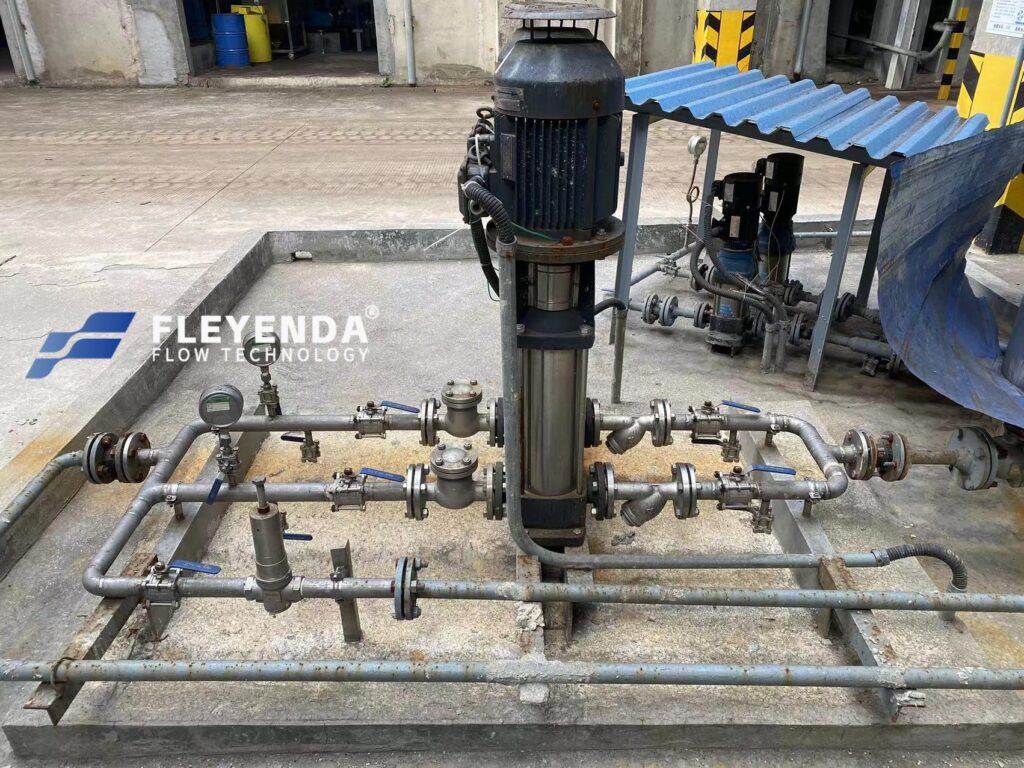
After detailed technical communication regarding operating conditions, pipeline layout, pressure requirements, and maintenance expectations, Fleyenda Valve recommended a combination of three-piece ball valves and check valves for the project.
The three-piece ball valves were mainly installed in the urea solution transport pipelines. Their compact structure, excellent sealing performance, and corrosion-resistant materials helped ensure stable and leak-free delivery of liquid reagents throughout the system. Compared with conventional valve structures, the three-piece design also provided easier maintenance and simplified future component replacement, which was especially important for continuous-operation power plant systems.
To further improve pipeline safety and system reliability, check valves were installed to prevent reverse flow inside the pumping system. This helped protect critical pump equipment while maintaining stable pipeline pressure during operation. The automatic backflow prevention capability of the check valves also reduced operational risks during system startup and shutdown processes.
Throughout the project, the Fleyenda technical and business teams maintained close communication with the Indonesian customer to optimize valve selection and ensure compatibility with the plant’s SCR operating requirements. Based on the actual working conditions, customized valve configurations were provided to improve long-term operational reliability and reduce maintenance frequency.
After installation and operation, the customer reported stable urea solution transport performance and improved SCR system efficiency. The valve system helped reduce leakage risks, improve pressure stability, and support continuous operation of the flue gas treatment process. The customer also expressed satisfaction with the product quality, technical communication, and overall project support provided by Fleyenda Valve.
Today, SCR systems have become one of the most important technologies for controlling NOx emissions in thermal power generation. In these applications, reliable valve performance plays a critical role in ensuring precise reagent delivery, pipeline safety, and long-term environmental compliance.
Fleyenda Valve continues supporting industrial environmental protection projects worldwide with reliable flow control solutions including:
- Three-piece ball valves
- Check valves
- Automated valve systems
- Corrosion-resistant industrial valves
These products are widely applied in thermal power plants, chemical processing facilities, water treatment systems, and industrial emission control projects.
As global industries continue investing in cleaner and more efficient energy infrastructure, dependable industrial valve systems will remain essential for maintaining safe, stable, and efficient SCR flue gas treatment operations.