


API 6D Standard Explained: A Technical Guide for Pipeline Valves
1. Introduction
In the oil and gas industry, valve performance is directly linked to system safety and operational reliability. Among the various international standards, API 6D is one of the most important specifications governing pipeline valves.
This standard defines the design, manufacturing, testing, and documentation requirements for valves used in pipeline systems. Understanding API 6D is essential for engineers, procurement teams, and project managers involved in upstream, midstream, and downstream operations.
2. What Is API 6D?
API 6D is a specification published by the American Petroleum Institute that covers pipeline valves, including:
- Ball valves
- Gate valves
- Plug valves
- Check valves
It applies to valves used in transportation systems for oil, gas, and petrochemical fluids, where reliability and safety are critical.
3. Scope and Application
API 6D is specifically designed for pipeline service, not general industrial applications. It is widely used in:
- Long-distance oil and gas pipelines
- LNG transmission systems
- Refining and petrochemical facilities
- Offshore and onshore pipeline networks
Compared to general-purpose standards, API 6D places greater emphasis on tight sealing, pressure integrity, and operational safety.
4. Key Requirements of API 6D
4.1 Design Requirements
API 6D defines strict criteria for valve design, including:
- Pressure-temperature ratings
- Wall thickness and structural strength
- Fire-safe design (where applicable)
- Anti-static features
Valves must be engineered to withstand high-pressure pipeline conditions and external stresses.
4.2 Material Requirements
Materials used in API 6D valves must meet specific standards for:
- Mechanical strength
- Corrosion resistance
- Low-temperature or high-temperature performance
Material traceability is mandatory to ensure quality control throughout the manufacturing process.
4.3 Testing and Inspection
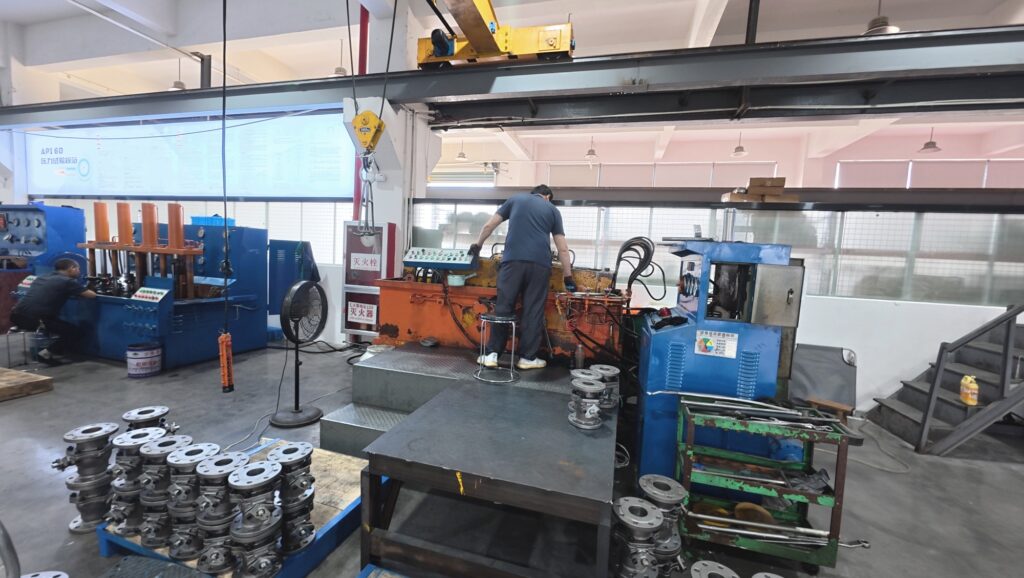
Testing is one of the most critical aspects of API 6D compliance. Required tests include:
- Hydrostatic pressure testing
- Seat sealing (leakage) testing
- Shell strength testing
These tests ensure that valves can maintain zero or minimal leakage under operating conditions.
4.4 Fire-Safe Certification
For applications involving flammable media, API 6D valves may require compliance with fire testing standards such as API 607.
This ensures that valves can maintain sealing integrity even after exposure to fire.
4.5 Documentation and Traceability
API 6D requires comprehensive documentation, including:
- Material certificates
- Test reports
- Inspection records
This level of traceability is essential for large-scale projects and regulatory compliance.
5. API 6D vs Other Valve Standards
API 6D vs API 600
- API 6D focuses on pipeline valves
- API 600 applies mainly to steel gate valves for general service
API 6D vs API 608
- API 6D covers pipeline ball valves
- API 608 applies to floating ball valves for general industrial use
API 6D vs ISO Standards
- API 6D is widely used in oil & gas projects
- ISO standards may apply to broader industrial applications
6. Why API 6D Matters in Industrial Projects
Using API 6D-compliant valves provides several advantages:
- Enhanced safety in high-pressure systems
- Reliable sealing performance
- Compliance with international project requirements
- Reduced risk of leakage and failure
For EPC contractors, API 6D certification is often a mandatory requirement in project specifications.
7. Common Misunderstandings About API 6D
Misconception 1: All Industrial Valves Meet API 6D
Not all valves are designed for pipeline service. API 6D valves must meet stricter requirements than general-purpose valves.
Misconception 2: Certification Alone Guarantees Performance
While certification is important, factors such as:
- Manufacturing quality
- Supplier experience
- Application-specific design
also play a critical role in performance.
Misconception 3: API 6D Applies to All Valve Types
API 6D is limited to specific valve categories used in pipeline systems.
8. How to Select API 6D Valves
When selecting API 6D valves, consider:
- Pressure class and operating conditions
- Media type (corrosive, high temperature, etc.)
- Valve type and function (shut-off, control)
- Supplier certifications and testing capabilities
It is also important to evaluate the supplier’s project experience and quality assurance system.
9. Where Fleyenda Valve Fits
Fleyenda Valve manufactures valves in accordance with API 6D requirements, focusing on:
- Reliable sealing performance
- Strict quality control and testing procedures
- Material traceability and certification
- Custom solutions for pipeline applications
These capabilities make Fleyenda Valve suitable for oil & gas, LNG, and industrial pipeline projects.