


Industrial Valve Types Guide by Fleyenda
Industrial valves are fundamental components in fluid control systems, playing a critical role in isolating flow, regulating pressure, and ensuring operational safety across industries. From oil and gas pipelines to water treatment plants and chemical processing lines, selecting the right valve type directly impacts system efficiency, reliability, and lifecycle cost.
This guide provides a structured overview of the most commonly used industrial valve types offered by Fleyenda, focusing on their working principles, strengths, and ideal applications. The content is designed for engineers, project managers, and procurement teams seeking practical, application-driven insights.
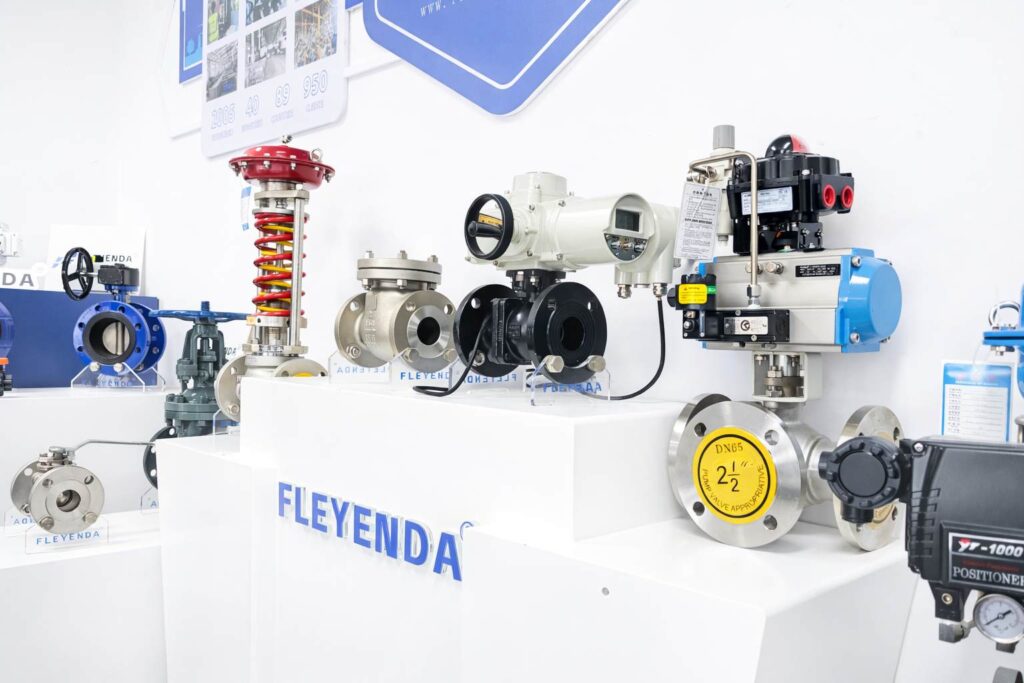
Manual, Actuated, and Automatic Valves
In addition to valve body design, industrial valves can also be classified by operation method. The table below clearly compares Manual Valves, Actuated Valves, and Automatic Valves in terms of control method, key features, and typical working scenarios, making it easier for engineers and buyers to select the most suitable solution.
| Valve Type | Operation Method | Key Characteristics | Typical Working Scenarios |
|---|---|---|---|
| Manual Valves | Operated by handwheel, lever, or gearbox | • Simple structure• Low initial cost• High reliability• No external power required | • Infrequently operated pipelines• Small to medium-sized systems• Isolation and backup positions in plants |
| Actuated Valves | Driven by electric, pneumatic, or hydraulic actuators | • Remote and centralized control• Consistent and repeatable operation• Easy integration with PLC / DCS / SCADA• Reduced manual labor | • Automated production lines• Hazardous or hard-to-reach locations• Processes requiring frequent valve operation |
| Automatic Valves | Self-operated based on pressure, flow, or temperature | • No manual or external power needed• Fast response to system changes• Improves system safety and protection | • Overpressure protection systems• Backflow prevention lines• Critical safety and flow control applications |
Common Valve Examples
- Manual Valves: Manual ball valves, gate valves, butterfly valves
- Actuated Valves: Electric ball valves, pneumatic butterfly valves, hydraulic gate valves
- Automatic Valves: Check valves, safety valves, pressure relief valves
How to Choose the Right Valve
When selecting a valve for your application, consider the following factors:
- Function: Isolation, regulation, backflow prevention, or pressure relief
- Media Type: Liquid, gas, steam, corrosive or abrasive fluids
- Pressure & Temperature: Operating and design limits
- Pipe Size & Installation Space
- Automation Requirements
Fleyenda offers a comprehensive portfolio of industrial valves engineered to meet international standards and demanding industrial conditions.
Ball Valves
Ball valves operate using a hollow, perforated sphere that rotates 90 degrees to either allow or block fluid flow. Their quarter-turn design enables fast operation and reliable shut-off.
Key Advantages
- Tight sealing with minimal leakage
- Low flow resistance when fully open
- Simple structure with long service life
- Easy automation with electric or pneumatic actuators
Typical Applications
- Oil and gas transmission pipelines
- Chemical and petrochemical processing
- Industrial water and wastewater systems
Best Use Case: On/off control where fast operation and zero leakage are required.
Gate Valves
Gate valves control flow by raising or lowering a gate perpendicular to the flow direction. When fully open, the gate is completely out of the flow path, resulting in minimal pressure loss.
Key Advantages
- Suitable for large-diameter pipelines
- Minimal pressure drop in fully open position
- Ideal for infrequent operation
Typical Applications
- Municipal water supply networks
- Crude oil and refined product pipelines
- Steam and utility systems
Design Note: Gate valves are not recommended for throttling, as partial opening may cause vibration and accelerated wear.
Globe Valves
Globe valves are designed for precise flow regulation. The internal disc moves linearly toward or away from the valve seat, allowing accurate control of flow rate.
Key Advantages
- Excellent throttling and flow control capability
- Good sealing performance under frequent operation
- Suitable for automation and control systems
Typical Applications
- Boiler feedwater systems
- Process flow regulation in chemical plants
- Cooling and heating systems
Best Use Case: Applications requiring frequent flow adjustment rather than simple isolation.
Butterfly Valves
Butterfly valves use a rotating disc mounted on a central shaft to regulate flow. Their compact and lightweight design makes them particularly suitable for large pipe diameters.
Key Advantages
- Compact structure with reduced installation space
- Lightweight and cost-effective
- Fast operation and easy maintenance
Typical Applications
- Water treatment and desalination plants
- HVAC and fire protection systems
- Food, beverage, and pharmaceutical processing
Industry Trend: Butterfly valves are increasingly used as an alternative to gate valves in large-diameter, low-to-medium pressure systems.
Check Valves (Non-Return Valves)
Check valves automatically prevent reverse flow, protecting pumps, compressors, and pipelines from backflow-related damage.
Key Advantages
- Automatic operation without external power
- Protects equipment from pressure surges
- Available in multiple designs (swing, lift, dual-plate)
Typical Applications
- Pump discharge lines
- Compressed air systems
- Water distribution and industrial pipelines
System Benefit: Essential for improving system reliability and reducing maintenance risks.
Diaphragm Valves
Diaphragm valves use a flexible diaphragm to control flow, fully isolating the operating mechanism from the process fluid. This design minimizes contamination and internal buildup.
Key Advantages
- Excellent chemical resistance
- Smooth flow path with no dead zones
- Easy cleaning and low maintenance
Typical Applications
- Chemical processing with corrosive media
- Pharmaceutical and food-grade systems
- Slurry, wastewater, and abrasive fluids
Best Use Case: Applications requiring high cleanliness or handling aggressive media.
Relief Valves
Relief valves protect systems by automatically releasing excess pressure when it exceeds a preset limit, preventing equipment damage and safety hazards.
Key Advantages
- Critical pressure protection component
- Reliable automatic operation
- Enhances overall system safety
Typical Applications
- Boilers and pressure vessels
- High-pressure gas and steam systems
- Chemical and industrial processing units
About Fleyenda
Fleyenda is a professional industrial valve manufacturer and solution provider, delivering reliable flow control products for global industries including oil & gas, water treatment, chemical processing, and energy. With a focus on performance, durability, and application-specific design, Fleyenda supports customers throughout the entire project lifecycle—from selection to operation.